
Table of Contents >> Show >> Hide
- Why Airplane Etiquette Matters (Even If You “Paid for This Seat”)
- Before You Board: Set Yourself Up to Be Easy to Travel With
- Boarding: The Aisle Is Not a Parking Lot
- In Your Seat: The Golden Rule Has Armrests
- The “Invisible Box” Principle (Your Space Has Edges)
- Armrest Etiquette: The Middle Seat Needs a Win
- Reclining Etiquette: Yes, You CanBut Do It Like a Human
- Screen, Sound, and Light: Your Entertainment Shouldn’t Be a Group Activity
- Tray Table Etiquette: Tap Gently, Not Like You’re Testing It for Earthquakes
- Body and Grooming Etiquette: Planes Are Public, Not Your Bathroom Mirror
- Food and Fragrance: Don’t Weaponize Smells
- Respect the Crew: Polite Passengers Get Better Outcomes
- Cabin Common Areas: Aisles, Bathrooms, and Timing
- Deplaning: The Final Test of Civilization
- When Awkward Happens: Polite Scripts That Actually Work
- Quick Checklist: Airplane Etiquette in 60 Seconds
- Real-World Experiences: Scenarios You’ll Recognize (and How to Handle Them)
- Conclusion: Fly Like You Want Others to Fly Around You
Flying is a modern miracle: a metal tube full of strangers hurtling through the sky at 500+ mph while everyone pretends it’s totally normal to eat pretzels at
35,000 feet. The catch? Air travel only works when we all follow a few shared rulessome written (seat belts) and some “unwritten” (please don’t clip your
nails like you’re auditioning for a tiny percussion section).
This guide breaks down airplane etiquette from curb to cabin to carousel, with practical tips, quick “why it matters” explanations, and real-life examples.
Think of it as your friendly in-flight upgrade: more comfort, fewer side-eyes, and a much lower chance of becoming a story someone posts about later.
Why Airplane Etiquette Matters (Even If You “Paid for This Seat”)
Airplane etiquette isn’t about being fancyit’s about being functional. Planes are shared micro-spaces with limited storage, narrow aisles, and a schedule that
can be derailed by one small bottleneck (like a passenger reorganizing a suitcase in the doorway as if the jet bridge is their personal closet).
Good air travel manners reduce delays, prevent conflicts, and make the trip easier for everyone, including you. Etiquette also overlaps with safety: following
crew instructions, staying seated when you should, and keeping aisles clear isn’t just politeit helps the flight operate smoothly.
Before You Board: Set Yourself Up to Be Easy to Travel With
Pack Like You’re Sharing a Closet (Because You Are)
Overhead bin space is limited, and the fastest way to make enemies is to act like you’re the sole heir to the entire compartment. Pack so your largest carry-on
goes overhead and your smaller personal item fits under the seat in front of you. If you bring multiple “small-ish” bags, consolidate before boarding so you
aren’t juggling items in the aisle.
Also: avoid last-minute gate drama by checking your airline’s carry-on and personal item size rules ahead of time. Airlines can be strict, and “But it fit last
time!” is not a boarding pass.
Security Line Etiquette: The Great Plastic-Bin Ballet
Airport security is where patience goes to be stress-tested. Help the line move by getting ready before you reach the front: have your ID and boarding pass
accessible, empty your pockets when prompted, and follow instructions the first time (it’s faster than debating). If you’re unsure, watch what the people ahead
of you do and copy the ones who aren’t being redirected by an officer.
Bonus manners: don’t block the belt while you put your shoes back on. Step to the side, regroup, then rejoin society. Think of it like a highway: merge lanes
exist so nobody has to live in the shoulder forever.
Gate Area Etiquette: Avoid Becoming “Gate Lice”
Boarding is smoother when the area around the gate stays clear. If you’re not in the current boarding group, hang back. You’ll still get on the planethere is
no prize for being the closest person to the scanner for 22 straight minutes.
If you need overhead space (because your bag is truly carry-on sized), boarding with your group matters. If you don’t need overhead space, consider boarding
later and letting families, tight connections, and those who need assistance move through.
Boarding: The Aisle Is Not a Parking Lot
Move In, Then Set Up
When you reach your row, step into it as much as possible before you start your “settling in” routine. If you stop in the aisle to remove your jacket, open
your snack tote, and tell your seatmates a full recap of your morning, you create a human traffic jam.
A simple pattern helps: stow the big bag quickly, sit down, then handle smaller tasks once you’re not blocking the aisle.
Overhead Bin Etiquette: The Shared Tetris Agreement
- Use the bin over your row first when possible. Don’t stash your bag five rows ahead and stroll back like you’re hiding treasure.
- Place bags efficiently (often on their side or wheels-first, depending on the bin design) to maximize space.
- Keep small items under the seat unless you’re in a row where under-seat storage isn’t allowed (like some bulkheads).
- Don’t open bins repeatedly after you’ve sat down unless it’s truly necessary. The “bin door encore” is disruptive and slows the cabin down.
If you can’t lift your bag safely, ask for help before you’re in a wrestling match above someone’s head. The goal is “secure,” not “surprise falling luggage.”
Seat-Swap Etiquette: How to Ask Without Making It Awkward
Seat swaps are not automatically rudebut entitlement is. If you want to switch, ask politely, accept “no” gracefully, and only propose a fair trade. A good
rule: offer something equal or better (aisle for aisle, window for window, or an upgrade in row/legroom when possible).
Try this script: “Hi! Would you be open to switching seats so I can sit with my family? Totally okay if not.” If they say no, respond with: “No problem at all.
Thanks for considering.” The end. No sighing. No guilt campaign.
In Your Seat: The Golden Rule Has Armrests
The “Invisible Box” Principle (Your Space Has Edges)
Imagine an invisible rectangle around your seat: seat width, armrests, legroom area in front of you. That’s your zone. Keep elbows, knees, hair, bags, and
gadgets inside it. If your belongings spill into your neighbor’s space, you’re basically subleasing their seat without permission.
Armrest Etiquette: The Middle Seat Needs a Win
The widely accepted courtesy rule: the middle seat passenger gets both inner armrests. The window seat gets the wall (leaning space), and the aisle seat gets
easier bathroom access. It’s not a perfect system, but it’s the closest thing we have to cabin peacekeeping.
If you’re in the aisle and want a bit more room, some seats have a small release button that allows the aisle armrest to lift (helpful for getting in and out
without doing the sideways crab walk).
Reclining Etiquette: Yes, You CanBut Do It Like a Human
Seat reclining is one of aviation’s hottest debates because both sides are “right.” You paid for a seat that reclines. The person behind you paid for the space
your recline reduces. Etiquette is how we prevent that from becoming a feud.
- Recline slowlyno sudden slam-back.
- Check timing: avoid reclining during meal service or when the person behind you is clearly using a laptop.
- Give a heads-up if it’s tight: a quick glance back and a friendly “Mind if I recline a bit?” can defuse tension.
- Be flexible: if someone behind you asks for a little space to eat or work, adjusting slightly is good manners.
Screen, Sound, and Light: Your Entertainment Shouldn’t Be a Group Activity
Headphones aren’t optional. If your phone is playing audio out loud, you’re forcing strangers to participate in your playlist, your game sound effects, or that
video you’re “just going to watch real quick.” Keep volume contained.
On night flights, dim your screen and avoid blasting your neighbor with a glowing rectangle. If you’re watching something with flashing scenes, consider a lower
brightnessyour seatmate didn’t consent to a strobe-light experience.
Tray Table Etiquette: Tap Gently, Not Like You’re Testing It for Earthquakes
Tray tables are connected to the seat in front of you, so heavy typing, constant jiggling, or repeatedly yanking the seatback can feel like a tiny earthquake
to the person ahead. If you’re working, type lightly when possible, and keep your movements controlled.
Body and Grooming Etiquette: Planes Are Public, Not Your Bathroom Mirror
- Shoes: keep them on unless you have a very good reason (and even then, keep socks on). Bare feet on armrests or seats? Hard no.
- Grooming: save nail clipping, hair trimming, and heavy lotion application for literally anywhere else.
- Stretching: great ideajust don’t stretch into someone’s space or block the aisle.
Food and Fragrance: Don’t Weaponize Smells
Strong odors spread fast in a sealed cabin. If you can, avoid intensely fragrant foods (think: extra-garlicky, fishy, or anything that announces itself three
rows away). The same goes for heavy perfume or colognespraying it before a flight is like turning the cabin into your personal scent cloud.
If you do eat onboard, keep it neat: open wrappers quietly, contain crumbs, and tidy up. Flight attendants aren’t your personal cleanup crew; they’re managing a
moving vehicle in the sky.
Respect the Crew: Polite Passengers Get Better Outcomes
Follow Instructions the First Time
Flight attendants and pilots aren’t making rules to ruin your funthey’re coordinating safety and timing. When you’re asked to stow a bag, sit down, raise your
seatback, or buckle up, do it promptly. It reduces delays and keeps the cabin from turning into a negotiation tournament.
Ask Smart, Ask Kindly
Need help? Ask early and politely. Want water? Great. Want to debate policy mid-boarding while other passengers are stacking up behind you? Less great.
Appreciation goes a long way, even if it’s just a sincere “Thank you.”
Cabin Common Areas: Aisles, Bathrooms, and Timing
Aisle Etiquette: Keep It Clear
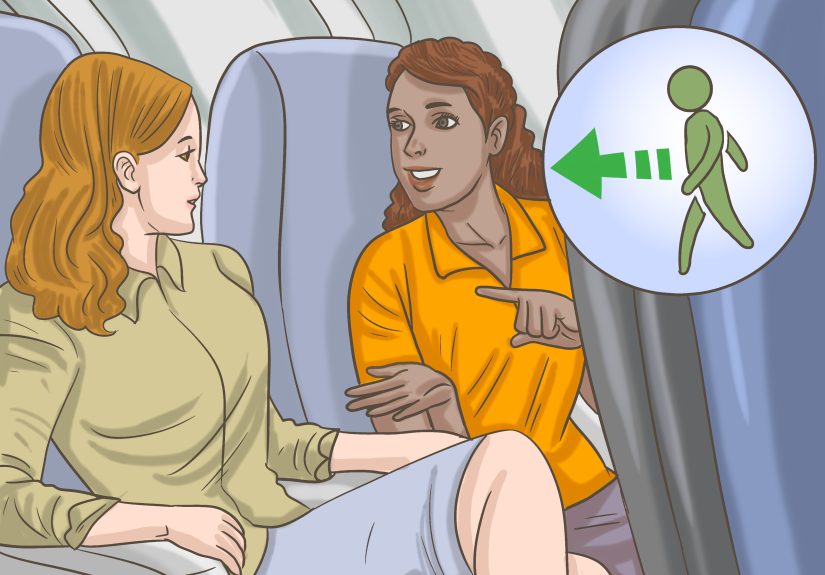
The aisle is the cabin’s main roadway. Don’t leave bags, legs, or gear sticking out. If you’re in an aisle seat, be mindful when people need to pass; a quick
stand-and-step-out is often easier than making them climb over you like a low-budget obstacle course.
Lavatory Etiquette: Quick, Clean, and Considerate
Lines happen. If there’s a queue, don’t hover directly over seated passengers or lean on armrests while you wait. Stand in a way that keeps the aisle passable.
Inside the lavatory: leave it reasonably clean, and don’t treat it like a dressing room. Everyone is waiting for you to finish your mission and return.
Deplaning: The Final Test of Civilization
Exit Row-by-Row (Unless Someone Waves You Ahead)
The most widely respected deplaning rule is simple: the plane empties from the front, row by row. Don’t surge forward the second the seatbelt sign turns off.
If you have a tight connection, ask politely and you’ll often find people willing to let you passespecially if you ask before the crowd starts moving.
If Your Bag Is Behind You, Let the Stream Flow
If you placed your carry-on in a bin behind your seat, don’t shove upstream when the aisle is moving. Wait for a natural pause, then step back briefly to grab
it. This keeps the flow steady and prevents aisle gridlock.
When Awkward Happens: Polite Scripts That Actually Work
- Armrest conflict: “Heymind if we share this so we both fit comfortably?”
- Recline request: “Would you be able to bring your seat up a bit while I eat/work? Thanks so much.”
- Loud audio: “Hiwould you mind using headphones? I’d really appreciate it.”
- Strong scent: “Sorry to askcould you avoid spraying anything for now? I’m sensitive to fragrances.”
Notice the pattern: calm tone, clear request, gratitude. You’re aiming for cooperation, not a courtroom drama at 35,000 feet.
Quick Checklist: Airplane Etiquette in 60 Seconds
- Board with your group, keep the gate area clear, and move into your row before organizing.
- One bag overhead, smaller item under the seat; don’t hoard bin space with coats and tiny bags.
- Respect the invisible box of personal spaceelbows, knees, hair, and gear stay contained.
- Middle seat gets the inner armrests (courtesy rule). Headphones always.
- Recline slowly, pick your moment, and respond kindly to reasonable requests.
- Keep grooming private, odors minimal, and the aisle clear.
- Deplane row-by-row; if you need to pass, ask nicely and early.
Real-World Experiences: Scenarios You’ll Recognize (and How to Handle Them)
Etiquette advice is easiest to remember when you can picture it happening. Here are real-life flight moments travelers run into all the timeand how good airplane
etiquette turns them from stressful to smooth.
Scenario 1: The Overhead Bin “Musical Chairs” Moment
You board and discover the bin over your row is already packed with a suspicious collection of small backpacks and puffy jackets. Your roller bag is legit
carry-on size, but it’s starting to look like it might have to gate-check. The polite move is to pause (without blocking the aisle), look for a nearby open
space close to your seat, and stow your bag efficiently. If you need help, ask a flight attendant calmlythis is their daily puzzle, and a respectful request
is far more effective than an angry speech. If you realize you’re the one with small items overhead, the best etiquette is to relocate them under your seat
once you notice space is tight. Being the person who makes room is basically the cabin equivalent of returning your shopping cart: quietly heroic.
Scenario 2: The Recline Clash During Snack Time
Mid-flight, the person in front reclines suddenlyright as you open your tray table. Now your drink is playing a suspenseful game of “will it spill?” Etiquette
says you start with generosity: maybe they didn’t notice. A simple, friendly line works: “Hey! Would you mind coming up a little while I eat? Thank you.” Most
people respond well to a calm request. If you’re the recliner, the best “experience-based” habit is to recline slowly, glance behind you first, and return
upright during meals. You still get comfort, and the person behind you still gets dignity (and their laptop screen).
Scenario 3: The Middle-Seat Armrest Negotiation
The middle seat passenger settles in and claims both inner armrests, and the aisle seat person looks offendedlike the armrest just applied for a job they
wanted. This is where the courtesy rule prevents a three-hour elbow cold war. If you’re in the aisle or window, treat the inner armrest as shared territory the
middle seat needs to feel human. If you’re in the middle, you can still be considerate by keeping elbows tucked and not spreading outward. The “win” isn’t
ownership; it’s everyone fitting without accidentally inventing a new contact sport.
Scenario 4: The Phone Speaker Surprise
Someone two rows back starts watching a video on speaker. You can hear every word, including the dramatic soundtrack. Your options: put on your own headphones
and ignore it, or (if it’s really disrupting the cabin) use a polite, low-drama ask: “Hiwould you mind using headphones?” If you don’t want a direct
interaction, you can mention it quietly to a flight attendant. Most crews will handle it efficiently. The etiquette lesson: if your device makes noise, it
belongs in your earsbecause the cabin is a shared space, not a group chat.
Scenario 5: The Deplaning Sprint That Isn’t Actually Faster
The seatbelt sign turns off and a few people pop up instantly, pushing forward as if the exit door is handing out trophies. In reality, this slows everything
down by clogging the aisle. The best etiquette is to stand when your row is ready and keep the flow moving. If you have a tight connection, asking nearby
passengers politely before landing (“I’m sorrymy connection is really tight. Would you mind if I slipped out quickly when we land?”) often gets you more help
than trying to force your way through at the last second.
Scenario 6: The “I’m Not Feeling Great” Flight
Sometimes people have to travel even when they’re not at their best. Etiquette here is about reducing the impact on others: mask if you’re coughing, cover
sneezes properly, sanitize hands, and avoid touching shared surfaces unnecessarily. If you can postpone travel when you’re truly sick, that’s kinder to
everyone in the cabin. And if you can’t, small considerate choiceslike using tissues, disposing of them properly, and keeping your space tidymake a crowded
flight feel safer and more respectful for the people around you.
Conclusion: Fly Like You Want Others to Fly Around You
Practicing airplane etiquette isn’t about being perfectit’s about being aware. If you keep aisles clear, share space fairly, manage noise and smells, and treat
the crew and other passengers with basic respect, you’ll have better flights and so will everyone near you. The cabin is temporary, but your reputation as “that
passenger” can live forever in someone’s group chat. Choose wisely.






 Close
Close