
Table of Contents >> Show >> Hide
- First, Figure Out What You’re Dealing With (It Matters)
- The Golden Rules (Do These Before Any “Hack”)
- Quick Rescue: What to Do in the First 2 Minutes
- The Best Methods (Pick the One That Matches Your Situation)
- Method 1: Dish Soap (Best for Oil-Based or “Greasy” Foundation)
- Method 2: Liquid Laundry Detergent Pretreat + Soak (Best for Dried or Set Stains)
- Method 3: Rubbing Alcohol or Alcohol-Based Hand Sanitizer (Best for Heavy Pigment Transfer)
- Method 4: Shaving Cream “Collar Ring” Trick (Best for Fresh Neckline Smudges)
- Method 5: Micellar Water or Oil-Free Makeup Remover (Best for Small Spots or Delicates)
- Method 6: Oxygen Bleach Soak (Best for Stubborn Stains on Whites or Colorfast Fabrics)
- Method 7: Targeted Stain Removers (Best When You Want “Follow the Steps, Get On With Life”)
- Powder Foundation: A Different Approach (Don’t Add Water First)
- Fabric-by-Fabric Playbook
- What Not to Do (Unless You Like Learning Lessons the Hard Way)
- Preventing Future Foundation Stains (Because You’re Busy)
- Foundation Stain FAQ
- Wrap-Up: The Simple Winning Formula
- Experiences: The Foundation-Stain Moments I’ll Never Forget (and the Fixes That Saved the Day)
Foundation is a confidence booster… until it decides to become a “collar accessory.”
If you’ve ever pulled a shirt over your head and watched your neckline get instantly beige-tinted,
congratulations: your outfit just joined the glam squad without permission.
The good news? Most foundation stains are very removable when you treat them the right way.
The trick is to match the method to the makeup (oil-based vs. water-based, liquid vs. powder),
and to avoid the two things that turn “oops” into “RIP shirt”: rubbing hard and applying heat too soon.
First, Figure Out What You’re Dealing With (It Matters)
Foundation stains are usually a combo of pigment + binders + oils (or silicones) + sometimes sunscreen.
That’s why they can look “dry” but behave like grease.
Before you start experimenting like a backyard chemist, do this quick assessment:
- Liquid/cream foundation: Often oil- or silicone-heavy. Best first move: lift excess, then use a degreaser (dish soap) or detergent.
- Powder foundation: Pigment sits on top at first. Best first move: remove loose powder without adding water.
- Long-wear / full-coverage: More pigment + more binders. Expect to pretreat and possibly repeat.
- Tinted moisturizer / skin tint: Usually lighter, but still can contain oils. Treat early and it often disappears fast.
The Golden Rules (Do These Before Any “Hack”)
1) Don’t rub. Lift.
Rubbing pushes pigment deeper into fibers. Instead, scrape or lift excess foundation gently with a spoon edge,
dull knife, or an old credit card. Think: “scoop,” not “smear.”
2) Start cool, not hot.
Heat can set many stains. Begin with cool or cold water (or no water for powder).
You can move to the warmest water safe for the fabric laterafter pretreatment.
3) No dryer until you’re sure.
The dryer is a stain’s retirement plan. If the mark is still visible after washing, air-dry and treat again.
4) Patch test anything “extra.”
Alcohol, oxygen bleach, and strong stain removers can affect dyes or delicate fibers.
Test on an inside seam first, especially with dark colors or stretchy blends.
Quick Rescue: What to Do in the First 2 Minutes
If the stain is fresh (you just did it), speed matters more than sophistication.
Here’s the simple “triage” plan:
- Lift excess foundation (no rubbing).
- Blot from the back with a clean cloth or paper towel to push pigment out, not in.
- Apply a small amount of dish soap or liquid laundry detergent directly to the stain.
- Work it in gently with your fingers or a soft toothbrush.
- Rinse with cool water from the back side of the fabric.
If you’re not near a sink, a stain-remover pen or a small dab of liquid detergent plus a damp napkin
can keep the stain from setting until you get home.
The Best Methods (Pick the One That Matches Your Situation)
Method 1: Dish Soap (Best for Oil-Based or “Greasy” Foundation)
Dish soap is built to break down oils. For many liquid foundations, it’s the MVPespecially on collars and cuffs.
- Place the stained area face down on a clean towel or paper towels.
- Apply a few drops of clear dish soap directly to the stain.
- Gently massage for 30–60 seconds. Don’t shred the fabric; you’re persuading the stain, not fighting it.
- Rinse with cool water from the back side so the stain flushes out.
- If needed, repeat before washing normally.
Example: A beige foundation ring on a white cotton tee collar often lifts after two rounds of dish soap + cool rinse,
then a normal wash with heavy-duty detergent.
Method 2: Liquid Laundry Detergent Pretreat + Soak (Best for Dried or Set Stains)
If the stain is older (hours/days), you’ll usually need time and saturation.
Detergent pretreating works because surfactants loosen oils while enzymes (in many detergents) help break down complex grime.
- Apply liquid detergent to both the front and back of the stain.
- Let it sit 10–15 minutes (don’t let it dry out).
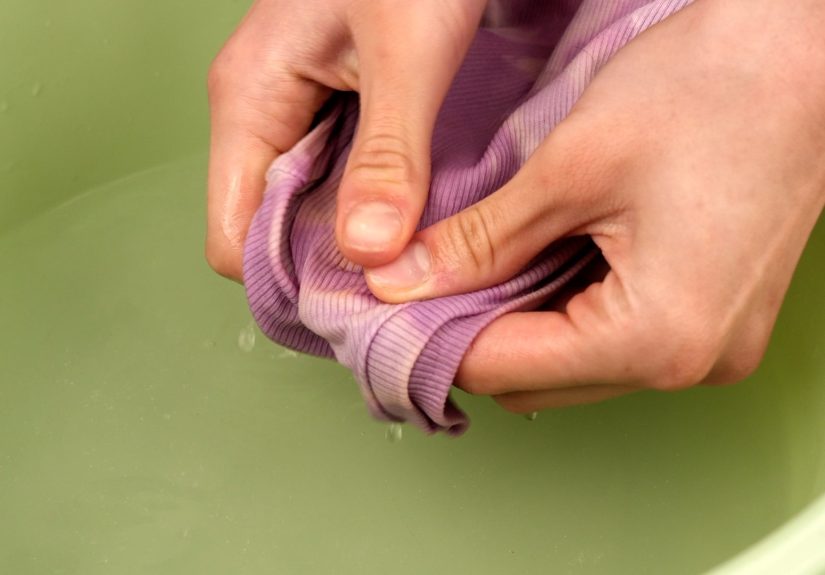
- Soak the garment in a basin with water at the warmest temperature safe for the fabric and a bit more detergent.
- Soak 30–60 minutes (longer if needed), then gently brush and rinse.
- Launder as usual. Air-dry and check.
Pro tip: Treating both sides matters because foundation often clings to surface fibers on one side
while pigment has already traveled to the other.
Method 3: Rubbing Alcohol or Alcohol-Based Hand Sanitizer (Best for Heavy Pigment Transfer)
Alcohol can dissolve certain binders and help lift pigmentespecially on synthetics and tightly woven fabrics.
Use it when the stain looks “stuck” even after soap.
- Put a towel or paper towel under the stained area.
- Dab (don’t pour like you’re baptizing the shirt) a small amount of rubbing alcohol on a cotton pad or cloth.
- Blot the stain gently; move to a clean section of the towel as pigment transfers.
- Rinse with cool water, then pretreat with detergent and wash.
Fabric caution: Alcohol can affect some dyes. Patch test first on darks or bright colors.
Method 4: Shaving Cream “Collar Ring” Trick (Best for Fresh Neckline Smudges)
Plain shaving cream (the foamy kind) contains surfactants that can help loosen makeup.
It’s popular because it’s easy and already in many bathrooms.
- Apply a small amount of shaving cream to the stain.
- Let sit 5–10 minutes.
- Work gently with fingers, rinse cool, and wash.
- If needed, add a tiny dab of rubbing alcohol to the shaving cream during the second round.
Method 5: Micellar Water or Oil-Free Makeup Remover (Best for Small Spots or Delicates)
If the stain is small or the fabric is delicate, makeup remover can be a gentler first step.
Micellar water can lift pigments without heavy scrubbing.
- Dab micellar water onto a cotton pad.
- Blot the stain from the outside in.
- Rinse cool, then wash with mild detergent if the care label allows.
Important: Avoid oily removers on fabric unless you plan to follow with dish soap or detergent,
because the “remover” can become its own stain.
Method 6: Oxygen Bleach Soak (Best for Stubborn Stains on Whites or Colorfast Fabrics)
Oxygen bleach (often sodium percarbonate-based) is great for multi-component stains and can brighten dingy whites.
It’s generally safer for colors than chlorine bleach, but you still need to follow the label and patch test.
- Dissolve the oxygen bleach powder fully in warm water (or as directed).
- Soak the garment for 1–6 hours depending on severity and label instructions.
- Wash normally. Air-dry and check.
If your stain is on a white cotton tee that’s already had an “oops, I dried it” moment,
oxygen bleach soaking is one of the more realistic paths to redemption.
Method 7: Targeted Stain Removers (Best When You Want “Follow the Steps, Get On With Life”)
If you’d rather not experiment, commercial stain removers for cosmetics can be highly effective.
Follow instructions carefully, and consider specialized options when foundation is mixed with sunscreen or setting spray.
- Stain remover sprays: Pretreat, wait, then wash.
- Specialty cosmetic stain solutions: Often involve applying solution and blotting onto an absorbent cloth underneath.
Powder Foundation: A Different Approach (Don’t Add Water First)
Powder stains are easiest when you keep them dry at the start.
Water can turn loose pigment into a paste that grabs fibers like it pays rent.
- Shake the garment gently outside or over a trash can.
- Use a lint roller or tape to lift remaining powder.
- If residue remains, pretreat with detergent or a stain remover, then wash.
Fabric-by-Fabric Playbook
Cotton and Denim
Cotton is forgiving. Use dish soap or detergent pretreat, then wash warm if the label allows.
For white cotton, oxygen bleach can help if pigment lingers.
Polyester, Nylon, and Athletic Fabrics
Synthetics can hold onto oily stains. Dish soap + gentle brushing works well.
For stretchy blends (spandex/elasthane), avoid harsh scrubbing and high heatstick to cool rinses and label-safe washing.
Wool, Silk, and “Handle With Care” Fabrics
Use a gentle approach first: blot, cool water, and a tiny amount of mild detergent.
If the label says dry-clean only, don’t gambleprofessional cleaning is safer.
Dry-Clean Only Items
Blot (do not rub), and take it to a cleaner as soon as possible.
Tell them it’s foundation and mention the fabric type. The more info they have, the better the odds.
What Not to Do (Unless You Like Learning Lessons the Hard Way)
- Don’t start with hot water on a fresh stain. Heat can make pigment harder to remove.
- Don’t toss it in the dryer “to see what happens.” What happens is the stain becomes permanent roommates with your shirt.
- Don’t mix cleaning chemicals. Never combine bleach with ammonia or other cleaners. Use one method at a time, rinse between attempts.
- Don’t scrub delicate fibers aggressively. A stain is annoying; a hole is forever.
Preventing Future Foundation Stains (Because You’re Busy)
- Do makeup first, then dress. Revolutionary, I know.
- Use a robe or button-up “getting ready” shirt to protect outfits.
- Try a barrier: Slip a thin scarf or clean cloth over your head while pulling on a top.
- Let foundation set before dressing (especially dewy formulas).
- Keep a stain pen in your bag for emergency collar smudges.
Foundation Stain FAQ
Can I remove foundation that’s already been washed and dried?
Sometimes, yesespecially on cotton. Pretreat with liquid detergent, soak, and consider an oxygen bleach soak.
You may need multiple rounds. Air-dry between attempts so you can see progress.
Does vinegar remove foundation stains?
Vinegar can help with some odors and certain residues, but foundation is usually oil + pigment.
You’ll typically get better results from dish soap, detergent, alcohol (carefully), or oxygen bleach.
What if the stain looks “gone” when wet but reappears when dry?
That’s often leftover oil or pigment still in the fibers. Pretreat again and wash.
Avoid heat until it’s truly gone when dry.
Wrap-Up: The Simple Winning Formula
Most foundation stains come out when you:
lift excess, degrease with dish soap or detergent,
rinse cool from the back, and wash only after pretreating.
If it’s set, add time (soak) and the right booster (oxygen bleach for colorfast fabrics).
And if nothing else works, remember: there is no shame in calling in a professional.
The real villain here is not you. It’s the collar of your shirt for being exactly where your face is.
Experiences: The Foundation-Stain Moments I’ll Never Forget (and the Fixes That Saved the Day)
The first time I learned the “don’t rub it” rule was at a family event where photos were basically unavoidable.
I pulled a light-colored dress over my head after doing my makeup (mistake #1), felt a little drag at the neckline,
and immediately knew something tragic had happened. The collar had a perfect crescent of foundationlike my outfit
had tried contouring itself. My instinct was to scrub it with a wet paper towel. Luckily, someone stopped me and said,
“Blot. Don’t rub.” We lifted the excess with the edge of a spoon, dabbed dish soap directly onto the mark,
and rinsed from the back under cool water. The stain didn’t vanish instantly, but it faded enough that I could re-wear
the dress the next day after a proper wash. Lesson learned: fast + gentle beats frantic + aggressive every time.
Another memorable one happened with a long-wear foundation on a black athletic top (the kind with a little stretch).
I leaned in for a quick hug, and the other person’s shoulder got a smudgethen I noticed my own shirt had a pale patch.
Dish soap helped, but the pigment clung to the synthetic fibers like it had a lease. This was the day I discovered
careful blotting with rubbing alcohol can be a game-changer. I put a clean towel under the spot, used a cotton pad with
a small amount of alcohol, and gently blotted until the towel started picking up color. Then I rinsed cool and
pretreat-washed. The stain was 90% gone on the first pass and fully gone after a second gentle treatment.
The key was going slow and patch-testing firstblack fabric is not the place to freestyle with chemicals.
The most dramatic rescue, though, was a white cotton tee that had a foundation stain I didn’t notice until it had
already been washed and dried. (The dryer: the stain’s personal trainer.) The mark looked faint when the shirt was wet,
so I missed itthen it reappeared once dry, like a ghost of makeup past. I tried detergent pretreating and a warm soak,
which helped but didn’t fully erase it. What finally finished the job was an oxygen-bleach soak followed by a normal wash,
then air-drying to check the result. It wasn’t instant gratification, but it was satisfying in the way only saving a
“ruined” shirt can be. That experience also taught me the most practical habit: never put anything stained into the dryer
unless you’re 100% sure it’s gone when dry.
If you take anything from these stories, let it be this: foundation stains feel dramatic in the moment, but they’re
usually a problem you can solve with the right order of operationslift, degrease, blot, rinse cool, then wash.
When you treat the stain like a process instead of a panic, your clothes have a much better chance of making a full recovery.






 Close
Close