
Table of Contents >> Show >> Hide
- Quick Answer: The Correct Chessboard Setup
- Understanding the Chessboard Before You Set It Up
- What Pieces Does Each Player Start With?
- How to Set up a Chessboard Step by Step
- Correct Chessboard Layout Diagram
- Common Chessboard Setup Mistakes
- How to Remember the Chessboard Setup
- Setting Up Special Chess Sets
- What Happens After the Board Is Set Up?
- Beginner Tips for a Smooth First Game
- Personal Experiences and Practical Lessons From Setting Up a Chessboard
- Conclusion
Learning how to set up a chessboard is the first tiny gate you pass through before entering the very dramatic kingdom of chess. The good news? It is much easier than learning the Sicilian Defense, surviving a discovered attack, or explaining to a child why the horsey piece does not simply gallop wherever it wants. A correct chessboard setup takes less than a minute once you know the pattern, but getting it wrong can make the whole game feel slightly cursed.
This guide walks you through the correct chessboard layout, where every piece goes, how to remember the tricky parts, and what mistakes beginners make most often. Whether you are setting up a wooden tournament board, a travel chess set, a classroom board, or a fancy decorative set that looks like it belongs in a castle, the rules are the same. Put the board the right way, place the pieces in order, remember “white on the right” and “queen on her color,” and you are ready to play.
Quick Answer: The Correct Chessboard Setup
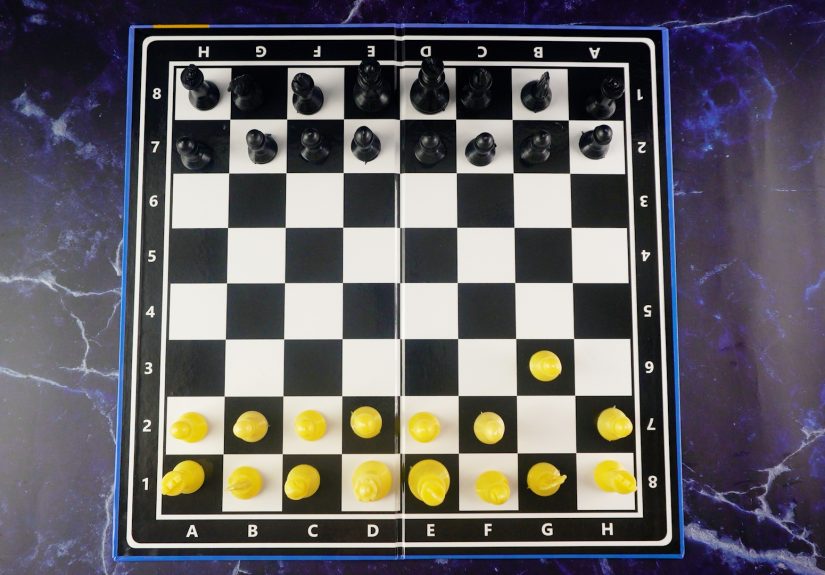
Place the board so the bottom-right corner square is light-colored. From White’s side, the back row should read: rook, knight, bishop, queen, king, bishop, knight, rook. Put all eight white pawns on the second row. Black mirrors this setup on the opposite side, with black pawns on the seventh row and black’s back row reading: rook, knight, bishop, queen, king, bishop, knight, rook.
The queens always start on their own color: the white queen on a light square and the black queen on a dark square. The kings go beside the queens on the remaining center squares. Once everything is placed correctly, White makes the first move.
Understanding the Chessboard Before You Set It Up
A standard chessboard has 64 squares arranged in an 8-by-8 grid. The squares alternate between light and dark colors. They may be white and black, cream and brown, maple and walnut, red and ivory, or any other stylish pairing your chess set has decided to wear to the party. The colors do not matter as much as the alternating pattern.
The “White on the Right” Rule
Before placing a single piece, turn the board so that the bottom-right corner square is light-colored from each player’s perspective. This is the classic memory trick: white on the right. If the right-hand corner is dark, rotate the board 90 degrees. Do this before setting up the pieces, because a sideways board is the chess equivalent of buttoning your shirt one hole offeverything technically exists, but something feels deeply wrong.
Files, Ranks, and Coordinates
On a chessboard, vertical columns are called files and horizontal rows are called ranks. From White’s side, the files are labeled a through h from left to right. The ranks are numbered 1 through 8 from White’s side to Black’s side. That means White’s pieces begin on ranks 1 and 2, while Black’s pieces begin on ranks 8 and 7.
If your board has coordinates printed on it, White should sit behind ranks 1 and 2. The square h1 should be light-colored. This is another easy way to check whether the chessboard orientation is correct.
What Pieces Does Each Player Start With?
Each player begins with 16 pieces. White has 16 light pieces, and Black has 16 dark pieces. Each side has one king, one queen, two rooks, two bishops, two knights, and eight pawns. Together, that makes 32 chess pieces on the board at the start of the game.
The Full Set for Each Side
- 1 King: The royal piece you must protect at all costs.
- 1 Queen: The most powerful piece on the board.
- 2 Rooks: The castle-shaped pieces that start in the corners.
- 2 Knights: The horse-shaped pieces that jump in an L-shape.
- 2 Bishops: The diagonal movers that begin beside the knights.
- 8 Pawns: The brave little soldiers lined up in front.
If you are using a themed chess set, identifying pieces can be a little harder. Some artistic sets turn knights into dragons, rooks into towers, and bishops into mysterious hat-wearing philosophers. When in doubt, sort the pieces by height and shape. The king is usually the tallest and often has a cross or crown. The queen is usually the second tallest. Rooks look like towers, knights look like horses, bishops often have a split or pointed top, and pawns are the smallest.
How to Set up a Chessboard Step by Step
The easiest way to set up a chessboard is to build from the outside inward. Start with the board orientation, then place the back-rank pieces, then add the pawns. This method keeps things simple and reduces the chance of swapping the king and queen, which is the most common beginner mistake.
Step 1: Place the Board With a Light Square on the Right
Sit across from your opponent and place the board between you. Look at the corner square closest to your right hand. It must be light. Your opponent should also have a light square in their right-hand corner. If both players do not have a light square on the right, the board is not oriented correctly.
Step 2: Put the Rooks in the Corners
Place White’s rooks on a1 and h1. Place Black’s rooks on a8 and h8. Rooks are the easiest major pieces to place because they live in the corners like tiny stone castles guarding the kingdom. If your board has no coordinates, simply put one rook in each corner closest to the player.
Step 3: Place the Knights Next to the Rooks
Next, place the knights beside the rooks. White’s knights go on b1 and g1. Black’s knights go on b8 and g8. Knights are usually shaped like horses, which makes them easy to recognize and slightly suspicious-looking. They are also the only pieces that can jump over other pieces, but during setup they politely wait in line like everyone else.
Step 4: Place the Bishops Next to the Knights
Now place the bishops beside the knights. White’s bishops go on c1 and f1. Black’s bishops go on c8 and f8. After this step, each player should have two empty center squares on the back row. Those are reserved for the queen and king.
Step 5: Put the Queen on Her Own Color
This is the rule that saves beginners everywhere: queen on her color. The white queen starts on a light square, which is d1. The black queen starts on a dark square, which is d8. If your queen is not standing on a square that matches her color, she is in the wrong place and probably judging you silently.
Step 6: Place the King Beside the Queen
After the queen is placed, the king goes on the only remaining center square. White’s king goes on e1. Black’s king goes on e8. When the board is set up correctly, the two kings face each other on the same file, and the two queens face each other on the same file.
Step 7: Line Up the Pawns
Finally, place all eight white pawns on the second rank, directly in front of the white pieces. Place all eight black pawns on the seventh rank, directly in front of the black pieces. Pawns form the front line. They may be small, but they are the first pieces most players move, and they are very good at starting arguments about strategy.
Correct Chessboard Layout Diagram
From White’s perspective, the starting position looks like this:
| 8 | Black rook | Black knight | Black bishop | Black queen | Black king | Black bishop | Black knight | Black rook |
| 7 | Black pawn | Black pawn | Black pawn | Black pawn | Black pawn | Black pawn | Black pawn | Black pawn |
| 6 | Empty | Empty | Empty | Empty | Empty | Empty | Empty | Empty |
| 5 | Empty | Empty | Empty | Empty | Empty | Empty | Empty | Empty |
| 4 | Empty | Empty | Empty | Empty | Empty | Empty | Empty | Empty |
| 3 | Empty | Empty | Empty | Empty | Empty | Empty | Empty | Empty |
| 2 | White pawn | White pawn | White pawn | White pawn | White pawn | White pawn | White pawn | White pawn |
| 1 | White rook | White knight | White bishop | White queen | White king | White bishop | White knight | White rook |
| a | b | c | d | e | f | g | h |
Common Chessboard Setup Mistakes
Mistake 1: The Board Is Rotated the Wrong Way
The most common setup mistake is putting a dark square in the bottom-right corner. This flips the color pattern and makes the rest of the arrangement incorrect. Always check the board before placing pieces. Say “white on the right” out loud if necessary. Yes, your opponent may hear you. No, that is not embarrassing. It is better than playing an entire game on a sideways universe.
Mistake 2: The King and Queen Are Swapped
Many beginners place the king and queen backward. The fix is simple: the queen starts on her own color. White queen on white. Black queen on black. Once the queen is correct, the king naturally goes beside her.
Mistake 3: Black’s Pieces Are Not Mirrored
Black’s setup should mirror White’s setup. The black queen should face the white queen, and the black king should face the white king. If the kings and queens are diagonally across from each other instead of directly opposite, something has gone wrong.
Mistake 4: Pawns Are Placed on the Wrong Rank
Pawns do not start on the back row. They go one row in front of the major and minor pieces. White pawns belong on the second rank. Black pawns belong on the seventh rank. Think of pawns as the front fence. The fancy pieces stay behind them until the game begins.
How to Remember the Chessboard Setup
Two phrases will get you through almost every setup panic:
- White on the right: The light square goes in the bottom-right corner.
- Queen on her color: The queen starts on the square that matches her color.
For the back row, remember this pattern from the outside in: rooks, knights, bishops, queen and king. Another way to say it is: castles in the corners, horses beside castles, bishops beside horses, royalty in the middle. It sounds like a medieval seating chart, which is basically what chess is.
Setting Up Special Chess Sets
Travel Chess Sets
Travel chess sets are often magnetic, small, and slightly determined to lose a pawn under the sofa. The setup is the same as a standard chessboard. The only extra step is making sure the board is not upside down before the pieces snap into place. If coordinates are printed on the sides, White should sit behind rank 1.
Decorative Chess Sets
Decorative sets can be beautiful, but they sometimes make piece identification confusing. If the pieces are themed as soldiers, animals, movie characters, or abstract sculptures, identify the king and queen first. Then sort rooks, knights, bishops, and pawns by matching pairs. Once the pieces are sorted, the normal setup rules apply.
Digital Chessboards
Online chess platforms set up the board automatically, but learning the layout still matters. It helps you understand coordinates, notation, openings, and analysis diagrams. If you ever study a move like “Nf3” or “e4,” knowing the board layout makes the notation feel less like a secret code written by a very serious pigeon.
What Happens After the Board Is Set Up?
Once the board is correct, White moves first. A typical first move might be moving the pawn in front of the king two squares, known as 1. e4, or moving the queen’s pawn two squares, known as 1. d4. These moves open lines for bishops and the queen while helping White fight for the center.
Before you begin, do one final check. The bottom-right square should be light. The queens should be on their own colors. The pawns should be in front. The rooks should be in the corners. If all of that is true, congratulations: your chessboard is ready, and any future disaster is purely strategic.
Beginner Tips for a Smooth First Game
Keep Captured Pieces Beside the Board
Place captured pieces off to the side instead of scattering them around the table. This keeps the board clean and prevents the classic “Wait, was that bishop captured or just emotionally removed from the game?” confusion.
Use the Same Setup Routine Every Time
Consistency builds memory. Set up the board in the same order each time: board orientation, rooks, knights, bishops, queen, king, pawns. After a few games, your hands will do most of the work automatically.
Teach Kids With Stories
Children often remember chess setup better when the pieces become characters. Rooks are castles, knights are horses, bishops are advisors, the queen wears her own color, and the king stands beside her. Pawns are the tiny guards who bravely stand in front even though they are paid absolutely nothing.
Personal Experiences and Practical Lessons From Setting Up a Chessboard
One of the funniest things about learning how to set up a chessboard is that almost everyone makes the same mistakes. The first time many people play, they are so focused on the impressive piecesthe king, queen, and knightsthat they forget the board itself has a correct direction. A board turned the wrong way can look perfectly normal for several minutes, especially if both players are beginners. Then someone says, “Is the queen supposed to be there?” and the whole table falls into a quiet investigation.
A useful experience from teaching beginners is to start with the board, not the pieces. Ask the learner to find the light square on the right. Let them rotate the board until it feels correct. This tiny step gives them control and builds confidence. Once they understand that the board must be oriented first, the rest of the setup becomes much less mysterious.
Another helpful lesson comes from family games. When adults teach children chess, they sometimes explain too much at once. They describe how every piece moves, what checkmate means, why castling exists, and how pawns promote. Five minutes later, the child is staring at a bishop like it owes them money. A better approach is to teach setup as its own mini-game. Can you put the rooks in the corners? Can you put the knights beside them? Can you find where the queen goes? Each correct placement becomes a small win.
In casual games at coffee shops, parks, or school clubs, the setup routine also prevents arguments. If both players know the same two reminderswhite on the right and queen on her colorthey can fix the position quickly without turning it into a courtroom drama. This is especially useful with mixed sets where the pieces are unusual or when a board has no coordinates.
For tournament-style play, a clean setup routine feels even more important. Serious players often arrange the pieces quickly and neatly before starting the clock. That neatness is not just for appearances. A correctly arranged board helps both players focus on the game instead of wondering whether a bishop is missing or whether a rook has wandered into knight territory.
My favorite practical trick is to set up from the outside inward. Corners first, then the pieces next to the corners, then the bishops, then the royal pair. This method feels natural because the board slowly fills toward the center. It also makes the queen-and-king decision easier, because by the time you reach the middle, only two squares remain. Put the queen on her color, and the king takes the last seat. Very royal, very efficient.
The more often you set up a chessboard, the more it becomes a quiet ritual. There is something satisfying about placing the pieces in order before a game begins. The board is balanced, the armies are equal, and for one beautiful moment, nobody has blundered anything. Enjoy that moment. It may not last long.
Conclusion
Knowing how to set up a chessboard is the first skill every chess player needs. The process is simple once you remember the two golden rules: the light square goes on the right, and the queen starts on her own color. From there, place rooks in the corners, knights beside rooks, bishops beside knights, queen and king in the center, and pawns across the row in front.
A correct chessboard setup makes the game fair, familiar, and easy to follow. It also helps beginners learn notation, understand openings, and avoid early confusion. Best of all, once you master the layout, you can set up a board almost anywhere: at home, in a classroom, at a tournament, in a park, or on a tiny magnetic travel set during a road trip. The pieces may look serious, but the setup does not have to be scary. Give the queen her matching outfit, keep the light square on the right, and let the game begin.






 Close
Close