
Table of Contents >> Show >> Hide
- What Causes a Sore Ankle?
- How to Soothe a Sore Ankle: 13 Steps
- 1. Stop the Activity That Made It Worse
- 2. Look for Red Flags Before You Treat It at Home
- 3. Rest the Ankle for the First Day or Two
- 4. Ice It the Right Way
- 5. Use Compression Without Turning Your Foot Into a Burrito
- 6. Elevate the Ankle Above Heart Level
- 7. Consider Over-the-Counter Pain Relief
- 8. Support the Joint With a Brace if It Feels Unsteady
- 9. Ease Back Into Weight-Bearing Gradually
- 10. Start Gentle Range-of-Motion Exercises
- 11. Rebuild Strength and Balance
- 12. Wear Better Shoes While You Recover
- 13. Return to Activity Slowly and Know When to Call a Professional
- Common Mistakes That Can Make a Sore Ankle Worse
- When a Sore Ankle Might Be More Than a Mild Sprain
- Real-Life Experiences With a Sore Ankle
- Conclusion
- SEO Tags
A sore ankle has a special talent for ruining your whole day. One awkward step off a curb, one enthusiastic workout, one poorly timed dance move in the kitchen, and suddenly your ankle is filing a formal complaint. The good news: many sore ankles can calm down with smart home care, patience, and a little restraint. The less-fun news: not every sore ankle is “just a sprain,” and pushing through pain can turn a short-term problem into a long-term one.
If your ankle is throbbing, puffy, stiff, or tender, this guide walks you through 13 practical steps to soothe a sore ankle, reduce swelling, protect the joint, and help you return to normal movement without doing something gloriously regrettable. Whether your pain came from a twist, overuse, a long run, or an accidental meeting with the edge of a stair, these tips can help you recover more comfortably.
What Causes a Sore Ankle?
Before you start treatment, it helps to know what may be going on. A sore ankle can happen for several reasons, including:
- Ankle sprain: the most common cause, often from rolling or twisting the joint
- Strain: irritation or injury to muscles or tendons around the ankle
- Overuse: too much walking, running, hiking, or standing
- Poor footwear: flimsy shoes, worn-out sneakers, or heels that look confident but feel criminal
- Arthritis or inflammation: especially if pain builds gradually
- More serious injury: such as a fracture, tendon injury, or a high ankle sprain
That is why the goal is not just to “make it stop hurting,” but to calm pain while also protecting the ankle from more damage.
How to Soothe a Sore Ankle: 13 Steps
1. Stop the Activity That Made It Worse
The first step is wonderfully unglamorous: stop doing the thing that made your ankle angry. If the pain started during exercise, sports, walking, or yard work, take a break right away. “Walking it off” sounds heroic, but with an ankle injury, it can be a shortcut to more swelling and a longer recovery. Give the joint a chance to settle before you test its patience again.
2. Look for Red Flags Before You Treat It at Home
Not every sore ankle is safe to manage on your couch with a bag of frozen peas. Get medical attention promptly if you notice any of the following:
- You cannot bear weight or take several steps
- The ankle looks deformed rather than simply swollen
- Pain is severe even when you are resting
- You have major bruising, numbness, tingling, or your foot looks pale or bluish
- The pain or swelling is getting worse instead of better
- You have fever, redness, warmth, or an open wound
If any of that sounds familiar, skip the guesswork and get checked out.
3. Rest the Ankle for the First Day or Two
One of the best home remedies for ankle pain is also the least exciting: rest. For the first 24 to 48 hours, limit walking and avoid sports, running, jumping, or anything that causes sharp discomfort. Rest does not mean becoming one with the sofa forever. It means protecting the joint while the earliest inflammation settles down.
If putting weight on the ankle hurts, reduce how much you walk. A brief rest period early on can help prevent a minor injury from becoming a bigger one.
4. Ice It the Right Way
If you are wondering how to reduce ankle swelling fast, cold therapy is one of your best tools. Apply an ice pack or cold compress for about 15 to 20 minutes at a time. Always place a thin towel between the ice and your skin. Direct ice contact can irritate or even damage the skin, and longer is not better here.
Use ice several times a day during the first 24 to 48 hours. If your ankle still feels hot, puffy, or throbbing, icing can continue to help. This is not the moment for heat packs, hot baths, or “warming gels.” In the early stage, heat can make swelling worse.
5. Use Compression Without Turning Your Foot Into a Burrito
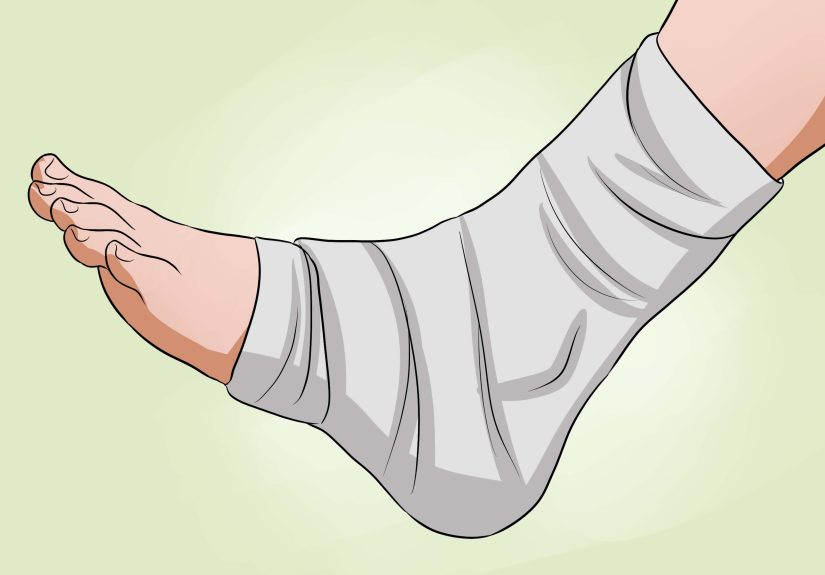
A compression wrap or elastic bandage can help control swelling and provide a little support. Wrap the ankle snugly, but not tightly enough to leave your toes cold, numb, or discolored. If that happens, the wrap is too tight and needs adjusting.
Compression works best when paired with rest, ice, and elevation. You can also use an ankle sleeve or brace if that feels easier and more secure than wrapping. The goal is gentle support, not medieval armor.
6. Elevate the Ankle Above Heart Level
When your ankle is swollen, gravity is not your enemy if you use it wisely. Prop your foot on pillows so the ankle sits above the level of your heart. This can help fluid drain away from the area and may reduce throbbing and puffiness.
Try this while resting, reading, scrolling, pretending to answer emails, or sleeping if it is comfortable. If your ankle feels dramatically better after elevation, that is usually a sign swelling is playing a big role in your discomfort.
7. Consider Over-the-Counter Pain Relief
If your pain is mild to moderate, an over-the-counter pain reliever may help. Many people use acetaminophen for pain or an NSAID such as ibuprofen or naproxen for pain and swelling. Always follow the label directions, and do not take these medications if your doctor has told you to avoid them because of stomach ulcers, kidney disease, bleeding risk, or other medical reasons.
Topical anti-inflammatory gels may also help some people. If you take prescription medications or have chronic medical conditions, it is wise to check with a healthcare professional before adding anything new.
8. Support the Joint With a Brace if It Feels Unsteady
A sore ankle that feels weak, wobbly, or unstable often benefits from extra support. A lace-up brace, semi-rigid brace, or stirrup-style brace can make walking more comfortable and may help protect healing ligaments. This is especially helpful after a mild or moderate sprain.
Think of a brace as a helpful bodyguard, not a permanent roommate. It can give the ankle support while you recover, but you still need to rebuild strength and balance over time.
9. Ease Back Into Weight-Bearing Gradually
Once the worst pain and swelling begin to improve, start putting weight on the ankle as tolerated. That phrase sounds technical, but it really means: listen to the joint and do not be a legend in your own mind. Start with short periods of standing or walking. If pain spikes, back off and rest.
Some people need crutches for a day or two. Others are fine with slower walking and a brace. The trick is progress without punishment. A little discomfort can happen, but sharp pain is your ankle saying, “Absolutely not.”
10. Start Gentle Range-of-Motion Exercises
Once you are past the initial flare-up, gentle movement can help reduce stiffness. Many experts recommend beginning simple range-of-motion work as symptoms allow. Good starter moves include:
- Pointing and flexing your foot
- Making slow ankle circles
- Tracing the alphabet in the air with your big toe
These movements should be controlled and mostly pain-free. You are not trying to win an award for dramatic stretching. You are simply reminding the ankle how to move normally again.
11. Rebuild Strength and Balance
This is the step people love to skip, and it is exactly why sore ankles often make a comeback tour. Once the early pain settles, strengthening and balance work are key. A weak ankle is more likely to roll again.
Helpful exercises may include:
- Calf raises
- Resistance-band exercises
- Standing on one foot while holding onto a counter
- Heel and toe raises
These moves train the muscles, tendons, and stabilizers around the ankle. If you have repeated sprains or ongoing instability, physical therapy can be a game changer.
12. Wear Better Shoes While You Recover
If your ankle hurts, now is not the time for floppy sandals, dead sneakers, or “fashion first, biomechanics never” footwear. Choose supportive shoes with cushioning, structure, and a stable sole. The right shoe can reduce strain and make daily movement more comfortable.
If your pain comes from overuse or standing all day, swapping your shoes may help almost as much as icing. Sometimes the ankle is not dramatic. It is just exhausted and asking for better equipment.
13. Return to Activity Slowly and Know When to Call a Professional
As your ankle improves, resist the urge to go from “rest day” to “weekend warrior.” Return to exercise gradually. Start with walking, then low-impact activity, then more demanding movement if the ankle remains stable and pain-free. If you play sports, consider using a brace or taping during your return phase.
See a healthcare provider if your ankle is still quite painful after a few days, keeps swelling, feels unstable, or does not improve the way you expected. Persistent ankle pain can signal a more serious sprain, tendon injury, fracture, or chronic instability. Getting expert care early can save you a lot of future frustration.
Common Mistakes That Can Make a Sore Ankle Worse
Even with good intentions, people often sabotage their own recovery. Here are a few classic mistakes:
- Returning to sports too soon
- Using heat immediately after an injury
- Wrapping the ankle too tightly
- Ignoring instability or repeated “giving way”
- Skipping rehab once the pain starts to fade
- Wearing unsupportive shoes while the ankle is still healing
If your ankle seems mostly better but still feels weak, that is your clue to keep working on balance and strengthening, not your cue to attempt heroic jump squats in the driveway.
When a Sore Ankle Might Be More Than a Mild Sprain
Mild ankle soreness often improves with home treatment. But there are times when a sore ankle points to something more serious, such as:
- A fracture or bone bruise
- A high ankle sprain
- A torn tendon
- Chronic ankle instability
- Arthritis or gout
- An infection or inflammatory condition
If your symptoms are intense, unusual, or stubborn, do not keep diagnosing yourself with optimism. A proper evaluation can tell you whether you need imaging, bracing, physical therapy, or another treatment plan.
Real-Life Experiences With a Sore Ankle
One of the tricky things about ankle pain is how different it feels from person to person. A runner might describe it as a nagging ache that shows up halfway through every jog, then vanishes just enough to create false confidence. A parent may notice it after a long day of standing, when the ankle feels stiff and puffy by evening but loosens up after rest. An athlete may hear a pop, see swelling almost immediately, and know within seconds that this is not just “walking it off” territory.
Many people say the first 24 hours are the most confusing. At first, the ankle may feel sore but manageable. Then the swelling arrives, the bruise begins its artistic performance, and suddenly even a trip to the kitchen feels like a dramatic expedition. In these situations, the people who tend to recover more smoothly are often the ones who take the injury seriously right away. They rest early, ice consistently, keep the ankle elevated, and avoid the classic mistake of testing it every 20 minutes just to “see if it’s better yet.”
There is also the experience of the ankle that seems fine until the next morning. Plenty of people twist an ankle, finish the day, and only realize the full damage after sitting overnight. They get out of bed, take one step, and the ankle responds like it has been personally offended. That delayed stiffness can be surprisingly intense. Gentle movement, support, and a slower start to the day often help more than trying to force normal walking immediately.
Another common story is the repeat sprain. Someone hurts an ankle in high school, again during a pickup basketball game years later, and then notices the same ankle feels less trustworthy forever after. It rolls more easily on uneven ground. It feels weak in certain shoes. It becomes the diva of the lower body, always threatening a comeback injury. In many of these cases, the issue is not just the original sprain. It is the lack of full rehab afterward. Once people start working on balance, calf strength, and ankle stability, they often realize how much more secure the joint can feel.
Then there is the overuse version: no dramatic twist, no exciting sports moment, just a sore ankle that develops after travel, long shifts, intense step goals, or a sudden burst of “healthy new me” activity. This kind of ankle pain can feel sneaky because there is no obvious injury to blame. But supportive footwear, rest, ice, and cutting back on aggravating activity for several days often make a big difference. Sometimes the ankle is not injured so much as overworked and underappreciated.
The most reassuring experience people describe is the turning point: swelling goes down, walking becomes easier, and the ankle stops feeling like a fragile glass ornament. That is usually when confidence starts to return. Still, the smartest recoveries happen when people keep going with strengthening after the pain fades. A calm ankle is good. A calm, strong, stable ankle is better.
Conclusion
If you want to soothe a sore ankle, start with the basics done well: rest, ice, compression, elevation, support, and patience. Then move into gentle motion, strengthening, and a gradual return to activity. It is not flashy, but it works. The biggest mistake is rushing. Ankles are surprisingly good at remembering when you disrespect the healing process.
Treat mild soreness early, watch for red flags, and get medical help if the pain is severe, persistent, or paired with instability. With the right care, many sore ankles improve well. And next time your body suggests a graceful landing is optional, maybe let your ankle have a vote.





 Close
Close