
Table of Contents >> Show >> Hide
- Step 1: Choose the Right Crayfish Species First
- Step 2: Give Your Crayfish a Tank That Matches Its Size and Temperament
- Step 3: Cycle the Aquarium Before the Crayfish Moves In
- Step 4: Keep Water Quality Stable, Not “Basically Fine”
- Step 5: Build a Crayfish-Friendly Tank Layout With Hiding Places
- Step 6: Use a Tight Lid Because Crayfish Are Escape Artists
- Step 7: Feed a Varied Omnivore Diet, Not Just Random Leftovers
- Step 8: Be Extremely Careful With Tank Mates
- Step 9: Respect the Molting Process and Do Not Panic
- Step 10: Keep Up With Cleaning and Maintenance
- Step 11: Watch for Health Issues, Use Safe Products, and Never Release a Pet Crayfish
- Common Mistakes to Avoid
- Bonus: Real-Life Crayfish Care Experiences New Owners Relate To
- Conclusion
- SEO Tags
Crayfish are like tiny underwater bulldozers with attitude. One minute they are hiding under a rock like shy little hermits, and the next they are dragging a plant across the tank like they just signed a home renovation contract. If you want a pet that is fun to watch, full of personality, and surprisingly easy to keep once the setup is right, crayfish deserve a serious look.
That said, “easy” does not mean “toss one in a bowl and hope for the best.” Good crayfish care comes down to stable water, enough space, a safe tank layout, and understanding one important truth: this cute crustacean is still an opportunistic little predator wearing armor. In other words, proper crayfish care is part aquarium science, part interior design, and part crime prevention.
This guide breaks everything down into 11 practical steps so you can keep your pet crayfish healthy, active, and gloriously weird.
Step 1: Choose the Right Crayfish Species First
Before you buy anything, decide what kind of crayfish you want to keep. This matters more than most beginners realize. Some species stay relatively small, while others become tank bosses with claws and confidence to match. Dwarf crayfish, such as Mexican dwarf orange crayfish, are easier to fit into smaller aquariums. Larger species, like electric blue crayfish and other common North American aquarium crayfish, need more room and often more caution.
Also check your state and local rules before bringing one home. Some crayfish species are restricted or discouraged in certain places because of invasive-species concerns. That may sound like boring paperwork, but it is much less boring than discovering your “cute pet” is not legal to keep.
Step 2: Give Your Crayfish a Tank That Matches Its Size and Temperament
Crayfish do not need a mansion, but they absolutely do need real space. A dwarf crayfish can do well in a small but properly filtered aquarium, while larger crayfish should be given a noticeably bigger tank. As a general rule, bigger is better because larger tanks are more stable, easier to maintain, and less likely to turn into a cranky crustacean boxing ring.
If you are keeping a standard-sized crayfish, do not think of a tiny desktop tank as “cozy.” Think of it as “a bad idea with claws.” A roomy tank helps reduce territorial stress, improves water quality, and gives your crayfish enough floor space to explore.
Step 3: Cycle the Aquarium Before the Crayfish Moves In
This is the step most people want to skip and the step that causes the most problems when they do. Your tank should be cycled before your crayfish arrives. Cycling allows beneficial bacteria to establish themselves in the filter and aquarium so toxic waste can be broken down more safely.
In practical terms, that means you should not add a crayfish to a fresh tank that was set up yesterday and still smells like optimism and wet gravel. Test the water and wait until ammonia and nitrite are at zero, with nitrate staying low and manageable. Stable water is not a luxury for crayfish. It is basic survival.
Step 4: Keep Water Quality Stable, Not “Basically Fine”
Crayfish are hardy compared with some aquarium pets, but they still do best in clean, stable freshwater. Sudden swings in temperature or water chemistry are stressful, especially during molting. For many commonly kept pet crayfish, a stable temperature somewhere in the upper 60s to upper 70s Fahrenheit works well, though the exact ideal range depends on the species.
Aim for near-neutral water, avoid extremes, and make sure the water has enough mineral content to support shell growth. Crayfish use calcium to build and harden their exoskeleton, so water that is too soft can make life harder for them. Always treat tap water with a proper water conditioner before adding it to the tank. Chlorine and chloramine are not “character building.” They are just harmful.
Get into the habit of testing the water regularly. Clear water can still be dangerous. If ammonia or nitrite appears, or nitrate starts creeping up, your crayfish may look okay right until it suddenly does not.
Step 5: Build a Crayfish-Friendly Tank Layout With Hiding Places
If you remember only one decorating rule, remember this: crayfish need places to hide. Caves, rock piles, driftwood, ceramic shelters, and even aquarium-safe PVC tubes can all work. Hiding spaces reduce stress and become even more important during molting, when crayfish are soft, vulnerable, and in absolutely no mood for visitors.
Use sand or smooth gravel as substrate, and avoid anything sharp that could injure soft tissue or delicate legs. Secure heavy decor so it cannot collapse if your crayfish decides to dig underneath it. And yes, your crayfish probably will redecorate. That perfect aquascape you lovingly arranged? Your crayfish sees it as a suggestion.
Step 6: Use a Tight Lid Because Crayfish Are Escape Artists
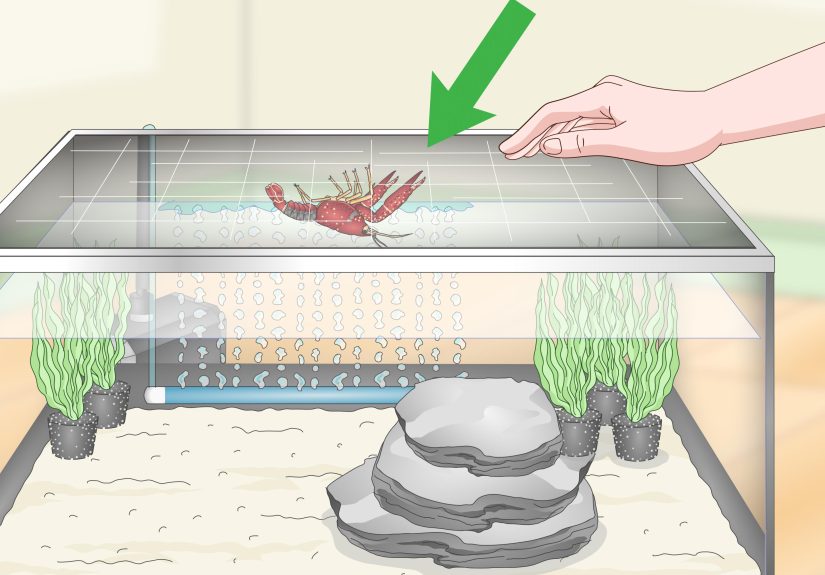
Crayfish climb. They climb plants, filter tubes, decor, airline tubing, and apparently the ladder of bad decisions. If your tank has an opening, assume your crayfish has already noticed it.
Use a snug, secure lid and cover any obvious gaps. This is especially important in tanks with tall decor near the surface. Owners are often shocked to learn how determined a crayfish can be once it decides the living room floor might be part of its territory. It is not. But it will still try.
Step 7: Feed a Varied Omnivore Diet, Not Just Random Leftovers
Crayfish are omnivores and scavengers, which is great news because they eat a wide variety of foods. It is less great news if you interpret that as permission to feed them like a tiny underwater garbage disposal.
A good crayfish diet can include:
- Sinking crustacean pellets or high-quality bottom-feeder pellets
- Algae wafers
- Frozen foods like bloodworms or brine shrimp
- Occasional protein treats such as krill or shrimp
- Blanched vegetables like zucchini, peas, spinach, or green beans
Feed small portions once a day or every other day, depending on the crayfish’s size and age. Juveniles usually eat more often than adults. Remove uneaten food before it decays and wrecks your water quality. Variety matters because it helps support growth, activity, and shell health.
Step 8: Be Extremely Careful With Tank Mates
This is where a lot of “but the pet store said it would be fine” stories begin.
Many crayfish are best kept alone. They can be territorial, opportunistic, and surprisingly effective hunters when a sleepy fish drifts too close. Bottom-dwellers are especially risky companions because they use the same space. Shrimp are often treated like snacks. Slow fish, long-finned fish, and resting fish can all end badly.
Dwarf species may be more manageable in some community setups, but even then, success is never guaranteed. If you want the least stressful route, keep your crayfish in a species-only tank. That way, nobody gets pinched, chased, or turned into an accidental appetizer.
Step 9: Respect the Molting Process and Do Not Panic
All crayfish molt. They shed their exoskeleton so they can grow. During and after a molt, they are vulnerable, soft-bodied, and easily stressed. This is the moment when many first-time owners think their crayfish is sick, dying, or mysteriously duplicating itself.
Here is what to do:
- Leave the crayfish alone
- Do not handle it
- Keep the water stable
- Make sure it has places to hide
- Leave the shed shell in the tank for a while because the crayfish may eat it to reclaim minerals
If your crayfish disappears for a bit after molting, that is usually normal. It is not being dramatic. It is trying not to get injured while its new shell hardens.
Step 10: Keep Up With Cleaning and Maintenance
Crayfish are messy little roommates. They dig, shred food, move substrate, and produce waste. A filter is essential, but filtration is not magic. You still need to do regular maintenance.
Plan on checking the tank daily, testing the water weekly, and doing partial water changes on a regular schedule. Small, routine water changes are much better than waiting until the tank looks suspicious and then doing a giant emergency cleanup. Vacuum up debris, remove uneaten food, and rinse or replace filter media according to the product instructions without wiping out all the beneficial bacteria at once.
Consistency is what keeps crayfish tanks healthy. Neglect is what turns them into a cloudy science project.
Step 11: Watch for Health Issues, Use Safe Products, and Never Release a Pet Crayfish
Healthy crayfish are active, alert, and interested in food. Red flags include prolonged lethargy, repeated failed molts, obvious injuries, missing limbs that do not improve over time, sudden appetite loss, or ongoing trouble staying upright. Quarantining new crayfish before adding them to an established setup is a smart move because it reduces the chance of bringing in disease or parasites.
Be careful with medications. Copper-based products can be toxic to invertebrates, including crayfish. If you are treating a shared system, always read labels and verify the product is safe for crustaceans.
Finally, never release a pet crayfish into the wild, even if you can no longer keep it. Released aquarium animals can spread disease, harm native species, and create invasive-species problems. Rehome it through a local aquarium group, aquatic rescue, or another experienced keeper instead.
Common Mistakes to Avoid
Even a solid crayfish setup can go sideways if you make a few classic errors. The biggest ones are using an uncycled tank, overcrowding the aquarium, keeping the wrong tank mates, skipping water testing, and assuming all crayfish species have identical needs. Another common mistake is confusing “hardy” with “indestructible.” Crayfish are tough, but poor water quality still catches up with them.
One more mistake deserves honorable mention: underestimating boredom. Crayfish are curious animals. Give them hides, things to climb on, and a layout with some texture and variety. A bare tank may be easy to clean, but it is not especially enriching.
Bonus: Real-Life Crayfish Care Experiences New Owners Relate To
Ask enough crayfish keepers about their first month with one, and you start hearing the same stories. The first is usually some version of, “I thought he was dead, but he had just molted.” That is a rite of passage. New owners often find what looks exactly like a full crayfish body in the tank, complete with claws and legs, and assume the worst. Then the actual crayfish appears later from a cave looking slightly larger and totally unbothered.
Another common experience is realizing your crayfish has a much bigger personality than you expected. People buy one thinking they are getting a quiet bottom-dweller, but what they actually bring home is a tiny armored landlord who inspects every corner of the tank, claims a favorite cave, and acts personally offended when the furniture gets moved during cleaning.
Many owners also discover that crayfish are not subtle eaters. They do not “gracefully nibble.” They grab food with theatrical commitment, drag it away like they won an argument, and often leave a little mess behind. This is one reason feeding dishes, spot feeding, or quick cleanup habits become so helpful in the long run.
Then there is the plant issue. A beginner might add lush greenery hoping for a beautiful aquascape, only to find stems uprooted, leaves clipped, and decor shifted overnight. Crayfish are not always trying to destroy your tank. Sometimes they are just exploring, climbing, digging, or deciding that your carefully placed moss ball belongs somewhere else now. But the effect can be the same. Experienced keepers learn to choose sturdier plants, anchor decor well, and accept that the crayfish may have its own design vision.
One surprisingly enjoyable experience is how quickly a crayfish can learn the feeding routine. Many begin to recognize movement near the tank and come forward when they expect food. That interactive behavior makes them feel more like a pet and less like a living ornament. Some owners even describe their crayfish as oddly charismatic, which sounds ridiculous until you have watched one stomp around its tank like it is in charge of rent.
There is also a lesson almost every keeper learns once: if the lid is not secure, the crayfish will test it. Sometimes that means climbing airline tubing. Sometimes it means standing on decor like a fuzzy little mountain climber with claws. Either way, people tend to become believers in tight-fitting lids very quickly.
In the end, the most common experience is this: once the tank is stable and the basics are right, crayfish are rewarding, entertaining pets. They are odd, clever, a little destructive, and a lot more fun than most people expect. Caring for them becomes easier when you stop trying to make them behave like fish and start appreciating them for what they are: miniature freshwater crustaceans with strong opinions and excellent comic timing.
Conclusion
If you want to take care of crayfish the right way, focus on the fundamentals: choose the right species, give it enough room, cycle the tank, keep the water stable, provide plenty of hiding places, feed a varied diet, and treat molting like the fragile process it is. Add a secure lid and a healthy respect for their territorial side, and you are already ahead of many first-time keepers.
Crayfish care is not complicated once you understand the animal in front of you. They are not decorative rocks with claws. They are active, curious, sometimes dramatic pets that thrive when their environment is clean, safe, and built for their natural behavior. Get those basics right, and your crayfish can become one of the most entertaining creatures in your home aquarium.







 Close
Close