
Table of Contents >> Show >> Hide
- Why Drink Measurements Matter More Than People Think
- The Most Common Drink Measurements Explained
- Essential Measurement Conversions for Drink Recipes
- Bar Tools That Make Measuring Easier
- How Ratios Work in Drink Building
- Common Recipe Terms That Confuse Beginners
- How Ice Changes Measurements
- Biggest Measurement Mistakes to Avoid
- Examples of Drink Measurements in Real Recipes
- How to Scale Drink Recipes Up or Down
- How to Train Your Palate Alongside Your Measuring
- The Best Rule of All: Measure, Then Adjust
- Experience and Real-Life Lessons From Learning Drink Measurements
- Conclusion
Ever stared at a drink recipe and thought, “Wait… how much is a dash, why is a jigger not a person, and who decided ounces should run my kitchen?” You are not alone. Understanding drink measurements is the secret handshake of making better beverages at home. Whether you are building a bright citrus spritz, a creamy dessert drink without alcohol, or a fruit-packed party punch, the difference between “pretty good” and “wow, make me another” often comes down to measurement.
This ultimate guide breaks down the most common drink measurements in plain English, with zero fluff and just enough personality to keep your measuring spoons from falling asleep. You will learn what terms like ounce, part, dash, and splash actually mean, how to use common bar tools, how to scale recipes up or down, and how to avoid the classic mistakes that turn a refreshing drink into a glass of confusion.
If you have ever wanted to feel confident reading a recipe, adjusting sweetness, balancing citrus, or mixing drinks without treating your countertop like a chemistry disaster scene, this guide is for you.
Why Drink Measurements Matter More Than People Think
Drink measurements are not just about being neat. They control flavor, texture, balance, consistency, and even appearance. A little too much citrus can make a drink sharply sour. Too much syrup can turn it into liquid candy. Too much mixer can flatten the whole thing until it tastes like flavored regret.
Precise measuring matters because beverages are built on ratios. A balanced drink usually combines a strong base flavor, an acidic element, a sweetener, and sometimes a bubbly or creamy component. When you measure accurately, you can repeat what worked, fix what did not, and make changes on purpose instead of by accident.
That is the beauty of understanding drink measurements: once you know the language, every recipe becomes easier to read and much easier to improve.
The Most Common Drink Measurements Explained
Ounce
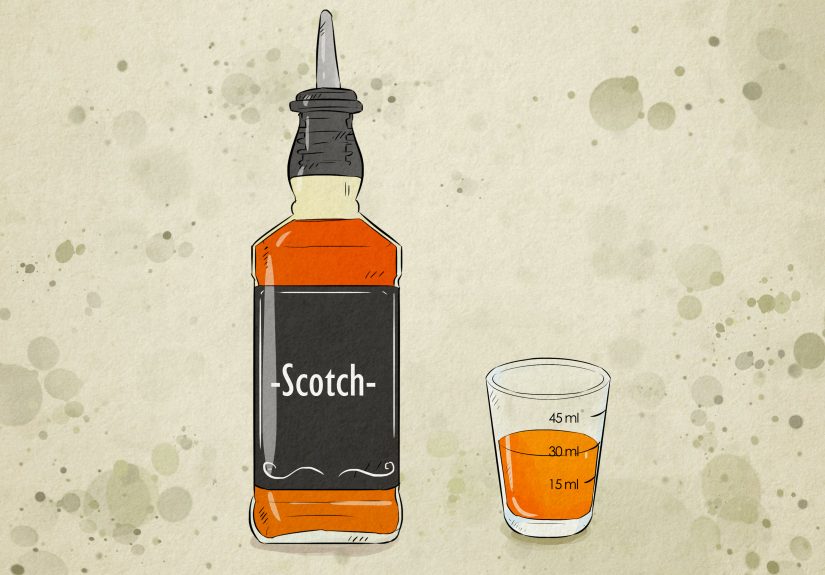
The ounce is one of the most common units in drink recipes in the United States. In beverage recipes, this usually means a fluid ounce, which measures volume, not weight. One fluid ounce is about 30 milliliters, more precisely 29.57 milliliters.
Common examples:
- 1 oz fresh lime juice
- 2 oz orange juice
- 1.5 oz cream of coconut
If a recipe gives ounces, a jigger or liquid measuring tool is your best friend.
Milliliter (mL)
Many modern recipes, especially professional or internationally shared ones, use milliliters. This system is precise and easy to scale. Here are the rough conversions worth remembering:
- 15 mL = 1/2 oz
- 30 mL = 1 oz
- 45 mL = 1.5 oz
- 60 mL = 2 oz
If you want your drinks to feel consistent and café-level polished, learning basic mL conversions is a smart move.
Part
A part is a flexible measurement based on ratio, not a fixed volume. That means one part can be whatever amount you choose, as long as you keep it consistent throughout the recipe.
For example, if a mocktail recipe says:
- 2 parts pineapple juice
- 1 part lime juice
- 1 part sparkling water
You could make one part equal to 1 ounce, 1/2 cup, or even a whole pitcher scoop. The recipe still works because the ratio stays the same. “Parts” are ideal for batching drinks for a crowd.
Dash
A dash is small, but not imaginary. It is generally understood as a tiny amount, often around 1/8 teaspoon, though exact volume can vary depending on the ingredient and bottle. A dash is commonly used for bitters-style nonalcoholic flavorings, saline solution, orange blossom water, or strong spices.
Think of a dash as a seasoning move. It should add complexity, not start a takeover.
Splash
A splash is less precise than a dash and usually means a quick pour of a small amount, often somewhere around 1/4 ounce to 1/2 ounce. In practice, a splash is used when an ingredient supports the drink rather than defines it, such as soda water, juice, or plant milk.
Translation: enough to contribute, not enough to become the headline.
Teaspoon and Tablespoon
Kitchen measurements show up in drink recipes more often than people expect, especially for syrups, extracts, sweeteners, and spices.
- 1 teaspoon = about 5 mL
- 1 tablespoon = 3 teaspoons = about 15 mL = 1/2 oz
This is handy when you do not have bar tools nearby. A tablespoon can stand in for 1/2 ounce, which is one of the most common small drink measurements.
Essential Measurement Conversions for Drink Recipes
Here are the conversions that save the day when a recipe and your measuring tools are clearly not on speaking terms:
- 1 oz = 2 tablespoons
- 1.5 oz = 3 tablespoons
- 2 oz = 1/4 cup
- 1/2 oz = 1 tablespoon
- 3/4 oz = 1 tablespoon + 1 1/2 teaspoons
- 1 cup = 8 oz
Memorize a few of these and suddenly you look like the calm, organized person every recipe believes you already are.
Bar Tools That Make Measuring Easier
Jigger
A jigger is the classic bar measuring tool. Most are double-sided and include two common measurements, such as 1 oz and 2 oz, or 3/4 oz and 1.5 oz. Some also have interior lines for partial fills.
If you want precision without overthinking, get a jigger. It is fast, simple, and much neater than free-pouring into a spoon while hoping for the best.
Measuring Spoons
These are perfect for syrups, juices, extracts, and concentrated flavorings. They are especially useful for small-volume ingredients that need accuracy, such as rose water or vanilla.
Liquid Measuring Cup
For batching mocktails, punches, and party drinks, a liquid measuring cup is the MVP. It handles larger quantities better than a jigger and keeps scaling straightforward.
Digital Scale
Most home drink recipes use volume, but a scale can help with sugar, fruit purée, and repeatable syrup recipes. It is more common in recipe development than casual mixing, but it is excellent for consistency.
How Ratios Work in Drink Building
Once you understand ratios, you stop memorizing recipes and start understanding them. Many drinks follow a structure: something bright, something sweet, something strong or flavorful, and sometimes something sparkling or creamy.
For example, a balanced zero-proof sour-style drink might look like this:
- 2 oz brewed tea or nonalcoholic spirit alternative
- 3/4 oz fresh lemon juice
- 3/4 oz simple syrup
That ratio gives you backbone, acidity, and sweetness. Want it tarter? Reduce the syrup slightly. Want it softer? Increase the sweetener or add a touch of water. Ratios give you control.
Another example is a spritz-style drink:
- 2 parts fruit juice or bitter aperitif alternative
- 3 parts sparkling water
- 1 part citrus
You can swap ingredients while preserving balance. That is where drink measurements become less “rules” and more “superpower.”
Common Recipe Terms That Confuse Beginners
Build
This means adding ingredients directly into the serving glass. No shaker. No drama. Just pour, stir if needed, and serve.
Shake
Shaking mixes ingredients quickly and chills them well. It is often used for juices, syrups, egg-free foaming ingredients, or dairy alternatives that need full integration.
Stir
Stirring is gentler and works well for clear drinks or recipes where you want smooth blending without extra air or froth.
Top With
This means adding a final ingredient, usually sparkling water, tonic, soda, or foam, after the main mix is done. The amount may not be exact because it depends on glass size, ice volume, and personal taste.
How Ice Changes Measurements
Ice is the sneaky co-author of every cold drink. It chills, dilutes, and changes how concentrated a recipe tastes. More ice does not necessarily mean a weaker drink right away. In fact, a full glass of ice often keeps a drink colder and slows dilution compared with a half-empty ice situation.
When measuring ingredients, always measure the liquid first. Do not guess based on where the glass looks “full enough.” Ice takes up volume, and your eyes are charming but unreliable.
Biggest Measurement Mistakes to Avoid
Free-Pouring Too Early
Experienced bartenders can sometimes free-pour with accuracy. Most people at home cannot. And that is fine. Measuring is not cheating. It is how good recipes stay good.
Confusing Ounces by Weight and Fluid Ounces
In drink recipes, ounces almost always refer to fluid ounces. If you use a food scale expecting the same result, things can get weird quickly.
Ignoring Fresh Juice Strength
Lemon and lime juice vary in intensity. One batch can taste bright and floral, another sharply acidic. Measurements matter, but tasting still matters too.
Using “Splash” Like It Means “Half the Carton”
A splash is small. If your splash makes the drink a different color, it was not a splash. It was a plot twist.
Examples of Drink Measurements in Real Recipes
Citrus Mint Cooler
- 2 oz orange juice
- 3/4 oz lime juice
- 1/2 oz simple syrup
- 2 oz sparkling water
- 5 mint leaves
This recipe shows how sweet, sour, and bubbly elements balance when measured correctly.
Creamy Espresso Mocktail
- 2 oz chilled espresso or strong cold brew
- 1 oz milk or oat milk
- 3/4 oz vanilla syrup
- 1 dash cocoa powder
Small measurement differences matter here. Too much syrup and it becomes dessert with trust issues.
Berry Spritz Pitcher
- 2 cups berry juice blend
- 1 cup lemon juice
- 1 cup simple syrup
- 4 cups sparkling water
This is a great example of scaling a ratio from single-serve ounces to crowd-friendly cups.
How to Scale Drink Recipes Up or Down
Scaling is easier than it looks. Start with the ratio, then multiply every ingredient equally. If a single drink calls for:
- 2 oz juice
- 1 oz citrus
- 1 oz syrup
For four servings, multiply each by four:
- 8 oz juice
- 4 oz citrus
- 4 oz syrup
Always add fizzy ingredients last when batching. Carbonation disappears faster than your guests when cleanup starts.
How to Train Your Palate Alongside Your Measuring
The goal is not just following measurements blindly. It is learning what they do. Taste tiny samples before adding ice or bubbles. Notice how 1/4 ounce more syrup softens acidity. Notice how an extra 1/2 ounce of citrus sharpens the finish. Over time, measurements become meaningful rather than mechanical.
That is when recipe reading gets fun. You stop seeing numbers and start seeing flavor architecture.
The Best Rule of All: Measure, Then Adjust
Start with precise drink measurements. Then taste. Then make small changes. That order matters. Measuring first gives you a reliable baseline. Adjusting second gives you a drink that fits your ingredients, your glassware, and your taste.
In other words, measurements are the map, not the prison. They help you get where you want to go without accidentally driving into Lake Lemon Juice.
Experience and Real-Life Lessons From Learning Drink Measurements
When people first start making drinks at home, they usually think the hard part is the fancy garnish, the shaker technique, or finding the perfect glass. It feels glamorous to imagine that pros are guided by instinct alone, casually pouring perfect amounts while maintaining eye contact and somehow never spilling sticky syrup on the counter. Then reality arrives wearing sweatpants. The real challenge is usually measurement.
A lot of beginners learn this the same way: they make one drink that tastes amazing, try to recreate it the next day, and accidentally invent a completely different beverage. Suddenly the citrus is too aggressive, the sweetness is louder than a karaoke machine, or the whole thing tastes watered down before the first sip is finished. That moment is frustrating, but it is also useful. It teaches a lesson that every good drink maker eventually learns: flavor is emotional, but consistency is mathematical.
There is also a funny psychological shift that happens once people start measuring accurately. At first, using a jigger or measuring spoon can feel overly serious, almost like you are turning a casual kitchen moment into homework. But after a few successful drinks, the opposite becomes true. Measuring creates freedom. It removes guesswork. It makes experimenting less risky because you know where you started. If a recipe tastes too tart, you can reduce the citrus by a quarter ounce next time instead of making vague promises to yourself like, “I guess I will use less lemon, somehow.”
Many home mixers also discover that small differences matter more than expected. An extra half ounce sounds tiny until it lands in a small glass. Then it becomes the difference between balanced and baffling. This is especially true with concentrated ingredients such as ginger syrup, grenadine alternatives, cold brew, citrus juice, and floral waters. Measuring helps people respect strong ingredients rather than letting them hijack the drink.
Another common experience is the surprise of learning how much ice changes everything. Many people blame the recipe when the real issue is dilution. They pour carefully measured ingredients into a warm glass with a few lonely cubes, wonder why the drink melts into sadness, and assume the formula was wrong. Later, with a full glass of ice and the same measurements, the recipe suddenly works. It is one of those small discoveries that makes people feel smarter in the best possible way.
Perhaps the most rewarding part of learning drink measurements is confidence. Once people understand ounces, parts, dashes, and basic ratios, recipes stop looking intimidating. Instead of seeing a coded message from a secret beverage society, they see a system they can use. That confidence usually spills into creativity. Someone starts with a citrus cooler, then swaps orange for grapefruit, then changes the syrup, then adds sparkling water, and before long they have created a signature drink. Not by guessing wildly, but by understanding the structure behind the flavor.
That is why measuring matters so much in the real world. It is not about perfection. It is about making better choices, wasting fewer ingredients, and building drinks you can actually repeat. And honestly, it is a lot more fun to say, “I nailed the ratio,” than to say, “I have no idea what happened, but it is purple now.”
Conclusion
Understanding drink measurements is one of the fastest ways to improve any homemade beverage. Once you know how ounces, tablespoons, milliliters, parts, dashes, and splashes work, recipes become easier to read, easier to scale, and easier to customize. More importantly, you stop relying on luck and start building drinks with purpose.
Whether you are mixing a quick mocktail for yourself or a full pitcher for friends, accurate measurement helps you create better balance, better consistency, and better flavor. Start with the basic conversions, use the right tools, respect ratios, and taste as you go. With a little practice, you will understand exactly what each measurement brings to the glass.






 Close
Close