
Table of Contents >> Show >> Hide
- Can You Really Clean a Washing Machine With Lemon and Toothpaste?
- Why Washing Machines Get Dirty in the First Place
- What You Will Need
- How to Use a Lemon and Toothpaste to Clean a Washing Machine Safely
- Step 1: Empty the Machine and Inspect It
- Step 2: Make a Simple Lemon Cleaning Solution
- Step 3: Clean the Rubber Gasket Carefully
- Step 4: Tackle the Detergent Drawer
- Step 5: Use Toothpaste Only for Small Stains, Scuffs, or Exterior Buildup
- Step 6: Wipe the Drum and Door Glass
- Step 7: Run a Proper Cleaning Cycle
- Step 8: Let Everything Dry
- Where This Method Works Best
- Mistakes to Avoid
- Front-Load vs. Top-Load Washer Tips
- How Often Should You Clean Your Washing Machine?
- Better Alternatives If Your Washer Really Smells Bad
- Final Thoughts
- Real-World Experiences With the Lemon-and-Toothpaste Method
Your washing machine is supposed to make things smell clean, not like a damp gym sock that gave up on life. But between leftover detergent, fabric softener residue, lint, moisture, and the occasional forgotten pocket surprise, even a hardworking washer can get funky. That is why so many people go hunting for easy DIY fixes and stumble onto one very curious idea: cleaning a washing machine with lemon and toothpaste.
It sounds like the start of a strange science fair project, but there is a practical way to use both ingredients. The trick is knowing where they help and where they absolutely do not belong. Lemon can be useful as part of a gentle wipe-down because its natural acidity helps loosen light grime and mineral film. Toothpaste, especially plain white non-gel toothpaste, can work as a mild abrasive for small scuffs and stubborn residue on certain exterior surfaces. But neither one should replace your washer’s proper cleaning cycle, and neither should be dumped into the machine like some miracle potion from the internet.
In this guide, you will learn how to use a lemon and toothpaste to clean a washing machine safely, what mistakes to avoid, when this method makes sense, and when it is smarter to call in the real pros: your washer’s self-clean cycle and the owner’s manual.
Can You Really Clean a Washing Machine With Lemon and Toothpaste?
Yes, but only in a limited, commonsense way. If your goal is to freshen up the door rim, wipe detergent residue from the drawer, clean the glass, or buff minor scuffs on the outside of the machine, lemon and toothpaste can help. If your goal is to deep-clean the drum, kill odor at the source, or deal with heavy mold buildup, they are not enough on their own.
That distinction matters. A washing machine has interior parts, rubber seals, hoses, filters, and hidden corners that do not always respond well to random DIY mixtures. So think of this method as a surface-detailing hack, not a full spa retreat for your washer. Lemon is the polite guest that freshens the room. Toothpaste is the friend who can polish a stubborn spot. Neither one is the building manager.
Why Washing Machines Get Dirty in the First Place
A washer may look clean because it fills with water all day, but it is actually a prime hangout spot for buildup. Every cycle can leave behind traces of detergent, dirt, body oils, pet hair, hard-water minerals, and fabric softener. In front-load models, the door gasket can trap moisture and debris. In both top-load and front-load machines, the detergent drawer and tub can collect film over time.
Then comes the classic problem: moisture that does not fully dry out. Leave the door closed after a cycle, and that damp environment becomes the perfect setting for musty odors. Add too much detergent, overload the machine, or skip routine maintenance, and suddenly your “clean” laundry starts coming out smelling suspiciously like yesterday’s rain-soaked towel.
What You Will Need
- 1 fresh lemon or 2 tablespoons bottled lemon juice
- Plain white non-gel toothpaste
- 2 to 3 microfiber cloths
- A soft sponge
- An old soft-bristled toothbrush
- A small bowl of warm water
- A dry towel
- Optional: a washer cleaner tablet or the cleaner recommended in your owner’s manual
Keep the ingredient list simple. This is not the time to add dish soap, glitter, essential oils, mystery powder from the back of the pantry, or “whatever else might help.” Your washing machine deserves better than a freestyle chemistry experiment.
How to Use a Lemon and Toothpaste to Clean a Washing Machine Safely
Step 1: Empty the Machine and Inspect It
Make sure the washer is empty. Open the lid or door, remove any clothing, and take a quick look around the drum, gasket, detergent drawer, and exterior. If you see coins, lint clumps, hair ties, or that one missing sock from three weeks ago, remove them first.
This is also the moment to check what kind of cleaning you actually need. If the washer smells mildly stale and looks grimy around the edges, this method may help. If you see heavy black mold, standing water, damaged rubber, or leaks, skip the cute hack and move straight to a more thorough maintenance routine.
Step 2: Make a Simple Lemon Cleaning Solution
Squeeze one lemon into a bowl and mix the juice with about 2 cups of warm water. If you are using bottled lemon juice, 2 tablespoons is enough. Dip a microfiber cloth into the mixture and wring it out well so it is damp, not dripping.
Use this diluted lemon solution to wipe areas that can collect light residue, such as the washer door, glass window, lid, detergent drawer housing, and the rubber gasket. The goal is to loosen grime and freshen wipeable surfaces, not soak the machine in acid.
Step 3: Clean the Rubber Gasket Carefully
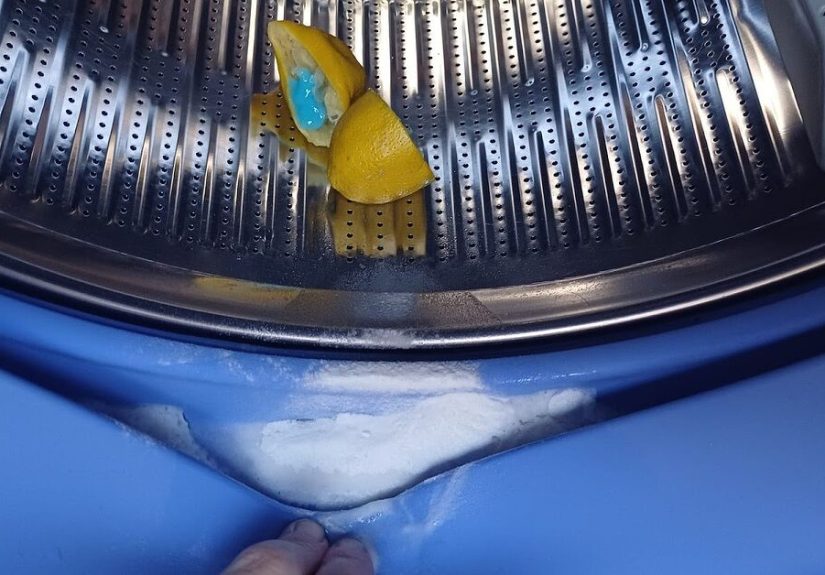
If you have a front-load washer, the gasket deserves your full attention. Gently pull back the folds of the rubber seal and wipe inside with your damp lemon cloth. Use the old toothbrush for corners where residue likes to hide.
Work slowly and gently. Do not scrub the rubber like it insulted your family. The gasket helps seal the door properly, so you want it clean, not worn down. When you are finished, wipe it again with a cloth dampened in plain water, then dry it thoroughly with a towel.
Step 4: Tackle the Detergent Drawer
Remove the detergent drawer if your model allows it. Rinse it under warm water and wipe away loose detergent sludge. If you still see stubborn film or sticky spots, add a tiny dab of white non-gel toothpaste to your soft toothbrush and gently scrub only the problem areas.
This is one of the best places to use toothpaste because the residue is often concentrated and the drawer can usually be rinsed completely afterward. Once the buildup lifts, rinse the drawer well and wipe it dry before reinstalling it. You do not want toothpaste residue hanging around where detergent belongs.
Step 5: Use Toothpaste Only for Small Stains, Scuffs, or Exterior Buildup
If the washer’s exterior has little scuffs, grime around the handle, or dull spots on smooth trim, apply a pea-sized amount of white non-gel toothpaste to a soft cloth. Rub gently in circular motions, then wipe with a clean damp cloth and dry immediately.
Keep the toothpaste away from the drum interior, deep rubber folds, electronic controls, and any delicate painted finishes unless you have tested a hidden area first. Toothpaste can be surprisingly handy, but this is a precision move, not an all-over scrub.
Step 6: Wipe the Drum and Door Glass
Use your lemon-dampened cloth to wipe the inside door glass and the visible interior surface of the drum. This can help remove light residue and water spots. Then go back over everything with a plain damp cloth, followed by a dry towel.
Notice what this step does not say: “Squeeze lemon juice into the drum and hope for the best.” A wipe-down is one thing. Running acidic ingredients through the machine as a deep-clean solution is another. When in doubt, stay surface-level and let the washer’s approved cleaning method handle the internals.
Step 7: Run a Proper Cleaning Cycle
After the lemon-and-toothpaste detail work, run the washer’s clean cycle if it has one. Use a washer cleaner tablet or another product approved by your machine’s manufacturer. If your owner’s manual allows bleach for a cleaning cycle, you can use that method instead.
This is the step that turns a decent cosmetic cleanup into real washing machine maintenance. The DIY hack helps with visible grime. The cleaning cycle helps address what you cannot see.
Step 8: Let Everything Dry
When the cleaning cycle is done, leave the lid or door open and crack the detergent drawer open as well. Airflow is one of the simplest ways to prevent future odors and mildew. It is not glamorous, but neither is wondering why your towels smell like a basement.
Where This Method Works Best
This lemon and toothpaste washing machine method works best for light maintenance and cosmetic cleanup. It is especially useful when you want to:
- Freshen the door and gasket area
- Loosen sticky residue in the detergent drawer
- Remove light water spots from the glass
- Buff scuffs on smooth exterior surfaces
- Make the machine look cleaner between full maintenance cycles
In other words, it is a tidy-up method, not a rescue mission. If your washer already smells like a swampy locker room, you need more than citrus optimism.
Mistakes to Avoid
Do Not Put Toothpaste in the Drum or Dispenser
Toothpaste is meant for spot-cleaning, not for circulating through the washer. It can leave residue, create a mess, and generally behave like an uninvited guest.
Do Not Use Gel, Charcoal, or Whitening Toothpaste
Stick with plain white non-gel toothpaste. Fancy formulas may contain dyes, bleaching agents, or extra abrasives that are not ideal for appliance surfaces.
Do Not Treat Lemon as a Full Deep-Clean Solution
Lemon can help with wipe-down cleaning, but it is not a substitute for the machine’s proper cleaning cycle. Think of it as detail spray, not engine repair.
Do Not Skip the Rinse and Dry Step
Any lemon or toothpaste you use should be wiped away completely. Leftover product can attract more grime or leave streaks.
Do Not Ignore the Owner’s Manual
Different washers have different rules. Some can use bleach in the cleaning cycle. Some should not. The manual may be less exciting than a viral cleaning hack, but it is far less likely to ruin your gasket.
Front-Load vs. Top-Load Washer Tips
Front-load washers usually need more attention around the gasket, door glass, and detergent drawer. Moisture tends to linger there, which makes odor prevention especially important.
Top-load washers may not have the same door-seal drama, but they can still collect detergent buildup in the tub and dispenser areas. The lemon-and-toothpaste method is still best reserved for the surfaces you can wipe and rinse easily.
How Often Should You Clean Your Washing Machine?
A good rule of thumb is to give your washer some attention once a month. That includes running a cleaning cycle, wiping the gasket or lid area, checking the drawer, and letting the machine dry out between uses. If you do lots of laundry, wash heavily soiled items, or use too much detergent, you may need to clean it more often.
Regular maintenance is what keeps you from needing a dramatic “deep clean day” later. It is the home-appliance version of flossing: not thrilling, but very effective.
Better Alternatives If Your Washer Really Smells Bad
If you are dealing with serious odor, stubborn buildup, or recurring mildew, do not rely on lemon and toothpaste alone. Try these smarter steps:
- Run the washer’s self-clean or tub-clean cycle
- Use a washer cleaner tablet designed for washing machines
- Use bleach only if your machine’s instructions allow it
- Clean the detergent drawer thoroughly
- Check and clean the drain pump filter if your model has one
- Use the right amount of HE detergent
- Leave the door and drawer slightly open after cycles
These habits solve the root problem much better than relying on a trendy hack alone. The internet loves a shortcut, but washers usually prefer consistency.
Final Thoughts
So, how do you use a lemon and toothpaste to clean a washing machine without making things worse? Very carefully, very lightly, and with realistic expectations. Lemon works best as part of a diluted wipe-down for surfaces that need a little freshening. Toothpaste works best as a tiny, targeted helper for scuffs and sticky residue on wipeable, rinseable spots. Neither one should replace a proper washer-cleaning cycle.
If you treat this method as a detail-cleaning trick instead of a miracle cure, it can be genuinely useful. Your washing machine can look cleaner, smell fresher, and feel less grimy around the edges. Then, once the cosmetic work is done, let your machine’s approved cleaning cycle handle the heavy lifting. That is the real secret to a clean washer: not one magical ingredient, but a combination of smart surface care and regular maintenance.
Real-World Experiences With the Lemon-and-Toothpaste Method
One of the most common experiences people have with this method is realizing that the washing machine did not need a dramatic overhaul so much as a focused cleanup in the right places. The first wipe of the door glass, the lip around the opening, and the detergent drawer often makes a surprisingly big difference. That is because those are the areas where grime is visible, touchable, and annoying in a very personal way. You open the door, see the residue, and immediately feel like your laundry routine is somehow offending you. A quick lemon wipe can make the machine feel fresher fast, even before you run a proper cleaning cycle.
Another frequent experience is discovering that the detergent drawer is the real villain. People often assume the drum is the dirtiest part, but once the drawer comes out, it is like uncovering a tiny cave of dried soap, goo, and mystery paste. This is where a little toothpaste on a soft brush can actually feel satisfying. Used sparingly, it helps lift the film from corners and seams that a damp cloth misses. The big lesson here is not that toothpaste is magical. It is that small, stubborn patches sometimes need a little gentle abrasion and a lot of patience.
Many front-load washer owners also report that the gasket is the part they had been ignoring the longest. Understandably so. Pulling back those folds can feel like reading a plot twist you did not ask for. But once people start cleaning the gasket regularly, they often notice that odors become easier to control. Even a simple routine of wiping, drying, and leaving the door open can change the day-to-day experience of doing laundry. The machine smells less stale, towels smell cleaner, and there is less of that “why does everything smell slightly damp?” mystery.
There is also a very relatable experience that happens after trying a viral cleaning trick: the moment of truth when people realize the internet oversold it. Lemon and toothpaste can absolutely help with appearance and minor residue, but they do not replace the deep clean. A lot of people find that the machine looks cleaner right away yet still benefits greatly from a real tub-clean cycle afterward. That is not failure. That is actually the best outcome, because it means the DIY method did its job on the surfaces while the approved cleaning cycle handled the hidden buildup.
Some people also learn an important restraint lesson from this method. The first instinct is often to use more lemon, more toothpaste, more scrubbing, more everything. But better results usually come from using less product and more control. A pea-sized amount of toothpaste often works better than a giant smear. A damp cloth usually works better than a soaking wet one. Gentle, repeated passes are safer than aggressive scrubbing. Appliance cleaning rewards calm behavior, not revenge energy.
Perhaps the most useful real-world takeaway is that this method can motivate people to build a better washer-care routine. Once the machine looks cleaner, it becomes easier to keep it that way. People start leaving the door ajar, using the right amount of detergent, and running a monthly cleaning cycle instead of waiting until the washer smells like it is brewing its own opinions. In that sense, the lemon-and-toothpaste trick is less about miracle cleaning and more about momentum. It gives you an easy starting point, and sometimes that is exactly what a neglected appliance needs.







 Close
Close