
Table of Contents >> Show >> Hide
- What Are Spring Roll Skins?
- Beginner Tools and Ingredients You Need
- How to Use Rice Paper Spring Roll Skins for Fresh Rolls
- How to Use Wheat Spring Roll Skins for Crispy Rolls
- Best Fillings for Spring Roll Skins
- Common Mistakes Beginners Make
- How to Store Spring Rolls Safely
- Easy Beginner Recipe: Fresh Spring Rolls with Rice Paper
- Easy Beginner Recipe: Crispy Spring Rolls with Wheat Skins
- Troubleshooting Spring Roll Skins
- Beginner Experiences: What You Learn After Making Spring Rolls a Few Times
- Conclusion
Spring roll skins look innocent in the packagethin, flat, and quiet, like they have never ruined anyone’s dinner plans. Then you dip one in water, it folds onto itself like a clingy blanket, sticks to the cutting board, tears in three places, and suddenly you are negotiating with lunch. Good news: learning how to use spring roll skins is much easier once you understand what type you have, how much moisture it needs, and how to roll without treating the wrapper like a wrestling opponent.
This beginner-friendly guide explains how to use spring roll skins for fresh rolls, crispy fried rolls, and simple homemade appetizers. Whether your package says spring roll wrappers, rice paper wrappers, lumpia wrappers, or bánh tráng, you will learn what to do before filling, how to soften or handle the skins, how to avoid tearing, and how to make rolls that look neat enough for guests but still taste great if they come out a little “abstract art.”
What Are Spring Roll Skins?
Spring roll skins are thin wrappers used to hold vegetables, noodles, herbs, proteins, and sauces in a compact roll. The confusing part is that the phrase “spring roll skins” can mean different products depending on the recipe, store, or cuisine. Beginners often buy one kind of wrapper while imagining another, and that is where the trouble starts.
The two most common types are rice paper wrappers and wheat-based spring roll wrappers. Rice paper wrappers are usually round, dry, stiff sheets made from rice flour, tapioca starch, water, and salt. They become soft and flexible after a quick dip in water and are commonly used for fresh Vietnamese-style spring rolls, also called summer rolls or salad rolls. Wheat-based spring roll skins are usually square, thin pastry sheets that stay flexible when thawed and are often used for fried spring rolls or lumpia-style rolls.
Rice Paper Wrappers
Rice paper is ideal for fresh spring rolls filled with cooked shrimp, chicken, tofu, vermicelli noodles, lettuce, carrots, cucumber, mint, cilantro, basil, and dipping sauce. These wrappers are not cooked after rolling in many recipes, so your fillings should already be cooked, washed, sliced, and ready to eat. Rice paper can also be fried, but it behaves differently from wheat wrappers and can become sticky, bubbly, or delicate if handled carelessly.
Wheat-Based Spring Roll Skins
Wheat-based spring roll skins are better for crispy fried rolls. They are usually sold refrigerated or frozen and should be thawed gently before use. Unlike rice paper, they do not need to be soaked in water. You simply separate the sheets, keep them covered so they do not dry out, add a cooked or partially cooked filling, roll tightly, seal the edge, and fry or bake until crisp.
Beginner Tools and Ingredients You Need
You do not need fancy equipment to use spring roll skins. A shallow dish of water, a clean cutting board, a damp towel, and a little patience will do most of the heavy lifting. Think of it as a tiny kitchen assembly line: wrapper, filling, fold, roll, repeat. Once you build rhythm, spring rolls become faster and surprisingly relaxing.
- Spring roll skins, rice paper wrappers, or wheat spring roll wrappers
- A shallow bowl or pie plate for water if using rice paper
- A clean cutting board or damp kitchen towel as a rolling surface
- Prepared fillings such as lettuce, noodles, vegetables, herbs, shrimp, chicken, tofu, or pork
- A small bowl of water, egg wash, or cornstarch slurry for sealing wheat wrappers
- Dipping sauce such as peanut sauce, hoisin sauce, sweet chili sauce, soy-ginger sauce, or nuoc cham
The most important beginner rule is simple: prepare every filling before you wet or unwrap the skins. Spring roll wrappers are not interested in waiting while you chop carrots. Rice paper gets softer as it sits, and wheat wrappers can dry out quickly. A neat filling station prevents panic rolling, which is responsible for many spring rolls that look like they were assembled during an earthquake.
How to Use Rice Paper Spring Roll Skins for Fresh Rolls
Fresh spring rolls are the easiest place to start because they do not require frying. They are light, colorful, and forgiving once you learn the soaking step. The secret is to soften the rice paper only until it begins to bend. It should still feel slightly firm when you remove it from the water because it will continue softening on the board.
Step 1: Set Up Your Rolling Station
Place your fillings in small bowls or piles within easy reach. Slice vegetables into thin matchsticks so they roll neatly. Cook and cool any noodles, shrimp, chicken, tofu, or other proteins before assembly. Wash and dry herbs and lettuce well because too much water inside the roll can make the wrapper slippery and weak.
Step 2: Dip One Wrapper at a Time
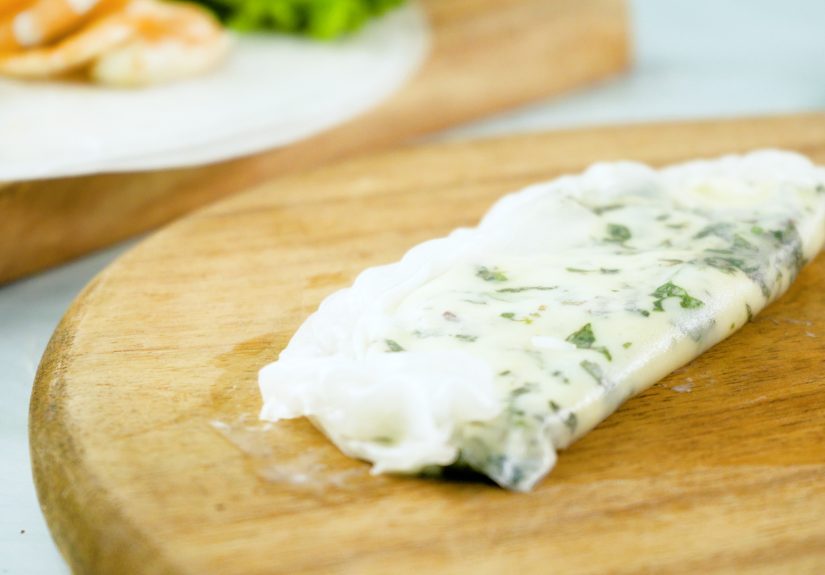
Fill a shallow dish with room temperature or slightly warm water. Slide one rice paper wrapper into the water for about 5 to 15 seconds, depending on thickness. Do not wait until it feels completely soft in the dish. Remove it while it is still a little firm and lay it flat on a damp cutting board or clean damp towel.
If the wrapper curls at the edges, give it a few seconds. If it folds over itself, gently separate it with wet fingers. If it tears, do not panic. Small tears can often be hidden by overlapping the wrapper as you roll. Spring rolls are food, not a final exam.
Step 3: Place Fillings in the Lower Third
Arrange a small amount of filling slightly below the center of the wrapper. Beginners usually overfill, which makes rolling difficult. Start with less than you think you need: a few lettuce leaves, a small bundle of noodles, two or three vegetable strips, herbs, and a few pieces of protein. Leave space on both sides so you can fold the edges inward.
Step 4: Fold, Tuck, and Roll
Fold the bottom edge of the wrapper up and over the filling. Use your fingers to gently tuck the filling back toward you, creating a snug cylinder. Fold in the left and right sides, then continue rolling away from you until the spring roll seals itself. Rice paper naturally sticks once softened, so no extra glue is needed.
Step 5: Keep Finished Rolls Covered
Place finished rolls seam-side down on a plate. Cover them lightly with a damp towel or plastic wrap so they do not dry out. Avoid stacking fresh rolls directly on top of one another because rice paper loves sticking to itself like it has separation anxiety.
How to Use Wheat Spring Roll Skins for Crispy Rolls
Wheat spring roll skins are the better choice when you want crispy, golden rolls. They are thinner than egg roll wrappers and fry into a light, crackly shell. Most are sold frozen, so let them thaw in the refrigerator or at room temperature according to the package directions. Do not microwave them unless the package says it is safe; overheating can make the sheets gummy or brittle.
Step 1: Separate and Cover the Skins
Open the package and gently peel off one sheet at a time. Keep the stack covered with a damp towel while you work. Air dries out wheat wrappers quickly, and dry corners are more likely to crack when rolled.
Step 2: Use a Dry, Cool Filling
For fried spring rolls, the filling should be flavorful but not wet. Cook vegetables, meat, mushrooms, or noodles first, then let the mixture cool. Drain excess liquid before rolling. Wet filling creates steam, weakens the wrapper, and can make fried rolls soggy instead of crisp.
Step 3: Roll Like an Envelope
Place one square wrapper on the board with a corner pointing toward you, like a diamond. Add a small line of filling near the lower third. Fold the bottom corner over the filling, roll once, fold in both side corners, then continue rolling tightly toward the top corner.
Step 4: Seal the Edge
Seal the final corner with a dab of water, egg wash, or cornstarch slurry. Press gently so it sticks. Place the roll seam-side down while you finish the rest.
Step 5: Fry, Bake, or Air Fry
For classic crispy spring rolls, fry them in hot oil until golden and crisp. Do not overcrowd the pan because crowded rolls steam instead of fry. For a lighter option, brush or spray the rolls with oil and bake or air fry until crisp, turning as needed. The texture will be slightly different from deep-fried rolls, but still delicious.
Best Fillings for Spring Roll Skins
The best spring roll fillings are balanced: something crisp, something soft, something fresh, and something savory. For fresh rolls, try lettuce, rice vermicelli, cucumber, carrot, bell pepper, mint, cilantro, basil, shrimp, tofu, or chicken. For crispy rolls, try cabbage, carrots, mushrooms, ground pork, glass noodles, bean sprouts, scallions, garlic, and ginger.
A good beginner combination for fresh rolls is lettuce, rice noodles, cucumber, carrot, mint, and cooked shrimp. A good beginner filling for fried rolls is cabbage, carrot, mushrooms, garlic, ginger, and ground pork or tofu. Keep fillings thin and evenly cut so every bite has a little of everything.
Common Mistakes Beginners Make
Over-Soaking Rice Paper
This is the number one beginner mistake. Rice paper should not feel fully soft when it leaves the water. If it is limp in the bowl, it will become sticky and fragile on the board. Dip briefly, lay it flat, and let time do the softening.
Overfilling the Wrapper
Spring roll skins are strong enough for a neat roll, not a salad bar with ambition. Too much filling causes tearing, bulging, and loose rolls. Start small. You can always make more rolls, which is a much better problem than trying to repair one enormous vegetable burrito in rice paper clothing.
Using Wet Fillings
Watery lettuce, hot noodles, juicy vegetables, and undrained cooked fillings can weaken wrappers. Pat vegetables dry, cool cooked ingredients, and drain sauces before rolling. Serve dipping sauce on the side instead of pouring it inside the roll.
Letting Wrappers Dry Out
Rice paper can become leathery if left uncovered, and wheat wrappers can crack if exposed to air. Keep finished fresh rolls lightly covered and keep unused wheat wrappers under a damp towel.
How to Store Spring Rolls Safely
Fresh spring rolls taste best shortly after rolling. If you need to store them, wrap each roll loosely in plastic wrap or separate them with parchment so they do not stick together. Refrigerate rolls that contain cooked shrimp, meat, tofu, or other perishable fillings. For best texture, eat fresh rolls the same day.
Crispy fried spring rolls are best eaten hot, soon after cooking. If you have leftovers, cool them, refrigerate them promptly, and reheat in an oven or air fryer to bring back some crispness. Avoid reheating crispy spring rolls in the microwave unless you are emotionally prepared for sadness in a soft wrapper.
Easy Beginner Recipe: Fresh Spring Rolls with Rice Paper
Ingredients
- 8 rice paper spring roll skins
- 1 cup cooked rice vermicelli noodles, cooled
- 16 cooked shrimp halves or sliced tofu
- 1 cup shredded lettuce
- 1 small carrot, cut into thin strips
- 1 small cucumber, cut into thin strips
- Fresh mint, cilantro, or basil
- Peanut sauce or sweet chili sauce for serving
Instructions
- Prepare all fillings before softening the wrappers.
- Dip one rice paper wrapper in room temperature or warm water for a few seconds.
- Lay it flat on a damp board and wait briefly until flexible.
- Add lettuce, noodles, vegetables, herbs, and shrimp or tofu to the lower third.
- Fold the bottom edge over the filling, fold in the sides, and roll tightly.
- Place seam-side down and repeat with the remaining wrappers.
- Serve with dipping sauce immediately.
Easy Beginner Recipe: Crispy Spring Rolls with Wheat Skins
Ingredients
- 12 wheat-based spring roll skins
- 2 cups shredded cabbage
- 1 carrot, shredded
- 1 cup mushrooms, finely chopped
- 2 scallions, sliced
- 1 teaspoon grated ginger
- 1 clove garlic, minced
- 1 tablespoon soy sauce
- 1 teaspoon sesame oil
- Oil for frying or brushing
- Cornstarch slurry for sealing
Instructions
- Cook cabbage, carrot, mushrooms, scallions, ginger, and garlic until softened.
- Season with soy sauce and sesame oil, then cool completely.
- Place one wrapper like a diamond on the board.
- Add a small spoonful of filling near the lower corner.
- Fold the bottom corner over the filling, fold in both sides, and roll tightly.
- Seal the top corner with cornstarch slurry.
- Fry until golden, or brush with oil and bake or air fry until crisp.
Troubleshooting Spring Roll Skins
Why Are My Rice Paper Rolls Tearing?
Your wrapper may be too wet, your filling may be too bulky, or sharp vegetable edges may be poking through. Use less filling, soften the wrapper for less time, and place lettuce down first to create a cushion.
Why Are My Rolls Sticky?
Rice paper naturally becomes sticky when hydrated. Use a damp surface instead of a dry plate, avoid stacking rolls, and keep your fingers slightly wet while rolling.
Why Are My Fried Spring Rolls Soggy?
The filling may be too wet, the oil may not be hot enough, or the pan may be overcrowded. Drain the filling well, fry in small batches, and let rolls rest on a rack instead of a paper towel-lined plate when possible.
Can I Make Spring Rolls Ahead of Time?
You can prep the fillings ahead, but rolling close to serving time gives the best texture. Fresh rice paper rolls can dry out or become chewy in the refrigerator. Crispy rolls can be rolled ahead and refrigerated briefly before frying, as long as the filling is cool and not watery.
Beginner Experiences: What You Learn After Making Spring Rolls a Few Times
The first experience most beginners have with spring roll skins is surprise. The package looks simple, the recipe looks simple, and the first wrapper somehow behaves like it has personal goals. That is normal. Spring roll skins require feel more than force. After a few tries, your hands learn what your brain keeps overthinking: dip briefly, fill lightly, tuck gently, and keep moving.
One of the biggest lessons is that the wrapper keeps changing after it leaves the water. Beginners often wait until rice paper is completely soft before removing it, but that is usually too late. The better experience is to pull it out while it still feels slightly stiff. By the time you add lettuce, noodles, herbs, and shrimp, the skin has relaxed enough to roll. This one adjustment can turn the whole process from frustrating to fun.
Another useful experience is learning that lettuce is more than a filling. It can act like a protective blanket between the delicate wrapper and sharper ingredients such as carrot sticks, cucumber strips, or crispy tofu edges. Put lettuce down first, then layer noodles and vegetables on top. The roll feels smoother, holds together better, and looks cleaner when sliced.
You also learn that spring rolls reward organization. When everything is sliced, cooked, cooled, and arranged before you begin, rolling feels easy. When you stop halfway through to find the mint or drain the noodles, the wrapper continues softening without your permission. A prepared station is not just neat; it protects your timing.
Beginners also discover that “pretty” and “delicious” are not the same thing. Some early rolls may look wrinkled, uneven, or slightly lumpy. That does not mean they failed. If the filling is fresh, the herbs are bright, and the dipping sauce is good, people will happily eat them. A homemade spring roll with personality is still better than a perfect-looking roll with bland filling.
With crispy spring rolls, experience teaches you to respect moisture. Hot filling, watery cabbage, and too much sauce are the enemies of crunch. Let the filling cool, drain it well, and keep the wrapper covered while you roll. The first batch may not be perfect, but by the second or third batch, your fingers understand how tight the roll should feel.
Finally, you learn that spring roll skins are flexible in more ways than one. They can hold classic Vietnamese-style fillings, simple lunch leftovers, vegetarian combinations, fruit dessert fillings, or crispy savory mixtures. Once you understand the basic technique, you stop seeing spring roll skins as intimidating and start seeing them as edible envelopes for whatever tastes good. And honestly, edible envelopes are one of humanity’s better ideas.
Conclusion
Learning how to use spring roll skins is mostly about choosing the right wrapper, controlling moisture, and practicing a simple fold-and-roll method. Rice paper wrappers are perfect for fresh spring rolls when dipped briefly and filled with crisp vegetables, herbs, noodles, and cooked proteins. Wheat-based spring roll skins are best for crispy fried or baked rolls when kept covered, filled lightly, sealed well, and cooked until golden.
Start with small amounts of filling, keep your work surface slightly damp for rice paper, cover wrappers so they do not dry out, and do not worry if your first few rolls look a little homemade. They are homemade. That is the charm. With a little practice, spring roll skins become one of the easiest ways to turn simple ingredients into fresh appetizers, quick lunches, party snacks, or crispy comfort food with a very satisfying crunch.





 Close
Close