
Table of Contents >> Show >> Hide
- What the Mayor Can (and Can’t) Do
- Before You Write: Do 15 Minutes of Homework
- Pick Your Delivery Method: Email, Mail, or Web Form
- The Structure of a Mayor-Ready Letter
- How to Address the Mayor (Without Sounding Weird)
- Step-by-Step: Write the Letter in 30 Minutes
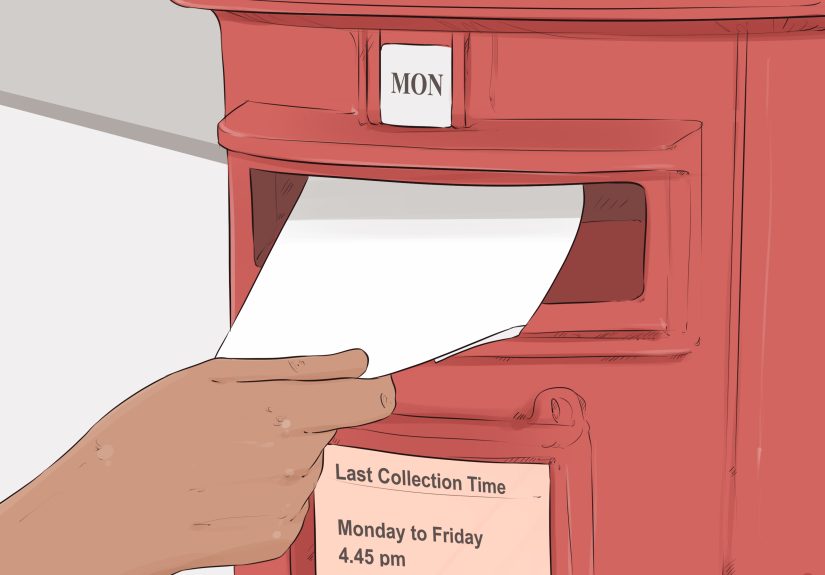
- Mailing Basics (So the Post Office Doesn’t Become Your Co-Author)
- Two Example Letters You Can Borrow (Without Sounding Like a Robot)
- What to Avoid (If You Want a Response)
- After You Send It: Follow Up Without Being a Menace
- Quick “Send It” Checklist
- Real-World Experiences: What It’s Like to Write to the Mayor (and What Actually Works)
- Conclusion
- SEO Tags
Writing to your mayor is one of the rare adult activities where you can complain and be helpful at the same time.
And unlike yelling into the void (also known as “posting”), a well-written letter can actually land on someone’s
desk, get routed to the right department, and sometimes trigger real changelike fixing a dangerous crosswalk,
speeding up a permit backlog, or finally dealing with the raccoon situation that has become “a whole thing.”
The secret is simple: mayors and their staff read a lot of messages. The letters that get traction are the ones that
are clear, specific, respectful, and easy to act on. This guide walks you through exactly how to do thatwith
formatting, examples, and a few “please don’t do this” warnings to keep your message out of the digital trash can.
What the Mayor Can (and Can’t) Do
Before you write, it helps to know what you’re asking for. In many cities, the mayor is the chief executive of the
local governmentmeaning they oversee city departments (public works, sanitation, transportation, housing, etc.)
and help set priorities. But some decisions are made by the city council, a city manager, boards/commissions, or a
specific agency.
If your issue is about a city service, a department policy, or a citywide initiative, the mayor’s office is a great
place to start. If your issue is about passing an ordinance, approving a budget line item, or changing zoning rules,
it may also be smart to copy your city council member (more on that later). The best letters don’t just “raise concerns”;
they point to a concrete action the city can take.
Before You Write: Do 15 Minutes of Homework
You don’t need to produce a doctoral thesisjust enough detail to make your letter credible and actionable.
Think of this step as “helping City Hall help you.”
1) Identify the exact problem
- What is happening? (Example: streetlight out, illegal dumping, repeated speeding near a school.)
- Where? Include cross streets, landmarks, or a specific block.
- When? Dates and times matter. “Every weekday around 4:30 p.m.” is gold.
- Who is affected? Residents, businesses, kids walking to school, seniors, commuters, etc.
2) Confirm it’s a city issue
Some things that feel “city-ish” are actually county, state, or private responsibilities (hello, mystery jurisdiction).
If you’re unsure, check your city website, your local 311 resources, or a department contact page.
If you’ve already reported the issue through 311 or an online form, note the ticket number in your letter.
3) Find the right contact route
Many cities offer multiple ways to contact the mayor’s office: web forms, email addresses, physical mailing addresses,
and phone lines. USA.gov even maintains a tool to help you find and contact local elected officials, including mayors.
Pick Your Delivery Method: Email, Mail, or Web Form
Your message should look professional in any format. Choose the method that fits your goal (and your patience level).
- Best for: quick requests, time-sensitive safety concerns, and issues where you want a written reply.
- Tip: Use a clear subject line and keep the body skimmablemany emails are triaged fast.
Physical letter
- Best for: formal requests, detailed community concerns, and situations where you want to signal seriousness.
- Tip: Make sure you format the envelope correctly and include a return address so it can be routed and replied to.
Online form
- Best for: cities that strongly prefer form submissions (many do), or when the form automatically routes by topic.
- Tip: If the form has a character limit, treat it like a press release: essential facts + the ask.
The Structure of a Mayor-Ready Letter
Here’s a structure that works because it respects everyone’s timeincluding yours.
Many advocacy guides recommend focusing on one issue, being brief, and stating your request clearly.
Recommended format (mail or “formal email”)
- Your contact info (name, address, email, phone)
- Date
- Inside address (the mayor’s name and office address)
- Salutation
- Opening paragraph: who you are + why you’re writing + that you’re a resident/constituent
- Middle paragraph(s): what’s happening + evidence + personal/community impact
- “The ask” paragraph: the action you want + why it’s reasonable + a timeframe if appropriate
- Closing: appreciation + request for response + signature
Subject lines that get opened (and not emotionally unfriended)
- “Safety concern: speeding near Lincoln Elementary at 4–5 p.m.”
- “Request: streetlight repair at 8th & Maple (ticket #123456)”
- “Constituent request: meeting about downtown small business permits”
- “Thank you + follow-up on illegal dumping report (photos available)”
How to Address the Mayor (Without Sounding Weird)
In the U.S., a common formal convention is to use “The Honorable” on the inside address line for many elected officials,
then use “Dear Mayor [Last Name]:” as the greeting. If you don’t know the mayor’s last name (or it’s hard to spell),
look it upgetting the name right is a small detail that signals seriousness.
Inside address (example)
The Honorable Jordan Smith
Mayor of Example City
Office of the Mayor
123 City Hall Avenue
Example City, ST 12345
Greeting (example)
Dear Mayor Smith:
Step-by-Step: Write the Letter in 30 Minutes
Step 1: Start with the point (politely)
Don’t bury the lead. In your first 2–3 sentences, say who you are, where you live (neighborhood is fine), and what you’re
asking about.
Example: “My name is Taylor Lee, and I live in the Riverside neighborhood. I’m writing to request action on repeated
speeding on River St. near the community center, which has created multiple near-misses for pedestrians.”
Step 2: Add specific details (so it can be routed)
- Location details (cross streets, addresses, landmarks)
- Frequency and timing (“three times this month,” “every Friday evening”)
- Any existing case numbers (311 tickets, permit IDs)
- What you’ve already tried (reported it, spoke to a department, attended a meeting)
Step 3: Explain the impact (human beats hypothetical)
Advocacy resources consistently note that personal, concrete impact helps officials understand why an issue matters.
Keep it real and grounded: injuries avoided, kids crossing, seniors navigating, businesses losing foot traffic, etc.
Step 4: Make one clear ask
Pick the single most reasonable action the city can take next. If you ask for five things, you may get zero things.
- “Please install a temporary speed feedback sign and evaluate a crosswalk upgrade.”
- “Please direct Public Works to assess streetlight outages on the 700 block and provide a repair timeline.”
- “Please assign a staff contact to coordinate a community meeting within the next 30 days.”
Step 5: Offer a constructive option (not just doom)
If you’re opposing something, propose an alternative. It’s much easier to act on “here’s a better route” than “everything is terrible.”
Step 6: Close like a grown-up
Thank them, request a response, and include your contact information. Polite follow-ups are normal. Threats are… also normal,
but only in the sense that you see them on the internet and then immediately regret humanity.
Mailing Basics (So the Post Office Doesn’t Become Your Co-Author)
If you’re sending a physical letter, format matters. Place the delivery address and return address correctly, write clearly,
and include the complete ZIP code when possible. A correct return address helps ensure undeliverable mail can be returned to you,
and it also signals legitimacy.
Envelope checklist
- Return address in the upper-left corner
- Mayor’s office address centered on the front
- Postage in the upper-right corner
- Legible, consistent formatting (typed labels are fine)
Two Example Letters You Can Borrow (Without Sounding Like a Robot)
Example 1: Safety issue (short and direct)
Subject: Safety concern: speeding on River St. near Community Center
Dear Mayor Smith:
My name is Taylor Lee, and I live in the Riverside neighborhood. I’m writing to request action on repeated speeding on River St.
between 6th and 8th, especially during weekday afternoons when kids are leaving the community center.
Over the past month, I’ve seen multiple near-misses at the crosswalk by the center’s main entrance. I filed a 311 report on January 10
(ticket #123456), but the speeding has continued. Several neighbors and I are concerned that a serious injury is only a matter of time.
Would your office please direct the appropriate department to evaluate traffic calming optionssuch as a speed feedback sign, targeted enforcement,
or crosswalk improvementsand share the city’s recommended next steps? I’d appreciate a response or a point of contact for follow-up.
Thank you for your time and for your work on public safety in our city.
Sincerely,
Taylor Lee
555-0100 | [email protected]
Riverside Neighborhood, Example City
Example 2: Service improvement (solution-forward)
Subject: Request: Pilot program for neighborhood compost pickup
Dear Mayor Smith:
I’m Alex Patel, a resident of the North Hill area. I’m writing to encourage the city to explore a small pilot program for compost pickup,
starting with a limited number of neighborhoods or a voluntary opt-in route.
Several nearby cities have used pilot programs to reduce landfill volume and help households manage food waste. In our neighborhood, many residents
already compost independently, but a city-supported option could increase participation and reduce odors and pests associated with overfilled trash bins
during summer months.
Would your office consider directing the sanitation department to evaluate a pilot and publish findings on cost, participation, and impact?
If helpful, I’m happy to connect you with a small group of residents who would volunteer to assist with outreach.
Thank you for considering this request, and I’d appreciate any update on whether a pilot assessment is possible this year.
Respectfully,
Alex Patel
North Hill, Example City
What to Avoid (If You Want a Response)
- All caps, insults, or threats: it feels satisfying for 12 seconds, then it gets triaged accordingly.
- Three issues in one letter: staff can route one issue; a buffet of issues becomes a parking lot.
- Vague claims: “Crime is out of control” is hard to act on; “Streetlights out on 700 block of Pine” is actionable.
- No return contact info: you’d be amazed how often this happens.
- Attachment overload: if you must attach, keep it small and essential (or offer to provide more on request).
After You Send It: Follow Up Without Being a Menace
City offices are busy, and many messages are handled by staff before the mayor ever sees them. That’s not a conspiracy;
it’s how calendars survive. If you don’t hear back:
- Wait a reasonable period (often a couple of weeks for non-emergencies).
- Send a brief follow-up referencing your original message and any ticket numbers.
- If appropriate, contact the relevant department directly or your council member as well.
- Keep a record of dates, names, and case numbers.
Quick “Send It” Checklist
- One issue per letter
- Specific location, timing, and impact
- Clear ask in one sentence
- Polite tone and correct names
- Your contact info included
- Proofread (yes, even if you’re righteously furious)
Real-World Experiences: What It’s Like to Write to the Mayor (and What Actually Works)
People often imagine writing the mayor as a dramatic momentspotlight, swelling music, the mayor pausing mid-speech to whisper,
“Get me that citizen’s letter.” The reality is less cinematic and more… workflow. And that’s good news: workflow means your message
can be processed, assigned, and acted on if you make it easy to route.
Experience #1: The “mystery department” problem. One resident wrote a passionate two-page email about a collapsing sidewalk
that was forcing wheelchair users into the street. The emotion was valid. The problem? No cross streets, no photos, and no mention of whether
it was city-maintained or part of a private frontage requirement. The message bounced between offices like a pinball. When the resident resent
a shorter follow-up with the exact block, two photos, and a simple ask (“Please confirm who is responsible and provide a repair timeline”),
it finally landed with Public Works. Same urgency, better packaging.
Experience #2: The “I already tried 311” upgrade. Another person reported illegal dumping in an alley three times.
Each time, it got cleaned upthen returned like a bad sequel. Their letter to the mayor worked because it included a mini timeline:
dates of reports, ticket numbers, and a clear request for a prevention step (temporary camera signage, increased patrols, or a gate on the alley).
Mayors’ offices can often nudge departments to think beyond cleanup toward prevention, but they need the pattern spelled out.
Experience #3: The “ask for a point of contact” hack. A neighborhood group wanted a meeting about traffic calming.
Instead of demanding an immediate overhaul (which invites a defensive response), their letter asked for one practical thing:
a staff contact who could attend a community meeting. Once they had a name and an email, the whole situation got easier.
Most city work happens through relationships and process; your letter can be the doorbell that gets you into the hallway.
Experience #4: The “too much research” trap. Some writers attach a full research report, 18 screenshots, and a 12-minute video.
Their intentions are pure. Their inbox footprint is terrifying. A better approach is to include a tight summary in the letter,
then offer additional materials on request. Think “movie trailer,” not “director’s cut.” If staff need more, they’ll askand when they do,
you’ll look prepared instead of overwhelming.
Experience #5: The “thank you letter that changes everything.” Not every letter needs to be a complaint.
Residents who write short notes thanking the city for a newly repaired playground or a well-run emergency response often get replies, too.
Those replies create goodwill and a contact thread you can later use when you do have a hard issue to raise. Also, praise is shockingly rare
in public service inboxesso it stands out in the best possible way.
The common thread in these experiences isn’t fancy language. It’s clarity, specificity, respect, and an ask that can be routed.
If you can do that, your letter won’t just “be heard.” It’ll be usableand that’s how local change actually happens.
Conclusion
A letter to your mayor doesn’t need to be long, dramatic, or perfect. It needs to be actionable.
Keep it focused on one issue, include the details that help staff route it, explain the impact in human terms,
and make one clear request. If you do that, you’ll stand out in the best way: as someone serious about improving the place you live.
And yessometimes City Hall really does fix the thing.




 Close
Close