
Table of Contents >> Show >> Hide
- What Does “Inside Out Architecture” Really Mean?
- The Historical Roots: From High-Tech Drama to Human-Centered Design
- Why Architects Still Love the Idea
- Key Characteristics of Inside Out Architecture
- Real-World Examples That Show the Idea in Action
- Inside Out Architecture and Sustainability
- The Human Experience: More Than an Aesthetic
- The Risks and Misunderstandings
- Why Inside Out Architecture Matters Now
- Experiencing Inside Out Architecture in Real Life
- Conclusion
- SEO Tags
Some buildings wear a tie. Others show up with their sleeves rolled up, their mechanical systems on display, and their structure practically saying, “Ask me how I work.” That, in a nutshell, is the spirit of inside out architecture: a design approach that reveals what many buildings try to hide. Instead of treating pipes, structural frames, circulation, or environmental systems as backstage clutter, this style often turns them into part of the main performance.
But inside out architecture is not only about exposed ducts and a little industrial swagger. At its best, it is about honesty, flexibility, performance, and experience. It asks a bold question: what happens when the inner life of a building becomes part of its outward identity? The answer can be dramatic, practical, and surprisingly human. A building can become easier to understand, easier to adapt, and much more memorable than another glass box trying very hard not to make eye contact.
What Does “Inside Out Architecture” Really Mean?
The phrase usually refers to architecture that externalizes elements traditionally kept hidden inside a building. Structure, circulation, mechanical systems, shading devices, and service zones are sometimes pushed outward or made visibly legible. In other cases, the term also describes buildings that blur the line between interior and exterior space, creating environments where daylight, views, air, landscape, and movement work together so naturally that the building feels less like a sealed container and more like an active interface.
That means the idea has two closely related meanings. The first is technological and visual: the building turns its guts into architecture. The second is spatial and experiential: the building dissolves the hard boundary between indoors and outdoors. Good inside out architecture often combines both. It reveals how it works while also improving how people feel inside it.
The Historical Roots: From High-Tech Drama to Human-Centered Design
When many people hear the phrase “inside out architecture,” they think of the high-tech movement of the late twentieth century. That is fair. Landmark projects such as the Centre Pompidou in Paris made a global impression by placing ducts, circulation elements, and structural logic on the exterior. Instead of hiding the machinery of modern life, the building turned it into civic theater. Suddenly the escalator was not just transportation. It was a public event.
The same spirit appeared in buildings like the Lloyd’s Building in London, where services and circulation were pushed outward so the interior could remain open and adaptable. This was not rebellion for rebellion’s sake. It was a design strategy. By relocating service cores and technical systems, architects created more flexible floor plates and made future change easier. In other words, inside out architecture was not just trying to look cool. It was trying to stay useful.
Today, the concept has evolved. Contemporary architects are less interested in turning every pipe into a fashion statement and more interested in building transparency, long-term adaptability, wellness, daylight, and material honesty. The flashy machine aesthetic has matured into something more nuanced. The result is often quieter, smarter, and more responsive to the people who actually use the building.
Why Architects Still Love the Idea
1. It makes buildings legible
Inside out architecture helps people understand a building at a glance. You can often read where people enter, how they move, where public functions happen, and how the facade responds to sun, air, and privacy. That kind of clarity matters. A building that explains itself tends to feel more welcoming than one that behaves like a locked spreadsheet.
2. It supports flexible spaces
One of the biggest advantages of exposed or externalized systems is adaptability. When service zones are easier to access and the structural logic is more visible, renovation becomes less painful. In an era when offices, schools, labs, housing, and mixed-use spaces all need to change faster than ever, adaptable design is not a luxury. It is survival.
3. It can improve performance
Modern building envelopes do much more than keep rain out and air conditioning in. Facades now mediate light, heat, glare, views, ventilation, and comfort. When those strategies become visible, the building’s environmental intelligence becomes part of its identity. Dynamic shading, terraces, transitional zones, operable boundaries, and carefully designed skins can all express performance rather than bury it behind a decorative mask.
4. It creates stronger indoor-outdoor connection
Current design research keeps pointing in the same direction: people benefit from daylight, quality views, contact with nature, and a clear relationship to the outside world. That is why so many contemporary projects emphasize courtyards, terraces, transparent edges, winter gardens, visible stairs, outdoor circulation, and shared commons. Inside out architecture often turns these moves into its central language.
Key Characteristics of Inside Out Architecture
Although every project interprets the idea differently, the most successful examples tend to share several traits:
Exposed structure and services
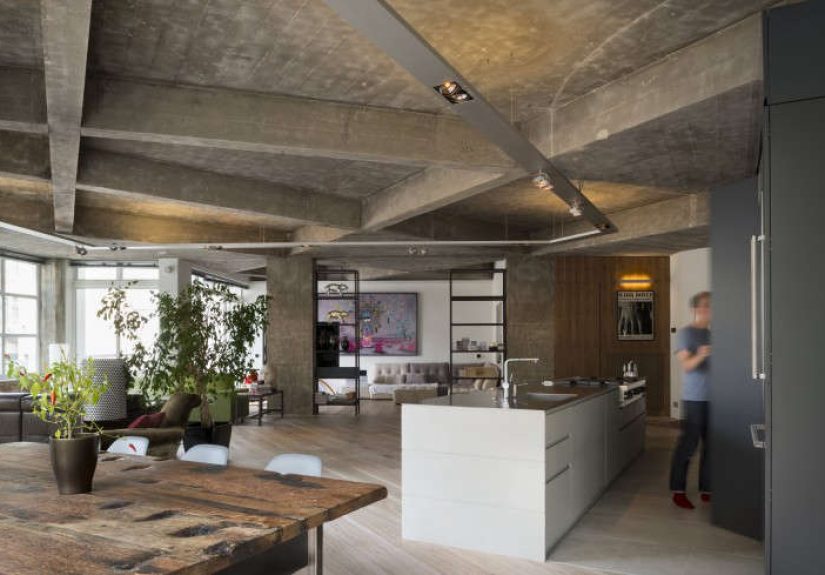
Structural frames, trusses, braces, mechanical ducts, or circulation elements are made visible rather than concealed. This can create a sense of honesty and reduce the need for unnecessary finish layers.
Material honesty
Concrete looks like concrete. Steel looks like steel. Timber looks like timber. Instead of wrapping everything in decorative disguise, the building lets materials communicate their weight, texture, and purpose. It is refreshingly direct. It is also the architectural equivalent of saying, “No filter.”
Transparent or permeable boundaries
Glass, screens, courtyards, shaded exterior rooms, and intermediate zones help soften the divide between interior and exterior. The goal is not always maximum openness. Smart projects balance openness with climate control, privacy, safety, and acoustic comfort.
Visible environmental strategy
Sunshades, deep overhangs, double skins, terraces, and natural ventilation pathways can become expressive features. Instead of treating sustainability as invisible paperwork, inside out architecture often gives performance a physical form.
Flexible planning
Buildings that reveal their organizational logic tend to age better. Open spans, accessible service zones, and adaptable floor plates make it easier to reconfigure spaces for new uses over time.
Real-World Examples That Show the Idea in Action
The classic poster child is still the Centre Pompidou, which turned circulation and services into urban spectacle. But the idea did not stop there. More recent work shows that inside out architecture can be subtle, sustainable, and deeply connected to everyday use.
Academic buildings offer strong examples. Projects recognized in recent years by the AIA, including the Science and Environmental Center, the Harvey Mudd College McGregor Computer Science Center, and the UWM Chemistry Building, demonstrate how transparency, visible activity, daylight-rich common spaces, and carefully designed envelopes can turn technical facilities into inviting civic places. Rather than presenting a blank institutional face, these buildings reveal learning, collaboration, and movement.
Renovation projects also embody the inside out mindset. The Thurston Hall Renovation and the ongoing fascination with exposed modernist structures such as Gund Hall show how architects are rethinking older buildings without erasing their logic. Instead of hiding what made these structures distinctive, designers often sharpen the relationship between original structure, new systems, and contemporary needs.
Corporate and mixed-use projects provide another angle. Workplace research and design practice now emphasize varied settings for focus, collaboration, restoration, and social exchange. That has encouraged firms to create buildings with visible stairs, public-facing commons, terraces, flexible zones, and facades that perform as environmental filters rather than flat visual wallpaper. Projects such as LG’s North American Headquarters and other high-performance office environments show how indoor-outdoor living, daylight, and adaptable planning can shape both identity and well-being.
Inside Out Architecture and Sustainability
This is where the concept gets especially interesting. A building that reveals how it stands, breathes, shades, and adapts is often better positioned to support sustainable design. Not automatically, of course. Exposed pipes alone do not save the planet. A fancy duct is still just a duct. But when inside out thinking aligns with performance, it can make sustainability more visible and more meaningful.
For example, a high-performance facade can reduce solar gain while maximizing daylight. Exterior circulation and buffer spaces can moderate temperature differences between indoors and outdoors. Shading devices can express solar logic. Quality views and access to nature can improve the daily experience of occupants. In this sense, inside out architecture helps connect building performance with human perception. People can see the strategy working around them.
It also supports longevity. One of the most sustainable things a building can do is remain useful. Flexible systems, robust structures, and legible layouts help buildings evolve rather than become obsolete. That may be the least glamorous sustainability headline ever, but it is one of the most important.
The Human Experience: More Than an Aesthetic
Good inside out architecture changes how people move, gather, focus, and relax. It often makes circulation social rather than hidden. A stair becomes a meeting place. A terrace becomes an outdoor room. A lobby becomes a public threshold instead of a climate-controlled shrug. When light reaches deep into a floor plate and views are framed intentionally, people feel less sealed off from time, weather, and place.
There is also a psychological effect to visible structure and honest materials. People tend to trust what they can understand. A legible building feels less mysterious in the bad way and more intelligible in the good way. You know where to go. You sense how the parts relate. Even when a project is complex, it can feel generous rather than confusing.
That matters in schools, healthcare, workplaces, housing, and cultural buildings alike. If architecture is partly about reducing friction in daily life, then inside out design can be powerful because it makes spatial logic and environmental connection easier to grasp.
The Risks and Misunderstandings
Of course, not every exposed ceiling is a philosophical breakthrough. Sometimes “inside out” becomes a shortcut for unfinished-looking interiors, noisy spaces, or mechanical bravado that ages badly. A building can reveal its systems and still fail its users. It can be transparent and still feel exhausting. It can look flexible and still function like a stubborn old filing cabinet.
The best inside out architecture avoids that trap by balancing expression with comfort. Acoustic control still matters. Thermal comfort still matters. Maintenance still matters. Accessibility still matters. The point is not to expose everything all the time. The point is to reveal what helps people understand, enjoy, and adapt the building.
Why Inside Out Architecture Matters Now
We live in a time when buildings are asked to do more with less while serving more diverse needs. They must support health, flexibility, sustainability, identity, and social connection, often all at once. Inside out architecture matters because it offers a way to make those ambitions visible. It turns systems into design, performance into experience, and boundaries into opportunities.
More importantly, it reminds us that architecture is not just about appearances. It is about relationships: between people and climate, structure and skin, interior life and public face, permanence and change. The most compelling buildings today do not merely hide complexity behind polished surfaces. They choreograph complexity and make it understandable.
That is why inside out architecture still resonates. It is not just a style from the high-tech era. It is an ongoing design attitude, one that values honesty, adaptability, and the lived experience of space. When done well, it does not simply put the inside on the outside. It makes the whole building more alive.
Experiencing Inside Out Architecture in Real Life
Reading about inside out architecture is one thing. Walking through it is another. The real test happens when a person steps out of the street, enters a threshold, looks up, and suddenly understands how the place is put together. That moment can be oddly satisfying. You see the stair before you need it. You understand where the light is coming from. You notice that the facade is not just a pretty wrapper but a working system that shapes heat, glare, shade, and view. It is like meeting a building that actually introduces itself.
In many conventional buildings, the experience is compressed into a sequence of hidden operations. You enter through one sealed layer, move through another, and spend most of your time in spaces that feel detached from weather, season, and sometimes even gravity. Inside out architecture tends to disrupt that routine. It often gives you an immediate awareness of sky, structure, movement, and atmosphere. The result can feel energizing because the building does not treat you like cargo.
One of the most memorable sensations is the role of circulation. In a strong inside out project, stairs are not punishment devices tucked behind a fire door. They are social streets. Ramps, bridges, terraces, and visible corridors become part of the architecture’s public life. You see other people moving. You orient yourself through activity. Even a short walk to a meeting or classroom can feel less like a detour and more like participation in a shared spatial event.
There is also a tactile side to the experience. Exposed concrete, steel, timber, brick, mesh, and glass each communicate something different. When those materials are allowed to be themselves, the building feels more grounded. You can sense weight, temperature, roughness, reflection, and acoustics in a more direct way. That does not mean every raw material is automatically delightful. Badly detailed concrete can still look grumpy. But when materials are handled with care, they give a space character that fake finishes rarely achieve.
Daylight changes the experience too. In many inside out buildings, natural light is not limited to perimeter offices or one heroic lobby. It is pulled deep into the plan through atriums, courtyards, glazing, skylights, and carefully placed openings. As the day shifts, the building shifts with it. Morning light sharpens edges. Afternoon light softens surfaces. Rain makes glass feel different. Wind becomes visible in trees just beyond a shaded terrace. You remember that time is passing, and architecture starts to feel less static.
For users, that often creates a subtle sense of ownership. When you can read a building’s logic, you feel more comfortable inhabiting it. You know where the quiet zones are. You sense where collaboration naturally happens. You understand which spaces open to the landscape and which ones protect you from it. Instead of feeling trapped inside a mute container, you feel like you are in conversation with the place.
That may be the strongest argument for inside out architecture. It transforms buildings from sealed objects into readable environments. It gives people more than shelter and square footage. It gives them awareness, connection, and a little everyday drama. And honestly, that is not a bad deal for something made of steel, glass, concrete, and the occasional very opinionated duct.
Conclusion
Inside out architecture endures because it speaks to both the eye and the mind. It can be visually bold, but its deeper value lies in what it makes possible: flexible planning, clearer wayfinding, healthier indoor-outdoor relationships, more honest material expression, and a stronger connection between design intent and lived experience. Whether expressed through exposed structure, high-performance facades, open circulation, or carefully choreographed thresholds, this approach gives architecture a rare quality: it feels understandable without becoming simplistic.
In a world full of buildings that try very hard to look finished, inside out architecture dares to look alive. That is why it continues to influence the way architects design schools, labs, offices, homes, and cultural spaces. It does not just show the machinery of the building. It shows the values behind it.







 Close
Close