
Table of Contents >> Show >> Hide
- What Is Rosacea?
- How Laser Treatment Helps Rosacea
- Types of Laser and Light Treatments for Rosacea
- Who Is a Good Candidate for Laser Treatment?
- What to Expect Before the Procedure
- What Happens During Laser Treatment?
- How Many Sessions Are Needed?
- Benefits of Laser Treatment for Rosacea
- Risks and Side Effects
- Aftercare: How to Protect Your Results
- Laser Treatment vs. Medication: Which Is Better?
- How Much Does Laser Treatment for Rosacea Cost?
- How to Choose the Right Provider
- Common Myths About Laser Treatment for Rosacea
- Real-World Experiences With Laser Treatment for Rosacea
- Conclusion
Rosacea has a flair for drama. One minute your skin is minding its own business, and the next your cheeks are auditioning for the role of “tomato under stage lights.” For many people, rosacea is not just a little blush. It can mean persistent redness, visible blood vessels, burning, stinging, bumps, thickened skin, and the kind of facial flushing that makes strangers ask whether you just ran a marathon in July.
The good news is that laser treatment for rosacea can help calm some of the most stubborn visible signs, especially facial redness and broken blood vessels. It is not a magic wand, and it does not “cure” rosacea forever. But in the right hands, with the right device, and with realistic expectations, laser and light-based therapy can make rosacea-prone skin look noticeably calmer, more even, and less reactive.
This guide explains how laser treatment for rosacea works, what types of lasers are commonly used, who may be a good candidate, what the procedure feels like, how much downtime to expect, and how to care for your skin afterward. Consider it your friendly, dermatologist-approved roadmapminus the confusing medical fog machine.
What Is Rosacea?
Rosacea is a chronic inflammatory skin condition that most often affects the central face, including the cheeks, nose, chin, and forehead. It can appear as flushing, long-lasting redness, visible blood vessels, acne-like bumps, skin sensitivity, and, in some cases, thickened skin around the nose. Some people also develop ocular rosacea, which can cause dry, irritated, red, or gritty-feeling eyes.
Rosacea is common in adults, especially people between ages 30 and 50, but it can affect many skin tones and backgrounds. Although it is often associated with fair skin, rosacea can be underdiagnosed in darker skin because redness may appear brown, violet, dusky, or less obvious than the classic pink-red flush shown in textbook photos.
There is no permanent cure for rosacea, but it can be managed. Treatment usually focuses on controlling flares, reducing inflammation, protecting the skin barrier, and minimizing visible redness. Laser therapy is one tool in that larger plan.
How Laser Treatment Helps Rosacea
Laser treatment for rosacea works by targeting specific structures in the skin, most commonly enlarged blood vessels. Many vascular lasers are designed to focus energy on hemoglobin, the red pigment in blood. When the blood vessels absorb that light energy, heat damages the vessel walls, causing them to collapse or become less visible over time. The body then gradually clears the treated vessels.
This process is called selective photothermolysis, which sounds like a spell from a dermatology-themed fantasy novel but simply means using light and heat to target specific skin structures while sparing surrounding tissue as much as possible.
Laser and light treatments are especially useful for:
- Persistent facial redness
- Visible blood vessels, also called telangiectasias
- Frequent flushing in some patients
- Uneven red or blotchy skin tone
- Thickened skin or rhinophyma, when resurfacing lasers are appropriate
Laser treatment does not usually do much for pus-filled bumps, active inflammation, or acne-like rosacea lesions by itself. Those symptoms often need topical medication, oral medication, gentle skin care, and trigger management. Think of laser therapy as the “redness and vessel specialist” on the rosacea treatment team.
Types of Laser and Light Treatments for Rosacea
Pulsed Dye Laser
Pulsed dye laser, often called PDL, is one of the best-known vascular laser treatments for rosacea. It uses a concentrated wavelength of light that targets redness and visible blood vessels. Dermatologists frequently use PDL for facial redness, spider veins, and vascular lesions.
PDL can be very effective, but it may cause temporary bruising or purpura, which looks like small purple marks. Some settings are gentler and produce less bruising, while stronger settings may produce more dramatic short-term marks but better vessel clearance. Your dermatologist can adjust the device based on your skin type, symptoms, and tolerance for downtime.
Intense Pulsed Light
Intense pulsed light, or IPL, is technically not a laser. A true laser uses one focused wavelength of light, while IPL uses a broad spectrum of light filtered to target pigment and blood vessels. Still, people often group IPL with laser treatment because it is a light-based office procedure used for similar goals.
IPL is commonly used for diffuse redness, flushing, sun damage, brown spots, and overall uneven tone. For rosacea, IPL may be a good option when redness is spread across the cheeks rather than limited to a few obvious vessels. It is often described as gentler than some lasers, but it usually requires a series of sessions.
KTP Laser
The potassium titanyl phosphate laser, better known as KTP, is another vascular laser used for small visible blood vessels and redness. It can be helpful for superficial vessels near the skin’s surface. KTP lasers may be used on the nose, cheeks, or other areas where tiny red vessels are especially noticeable.
Nd:YAG Laser
Nd:YAG lasers penetrate more deeply into the skin than some other vascular lasers. They may be useful for larger or deeper blood vessels, including more prominent facial veins. Because deeper lasers can carry a greater risk of side effects when used incorrectly, they should be handled by experienced professionals who understand rosacea and different skin tones.
CO2 and Erbium Lasers for Thickened Skin
Some people with long-term rosacea develop thickened skin, especially around the nose. This condition is called rhinophyma. In those cases, resurfacing lasers such as carbon dioxide laser or erbium:YAG laser may be used to reshape and smooth excess tissue. This is different from treating redness. Resurfacing procedures are more intensive and usually involve more healing time.
Who Is a Good Candidate for Laser Treatment?
You may be a good candidate for laser treatment for rosacea if your main concerns are persistent redness, visible blood vessels, or thickened skin that has not responded enough to skin care and medication. A dermatologist will consider your rosacea subtype, skin tone, medical history, tendency to scar, current medications, sun exposure, and whether you have active irritation or infection.
Good candidates usually understand that laser therapy improves visible symptoms but does not eliminate the underlying tendency toward rosacea. New blood vessels can form later. Redness can return. Maintenance sessions may be needed. This is not failure; it is rosacea being rosacea, the skin condition equivalent of a houseguest who keeps “just stopping by.”
People with darker skin tones can still be candidates, but device choice and settings matter. Some lasers and light treatments carry a higher risk of hyperpigmentation or hypopigmentation in richly pigmented skin. Seeing a board-certified dermatologist or laser specialist experienced with your skin tone is especially important.
What to Expect Before the Procedure
Before laser treatment, your provider will examine your skin and ask about your rosacea history. They may ask what triggers your flares, which medications you use, whether you are pregnant, whether you scar easily, and whether you have recently tanned or used self-tanner.
You may be asked to avoid sun exposure before treatment. Tanned or sunburned skin increases the risk of burns, pigment changes, and poor results. Your provider may also ask you to stop certain irritating skin products, such as retinoids, exfoliating acids, scrubs, or strong acne treatments, for several days before the session.
Arrive with clean skin. Skip heavy makeup, fragrance, aftershave, and “miracle glow” serums that sound fancy but might make your skin stage a tiny rebellion.
What Happens During Laser Treatment?
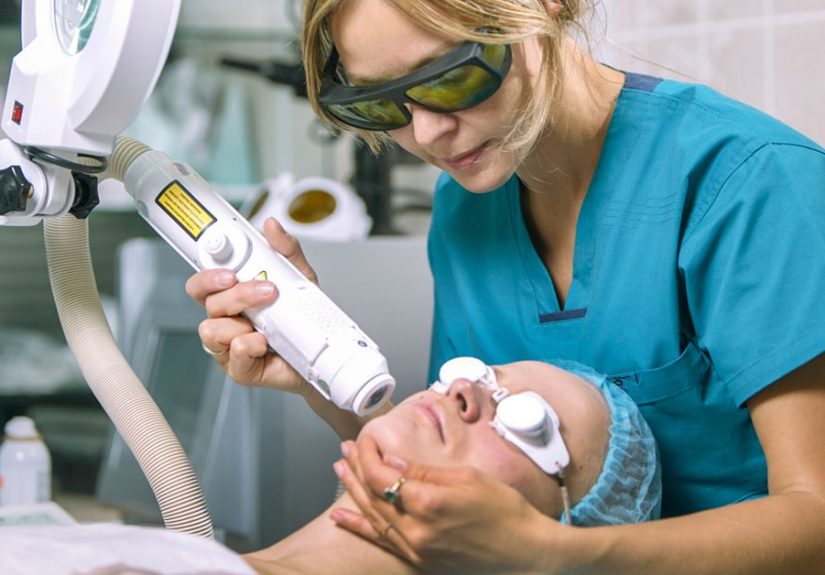
Laser treatment for rosacea is usually done in a dermatologist’s office or medical clinic. The skin is cleaned, and protective eyewear is placed over your eyes. Depending on the device and treatment area, your provider may apply cooling gel or use a built-in cooling system to protect the skin and improve comfort.
Most people describe the sensation as a rubber band snap, a quick hot prick, or a tiny spark against the skin. It is not usually unbearable, but it is not exactly a spa nap either. Treatments are often quick, sometimes lasting 15 to 45 minutes depending on the size of the area and the device used.
Afterward, your skin may look redder and feel warm, similar to a sunburn. Swelling can happen, especially around the cheeks and under the eyes. With some pulsed dye laser settings, bruising may appear and last several days to two weeks. IPL usually has less bruising, although redness and mild swelling are common.
How Many Sessions Are Needed?
Most people need a series of treatments. A typical plan may involve three to five sessions spaced several weeks apart, although the exact number depends on your symptoms, device, skin response, and goals. Some people notice improvement after one session, especially with visible vessels. Others need multiple visits before diffuse redness looks meaningfully calmer.
Results are gradual. Treated blood vessels fade as the body clears them. Redness may improve over weeks rather than overnight. If you are hoping to wake up the next morning with “new face, who dis?” energy, laser treatment may test your patience. The payoff is usually more of a steady fade than a dramatic curtain reveal.
Maintenance treatments may be recommended every six months, once a year, or as needed. Rosacea triggers, sun damage, genetics, and natural aging can all contribute to new redness over time.
Benefits of Laser Treatment for Rosacea
The biggest benefit is visible reduction in redness and blood vessels. For people who feel self-conscious about constant flushing or broken capillaries, this can be a major quality-of-life improvement. Many patients report that they use less concealer, feel more comfortable going makeup-free, and experience less anxiety about their skin appearance.
Other possible benefits include smoother-looking tone, fewer obvious red patches, and better confidence in social or professional settings. Some people also find that reducing visible vessels helps their skin look less inflamed overall, although laser treatment should still be paired with daily rosacea management.
Risks and Side Effects
Laser treatment is generally safe when performed by qualified professionals, but side effects can happen. Common temporary effects include redness, swelling, tenderness, warmth, mild itching, and bruising. Less common risks include blisters, burns, crusting, infection, scarring, and changes in skin color.
Pigment changes are especially important to discuss if you have medium to deep skin tone or a history of melasma. IPL and some lasers can worsen pigmentation if settings are too aggressive or if the skin is recently tanned. This is why “bargain laser day” should not be your skincare strategy. Experience matters.
Laser treatment may not be appropriate if you have active skin infection, uncontrolled inflammatory rosacea flare, recent isotretinoin use, certain photosensitizing medications, or a history of abnormal scarring. Always discuss your full health history before treatment.
Aftercare: How to Protect Your Results
After laser treatment, your skin needs gentle care. For the first few days, avoid hot showers, saunas, steam rooms, intense exercise, alcohol, spicy foods, and anything else that reliably turns your face into a warning light. Use a mild cleanser, bland moisturizer, and mineral-based sunscreen if recommended by your provider.
Do not pick at crusting or flakes. Do not exfoliate until your dermatologist says it is safe. Avoid retinoids, strong vitamin C products, glycolic acid, salicylic acid, benzoyl peroxide, and scrubs until your skin has recovered. Your face has just had a serious conversation with a laser; give it a calm room and a glass of metaphorical cucumber water.
Sun protection is non-negotiable. UV exposure is one of the most common rosacea triggers and can undo progress by encouraging more redness and vessel formation. Use broad-spectrum SPF 30 or higher daily, wear a wide-brimmed hat, and seek shade when possible.
Laser Treatment vs. Medication: Which Is Better?
Laser treatment and medication do different jobs. Topical medications such as metronidazole, azelaic acid, ivermectin, brimonidine, or oxymetazoline may help reduce bumps, inflammation, or temporary redness. Oral medications, including low-dose doxycycline, may be used for inflammatory rosacea. Laser therapy is better suited for visible blood vessels and persistent background redness.
Many people need a combination approach. For example, a dermatologist may prescribe a topical medication to control bumps, recommend a gentle skin care routine to repair the skin barrier, and use laser or IPL to reduce fixed redness. The best rosacea plan is usually not one heroic treatment; it is a well-behaved team.
How Much Does Laser Treatment for Rosacea Cost?
Cost varies widely depending on your location, provider, device, treatment area, and number of sessions. In many cases, laser treatment for rosacea is considered cosmetic, which means insurance may not cover it. However, coverage rules vary, especially if treatment is related to a medical diagnosis or severe symptoms. Ask your provider for a written estimate and check directly with your insurance company.
While cost matters, choosing the cheapest option can be risky. Laser devices are powerful medical tools. A poorly performed treatment can leave burns, scars, or pigment changes that cost far more to correct than the original session. Look for proper credentials, experience with rosacea, before-and-after photos, and a clear plan for your skin type.
How to Choose the Right Provider
Start with a board-certified dermatologist if possible. Ask what type of laser or light device they recommend and why. A good provider should explain expected results, number of sessions, downtime, risks, aftercare, and alternatives. They should also evaluate your actual rosacea pattern instead of offering a one-size-fits-all “redness package.”
Helpful questions include:
- Which laser or light device is best for my type of rosacea?
- How many sessions do you expect I will need?
- What side effects are most likely for my skin tone?
- Will I bruise or need downtime?
- What should I stop using before treatment?
- How should I care for my skin afterward?
- Will I still need prescription medication?
If the consultation feels rushed, vague, or salesy, keep looking. Your face is not a coupon experiment.
Common Myths About Laser Treatment for Rosacea
Myth 1: Laser Treatment Cures Rosacea Permanently
Laser treatment can reduce visible redness and vessels, but rosacea is chronic. You may need maintenance treatments and ongoing skin care.
Myth 2: IPL and Laser Are the Same Thing
IPL is light-based, but it is not technically a laser. Both can help rosacea, but they work differently and are chosen for different patterns of redness.
Myth 3: One Session Is Always Enough
Some visible vessels may improve quickly, but diffuse redness usually requires several treatments.
Myth 4: Laser Treatment Replaces Sunscreen
Nope. Sunscreen remains your daily bodyguard. Without sun protection, redness and vessels can return faster.
Real-World Experiences With Laser Treatment for Rosacea
People often walk into laser treatment with two feelings: hope and suspicion. Hope because they have tried green-tinted primers, gentle cleansers, prescription creams, trigger journals, and possibly whispered negotiations with their bathroom mirror. Suspicion because rosacea skin has a reputation for reacting to everything, including products labeled “calming,” “soothing,” and “for sensitive skin,” which sometimes feel like famous last words.
A typical experience starts with a consultation. Many patients say this is the most reassuring part because a good dermatologist explains that redness is not a personal failure or a hygiene issue. It is biology. For someone who has been told to “just drink more water” or “stop being embarrassed,” hearing that rosacea has real vascular and inflammatory components can feel like a tiny emotional exhale.
During the first session, the sensation can be surprising but manageable. Patients often compare PDL to quick snaps against the skin. IPL may feel like warm flashes or tiny rubber band flicks. The cheeks and nose tend to be more sensitive than the jawline. Some people smell a faint heated scent during laser pulses, which can be weird the first time but is generally normal. The treatment is usually fast enough that just when you start composing a dramatic internal monologue, it is over.
Immediately afterward, the face may look red, puffy, or blotchy. This is where expectations matter. The first look in the mirror is not always glamorous. Some people look sunburned. Some look like they cried during a spicy food challenge. If bruising settings were used, purple marks may appear and linger. This can be awkward for work or social plans, so scheduling matters. Many patients book treatment before a quiet weekend, not the day before wedding photos, job interviews, or a family gathering where Aunt Linda asks detailed questions.
The first week is usually about patience. Skin may feel warm, tight, or slightly tender. Gentle moisturizer becomes a best friend. Sunscreen becomes a daily contract. People who normally love hot yoga, long runs, red wine, or fiery ramen may need a short break because heat and flushing can worsen post-treatment redness. This is not forever, but it is part of protecting the result.
Improvement often sneaks in gradually. A person may notice that the red line beside the nose looks softer, or that the cheeks no longer flare as intensely after a warm shower. Makeup may sit better. The emergency concealer in the bag may retire from full-time employment to occasional consulting work. After two or three sessions, the change can become more obvious: fewer visible capillaries, less background redness, and a calmer baseline complexion.
Still, experiences vary. Some people respond beautifully. Others improve modestly and need a different device, stronger settings, or better control of triggers and inflammation. A few may decide the cost, downtime, or maintenance is not worth it. That does not mean they failed. Rosacea care is personal, and the best treatment is the one that improves both skin and quality of life without creating new stress.
The happiest laser patients tend to be those who treat it as part of a long-term rosacea plan. They keep using gentle skin care, avoid known triggers when possible, protect their skin from the sun, and return for maintenance when redness creeps back. Laser treatment is not a one-time breakup with rosacea. It is more like setting boundaries with a dramatic roommate: effective, worthwhile, and occasionally requiring follow-up conversations.
Conclusion
Laser treatment for rosacea can be a powerful option for people struggling with persistent facial redness, visible blood vessels, and certain forms of thickened skin. It works best when matched to the right symptoms, performed by an experienced provider, and combined with smart daily rosacea care. PDL, IPL, KTP, Nd:YAG, CO2, and erbium lasers each have different strengths, so the best choice depends on your skin tone, rosacea pattern, goals, and tolerance for downtime.
The most important takeaway is simple: laser therapy can improve rosacea, but it is not a cure. Maintenance, sunscreen, trigger awareness, and gentle skin care still matter. If your redness is affecting your confidence or not responding to other treatments, a consultation with a board-certified dermatologist can help you decide whether laser treatment belongs in your rosacea game plan.
Rosacea may enjoy making surprise appearances, but with the right tools, it does not have to run the show.





 Close
Close