
Table of Contents >> Show >> Hide
- Why a Malicious Server Motherboard Component Matters
- The Allegation: A Tiny Component With Big Implications
- Why the Story Became So Controversial
- Hardware Attacks Are Difficult to Prove
- Supply Chain Security Is the Real Main Character
- How a Hardware Implant Could Theoretically Work
- Why Traditional Cybersecurity Tools May Miss Hardware Threats
- What Companies Can Learn From the Motherboard Controversy
- Specific Example: The Data Center Procurement Problem
- The Role of Standards and Guidance
- What Security Teams Should Do Now
- Experience-Based Reflections: What This Topic Feels Like in the Real World
- Conclusion
- SEO Tags
In the world of cybersecurity, few stories can make a room full of IT professionals suddenly sit upright like the phrase “malicious component found on server motherboards.” Software bugs are bad enough. Phishing emails are annoying enough. Ransomware is the digital equivalent of finding a raccoon in your kitchen at 2 a.m. But a tiny unauthorized hardware component hidden inside the physical foundation of a server? That is a different level of nightmare fuel.
The famous case often associated with this topic involved allegations that a tiny hardware implant had been added to server motherboards supplied through a major technology supply chain and used by numerous companies. The report claimed that the component could potentially create a stealthy access point into corporate networks. The story quickly became one of the most controversial cybersecurity reports of the past decade because it touched everything businesses fear most: compromised suppliers, invisible backdoors, national security, cloud infrastructure, and the terrifying possibility that a threat could be baked into hardware before it ever arrived in a data center.
However, this story is not simple. Major companies named in connection with the alleged incident strongly denied finding malicious chips. The hardware vendor also denied the claims. Later public reporting noted that independent review efforts did not confirm the presence of such components. That makes this topic especially important for readers: the lesson is not merely “a spy chip was found.” The better lesson is that hardware supply chain security is now a boardroom issue, not just a server-room issue.
Why a Malicious Server Motherboard Component Matters
A server motherboard is not glamorous. It does not get a launch event, a celebrity endorsement, or a shiny unboxing video with dramatic music. Yet it is one of the most important pieces of equipment in modern computing. It connects processors, memory, storage, network interfaces, firmware, and management controllers. In plain English, the motherboard is the nervous system of a server.
If a malicious component were successfully added to a motherboard, the potential consequences could be serious. Unlike ordinary malware, which usually lives in software and may be detected by endpoint tools, a rogue hardware component could be harder to notice. It might sit quietly, interact with firmware or network traffic, and avoid traditional antivirus scans. That is why hardware tampering attracts so much attention from governments, cloud providers, defense contractors, financial institutions, and anyone else responsible for sensitive infrastructure.
The alleged motherboard implant story became so explosive because it suggested that attackers did not need to break into a company after deployment. Instead, they could theoretically compromise the supply chain before the server was delivered. That changes the entire security model. It means a company might receive a server that looks new, sealed, and legitimate, while secretly carrying a hidden risk.
The Allegation: A Tiny Component With Big Implications
The widely discussed allegation centered on server motherboards that were reportedly modified during manufacturing or assembly. According to the original report, the component was extremely small and designed to enable unauthorized access once the servers were installed. The report connected the alleged tampering to a broader supply chain operation and claimed that multiple organizations may have received affected hardware.
That description captured public imagination for an obvious reason: it sounded like something from a spy thriller, except the setting was not a secret underground bunker. It was the practical, spreadsheet-filled world of enterprise procurement. The terrifying part was not that the component was dramatic. It was that it was supposedly boring enough to hide among many other tiny parts on a complex board.
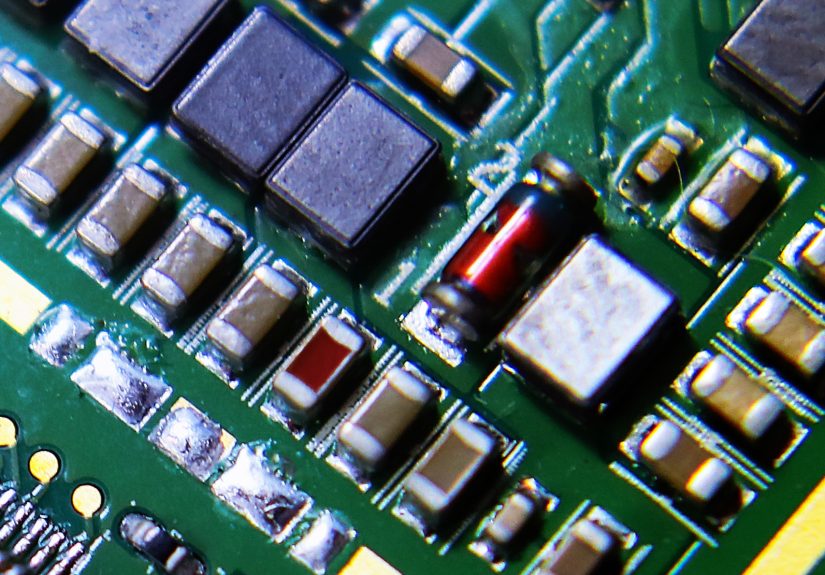
Modern server boards are crowded landscapes. Capacitors, resistors, chips, connectors, traces, controllers, and firmware storage devices all sit in tight formation. To most people, a motherboard already looks like a miniature city designed by someone who really enjoys right angles. A tiny unauthorized component could be extremely difficult for a non-specialist to identify, especially if it resembled legitimate parts.
Why the Story Became So Controversial
The controversy around the alleged malicious component is just as important as the allegation itself. Apple, Amazon Web Services, and Supermicro issued strong denials. They stated publicly that they had not found malicious chips in the systems described. The denials were unusually direct, detailed, and forceful, which made the story even more unusual.
In many cybersecurity incidents, companies use careful language. They may say they are “investigating,” “aware of reports,” or “working with partners.” In this case, the denials were much sharper. That created a rare public clash between a major media investigation and the companies named in the story.
Later reporting also discussed audit results that did not find evidence of malicious hardware on the reviewed motherboards. This did not erase the broader concern about hardware supply chain attacks, but it did mean responsible writers should avoid presenting the allegation as an undisputed fact. The more accurate framing is this: the report raised a major warning about possible hardware supply chain compromise, while the companies involved publicly rejected the claims and no public technical proof has settled the matter.
Hardware Attacks Are Difficult to Prove
One reason this topic remains so fascinating is that hardware attacks are difficult to investigate in public. With a software breach, investigators can often share indicators of compromise, malicious IP addresses, file hashes, logs, or malware samples. With hardware, the evidence may be physical, classified, proprietary, or destroyed during analysis.
A suspicious chip must be examined carefully. Investigators need to understand whether it is actually unauthorized, what it connects to, how it behaves, and whether it could realistically perform the claimed function. That requires electrical engineering, firmware analysis, board design knowledge, supply chain records, and sometimes highly specialized lab equipment. In other words, this is not the kind of mystery solved by clicking “view source” and drinking a heroic amount of coffee.
Hardware compromise also creates attribution problems. Even if a rogue component is found, investigators must determine when it was added, who added it, whether it was intentional, and whether it was part of espionage, fraud, counterfeit manufacturing, or quality-control failure. That complexity is one reason the motherboard story still appears in cybersecurity discussions years later.
Supply Chain Security Is the Real Main Character
The biggest lesson from the malicious motherboard component controversy is not limited to one vendor, one report, or one year. The real issue is supply chain security. Companies rarely build every part of their technology stack themselves. They depend on manufacturers, subcontractors, firmware developers, logistics providers, distributors, cloud vendors, repair centers, and third-party service partners.
Every added layer creates another place where risk can enter. A server might be designed in one country, contain chips from several others, be assembled somewhere else, shipped through multiple logistics networks, configured by a reseller, and finally installed in a corporate data center. That is a lot of trust packed into one purchase order.
Supply chain risk management means asking uncomfortable questions before the invoice is paid. Who built this hardware? Who had access to it? Are the firmware images signed? Can the board design be verified against known-good schematics? Are components traceable? Are suppliers audited? Are replacement parts controlled? Is there a process for investigating anomalies? These questions are not glamorous, but neither is explaining to executives that the company’s “trusted infrastructure” may need to be treated like a crime scene.
How a Hardware Implant Could Theoretically Work
A malicious hardware component does not need to look like a movie villain’s blinking red device. It might be small, quiet, and boring. The theoretical goal could be to influence firmware behavior, communicate with a management controller, alter boot processes, weaken authentication, or create a covert way for attackers to reach deeper systems.
Enterprise servers often include a baseboard management controller, commonly known as a BMC. This subsystem allows administrators to manage servers remotely, even when the main operating system is not running. BMCs are extremely useful, especially in large data centers. They are also sensitive because they often have deep control over the machine.
If an attacker could interfere with low-level server management functions, the result could be dangerous. They might gain persistence, observe traffic, modify firmware behavior, or create a hidden pathway into a network. This is why security teams treat firmware, remote management interfaces, and supply chain validation as critical parts of modern defense.
Why Traditional Cybersecurity Tools May Miss Hardware Threats
Many companies have invested heavily in firewalls, endpoint detection, identity systems, vulnerability scanning, and security awareness training. Those controls matter. But they are mostly designed for software, users, and network behavior. A hardware implant lives in a different world.
Traditional tools may not notice a tiny physical component unless it causes detectable behavior. Even then, the symptoms might look like ordinary network noise, firmware instability, or strange server behavior. Security teams could spend weeks blaming drivers, updates, or that one server everyone quietly hates before realizing the issue sits deeper.
This is why hardware security requires layered controls. Organizations need trusted suppliers, tamper-evident logistics, firmware integrity checks, secure boot, network segmentation, monitoring of management interfaces, and asset inventories that include hardware and firmware details. In high-risk environments, they may also need physical inspection, X-ray analysis, destructive testing of sample units, and independent labs.
What Companies Can Learn From the Motherboard Controversy
1. Treat Suppliers as Part of the Security Boundary
A supplier is not just a vendor in accounting software. It is part of the organization’s security perimeter. Companies should evaluate hardware suppliers based on security maturity, transparency, manufacturing controls, incident response cooperation, and component traceability.
2. Verify Firmware and Configuration
Firmware should be signed, verified, updated, and monitored. Servers should arrive with documented firmware versions, and any unexpected changes should trigger investigation. This is especially important for BMCs, network cards, storage controllers, and boot firmware.
3. Segment Management Networks
Remote management interfaces should not sit casually on broad corporate networks like they are waiting for trouble to wander by with a clipboard. They should be isolated, monitored, and protected with strong authentication.
4. Keep Hardware Inventories Detailed
Asset inventory should go beyond “server in rack 12.” It should include model numbers, serial numbers, firmware versions, component details, supplier records, purchase channels, warranty history, and lifecycle status.
5. Prepare for Uncomfortable Investigations
If hardware tampering is suspected, the response plan should already exist. Companies need procedures for preserving evidence, isolating systems, contacting vendors, engaging forensic specialists, communicating internally, and deciding whether legal or government reporting is required.
Specific Example: The Data Center Procurement Problem
Imagine a fast-growing streaming company buying thousands of servers for a new video platform. The procurement team wants speed. The infrastructure team wants performance. Finance wants predictable cost. Security wants assurance. Everyone wants the project finished before the launch date, preferably without living on cold pizza and emergency meetings.
In that environment, hardware supply chain risk can be overlooked. The servers arrive, they pass basic checks, and they go into production. But if the organization lacks firmware verification, trusted supplier controls, and segmented management networks, it may not notice unusual low-level behavior until much later.
This example shows why supply chain security must be built into procurement from the beginning. Security cannot be sprinkled on top afterward like decorative parsley. It has to be included in vendor selection, contract language, delivery inspection, deployment standards, and ongoing monitoring.
The Role of Standards and Guidance
Cybersecurity frameworks from organizations such as NIST and CISA emphasize the importance of supply chain risk management. The goal is not to create paperwork for paperwork’s sake. The goal is to help organizations identify, assess, respond to, and monitor risks that come from third-party products and services.
Good supply chain security includes policies, supplier requirements, risk assessments, secure acquisition practices, incident response planning, and continuous monitoring. For hardware, it also includes firmware resiliency, platform integrity, trusted boot processes, and recovery methods if critical firmware becomes corrupted or compromised.
The motherboard controversy made these ideas feel less theoretical. It reminded executives that “trusted hardware” is not automatically trustworthy just because it arrived in a professional-looking box. Trust must be earned, verified, and renewed throughout the hardware lifecycle.
What Security Teams Should Do Now
Security teams do not need to panic every time they see a server motherboard. Panic is not a strategy; it is just cardio with anxiety. A better approach is to build a realistic hardware assurance program based on risk.
Start by identifying critical systems. Not every device requires the same level of inspection. Servers handling sensitive customer data, government workloads, payment processing, intellectual property, or cloud infrastructure deserve stronger controls than low-risk lab equipment.
Next, review supplier relationships. Use approved vendors, avoid gray-market hardware, require documented chain of custody, and make sure contracts include security expectations. Ask vendors about firmware signing, component traceability, vulnerability disclosure, and incident cooperation.
Then improve technical controls. Enable secure boot where appropriate. Restrict BMC access. Monitor management traffic. Keep firmware updated. Compare deployed configurations against known-good baselines. Use network segmentation so one compromised component cannot freely wander through the environment like it owns the place.
Finally, practice response. Tabletop exercises should include hardware compromise scenarios. Teams should know who decides whether a server is pulled from production, who contacts the vendor, who preserves evidence, and who communicates to leadership.
Experience-Based Reflections: What This Topic Feels Like in the Real World
Anyone who has worked around servers knows that infrastructure has a strange personality. On paper, it is all architecture diagrams, asset tags, ticket numbers, and uptime targets. In real life, it is also blinking lights, hot aisles, mysterious cables, firmware update windows, and that one rack where every problem seems to hold a family reunion.
The idea of a malicious component on a motherboard feels unsettling because hardware is supposed to be the dependable layer. Administrators expect software to be weird. They expect operating systems to complain, applications to misbehave, and users to click things that should have been left alone. But hardware is expected to sit there and be solid. When that trust is questioned, the emotional reaction is different.
One practical experience many IT teams share is the difficulty of proving a negative. If someone asks, “Are you absolutely sure there is no unauthorized component on this board?” the honest answer is complicated. A visual inspection may not be enough. A firmware scan may not be enough. Vendor documentation may not be enough. High assurance requires multiple forms of evidence, and even then, security is about reducing risk, not achieving magical certainty.
This is where mature organizations separate themselves from reactive ones. A reactive company waits for a headline, then asks whether its servers are affected. A mature company already has an inventory, supplier records, firmware baselines, network segmentation, and an escalation path. It may still have hard questions, but at least it is not trying to build a map while the building is already on fire.
Another real-world lesson is that procurement and security must speak earlier. Too often, security teams are invited after a purchase has already been made, which is a bit like asking a home inspector to review a house after you have moved in, painted the walls, and adopted three dogs. Security should be part of vendor selection, not an awkward afterthought.
Hardware trust also depends on boring habits done consistently. Buy from authorized channels. Record serial numbers. Validate firmware. Separate management interfaces. Remove unused services. Review vendor advisories. Test recovery procedures. None of this sounds exciting, but neither does brushing your teeth, and civilization seems to agree that skipping it creates problems.
The most useful mindset is calm skepticism. Do not assume every motherboard hides a secret implant. Do not assume every vendor is careless. But also do not assume that expensive hardware is automatically safe. The modern technology supply chain is too large, too global, and too complex for blind trust.
The malicious motherboard component controversy remains valuable because it forced the industry to look below the operating system and ask harder questions. What do we really know about the devices running our businesses? Who touched them before we did? Can we verify their integrity? Would we notice if something changed? Those questions are uncomfortable, but they are exactly the questions serious cybersecurity programs need to ask.
Conclusion
The story of a malicious component allegedly found on server motherboards supplied to numerous companies remains one of the most debated cybersecurity narratives of the modern era. The original allegation described a frightening hardware supply chain attack with massive implications. The companies named in the story strongly denied the claims, and public evidence has not resolved the controversy in a way that makes the allegation universally accepted.
Still, the broader warning is real. Hardware supply chain security matters. Servers are not just boxes of metal and silicon; they are trust anchors for cloud platforms, enterprise systems, financial networks, government services, and everyday digital life. If attackers can compromise hardware before deployment, traditional defenses may not be enough.
For businesses, the smartest response is not panic. It is preparation. Build stronger supplier controls. Verify firmware. Segment management networks. Maintain detailed inventories. Practice incident response. Treat hardware assurance as a living process, not a one-time checkbox.
In short, the motherboard controversy taught the technology world an uncomfortable but necessary lesson: the smallest component can raise the biggest questions.







 Close
Close