
Table of Contents >> Show >> Hide
When Medal of Honor: Airborne dropped (literally) in 2007, it tried something bold for a very crowded
World War II shooter market: it kicked you out of a plane and told you to figure the rest out on the way down.
Nearly two decades later, players still argue about which missions, weapons, and design choices truly shine
and where Airborne faceplants like a botched parachute landing.
This guide walks through community-favorite rankings and opinions on Medal of Honor: Airborne:
from the best campaign missions and weapons to how it stacks up against other WWII shooters. If you’ve ever
wondered, “Was this game underrated, or did critics get it right?” grab your chute, soldier. We’re jumping in.
Quick Overview of Medal of Honor: Airborne
Medal of Honor: Airborne is a first-person shooter developed by EA Los Angeles and released in 2007 for
PC, Xbox 360, and PlayStation 3. You play as Private (later Corporal) Boyd Travers of the 82nd and 17th Airborne
Divisions, fighting across six major operations in the European theater, from Sicily to Germany’s towering flak
fortresses.
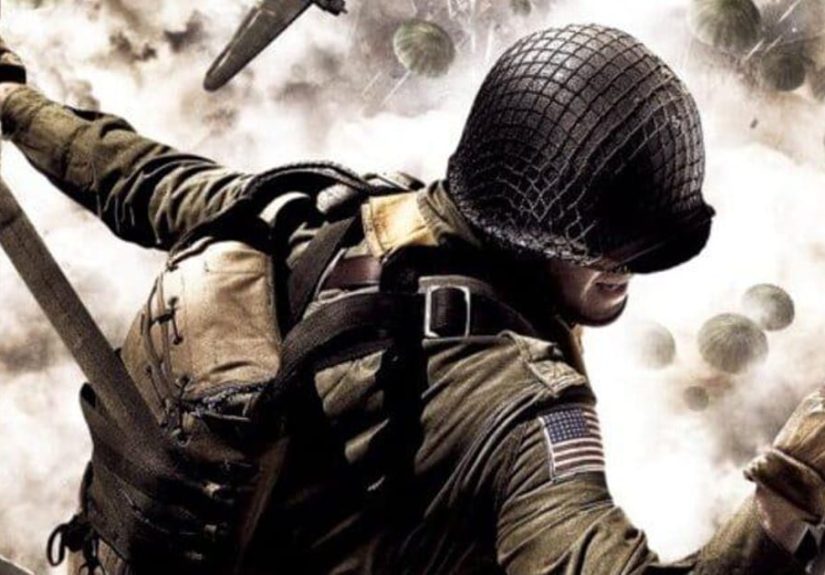
Its standout gimmick and biggest innovation is the free-form parachute insertion. Every major
mission begins with a jump from a C-47, letting you steer your parachute and choose your own landing zone. Where
you land shapes your opening fights, your routes, and sometimes whether you feel like a strategic genius or a
dropped bowling ball.
Critics generally landed in the “good but not legendary” range: IGN gave it around 7.9/10 and called it the best
Medal of Honor entry in a while, while GameSpot rated it 7.0/10, saying the campaign starts slow but becomes great
in the last two levels. Aggregate scores on Metacritic hover in the mid-to-high
70s depending on platform, with users often a bit more generous than critics.
Ranking the Campaign Missions
The single-player campaign includes six main missions (plus training), each built around a historical operation:
Husky, Avalanche, Neptune, Market Garden, Varsity, and the final assault on Der Flakturm.
Here’s one widely shared ranking based on difficulty, spectacle, and how well each mission uses Airborne’s
drop-anywhere design.
1. Der Flakturm – Flying Through Hail
The final mission, where you assault a massive German flak tower, is often called the game’s masterpiece. Many
fans single out this level as the moment Airborne fully delivers on its promise: intense vertical combat, brutal
enemies, and a cinematic conclusion as the tower collapses.
You’re dropping into chaos, navigating exterior platforms, interior corridors, and multiple floors full of elite
enemies armed with StG-44s and MG42s. It’s tough, but it’s also where the weapon-upgrade system and your learned
tactics really pay off.
2. Operation Market Garden – The Opening
Set in Nijmegen, Market Garden combines urban street fighting with a tense bridge defense that feels like a
playable WWII movie trailer. Historically, Market Garden was an ambitious but flawed Allied operation in the
Netherlands; the game leans hard into the desperate push to secure the bridge while fending off tanks and
Panzergrenadiers.
The mission’s open layout really rewards smart landings: hit a rooftop, flank machine-gun nests, and clear the
streets from above or land wrong and get shredded before you even say “objective marker.”
3. Operation Neptune – Saved by Sacrifice
Operation Neptune drops you behind Utah Beach on D-Day. It’s a classic WWII setting, but Airborne’s take focuses
on knocking out radar stations, bunkers, and a Tiger tank that threatens the invasion force.
The level is packed with snipers and trench networks, making positioning everything. A clever drop near cover
turns a frustrating slog into a satisfying, methodical assault. It’s the mission where many players finally “get”
the slow-and-steady, aim-down-sights gunplay the game demands.
4. Operation Varsity – Young Fools
Varsity sends you into an industrial complex in Germany’s Ruhr region to wreck a tank assembly plant, a munitions
factory, and armored reinforcements arriving by train.
Varsity is beloved for its set pieces especially the fortified train yard and its difficulty spike. Enemies
hit harder, the layouts are more complex, and staying mobile between cover is essential. It functions as a
dress rehearsal for the hellstorm of Der Flakturm.
5. Operation Avalanche – The Show
Avalanche takes place among the ruins of Paestum in Italy, where you’re sabotaging fuel depots, ammo stockpiles,
and radio equipment. The setting is beautiful in a “ruined temple full of people
trying to kill you” way, but the mission is more linear and less memorable than the later operations.
Still, it’s the first time the game really feels like it’s opening up more verticality, more flanking routes,
and more opportunities to experiment with different weapons.
6. Operation Husky – Infinite Mischief
Husky is the classic “first real mission” of a WWII shooter: a Sicilian town, anti-aircraft guns, and a mix of
Italian and German units. It’s solid, but heavily tutorial-flavored; the game is
still teaching you landings, weapon upgrades, and how not to charge MG42s in a straight line.
Many players remember Husky more for its promise than its payoff: it hints at the free-flowing chaos to come but
doesn’t fully unleash it yet.
Ranking the Best Weapons in Medal of Honor: Airborne
One of Airborne’s underrated strengths is its weapon upgrade system. As you use a gun, it gains
experience and unlocks up to three upgrades improved recoil, damage, sights, and so on. Fully upgraded weapons
not only perform better; their HUD icons also change.
Here’s a commonly agreed-upon shortlist of top-tier weapons:
1. M1 Garand
The Garand is your trusty all-rounder: accurate, powerful, and extremely satisfying thanks to its iconic “ping.”
With upgrades, recoil drops and accuracy climbs, making it deadly at mid-range. It’s the weapon that carries a lot
of players through Husky, Avalanche, and beyond.
2. Thompson Submachine Gun
Up close, the Thompson is a lawnmower with a hero complex. Fully upgraded, it becomes a melt machine for close
quarters in Market Garden’s buildings and Der Flakturm’s interiors. There are whole threads dedicated to arguing
whether the Thompson is “too strong” which tells you everything you need to know.
3. StG-44 (Sturmgewehr 44)
Once you snag the German StG-44, it’s hard to go back. As one of the first true assault rifles in history, it’s
equally dangerous at medium and short ranges in the game. Fully upgraded, it’s a laser beam of bad news for anyone
in your sights.
4. Springfield or Gewehr 43 (Sniper Role)
For players who like methodical play, the Springfield (Allied) and Gewehr 43 (Axis) shine in missions heavy on
snipers and elevated positions especially Neptune and Market Garden. Pick a good rooftop drop, clear streets and
bunkers from afar, and suddenly the “unfair” mission becomes a tactical puzzle you’re solving with headshots.
5. Recoilless Rifle / Panzerschreck
Anti-tank weapons like the recoilless rifle and Panzerschreck are less about style and more about necessity.
They’re clunky and slow, but they’re also what stands between you and Tiger tanks, fortified MG nests, and groups
of dug-in enemies. One well-placed rocket can completely change the tempo of a fight.
Critics vs. Fans: Is Airborne Underrated?
When Medal of Honor: Airborne released, reviewers liked it but didn’t exactly throw a parade. Reviews
praised the weapon upgrades and non-linear landing system but criticized the early missions and occasional rough
edges in aiming and pacing.
Over time, though, a lot of players have adopted the game as a kind of cult favorite. On Metacritic and store
pages, you’ll find user reviews calling it “underrated” with “great sound, graphics for the time, and a brilliant
final level.” On Reddit and forums, people still discuss its innovations like
the airborne insertion system and “affordance” AI that dynamically uses cover and terrain.
In the larger WWII FPS conversation, Airborne usually sits in the “hidden gem” tier:
- More experimental and free-form than many Medal of Honor and early Call of Duty titles.
- Less polished and cinematic than later big-budget shooters, but more replayable in certain missions.
- Especially beloved by players who enjoy replaying levels to perfect their drops and star ratings.
Tips for Enjoying Airborne Today
If you’re jumping into Medal of Honor: Airborne in the modern era maybe on PC via digital stores a few
mindset shifts can make a huge difference:
1. Treat Each Drop Like a Strategy Puzzle
The landing system isn’t just a gimmick; it’s the heart of the game. Aim for rooftops, flanking angles, and green
smoke “safe zones” early on, then experiment with riskier “skill drops” through windows and tight alleyways as you
get more comfortable.
2. Upgrade a Core Loadout
Focus on upgrading a few weapons for example, Garand + Thompson or Garand + StG-44. This lets you feel tangible
progression as recoil falls and damage climbs. Chasing the Weapon Master achievement (fully
upgrading every weapon) is also a satisfying long-term goal for completionists.
3. Respect the Difficulty
Airborne can be surprisingly punishing, especially on higher difficulties or if you try to play it like a run-and-gun
arcade shooter. Critics and players alike point out that it’s really built around cover, deliberate aiming, and
careful movement. If you’re new, there’s no shame in starting on an easier
difficulty and working your way up to those coveted five-star mission ratings.
500 Extra Words of Player-Focused Experiences
Talking about Medal of Honor: Airborne in purely technical terms misses what keeps people coming back:
the stories that emerge from each drop. Because every mission begins in the sky, your experience
can feel wildly different from someone else’s, even if you’re both technically playing the same level.
Picture this: you’re descending over Operation Husky for the fifth time. The first few runs, you probably followed
the green-smoke landing zones like a good little paratrooper. This time, you pull hard on the chute, line up with
a barely-open rooftop balcony, and squeak through by inches. You touch down in a dark room above an MG nest,
quietly clear the floor, and then open a window into the entire town square. Suddenly, the mission that used to
feel like a linear slog becomes a sniper’s playground and a sandbox for experimentation.
Or think about Der Flakturm. On paper, it’s just “assault the flak tower, clear the floors, blow it up.” In
practice, it’s a mini-campaign inside a single mission. Maybe your first attempt was chaos: you landed too close
to an MG42, got shredded, and spent the next 20 minutes respawning and trying not to rage-quit. On your second or
third attempt, you approach it like a puzzle. You drop onto a side platform, take out a few key enemies, kick a
grenade back down a corridor (still one of the most satisfying mechanics), and slowly climb your way up the tower.
By the time you reach the top levels, your weapons are fully upgraded and your reflexes are dialed in. The
experience shifts from overwhelmed panic to controlled intensity. This is why so many players cite the last level
as a masterpiece: it’s not just well-designed; it’s the final exam for everything you’ve learned.
There’s also a special kind of joy in the game’s failures. Botched landings crashing into a wall, landing in a
courtyard full of enemies, or misjudging a rooftop are frustrating in the moment but very funny in hindsight. The
ragdoll physics, occasionally over-the-top enemy reactions, and chaotic firefights give Airborne a scrappy charm
that perfectly polished shooters sometimes lack.
Multiplayer, while not as active today, deserves a nod too. Modes like Airborne Objective, where Allied players
parachuted in while Axis troops defended on the ground, leaned into the verticality and unpredictability of the
core design. Spawning from the air meant you were never completely locked into one approach you could always
adjust, try a new route, and drop right on top of a previously unbreakable defense.
Even now, when modern shooters offer enormous open worlds and high-end graphics, revisiting
Medal of Honor: Airborne feels surprisingly fresh. The missions are compact but replayable, the weapons
are satisfying to master, and the airdrop mechanic still stands out in a genre where “walk forward while things
explode near you” is often the default. For players who enjoy optimizing routes, chasing perfect mission ratings,
or just role-playing as a paratrooper dropping behind enemy lines, Airborne remains a lovable, slightly rough
gem in WWII shooter history.
So if you’re wondering where it ranks: it’s probably not the absolute best WWII shooter ever made but in the
hearts of many players, especially those who appreciate its experimental spirit, Medal of Honor:
Airborne absolutely earns a spot in the “must-try” tier. And if you mess up your first landing, don’t
worry. In this game, there’s always another jump.







 Close
Close