
Table of Contents >> Show >> Hide
- What Exactly Is Mohair?
- Why Mohair Throws Feel So Special
- Mohair vs. Other Throw Materials
- How to Choose the Right Mohair Throw
- Styling Ideas: Where Mohair Throws Look Best
- Caring for Mohair Throws Without Losing the Fluff
- Are Mohair Throws Worth the Investment?
- Living with Mohair Throws: Real-World Cozy Stories
- Final Thoughts
sources:
Few home accessories can upgrade your space as quickly as a mohair throw. One minute your sofa looks a little tired; the next, there’s a cloud of soft,
shimmery warmth casually draped over the arm and everything suddenly feels intentional and expensive. If you’ve ever wondered why designers obsess over
mohair throws (and why they often come with “wait…how much?” price tags), this guide is for you.
Below, we’ll unpack what mohair actually is, why mohair throw blankets feel so luxurious, how they compare to other fibers, how to care for them without
destroying the fluff, and smart tips for choosing and styling one at home. Then we’ll wrap up with some real-world stories of life with mohair throws so
you can decide whether this cozy upgrade is worth it for you.
What Exactly Is Mohair?
Mohair is a natural fiber made from the hair of the Angora goat (not to be confused with Angora wool from rabbits). It’s considered a luxury fiber, like
cashmere, alpaca, and silk, because it combines several traits that are hard to get in a single material: it’s warm, lightweight, lustrous, and durable.
Unlike many sheep’s wools, mohair fibers are long, smooth, and have less prominent surface scales. That structure helps explain why mohair is:
- Exceptionally soft for a wool-like fiber
- Very strong and resilient, resisting wear and stretching out of shape
- Thermo-regulating, insulating you in winter but not stifling in shoulder seasons
- Naturally elastic and crease-resistant, so it springs back after being folded or sat on
- Excellent at taking dye, which is why mohair throws often come in intense, saturated colors
Because of this mix of properties, mohair shows up not just in throws but in suits, scarves, upholstery, and even rugs. For home use, though, the mohair
throw blanket is where the fiber really shinesliterally and figuratively.
Why Mohair Throws Feel So Special
Featherlight Warmth
One of the biggest surprises when you actually pick up a mohair throw is the weight. It’s often much lighter than a chunky wool blanket but somehow feels
warmer once you tuck yourself under it. The airy structure of the fibers traps pockets of air, creating insulation without bulk. This makes a mohair throw
perfect for people who hate feeling weighed down but still want serious coziness.
Softness with a Little Halo
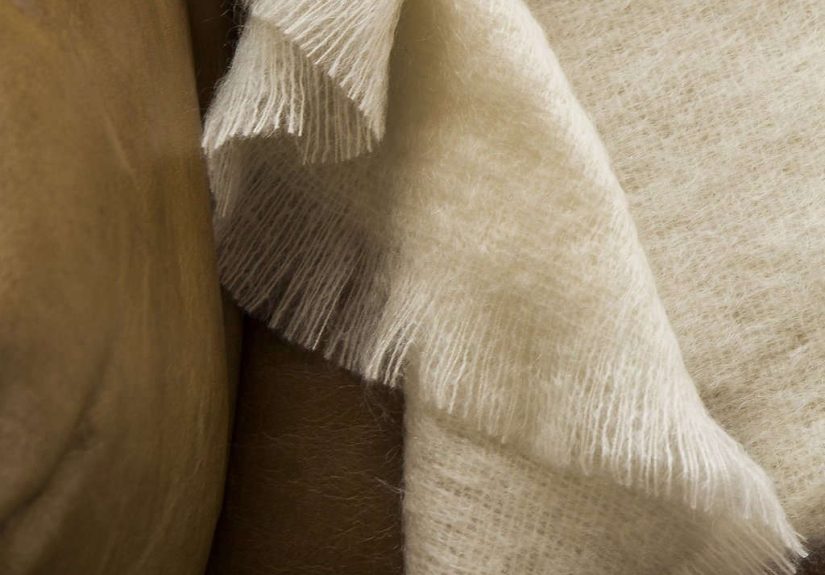
Mohair has a characteristic “halo”those fine, fuzzy fibers that create a soft outline around the throw. That halo gives the blanket a dreamy, cloudlike
look and contributes to the soft touch. Compared with some regular wools, which can feel scratchy against bare skin, mohair is typically gentler on the
neck, arms, and legs.
Natural Sheen and Color Depth
Mohair has a natural luster that almost looks silk-like in the right light. When it’s dyed, the color doesn’t just sit on the surface; it glows. That’s why
mohair throws often come in bold jewel tones, ombré plaids, or rich neutrals that appear deeper and more complex than the same color in cotton or acrylic.
If you like your decor to look layered and intentional with minimal effort, this sheen is doing a lot of the work for you.
Breathable and Odor-Resistant
Mohair fibers are naturally breathable and moisture-wicking, so you’re less likely to overheat under a mohair throw than under heavily brushed synthetics.
The fiber also tends to resist odors and stay fresh longer, which is exactly what you want from the blanket that gets dragged from sofa to bed to reading
chair and back again.
Durability That Justifies the Price
Mohair’s toughness is underrated. Those long, strong fibers resist pilling and wear, so a quality mohair throw can last for years with basic care. While
the upfront cost is higher than a basic fleece or polyester throw, the cost-per-use often ends up lower if you use and love it daily.
Mohair vs. Other Throw Materials
Mohair vs. Wool
Mohair and wool both come from animals and both insulate well, but their personalities are different. Wool (especially lambswool or merino) is soft and
cozy, but can feel denser and less lustrous. Mohair tends to:
- Feel lighter for the same level of warmth
- Have more sheen and drape
- Resist creasing and pilling a bit better
If you run cold and want serious warmth, a heavy wool blanket is still a classic. If you want warmth that looks and feels airy, mohair throws are often the
better pick.
Mohair vs. Cashmere
Cashmere is ultra-soft, buttery, and typically even more expensive. Mohair, while still luxurious, is usually more durable and less delicate. A cashmere
throw feels like a treat you baby; a mohair throw feels like a luxury you actually use every day without panicking when someone sits on it in jeans.
Many brands blend mohair with wool or other fibers to balance softness, strength, and price. A mohair-blend throw can be a smart middle ground if you want
that fuzzy halo and shine without going fully into “designer splurge” territory.
Mohair vs. Synthetic and Faux Mohair
Faux mohair throws made from polyester or acrylic are everywhere. They’re usually much more affordable, can mimic the fluffy look, and are often easier to
toss in the washing machine. However, they don’t typically match real mohair on breathability, temperature regulation, or longevity.
If you’re styling a room on a tight budget, faux mohair is a great temporary stand-in. If you’re building a home with pieces you’ll keep for years,
genuine mohair throws are the long game.
How to Choose the Right Mohair Throw
Before falling in love with the first fuzzy blanket you see online, it helps to know what to look for. Here are key factors to consider:
1. Fiber Content
Check the label. You’ll see:
- 100% mohair – maximum halo, shine, and lightness; often the priciest
- Mohair blends (e.g., 70% mohair, 30% wool) – still fluffy and warm, but with extra durability and structure
- Faux mohair – synthetic fibers designed to mimic the look
For a hero piece you’ll use constantly, a high-mohair or all-mohair throw is ideal. For kids’ rooms or high-spill zones, a blend or faux version might be
more practical.
2. Size and Weight
Typical mohair throws are around 50 by 70 inchesgreat for sofas and end-of-bed styling. If you’re tall or want to share, look for oversized versions. Pay
attention to weight too: some mohair throws are ultra-light and almost ethereal, while others feel denser and more blanket-like.
3. Color and Pattern
Mohair takes dye beautifully, so you’ll see everything from minimalist solids to bold plaids. Think about:
- Neutrals (camel, cream, gray) for timeless, “this could be in any designer catalog” vibes
- Jewel tones (emerald, sapphire, ruby) to energize a quiet room
- Plaids and ombrés to add movement and visual interest to plain furniture
If you’re nervous about commitment, pick a neutral base sofa and let your mohair throw be the colorful, low-risk statement piece.
4. Ethical and Sustainable Sourcing
Because mohair comes from animals, it’s worth checking whether the brand mentions responsible farming practices, animal welfare standards, and sustainable
land management. Many reputable producers now highlight certifications or traceability, which can help you feel better about your cozy purchase.
5. Budget and Longevity
Mohair throws can range from “nice gift” pricing to “this could be a plane ticket.” When comparing options, think in terms of years of use, not just the
price tag. A well-made throw that you reach for daily every winter can easily outlast several cheaper blankets that pill, flatten, or fall apart.
Styling Ideas: Where Mohair Throws Look Best
On the Sofa (The Classic)
Drape your mohair throw loosely over the back or arm of the sofa so the fringe skims the floor. The fuzzy texture instantly softens leather, brightens
dark upholstery, and makes even a budget couch feel more intentional. For movie nights, it’s already right there waiting for you.
Layered at the Foot of the Bed
Fold the throw in thirds lengthwise and lay it across the foot of the bed. This look adds hotel-level polish and a practical extra layer you can pull up on
cold nights. It’s especially good in guest roomsnothing says “we like you, please visit again” like a ridiculously soft blanket ready to go.
Reading Nooks and Desk Chairs
Toss a mohair throw over the back of a reading chair or home office chair. It’s a small styling move that makes workdays and reading sessions feel more
like self-care and less like chores. Plus, you can wrap it around your shoulders when the afternoon chill hits.
Outdoor Spaces (With Care)
On covered porches or screened-in patios, a mohair throw is perfect for fall evenings. Just bring it back inside after use and avoid damp conditionsmohair
insulates well even if it gets a bit moist, but it’s happier when fully dry and airy.
Caring for Mohair Throws Without Losing the Fluff
Mohair is surprisingly low-maintenance if you treat it right. The key is respecting the fiber’s delicacy while taking advantage of its natural resistance
to dirt and odors.
Day-to-Day Care
- Shake it out regularly to remove dust and loose fibers.
- Air it over a railing or drying rack occasionally to keep it fresh.
- Rotate how you drape it so the same area isn’t always getting the most friction.
Brushing to Restore the Halo
Over time, mohair’s fluffy surface can flatten, especially where people sit or lean. A soft-bristle mohair or clothes brush, used gently in one direction,
can revive the halo and remove surface lint. Think “light strokes,” not “aggressive scrubbing.”
Spot Cleaning
For small spills:
- Blot (don’t rub) with a clean, dry cloth.
- If needed, dab with cold water and a tiny bit of gentle wool detergent.
- Blot again to remove excess moisture and lay flat to dry away from direct heat or sun.
Avoid soaking the throw or using hot water; both can cause felting or shrinkage.
Deep Cleaning
Most genuine mohair throws do best with professional dry cleaning. Check the care label, but if in doubt, dry clean once a season or when visibly soiled.
Machine washing, especially in hot water or with harsh detergents, can permanently damage the fibers and kill that beautiful halo.
Storage Tips
When you’re not using your mohair throw, store it in a breathable cotton bag or pillowcase, not plastic. Add cedar or lavender sachets if you’re concerned
about moths. Fold it loosely to avoid hard creases, and make sure it’s fully dry before putting it away.
Are Mohair Throws Worth the Investment?
If you only use a throw blanket a couple of times a year, a simple fleece might be enough. But if throws are basically your off-duty uniformover your lap
while you read, around your shoulders while you work from home, layered on the bed and dragged to the sofathen a mohair throw can absolutely be worth the
upgrade.
You’re getting a mix of visual impact, tactile comfort, and long-term durability that cheaper fibers rarely match. Add in the fact that a mohair throw can
outlive several decor trends and still look chic, and it starts to feel less like a splurge and more like a smart, cozy investment.
Living with Mohair Throws: Real-World Cozy Stories
To really understand mohair throws, it helps to picture how they show up in everyday life. Here are a few scenarios that capture what it’s like to actually
live with one.
The “Unexpectedly Warm” Movie Night
Imagine a chilly Friday evening. You’ve promised yourself a solo movie marathon, snacks included. The thermostat is set a little lower than usual to keep
the energy bill sane, and normally you’d be piling on two blankets and still fiddling with socks. With a mohair throw, you drape it across your legs and
immediately notice that strange combo of lightweight and toasty. Halfway through the movie you realize you’re completely comfortableno shifting, no
kicking off layers, no overheating. The blanket simply does its job without demanding attention.
The “Guest Room Wow” Moment
Now picture a guest walking into your spare bedroom for a weekend stay. The room is simple: a clean white duvet, a small nightstand, a lamp. But at the
foot of the bed, there’s a lush, emerald mohair throw with a soft halo catching the light. Your guest doesn’t comment on the thread count of the sheets or
the lamp style. They say, “Okay, that blanket is gorgeous.” Later that night, when the house gets cool, they pull it up and discover it’s not just pretty
it’s deeply, quietly warm. The next morning, you catch them Googling mohair throws over coffee.
The “Work-From-Home Power Accessory”
For many people, the home office chair has become a second home. Hours of video calls, emails, spreadsheets, and the occasional doom-scroll can make the
day blur together. Keeping a mohair throw draped on the back of your chair transforms that space just a bit. On a long call, you casually wrap it around
your shoulders. Suddenly you’re less focused on how cold the room is and more focused on what you’re saying. When you glance at your webcam preview, the
fuzzy, luxe texture in the background also makes your space look more pulled togetherlike a small, soft promotion.
The “Family Blanket” Evolution
Over time, many households find that one mohair throw quietly becomes “the” blanket. It’s the one people reach for first, even if there are others
folded in the basket. Kids drag it to the couch for cartoons, teens steal it for marathon study sessions, adults grab it for early-morning coffee on the
porch. Because the fiber holds up so well, it survives all of this with only occasional brushing and a yearly dry clean. Years later, it’s still around,
still beautiful, maybe with a story or two in the faint patina of use.
The “Season-to-Season” Workhorse
In deep winter, your mohair throw goes into full-time duty, layered over duvets and piled on sofas. In spring and fall, it becomes the perfect in-between
layer for slightly chilly nights where you don’t want to turn the heat up or drag out heavy blankets. Even in summer, it can live at the foot of the bed
or on a chair, ready for cold A/C evenings or early-morning coffee runs to the balcony. Instead of being a “winter-only” item, the throw ends up working
nearly year-round.
These kinds of experiences explain why so many people who invest in one good mohair throw end up buying a second. It moves with you through seasons,
routines, and even homesquietly making all of them a little softer and a lot more comfortable.
Final Thoughts
Mohair throws are more than just pretty blankets. They’re a blend of luxurious fiber science and everyday practicality: warm yet light, durable yet soft,
eye-catching yet easy to live with. If you’re looking for a single decor piece that boosts comfort, adds visual richness, and will still look great years
from now, a well-chosen mohair throw is hard to beat.






 Close
Close