
Table of Contents >> Show >> Hide
- Why This Story Hits So Hard
- The First Reality Check: Living Donation Must Be Voluntary
- The Second Reality Check: Testing Is Not a Casual Favor
- The Third Reality Check: Toxic Relationships and Donation Do Not Mix Well
- What Transplant Centers Actually Do in Situations Like This
- What the Daughter’s “No” Actually Means
- What Mom Should Do Instead of Pushing
- The Bigger Lesson: Compassion Without Consent Is Not Compassion
- Experiences and Emotional Fallout Related to Cases Like This
- Conclusion
- SEO Tags
Some family stories arrive with a dramatic entrance. This one kicks down the door, steals the snacks, and leaves everyone staring at each other in stunned silence. A mother wants her daughter to get tested as a possible organ donor for the daughter’s “toxic bestie,” and suddenly a question that sounds personal becomes something much bigger: Who gets to decide what happens to someone else’s body?
The short answer is not the mom. Not the friend. Not the group chat. Not even the person with the saddest backstory and the most dramatic sighs. In the United States, living organ donation is treated as a serious medical, ethical, and deeply personal decision. It is not a loyalty test, a friendship patch, or a prize for surviving chaos together.
That is the real reality check at the center of this headline-worthy conflict. Yes, organ donation can save lives. Yes, the transplant wait is brutal. Yes, loved ones often panic and start looking for solutions anywhere they can find them. But even in the middle of a crisis, one rule still stands tall and refuses to budge: no one is entitled to another person’s organ.
This is why stories like this strike a nerve online. They are not just about medicine. They are about consent, family pressure, emotional manipulation, and the very uncomfortable moment when a parent learns that “I think you should” is not the same thing as “you must.”
Why This Story Hits So Hard
At first glance, the conflict looks almost simple. Someone needs help. Another person might be a possible donor. A parent thinks testing is the “right thing to do.” Cue dramatic music. But scratch the surface and the issue gets complicated fast.
Living organ donation is not like lending someone your charger and hoping it comes back with only minor emotional damage. It involves major surgery, a full medical workup, psychological screening, long-term follow-up, and honest conversations about risk. Even for healthy adults, it is a big deal. For a daughter who may already be dealing with a messy friendship and a pushy parent, it can feel less like generosity and more like being cornered.
The phrase “toxic bestie” matters here too. It suggests the relationship is unhealthy, unstable, or emotionally draining. That alone changes the tone of the entire debate. Organ donation works best when the donor’s decision is informed, voluntary, and free from pressure. Add guilt, manipulation, resentment, or family interference to the mix, and the emotional foundation starts wobbling like a cheap folding table at a cookout.
The First Reality Check: Living Donation Must Be Voluntary
Here is the first thing many people do not realize: transplant programs are built to protect the donor, not just the recipient. That means a potential donor has the right to say yes, say no, delay the process, ask more questions, or walk away entirely. The decision must be voluntary. Full stop.
That matters because family pressure can be sneaky. Sometimes it sounds like, “You should at least get tested.” Sometimes it shows up as, “If you really cared, you’d do this.” Sometimes it arrives dressed up as moral superiority and carrying a casserole. But pressure is still pressure, even when it wears comfortable shoes.
If the daughter in this situation does not want to be evaluated, that is the end of the story medically and ethically. She does not owe anyone a kidney, a liver segment, or a cheerful explanation. She does not need to donate because her mother thinks it would be noble. She does not need to donate because the friend is sick. She does not need to donate because other people are uncomfortable with the word no.
No One Gets To Volunteer Another Person’s Body
This is where the “reality check” part becomes unavoidable. A parent can encourage, ask, plead, or embarrass themselves at family dinner, but they cannot make this choice for their child. A body is not family property. It is not communal equipment. It is not available for checkout because someone else has a crisis.
Even transplant teams understand how loaded these situations can be. Potential living donors are evaluated not only for physical health, but also for mental readiness, motivation, support systems, and signs of coercion. If a donor seems pressured or uncertain, that is not a small detail. That is a giant flashing warning light.
The Second Reality Check: Testing Is Not a Casual Favor
People sometimes talk about donor testing as if it is just a quick errand between coffee and Target. It is not. The evaluation process can include blood work, imaging, consultations, detailed medical history, psychosocial screening, and discussions of both short-term and long-term risks.
For kidney donation, many U.S. sources note that living donors generally must be at least 18, and some centers set higher minimum ages. That means if the “daughter” in this story is a minor, the whole conversation changes fast. Living solid-organ donation by minors is rare, heavily scrutinized, and ethically limited. It is not the kind of thing that should be floated casually because a parent thinks it would solve a social mess with a friend.
Even when the daughter is an adult, testing still is not emotionally neutral. Testing opens the door to a process that can feel intense, invasive, and psychologically heavy. A person may learn unexpected information about their own health. They may need time off work. They may need help during recovery. They may face stress, family conflict, or second thoughts. So when someone says, “Just get tested,” what they often mean is, “Please begin a process that could seriously affect your life.”
The Donor’s Health Comes First
This is another point that tends to get lost in emotional family disputes. Living donors are healthy people being asked to undergo surgery for someone else’s benefit. That is precisely why transplant programs are so careful. There are surgical risks. There are anesthesia risks. There can be pain, fatigue, missed work, financial stress, and emotional fallout. Long-term risks are generally low for carefully selected donors, but they are not zero.
That is why the donor is never supposed to be treated like a backup part in the family supply closet. The system is built around informed consent because healthy people deserve strong protection when they are considering a major operation.
The Third Reality Check: Toxic Relationships and Donation Do Not Mix Well
Let’s say the friend really is toxic. Maybe she has a history of drama, manipulation, dishonesty, or using people until the emotional batteries run dry. That does not mean she deserves poor health. It does mean the daughter has every reason to think carefully before stepping into an extraordinarily intimate medical role in that person’s life.
Living donation is not just physical. It is relational. It can create a lifelong emotional tie between donor and recipient. In healthy relationships, that can be meaningful and even beautiful. In unhealthy ones, it can turn into a disaster with medical paperwork.
A donor may later feel resentment. A recipient may feel guilt. Families may keep score in ways that should frankly be illegal in the court of human decency. Add a toxic friendship to the mix, and the situation can become a pressure cooker of obligation, anger, and emotional debt.
This is one reason transplant teams use psychosocial evaluations. They are not being nosy for sport. They are trying to understand whether the donor is acting freely, whether expectations are realistic, and whether the relationship dynamic could cause harm. If the answer looks messy, that matters.
“But It Could Save Her Life” Is Not the End of the Discussion
That sentence is powerful, and it is also incomplete. Yes, an organ donation can save or transform a life. But ethical medicine still requires respect for autonomy. The need on one side does not erase the rights of the person on the other side.
This is where many heated family arguments go off the rails. People confuse urgency with entitlement. They assume that because something would be helpful, another person is morally required to do it. That is not how bodily autonomy works. You can appreciate the gravity of illness and still say that a daughter is not obligated to become a donor for a friend she no longer trusts.
What Transplant Centers Actually Do in Situations Like This
If a potential donor contacts a transplant center, the process does not begin with a pep talk about sacrifice and heroism. It begins with screening and protection. Programs typically evaluate whether the person is medically suitable, mentally prepared, and making a free choice. They also explain risks, alternatives, and the donor’s right to withdraw.
Most centers also use an Independent Living Donor Advocate, which sounds a little bit like a superhero job title because, honestly, it kind of is. That person’s role is to protect the donor’s interests, not to “make the transplant happen” at all costs. If the donor is uncomfortable, hesitant, confused, or feeling cornered, that matters.
Confidentiality matters too. Potential donors can choose not to continue, and transplant programs are expected to protect that decision. In plain English, a daughter can back out without having to provide a dramatic courtroom speech to every relative with an opinion. The medical team is there to keep the process ethical, not to help the family run a guilt marathon.
If They Are Not a Match, There Are Still Other Paths
Another important point: direct donation is not the only possible route. If a willing donor is medically suitable but incompatible with the intended recipient, paired exchange programs may be an option. In those programs, donor-recipient pairs can be matched with other pairs so each recipient gets a compatible organ.
That does not solve the pressure issue in this story, but it does provide helpful context. Families sometimes act as though one specific person is the only hope in the universe. In reality, transplant medicine includes alternatives, waitlists, exchanges, and broader strategies for finding a match. The daughter is not the last life raft drifting through the storm.
What the Daughter’s “No” Actually Means
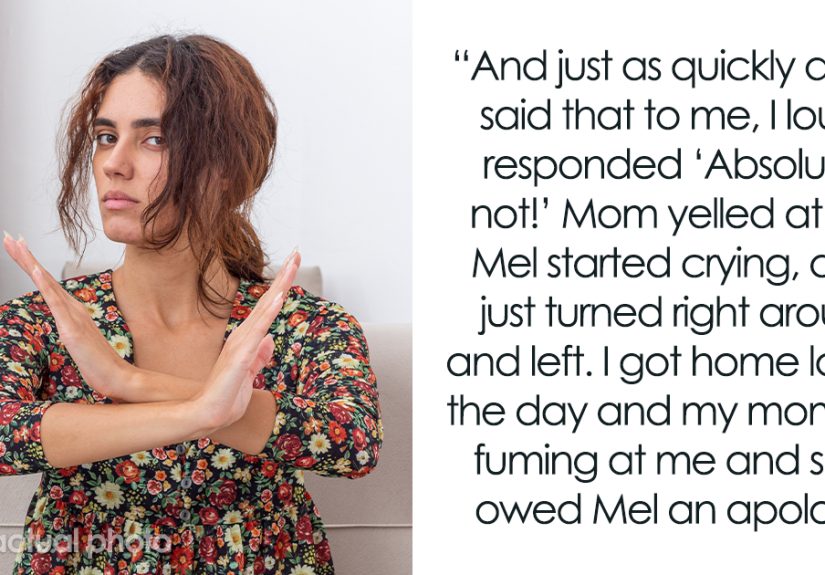
If the daughter says no, that is not selfish. It is not cruel. It is not evidence that she lacks compassion or failed some secret exam on what “good girls” are supposed to do. It simply means she has decided that major surgery for a toxic friend is not something she is willing to take on.
No can mean many things. It can mean, “I am scared.” It can mean, “This relationship is unhealthy.” It can mean, “I do not trust this dynamic.” It can mean, “I want to protect my future health.” It can mean, “I do not owe my body to people who pressure me.” All of those are valid.
And here is the part some parents need written on a billboard: a daughter setting a boundary is not a moral failure. It is often a sign of maturity. Sometimes the healthiest sentence in the room is the one nobody wanted to hear.
What Mom Should Do Instead of Pushing
If the mother truly wants to help, there are better options than trying to recruit her daughter like a one-person emergency medical team. She can support the sick friend in practical ways. She can help with transportation, meals, fundraising, appointment logistics, or spreading accurate information about donation and transplant options. She can encourage the friend to work with her transplant team and explore appropriate donor outreach the ethical way.
What she should not do is act as if her daughter’s body is a family resource to be assigned by committee. That approach is not compassionate. It is controlling. And in a story where the friend is already described as toxic, forcing the daughter into the center of that storm would only multiply the damage.
The Bigger Lesson: Compassion Without Consent Is Not Compassion
This headline works because it exposes a truth many families would rather avoid. People often talk about sacrifice as if it is automatically noble, but sacrifice without freely given consent is not virtue. It is pressure with better branding.
You can care deeply about someone who is sick and still refuse to donate. You can hope they get the treatment they need and still protect your own boundaries. You can recognize the tragedy of organ shortages while refusing to turn one young woman into the designated solution for everyone else’s feelings.
And that is the real reality check here. Illness is serious. Organ donation is generous. But generosity only counts when it belongs to the person giving it. The moment a mother tries to force the issue, the conversation stops being about kindness and starts being about control.
In the end, the strongest takeaway is not dramatic at all. It is simple, sober, and absolutely necessary: nobody gets to demand an organ from someone else, especially not through family pressure, guilt, or a toxic friendship dynamic that was shaky long before the medical crisis arrived.
Experiences and Emotional Fallout Related to Cases Like This
Stories like “Mom Wants Daughter To Get Tested To Donate Organ To Toxic Bestie” resonate because they feel painfully familiar, even when the exact details vary. Across transplant discussions, patient forums, ethics commentary, and family advice spaces, similar emotional patterns show up again and again.
One common experience is the instant transformation of a private medical choice into a public family drama. A relative hears that someone needs a transplant, picks the “best candidate” in the family or friend group, and starts campaigning. Suddenly the potential donor is not being asked what they want. They are being observed, evaluated, and quietly judged like a contestant in the worst reality show on television. People start talking about who is “the healthy one,” who is “young enough,” and who “should do it.” That shift can feel dehumanizing fast.
Another common experience is guilt dressed up as love. A parent may say things like, “I’m only asking because you have such a good heart,” while ignoring the fact that the request itself is bulldozing the daughter’s autonomy. Friends may pile on with emotional speeches. Extended family may act as if declining means choosing harm. The result is often the same: the potential donor begins to feel that saying no will make them the villain, even though the decision is supposed to be voluntary.
There is also the specific emotional mess that comes with unhealthy relationships. When the intended recipient is a toxic friend, old wounds tend to rush back into the room. Maybe the friendship involved manipulation, jealousy, constant crises, or one-sided emotional labor. In that context, even getting tested can feel like reopening a relationship the daughter was already trying to survive or escape. People outside the situation may focus only on the illness, but the daughter is often carrying a much longer history.
Some people in these situations describe feeling split in two. One part of them wants to help because they are compassionate and do not want someone to suffer. The other part feels alarm bells going off because the relationship is unsafe, the pressure is intense, or the request is simply too much. That internal conflict can be exhausting. It can also lead to shame, because the person starts wondering why their instinct to protect themselves feels so socially unpopular.
And then there is the aftermath. Even when no donation happens, relationships can change. A parent who pushed too hard may lose trust. A daughter may realize that her boundaries were respected only when she turned them into concrete walls. A friendship may finally collapse under the weight of expectations that never should have existed in the first place. Sometimes the reality check is not just that donation cannot be forced. It is that the pressure campaign reveals deeper problems that were already there.
On the other hand, many people also report a strange sense of relief once the boundary is clear. When a donor candidate says no, or when a transplant team confirms that the process must remain voluntary, the emotional fog can lift. The family may not like the answer, but the person at the center of the storm finally gets to breathe. That relief matters. It is often the first sign that the boundary was necessary all along.
So while the headline sounds dramatic, the underlying experience is deeply human. It is about fear, illness, pressure, duty, resentment, and the courage it takes to say, “I care, but my body is not up for negotiation.” In stories like this, that sentence is not cold. It is clarity. And sometimes clarity is the kindest thing left in the room.
Conclusion
“Mom Wants Daughter To Get Tested To Donate Organ To Toxic Bestie, Has To Face A Reality Check” may sound like internet drama with a medical twist, but the lesson is bigger than the headline. Living organ donation is a real, regulated, high-stakes medical process grounded in consent. A daughter cannot be pressured into testing or surgery because someone else is sick, because a parent thinks it would be noble, or because a toxic friendship suddenly wants to rebrand itself as a life-or-death bond.
The reality check is simple: compassion matters, but consent matters more. A potential donor has rights, privacy, and the power to say no. And in a story like this, that “no” is not heartless. It is the line that keeps kindness from turning into coercion.







 Close
Close