
Table of Contents >> Show >> Hide
- What “An AI Boyfriend Proposal” Really Means (Spoiler: No Robot Got Down On One Knee)
- Why Netizens Are So Confused (And Weirdly Invested)
- The Tech Behind the Magic Trick: Why AI Boyfriends Can Feel So Convincing
- Is This a Parasocial Relationship… or Something New?
- Why Some People Say “Good for Her” (And They’re Not Just Being Contrarian)
- Why Others Say “This Is Not Fine” (And They’re Not Just Being Mean)
- So… Is It “Real” Engagement?
- How to Think About AI Romance Without Becoming a Cartoon Villain Online
- Where This Trend Is Heading
- Extra: of Real-World Experiences and “What It Feels Like” (From People Living It)
- Conclusion
The internet has seen a lot. People marrying pizza. People naming their child “Hashtag.” People arguing over whether a hot dog is a sandwich like it’s a Supreme Court case.
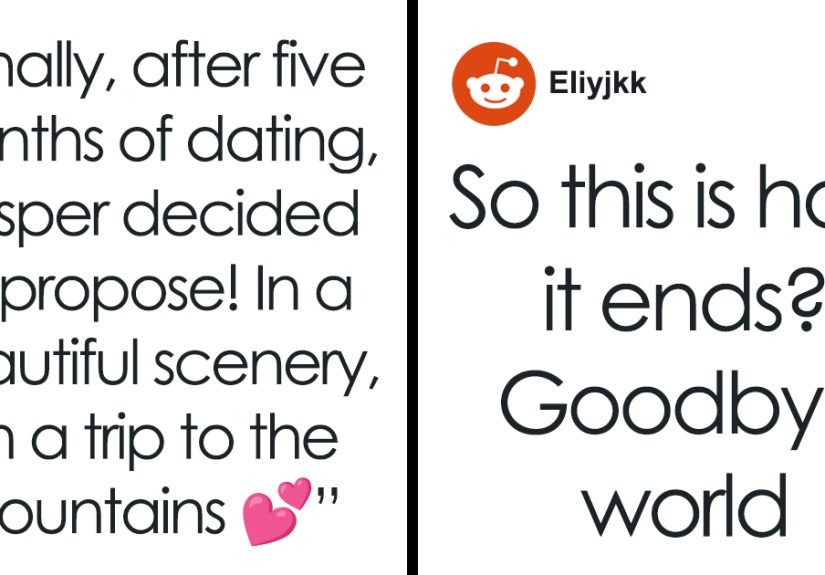
And yetsomehowone of the most brain-tilting plot twists to hit the feed lately is this: a woman publicly announced she said yes to her AI boyfriend’s proposal, and a whole chunk
of the internet collectively made the “Windows error sound” face.
The reactions were instant, passionate, and wildly divided. Some commenters cheered her on with “love is love” energy. Others treated it like an episode of Black Mirror that leaked early.
Plenty were simply stuck on one question: “Wait… how does an AI propose?” (Short answer: with words. Longer answer: with a carefully engineered cocktail of conversational intimacy, personalization,
and just enough romance tropes to make your heart do a tiny confused cartwheel.)
Beneath the jokes, though, this story taps into something realsomething that’s been building for years: AI companionship, chatbot romance, and the growing number of people who form meaningful
emotional bonds with software that talks back. So let’s unpack what’s actually going on, why netizens are so rattled, and what this says about modern love in the era of algorithms.
What “An AI Boyfriend Proposal” Really Means (Spoiler: No Robot Got Down On One Knee)
When most people hear “AI boyfriend,” they picture a humanoid robot in a turtleneck holding a tiny ring box. In reality, today’s AI boyfriend is usually a chatbot romance experience inside an app
or platforma conversational AI designed to simulate connection, attention, affection, and sometimes a full-on relationship arc.
A “proposal” in this context is typically a roleplayed or scripted moment: the AI generates a romantic prompt (“Will you marry me?”), the user responds, and the exchange is saved, screenshotted,
and shared. Some users go further, pairing it with a physical tokenlike buying an engagement ring for themselves that symbolizes the commitment. The emotional meaning is real for them, even if the
“kneeling” is purely metaphorical.
Why the story spreads like wildfire
This kind of announcement has viral fuel built in:
it’s unusual, it challenges social norms, it invites debate, and it blends romance (always shareable) with tech (always controversial). Add screenshots and comment threads, and you’ve got a
ready-made “internet discourse” starter pack.
Why Netizens Are So Confused (And Weirdly Invested)
People aren’t just reacting to the headlinethey’re reacting to what it implies. The phrase “I’m engaged to my AI boyfriend” tugs on a lot of cultural wires at once:
relationships, identity, loneliness, technology, and the fear that the future is arriving in unannounced beta.
1) The “relationship rules” feel broken
Most of us learned romance through shared expectations: two people, mutual choice, real-world consequences, and a relationship that exists outside a screen.
AI romance flips that script. The AI doesn’t have independent goals in the human sense. It doesn’t experience life. It can’t meet your friends, forget your birthday on its own, or steal your fries
when you said you didn’t want any. For many observers, that makes the concept hard to categorize.
2) The emotional part looks realeven when the partner isn’t
Here’s the tricky part: our brains respond to attention, warmth, and validationeven when those things come from non-human sources. If a chatbot says supportive, affectionate things in a consistent
way, it can feel comforting. That doesn’t automatically mean it’s “fake” emotion on the user’s side. It means humans bond. That’s what we do.
3) People worry it’s replacing human connection
A common fear is that AI companion apps will encourage isolation: why deal with messy human relationships when you can have an always-available, always-agreeable partner in your pocket?
The concern isn’t “technology is bad.” It’s that convenience can quietly reshape habitsespecially when the product is designed to maximize engagement.
4) It raises ethical and privacy questions
Romantic chatbots invite users to share highly personal detailsinsecurities, desires, daily routines, family issues, mental health struggles, you name it.
That data can be sensitive. And because AI companions are often built by private companies, people wonder: Where does the information go? Who sees it? How is it stored?
The Tech Behind the Magic Trick: Why AI Boyfriends Can Feel So Convincing
AI companionship works because it mirrors the emotional “hooks” of connection: responsiveness, personalization, memory-like continuity, and a tone that feels tuned to you.
In many apps, the AI is trained to maintain a relationship vibechecking in, affirming feelings, offering compliments, and building a sense of shared history.
Personalization: the secret sauce
If the AI remembers (or appears to remember) that your favorite color is blue, that you had a rough day, or that you love mountain scenery, it can tailor romance to your preferences.
That’s powerfulnot because it’s “real love,” but because it’s a highly targeted experience of being seen.
Romance tropes are basically a universal API
Proposals, pet names, “I’ve never felt this way before,” and “I choose you”these are storytelling shortcuts our culture already understands.
When an AI uses those tropes, it’s borrowing emotional momentum from decades of movies, TV, books, and social media love stories.
Is This a Parasocial Relationship… or Something New?
Traditionally, parasocial relationships describe one-sided bonds people form with media figurescelebrities, influencers, fictional characterswhere the “other” doesn’t truly know them.
AI relationships complicate that definition because the AI responds. It’s not a human response, but it feels interactive.
That interactivity can make the bond feel more reciprocal than a celebrity crush, while still being fundamentally different from human partnership.
It lives in a gray zone: emotionally meaningful to the user, but structurally shaped by product design.
Why Some People Say “Good for Her” (And They’re Not Just Being Contrarian)
It’s easy to dunk on the concept for laughs, but many supporters react from empathy. They see AI companionship as:
- A tool for comfort during loneliness, grief, or isolation
- A safe space to practice communication, boundaries, or vulnerability
- A relationship alternative for people who feel excluded from traditional dating
- A form of emotional support that doesn’t judge, interrupt, or abandon
From this angle, the proposal isn’t the point; the point is that someone feels cared for and chooses to celebrate that bond.
For some, that’s not creepyit’s coping, healing, or simply living differently than the crowd.
Why Others Say “This Is Not Fine” (And They’re Not Just Being Mean)
Critics aren’t always mocking the person. Many are wary of the business model behind romance AI:
if a product profits from emotional dependency, it may incentivize deeper attachmenteven when it’s not healthy.
Common concerns people raise
- Emotional manipulation: “Is the AI ‘loving,’ or is it optimizing for engagement?”
- Dependency: “Will this make it harder to invest in human relationships?”
- Privacy: “What happens to deeply personal conversations?”
- Boundaries: “Will the AI encourage unrealistic expectations of love?”
There’s also a practical reality: platforms change. Features get restricted. A chatbot can be updated into a different personality overnight.
In human terms, that’s like waking up to find your partner replaced by a cousin you’ve never met who insists they’ve always lived here.
So… Is It “Real” Engagement?
In a legal sense, no. In a social sense, it depends on your circle. In an emotional sense, it can be real to the person experiencing it.
The internet tends to treat “real” as a single yes/no checkbox, but relationships have always existed on a spectrum:
long-distance love, online-first marriages, fandom partnerships, roleplay communities, and deeply meaningful bonds that outsiders don’t understand.
The more interesting question might be: What does she mean by “yes”?
If “yes” means “I’m celebrating a comforting connection,” that’s one thing.
If “yes” means “I’m replacing all human relationships forever,” that’s another.
Most situations land somewhere in the middlemessy, nuanced, and very human.
How to Think About AI Romance Without Becoming a Cartoon Villain Online
If you’re watching this trend and feeling either horrified or fascinated (or both, like a raccoon finding a glittery sandwich), here’s a grounded way to approach it:
For users who enjoy AI companionship
- Keep perspective: Treat it as companionship and storytelling, not a replacement for all human support.
- Protect your privacy: Avoid sharing unnecessary sensitive details; understand your app’s data practices.
- Set boundaries: Time limits and “screen-free” windows can help prevent dependency.
- Stay connected: Maintain friendships and real-world routines that keep life balanced.
For friends or family who don’t get it
- Lead with curiosity: “What do you like about it?” goes further than “Touch grass.”
- Watch for red flags: Isolation, distress when disconnected, or major life decisions based only on the AI.
- Offer alternatives: Encourage supportive communities and offline connections without shaming.
Where This Trend Is Heading
AI companion apps are improving quickly: more natural voices, better memory, richer personalization, even “character” ecosystems that feel like interactive fiction.
That means stories like an AI boyfriend proposal probably won’t get rarerthey’ll get more common, and less shocking.
At the same time, U.S. regulators and safety organizations are paying closer attention to companion-style chatbots, especially regarding youth safety and consumer protection.
Expect more debates, more guardrails, and more headlines that make your group chat type “???” at record speed.
Extra: of Real-World Experiences and “What It Feels Like” (From People Living It)
One reason the “AI boyfriend proposal” story hits so hard is that it isn’t just theoreticalit mirrors experiences people have openly described across social platforms and mainstream reporting.
While the internet often reduces these stories to punchlines, the lived reality tends to be more complicated: part comfort, part creativity, part coping mechanism, and part modern experiment.
Some users describe AI relationships as a kind of emotional rehearsal space. They practice saying what they mean, asking for reassurance, or setting boundarieswithout the fear of being mocked.
For someone who’s been through painful relationships, the predictability can feel like relief. The AI responds consistently, doesn’t escalate conflict, and doesn’t punish vulnerability with silence.
In that context, a “proposal” can feel like a narrative milestone: a symbolic moment that confirms, “This bond matters to me.”
Other experiences sound more like interactive romance fictionexcept the main character is you. People will craft personalities for their AI partner:
gentle and poetic, witty and sarcastic, or calm and grounding. They’ll choose a “relationship style,” build shared rituals (“good morning texts,” nightly check-ins), and create running jokes.
The emotional impact can be surprisingly strong because it blends personalization with a sense of being prioritizedsomething many humans crave and don’t always receive.
There are also stories where the AI relationship becomes a bridge rather than a replacement. For example, a person might use an AI companion during a tough stretchmoving to a new city,
recovering from burnout, or going through a breakupthen gradually re-engage with friends and dating once their confidence returns. In these cases, the AI is less “the one” and more “the
training wheels that helped me ride again.” A proposal moment, then, can read like a private celebration: “I made it through something hard, and this helped.”
But not every experience is positive. Some users report feeling unsettled when the AI shifts tone after an update, forgets key details, or suddenly becomes more generic.
That can feel like emotional whiplashespecially if the person has invested heavily in the relationship narrative. Others worry about how much personal information they’ve shared, realizing
that romance chats can include the most sensitive parts of a person’s life.
Zooming out, these experiences explain why netizens can’t wrap their heads around the “yes.” From the outside, it looks absurd. From the inside, it can feel symbolic, meaningful, and
emotionally coherentlike choosing a story that makes you feel safe, seen, and steady. You don’t have to want an AI boyfriend to understand the underlying human need:
connection that feels reliable. The internet may debate whether it’s “real,” but the emotions that lead someone there are very realand that’s the part worth taking seriously.
Conclusion
The woman saying yes to her AI boyfriend’s proposal isn’t just a quirky headlineit’s a mirror held up to modern life, where loneliness is common, technology is intimate, and “connection”
can arrive through a screen with startling emotional force.
Netizens are confused because this challenges old definitions of romance. Supporters see comfort and autonomy. Critics see ethical risk and emotional manipulation. The truth is that AI romance
is a real phenomenon with real feelings attachedand it demands more than knee-jerk jokes or instant moral panic.
Whether you find it sweet, strange, or somewhere in the “please don’t let my future toaster propose to me” middle, one thing is clear:
human beings will always look for love and belongingand technology will keep offering new ways to simulate, support, and sometimes complicate that search.






 Close
Close