
Table of Contents >> Show >> Hide
- Why Copying Someone’s Tattoo Can Feel Like a Personal Attack
- The Parent’s Logic: “If You Can Do It, So Can I”
- What Healthy Disagreement Looks Like Instead
- The Tattoo Reality Check: Health, Safety, and “Permanent Means Permanent”
- If You’re the Parent Who Copied the Tattoo: Damage Control That Actually Works
- The Bigger Takeaway: Your Kid Is Not a Project Anymore
- Real-World Experiences That Mirror This Tattoo Drama (And What People Learn)
Every family has a “this is fine” moment. Some families burn dinner. Some families accidentally reply-all.
And some families… permanently ink a life lesson onto their own body.
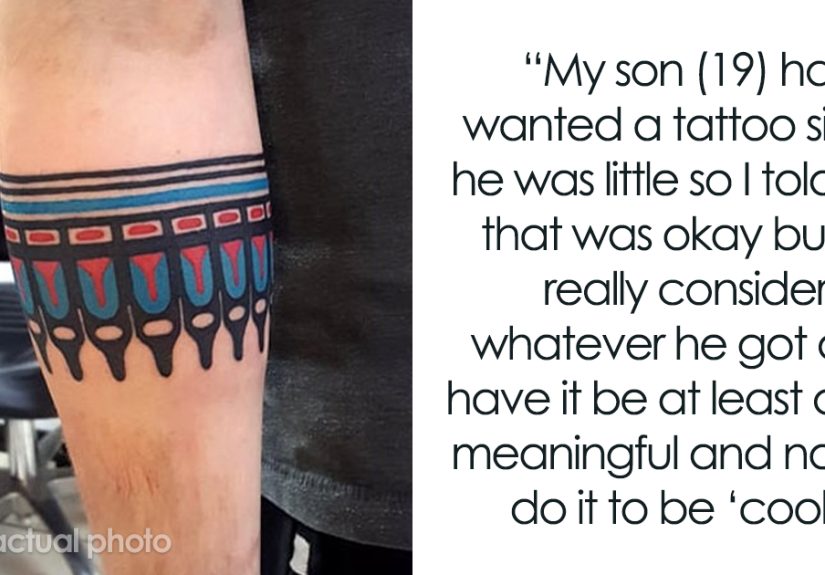
The scenario making people clutch their pearls (and their tattoo aftercare ointment) goes like this: a 19-year-old gets a tattoo.
The parent disapproves, decides words won’t land, and copies the exact tattoo to “prove a point.” The son feels mocked, invaded, or outplayed.
The internet reacts with the digital equivalent of a referee whistle: Foul. Unnecessary roughness. Ten-yard penalty for emotional immaturity.
But why does this hit such a nerve? Isn’t matching ink sometimes a sweet family thing? Absolutely. The difference is intent, timing, and respect.
This isn’t just a tattoo story. It’s a boundary story wearing a tattoo costume.
Why Copying Someone’s Tattoo Can Feel Like a Personal Attack
Tattoos aren’t rare anymore. They’re mainstream, workplace-visible, and increasingly normalized. In the U.S., about a third of adults have at least one tattoo,
and many have more than one. In other words, tattoos aren’t automatically “rebellion.” They’re often just… Tuesday.
Still, even when tattoos are common, a tattoo can be deeply personal: a memorial, a recovery milestone, a symbol of identity, or simply art someone wants to live with.
That “living with” part matters. This isn’t a poster you can take down when your taste changes. It’s your skin. Your body. Your call.
It’s Not the Ink. It’s the Message.
If a parent and adult child choose together to get matching tattooslike a small shared symbol, a family motto, a meaningful datethat can be bonding.
It says, “We’re connected.” The consent is mutual, the vibe is respectful, and nobody’s trying to win.
Copying a tattoo to “prove a point” tends to send a different message:
“I can outvote you in your own body story.”
That can feel less like connection and more like takeoverespecially when the tattoo was supposed to be an expression of independence.
For a 19-year-old, that independence is the headline. They’re legally an adult, but still in that in-between life stage where they’re forming identity fast:
jobs, relationships, values, appearance, boundaries, and yes, sometimes questionable art choices. (We’ve all had a haircut phase. Some of us just committed to it with needles.)
The Parent’s Logic: “If You Can Do It, So Can I”
Most parents who do something like this don’t wake up thinking, “Today I will become a cautionary tale.”
Often, it’s an attempt at shock therapy: “You’ll regret it, and I’ll show you how ridiculous it is by doing it too.”
Underneath that is usually fear:
- Fear of regret: “You’ll hate it later.”
- Fear of judgment: “People will treat you differently.”
- Fear of permanence: “You can’t undo it easily.”
- Fear of losing influence: “My kid is making decisions without me now.”
Those fears aren’t automatically wrong. Tattoos can be regretted. Removal can be expensive and painful. Reactions and infections can happen.
It’s reasonable for a parent to care. But caring and controlling are not the same thingespecially when your child is legally an adult.
When Parenting Turns Into a Power Contest
The problem with “proving a point” is that it often turns a conversation into a competition.
And competitions have winners. Relationships do not.
When a parent copies the tattoo, it can read like:
- Mockery: “Your choice is so dumb I’m going to make it a joke.”
- Control: “I’ll reclaim authority by escalating beyond you.”
- Humiliation: “I’ll make sure you feel weird about your own body decision.”
- Boundary violation: “Even your personal symbol isn’t safe from my commentary.”
That’s why people call the parent a jerk. Not because parents must love every tattoo.
It’s because copying the tattoo transforms the disagreement into an emotional steamroll.
What Healthy Disagreement Looks Like Instead
If you’re a parent and your adult child gets a tattoo you hate, you have three realistic options:
connect, cope, or combust. Copying the tattoo to “teach a lesson” is combusting with extra steps.
For Parents: How to Talk Tattoos Without Setting the Relationship on Fire
-
Start with curiosity, not critique.
“What does it mean to you?” lands better than “Why would you do that?” -
Ask permission to give advice.
“Do you want my opinion or do you just want me to listen?” is a relationship saver. -
Use “I” statements.
“I worry about permanence” beats “You’re making a mistake.” -
Talk practicals, not aesthetics.
Safety, cost, placement, and aftercare are fair topics. “That’s ugly” is a dead end. -
Repair quickly when it goes sideways.
In strong relationships, small repair attemptsapologies, humor, acknowledging feelingsstop conflict from escalating.
Bonus tip: if you feel the urge to “prove a point,” pause and ask yourself:
Do I want to be right, or do I want to be trusted?
For Young Adults: How to Hold Your Boundary Without Nuking the Relationship
- Name the boundary clearly. “My body choices aren’t up for debate.”
- Explain meaning if you want to. You’re not required to justify, but context can reduce panic.
- Acknowledge the fear underneath. “I know you’re worried I’ll regret it.”
- Keep it adult-to-adult. “I hear you” is stronger than “You’re ruining my life.”
You can be firm and still be kind. Boundaries don’t require cruelty. They require clarity.
The Tattoo Reality Check: Health, Safety, and “Permanent Means Permanent”
The family drama is emotional, but there are practical realities worth knowingbecause this is a decision that literally involves needles and skin.
Safety Isn’t Paranoia. It’s Basic Respect for Your Skin.
Professional shops with sterile practices drastically reduce risk, but problems can still happen: infections, allergic reactions,
and delayed irritation. Signs of infection can include increasing pain, warmth, swelling, fever, or drainage that doesn’t look like normal healing.
And allergic reactionsespecially to certain pigmentscan be stubborn because removing pigment isn’t simple.
Aftercare matters. Washing gently, keeping it clean, avoiding soaking, and not picking at scabs are not “extra.”
They’re how you keep a new tattoo from becoming a medical side quest.
Removal Exists, But It’s Not a Magic Eraser
Some parents fixate on regret because it’s real. People do remove tattoos.
But removal typically takes multiple sessions, costs real money, and can hurt more than getting the tattoo.
Even then, results vary depending on ink color, size, location, and skin type.
Here’s the key: if a parent’s concern is regret, the most helpful response is education and supportnot a humiliation stunt.
If You’re the Parent Who Copied the Tattoo: Damage Control That Actually Works
Let’s say you already did it. The ink is fresh, the house is tense, and your phone is full of messages that say,
“Congrats on winning the argument and losing the relationship.”
Here’s a better recovery plan than doubling down:
-
Own the impact, not just the intent.
“I thought I was making a point, but I see it hurt you.” -
Apologize without a speech.
Not “I’m sorry you feel that way.” Try: “I’m sorry I disrespected you.” -
Offer a repair action.
This could be covering it, altering it, or simply committing to new boundaries in how you talk about their choices. -
Stop making their tattoo the family headline.
Your relationship is bigger than a design.
The goal isn’t to pretend the disagreement never happened. It’s to prove you can handle adulthood-to-adulthood conflict like an adult.
The Bigger Takeaway: Your Kid Is Not a Project Anymore
When your child becomes an adult, the relationship has to evolve. The old rulesauthority, obedience, “because I said so”expire.
What replaces them is respect, negotiation, and boundaries that go both ways.
A tattoo can be a symbol of that transition. The real question isn’t whether the tattoo is “good.”
It’s whether the relationship can survive disagreement without turning into a control battle.
If you want your adult child to come to you later with bigger problemsmoney trouble, relationship crises, mental health struggles
they need to believe you’re safe. Safe doesn’t mean “always agrees.” Safe means “doesn’t punish me for being my own person.”
Real-World Experiences That Mirror This Tattoo Drama (And What People Learn)
Stories like “parent copies son’s tattoo and gets called a jerk” feel extreme, but the underlying dynamic is surprisingly common:
a young adult makes a permanent or symbolic choice, and a parent tries to regain control through a grand gesture.
Here are some experiences people often describe in real life that echo the same lessonswithout pretending every family is living in a reality show.
1) The “Matching Tattoo” That Wasn’t Really Matching
One common scenario: a parent and adult child get “matching” tattoos, but the parent frames it as ownershiplike the tattoo is a receipt for raising the kid.
The adult child later says it felt less like bonding and more like being branded. The lesson? Matching tattoos work best when they symbolize connection,
not control. If the vibe is “we chose this together,” it’s sweet. If the vibe is “you belong to me,” it’s a problem.
2) The Public Joke That Became a Private Wound
Some parents don’t copy the tattoothey mock it online or in front of relatives. They think it’s playful. The young adult experiences it as betrayal.
What changes the outcome is often one simple move: a sincere repair. A short apology and a commitment to stop joking about someone’s body choice can
rebuild trust faster than a thousand explanations.
3) The Tattoo Regret Spiral (And the Parent Who Didn’t Say “I Told You So”)
Regret does happen. People describe getting a tattoo at 18 or 19, loving it for a year, then feeling “that’s not me anymore” at 23.
The parent who keeps the relationship strong is usually the one who resists the victory lap. Instead of “I told you,” they say,
“Okaywhat do you want to do next?” That response turns a mistake into growth instead of shame. And shame is what makes adult kids disappear emotionally.
4) Tattoo Artists as Accidental Family Therapists
In many communities, tattoo artists end up hearing the whole backstory: “My mom hates this,” “My dad thinks I ruined my life,” “My parents won’t speak to me.”
Artists often encourage clients to slow down, think about meaning and placement, and choose designs that feel like themnot a dare, not a breakup rebound,
not a “watch me” move. The best studios feel less like chaos and more like professionalism: consent, hygiene, clear expectations, and aftercare.
It’s ironic that the tattoo shop sometimes has better boundaries than the family dinner table.
5) The “Prove a Point” Habit That Spills Beyond Tattoos
Finally, there’s the broader pattern. Families describe “point proving” in many forms: a parent posts a passive-aggressive message,
a child stops answering calls to punish the parent, or someone announces a dramatic decision just to win the argument.
These moves feel powerful for about five minutesthen they create a long-term chill. The healthier alternative is boring but effective:
name the feeling, set the boundary, and make a repair when you mess up.
The tattoo-copying parent story goes viral because it’s dramatic, yesbut also because it captures something real:
the moment when a parent realizes their kid is grown, and the old tools of control don’t work anymore.
If the “point” costs the relationship, it wasn’t a point. It was a price tag.






 Close
Close