
Table of Contents >> Show >> Hide
Parenting comes with a free starter pack of phrasesmost of them passed down like a family casserole dish.
Some are sweet. Some are… a little stale. And a surprising number sound helpful until you watch them land in a kid’s brain like
“Oh cool, I guess my feelings are illegal now.”
Below are 50 common “lessons” people say parents should stop teachingbecause they can quietly shape anxiety, shame, people-pleasing,
unhealthy boundaries, or a fear of failure. The goal isn’t to dunk on anyone’s childhood. It’s to upgrade the message so kids grow into
adults who can handle emotions, relationships, and real life without needing a manual and a nap.
Why “Good Advice” Can Turn Harmful
A lot of these teachings come from love, stress, culture, or survival: “Be tough,” “Be polite,” “Don’t make waves.”
The problem is that kids don’t only hear the wordsthey absorb the meaning behind them.
If the message sounds like “Your needs are inconvenient,” “Mistakes are dangerous,” or “Respect means silence,” kids adapt by shrinking.
And shrinking looks like “good behavior”… right up until it looks like burnout.
The fix usually isn’t “let kids do whatever.” It’s “keep the boundary, ditch the shame.”
You can teach responsibility without fear, confidence without arrogance, and kindness without turning your kid into an unpaid emotional-support human.
The 50 Harmful Lessons People Say Parents Should Retire
-
“Stop crying.” Kids learn that emotions are embarrassing instead of normal. That often becomes “I don’t know what I feel” later.
Try instead: “It’s okay to cry. I’m here. Tell me what happened.”
-
“Boys don’t cry.” Emotional repression doesn’t create strength; it creates confusion, anger, and loneliness with a baseball cap on.
Try instead: “Crying is a body’s way of releasing stress. You can be brave and sad.”
-
“Good girls are quiet/polite.” When “nice” becomes a rule, girls may struggle to say no, speak up, or set boundaries.
Try instead: “Be respectful, but your voice matters. You can say ‘no’ kindly.”
-
“Because I said so.” It teaches obedience without understandinggreat for short-term compliance, bad for long-term judgment.
Try instead: “My job is safety. Here’s the reason. You can be mad, but the rule stays.”
-
“Respect means never questioning adults.” This can train kids to ignore red flags and accept unfair treatment.
Try instead: “Respect is real, but you’re allowed to ask questions and feel safe.”
-
“Adults are always right.” Adults are sometimes tired, wrong, or confidently incorrectlike GPS in a tunnel.
Try instead: “Adults make mistakes too. If I’m wrong, we fix it.”
-
“Don’t talk back.” If “talking back” includes explaining or disagreeing, kids learn that communication equals disrespect.
Try instead: “You can disagree, but do it respectfully. Let’s practice.”
-
“You’re fine.” Dismissing pain or fear teaches kids to doubt their own bodies and instincts.
Try instead: “That looked scary. Are you hurt? Let’s check together.”
-
“Don’t be selfish.” Helpful when it means kindnessharmful when it means “ignore your needs so others stay comfortable.”
Try instead: “Be considerate, and also take up space. Both can be true.”
-
“You have to share everything.” Forced sharing can teach kids they don’t have ownership or boundaries.
Try instead: “You can take turns. You can also say, ‘Not right nowafter I’m done.’”
-
“Say sorry right now.” Forced apologies can become empty scripts instead of real empathy and repair.
Try instead: “Let’s fix what happened: check on them, name what you did, and make it right.”
-
“Give Auntie a hug.” Forced affection teaches kids their body isn’t theirs to controlbad for boundaries.
Try instead: “You can wave, high-five, or say goodbye your way.”
-
“Family problems stay in the family.” This can trap kids in silence when something is unsafe or harmful.
Try instead: “If something feels wrong, you can tell a trusted adult. Safety beats secrecy.”
-
“Stranger danger.” Oversimplified safety can backfiremost harm comes from known people, and kids also need help from safe strangers sometimes.
Try instead: “We watch for behavior: unsafe choices, secrets, pressure, or ignoring ‘no.’”
-
“Snitches get stitches.” Kids learn that reporting harm is betrayaleven when it’s the right thing.
Try instead: “Telling to get help is brave. We don’t protect harmful behavior.”
-
“If they tease you, they like you.” This normalizes disrespect as affection, which is a terrible dating lesson later.
Try instead: “People who like you should treat you well. Teasing isn’t love.”
-
“Just ignore bullies.” Sometimes ignoring works; sometimes it leaves kids alone with the problem.
Try instead: “Let’s plan: stay near others, use assertive words, and involve adults early.”
-
“If you’re anxious, you’re being dramatic.” Kids may hide symptoms instead of learning coping skills.
Try instead: “Your feelings are real. Let’s name them and figure out what helps.”
-
“Anger is bad.” Anger is information. Teaching kids it’s “bad” often turns it into explosion or silence.
Try instead: “Anger is okay. Hurting people isn’t. Let’s cool down safely.”
-
“Be gratefulother kids have it worse.” Perspective can help, but it can also teach kids to minimize real pain.
Try instead: “I hear you. Your problem matters, and we can still practice gratitude.”
-
“You can’t be mad at your parents.” This confuses love with compliance and blocks honest communication.
Try instead: “You can be mad and still loved. Let’s talk respectfully.”
-
“If you loved me, you’d…” Guilt-based love teaches kids to manage other people’s feelings, not their own choices.
Try instead: “I’m disappointed, but my love isn’t a bargaining chip.”
-
“Spanking teaches respect.” It often teaches fear and secrecy, not self-control or problem-solving.
Try instead: “Clear rules, consistent consequences, and calm follow-through.”
-
“Shame will motivate you.” Shame doesn’t create growth; it creates hiding and lying to avoid humiliation.
Try instead: “Let’s focus on what happened and what you’ll do differently next time.”
-
“You’re making me look bad.” Kids learn to perform for appearances instead of learning skills.
Try instead: “Your behavior affects others. Let’s reset and try again.”
-
“Kids should be seen and not heard.” That’s how you raise adults who struggle to speak up at work, in relationships, and at the doctor.
Try instead: “There’s a time to listen and a time to share. Your thoughts matter.”
-
“Never disagree with authority.” This can train kids to accept unfairness and ignore their own judgment.
Try instead: “Challenge respectfully. Ask for clarity. Advocate without being cruel.”
-
“Privacy means you’re hiding something.” Kids need developmentally appropriate privacy to grow autonomy and trust.
Try instead: “You deserve privacy. I’ll step in only for safety.”
-
“Your worth is your grades.” It creates anxiety and shortcuts (cheating, burnout) instead of learning.
Try instead: “Your effort and growth matter. Grades are feedback, not identity.”
-
“A’s or else.” Fear-based achievement can make kids terrified of trying anything hard.
Try instead: “Let’s build a plan: study habits, help, breaks, and realistic goals.”
-
“If you fail, you didn’t try.” Sometimes kids try a lot and still struggle. Invalidating that kills motivation.
Try instead: “Failure is information. What part was hard, and what support do you need?”
-
“You’re so smart!” (as the main praise) When praise is only about being “smart,” kids may avoid challenges that risk that label.
Try instead: “I love how you stuck with it. Your strategy worked.”
-
“College is the only successful path.” It can shame kids whose strengths fit trades, service, art, entrepreneurship, or different timelines.
Try instead: “Success is skills + character + options. Let’s explore what fits you.”
-
“Money is rude to talk about.” Silence creates confusion, not class. Kids need budgeting, saving, and scam-awareness.
Try instead: “Money is a tool. Let’s talk about needs, wants, and planning.”
-
“Never quit.” Persistence is greatuntil it keeps kids in toxic situations, injuries, or misery for appearances.
Try instead: “Don’t quit on hard things quicklybut do quit what harms you.”
-
“Winning is everything.” It teaches kids to fear loss, blame teammates, and cut corners.
Try instead: “Compete hard, lose with dignity, and measure progress.”
-
“Don’t ask for help.” It turns normal struggle into isolation and makes small problems bigger.
Try instead: “Asking for help is a skill. Let’s practice how to do it.”
-
“Handle it yourselfyou’re too sensitive.” This can teach kids to ignore their limits and accept mistreatment.
Try instead: “You’re allowed to be sensitive. Let’s build coping tools and boundaries.”
-
“Boys will be boys.” Excusing disrespect teaches kids that accountability is optional.
Try instead: “All kids can learn self-control and respect. We expect it.”
-
“Girls aren’t good at math/science.” Stereotypes shrink potential and confidence before kids even start.
Try instead: “Skills grow with practice. Let’s build them.”
-
“Real men don’t do housework.” This teaches entitlement and sets up future relationships for resentment-speedrunning.
Try instead: “Everyone contributes at home. Competence is attractive.”
-
“That’s not ladylike/manly.” Policing personality teaches kids to perform a role instead of being themselves.
Try instead: “Be kind and confident. Your interests don’t need a gender label.”
-
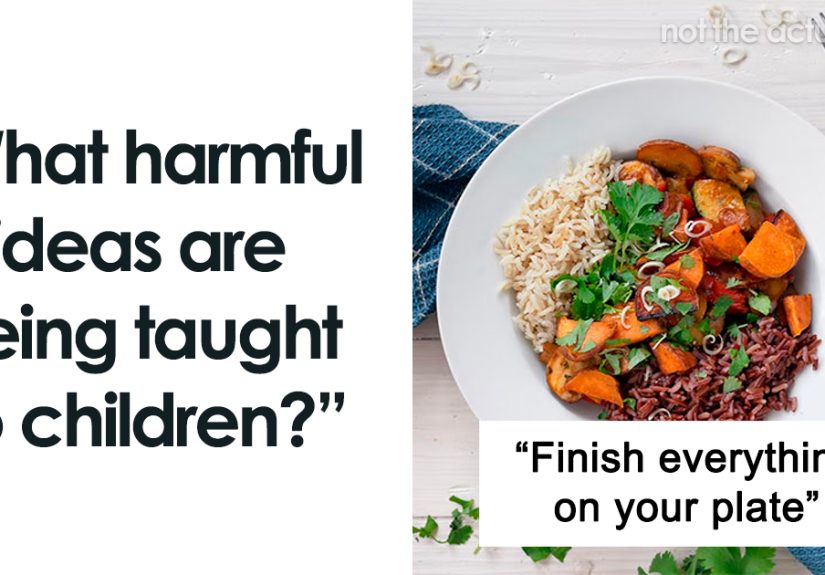
“You must finish your plate.” It can override hunger/fullness cues and create unhealthy relationships with food.
Try instead: “Listen to your body. Start with small portions; you can get more.”
-
“Dessert is the prize for eating.” This can make healthy food feel like punishment and sweets feel like status.
Try instead: “Dessert can be part of a balanced daynot a bribe.”
-
“I’m on a diet; I look huge.” Kids absorb body shame fast and may start judging themselves early.
Try instead: “Let’s talk about strength, energy, and healthnot hate.”
-
“You’d be prettier if…” Appearance-based criticism can plant long-term insecurity and people-pleasing.
Try instead: “You look like you. Let’s focus on hygiene, comfort, and self-expression.”
-
“Rest is lazy.” Kids learn to ignore exhaustion, which later becomes burnout with an email signature.
Try instead: “Rest is part of performance. Sleep, breaks, and recovery count.”
-
“Your mental health is just attitude.” This can discourage kids from sharing distress and seeking support.
Try instead: “Feelings can be heavy. Let’s talk, and we can get help if needed.”
-
“If someone hits you, hit back.” It can escalate danger and teach violence as problem-solving.
Try instead: “Get safe, get loud, get help. We’ll handle it with adults and a plan.”
-
“Never defend yourself.” The opposite extreme can teach kids they must accept harm.
Try instead: “Your priority is safety: leave, use your voice, and involve trusted adults.”
-
“Screens are evil” (or “screens are babysitters”). Both extremes fail. Kids need guidance, not panicor unlimited access.
Try instead: “We choose quality, set limits, and keep screens out of sleep time.”
-
“Your job is to make me happy.” Kids aren’t emotional managers. That’s a heavy backpack to wear forever.
Try instead: “My feelings are mine to handle. Your job is to learn and grow.”
-
“Forgive and forget no matter what.” Automatic forgiveness can keep kids stuck in harmful patterns.
Try instead: “You can forgive for your peaceand still keep boundaries.”
How to Replace These Messages Without Becoming a “Soft Parent”
You don’t need to choose between “strict” and “chaos goblin.” The sweet spot is
warmth + structure: empathy for feelings, firmness about behavior.
- Name the feeling: “You’re frustrated.” (Kids calm faster when they feel understood.)
- Hold the boundary: “And the rule is still no hitting.”
- Offer a better option: “You can stomp, squeeze a pillow, or ask for space.”
- Repair, don’t shame: “Let’s fix it” beats “What’s wrong with you?” every time.
- Model the skills: Apologize when you mess up. Kids learn more from your nervous system than your lectures.
FAQ: “But I Heard This Stuff and I Turned Out Fine”
Two things can be true: you survived it, and it still wasn’t the best message. Many adults are “fine” the same way a phone at 12% battery is “fine”
technically functioning, but one more stressor away from shutting down in the cereal aisle.
Updating a harmful lesson isn’t an accusation. It’s a software patch. The love can stay. The outdated lines can go.
Real-World Moments: What This Looks Like at Home (Experiences & Scenarios)
To make this practical, here are common real-life situations families describemoments where an old-school phrase is right there on your tongue,
and a healthier replacement keeps the boundary without damaging trust.
1) The grocery store meltdown. A child is crying because you said no to candy. The old script says, “Stop crying. People are watching.”
The problem? That teaches shame: emotions are only acceptable in private. A stronger script is, “You’re disappointed. Candy is not happening today.
You can cry, and we’re still leaving the aisle.” Same limit, no humiliation. When you get to the car, you can coach: “Next time, what could you do when you feel that big feeling?”
2) The forced apology after a sibling fight. One kid snatches a toy, the other yells, and everyone’s upset. “Say sorry!” feels efficient,
but kids often say it like a robot paying taxes. A more helpful approach is: “Check on your sibling. Are they okay? Tell them what you did: ‘I grabbed it.’ Then fix it:
give space, return the toy, help them calm down.” Empathy grows when kids understand impact, not when they recite a magic word to escape consequences.
3) The homework spiral. Your child is stuck, panicking, or shutting down. The old line“If you tried harder, you’d get it”turns struggle into shame.
The upgraded line is: “This is hard right now. Let’s break it into steps.” Maybe it’s a five-minute reset, a snack, or asking the teacher tomorrow.
Kids who learn “hard doesn’t mean hopeless” become adults who can learn new skills without feeling personally attacked by algebra.
4) The “clean your plate” dinner standoff. A kid says they’re full. The old belief is: “Finish everything; don’t waste food.”
But forcing fullness cues off can make self-regulation harder later. A practical compromise some families use is “small serving first” and “save leftovers.”
You still teach gratitude and reduced wastewithout teaching “ignore your body to please someone else.”
5) Body talk in the mirror. A parent mutters, “Ugh, I’m so fat,” or comments on a child’s body “for their own good.”
Kids don’t hear “motivation”they hear “my body is a problem.” A better household rule is: we talk about bodies as tools, not ornaments.
“Strong,” “healthy,” “energized,” “well-rested,” and “capable” beat “skinny” every day of the week (including the week after holidays).
6) The teen who says “I don’t want to hug.” Family gatherings can be a boundary obstacle course. Some adults feel offended,
but forced affection teaches kids that politeness outranks consent. A better script is: “You can wave, fist-bump, or say hello your way.”
That one small choice builds lifelong skills: boundary-setting, confidence, and the ability to say no without panic.
These moments are where parenting actually happensnot in a perfect speech, but in the small, repeatable phrases.
The “best” lesson usually sounds like: “I see you. The boundary stays. We’ll figure this out together.”
Conclusion
Kids don’t need perfect parents. They need parents who are willing to update the message.
When we replace shame with coaching, obedience with understanding, and “toughen up” with real emotional skills,
we raise humans who can handle lifewithout needing to unlearn their childhood in therapy as their main hobby.





 Close
Close