
Table of Contents >> Show >> Hide
- Bottom line (without the marketing confetti)
- What is Phallosan Forte?
- How penis extenders are supposed to work (the non-magic version)
- What the research says about penile traction therapy
- So… does Phallosan Forte really work?
- Pros and cons of Phallosan Forte (in plain English)
- Safety: what you should know before trying any extender
- How to set realistic expectations (so you don’t rage-quit at week two)
- Alternatives to consider before spending money
- FAQ
- Real-world experiences (what people typically report) about
- Conclusion
Penis extender ads have one job: make your measuring tape feel emotionally vulnerable.
Phallosan Forte is one of the better-known “traction” devices (it’s been around for years),
and it claims you can gently stretch tissue over time to increase length. But does it actually workor is it just an expensive lesson in patience?
Let’s walk through what Phallosan Forte is, what science says about penile traction therapy in general, what results are realistic,
and what safety stuff you should know before you even think about strapping on a “growth mindset.”
Bottom line (without the marketing confetti)
- Penile traction therapy (PTT) has clinical evidence for certain medical usesespecially Peyronie’s disease and some post-surgery situationsshowing modest length improvements in some studies.
- For cosmetic enlargement in otherwise healthy men, evidence is thinner and resultswhen they happentend to be small and slow.
- Phallosan Forte itself is a traction-style extender that uses a belt system with a vacuum-based attachment. If it “works,” it’s likely through the same mechanism as other traction devices: long-term, consistent, low-force stretching.
- Safety matters. Discomfort, skin irritation, and numbness are commonly reported with traction/vacuum-based devices. Stop if you have pain, persistent numbness, discoloration, or swelling.
- If you’re under 18, don’t use penis enlargement devicestalk to a qualified clinician if you have concerns. Bodies develop over time, and messing with traction devices without medical guidance isn’t worth the risk.
What is Phallosan Forte?
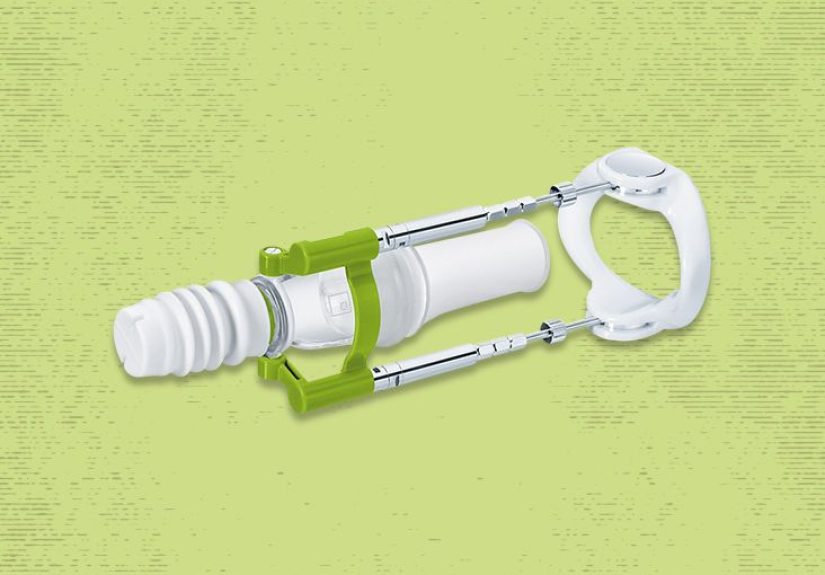
Phallosan Forte is a penis extender that’s designed to apply traction using an orthopedic-style belt/strap system.
Instead of the classic “two rods and a base ring” extender setup, it uses a vacuum attachment to hold the glans area in place
(typically with a protective sleeve/cap) while the strap provides adjustable traction.
The manufacturer also positions it as comfortable enough for longer wear sessions (including while moving around),
which is important because traction therapywhen it worksusually depends more on consistent time than on “maximum force.”
How it differs from rod-style extenders
Rod-style devices generally brace at the base and pull forward with adjustable rods. Phallosan’s approach aims to avoid some pressure points
by shifting to a belt system and vacuum fixation. In theory, comfort can improve complianceand compliance is basically the entire game here.
A device that’s “strong” but intolerable is like a gym membership you never use: technically impressive, practically useless.
How penis extenders are supposed to work (the non-magic version)
Traction therapy is built on a concept used elsewhere in medicine: mechanotransduction.
When tissue experiences gentle, sustained mechanical stress over time, it can adapt and remodel.
That doesn’t mean you can “stretch” the penis like a rubber band in a weekend. It means that small changes, if they occur,
tend to happen gradually over months with repeated, tolerable traction.
Why time matters more than intensity
Many clinical protocols for traction therapy rely on repeated daily use over weeks to months.
Results in studies are typically modestbut they’re more believable when the mechanism is “slow remodeling”
rather than “instant growth hack.”
What the research says about penile traction therapy
Important: Most higher-quality research on traction devices focuses on medical conditions,
not cosmetic enlargement. That doesn’t mean cosmetic results are impossibleit means expectations should be conservative,
and you should be wary of dramatic claims.
1) Peyronie’s disease (curvature and length loss)
Peyronie’s disease involves scar tissue (plaque) in the penis that can cause curvature, pain, and sometimes length loss.
Traction therapy is discussed as a non-surgical or adjunct option in clinical contexts, and there are randomized and prospective studies
reporting improvements in curvature and length measures in some men using specific traction devices over a few months.
Clinical commentary from urology sources also notes that evidence quality varies and protocols differ, which makes comparisons tricky.
2) Post-prostatectomy or penile rehabilitation contexts
Some research evaluates traction therapy to help preserve or improve penile length after prostate surgery.
Again, this is a medical context where length changes are measured systematically and where “success” may mean
preventing loss or achieving a modest gainnot turning anyone into a Marvel statue.
3) Cosmetic enlargement in healthy men
This is where things get foggier. Reviews of penile lengthening approaches include nonsurgical methods (like traction)
but often point out limitations: different devices, different wear times, small study sizes, variable measurement methods,
and unclear long-term durability of results.
Translation: if you’re expecting a dramatic transformation, traction devices are not your fairy godmother.
So… does Phallosan Forte really work?
Here’s the most honest answer: it can potentially produce modest length changes for some usersif used consistently over monthsbut results vary and marketing claims often overreach.
If traction therapy “works” for a person, it’s usually because they:
- Use it consistently over a long period (think months, not days).
- Keep traction within tolerable, safe limits (not “maximum pain = maximum gain”).
- Measure results realistically and consistently (and don’t panic over normal day-to-day fluctuations).
- Have expectations aligned with typical outcomes (small gains, not miracles).
What “work” usually looks like in real life
Many people who report benefits describe changes like:
a slightly longer flaccid hang, a small increase in measured length, or improved confidence.
Girth changes are often less consistent and harder to attribute directly to traction alone.
Also, some improvements people notice may be related to better erection quality, reduced anxiety, or more consistent measurement habits,
not purely tissue change.
Pros and cons of Phallosan Forte (in plain English)
Potential pros
- Comfort-focused design: If the belt/vacuum approach is more wearable for you, you’re more likely to stick with it.
- Hands-free potential: Some users value being able to move around more easily than with rigid rod devices.
- Traction mechanism is plausible: Traction therapy has a real medical rationale, even if cosmetic outcomes are modest.
Potential cons
- Time commitment: If you hate routines, traction therapy will absolutely expose that.
- Mixed results: Some users see small gains; others see none.
- Side effects: Discomfort, skin irritation, bruising, swelling, or numbness can happenespecially if used improperly or too aggressively.
- Cost: Premium devices can be expensive, and the “best” device is the one you can safely and consistently use.
Safety: what you should know before trying any extender
This matters more than hype. Traction and vacuum-based systems can cause problems if you push too hard or ignore warning signs.
Common issues reported across traction/vacuum contexts include irritation and temporary numbness.
You should stop and seek medical advice if symptoms persist.
Red flags to stop immediately
- Persistent numbness or tingling that doesn’t resolve with rest
- Significant pain (not mild discomfort), sharp pain, or burning sensations
- Skin breakdown, blisters, or open sores
- Marked swelling, discoloration, or bruising that worsens
- Any sign of injury or sudden functional change
Who should avoid extenders (or only use under medical supervision)
- Anyone under 18
- People with bleeding disorders or on blood thinners (higher bruising risk)
- Those with reduced sensation/neuropathy (you may not feel warning signs)
- People with active pain, suspected injury, or unexplained symptoms
- Anyone with Peyronie’s disease should consult a urologist for the safest plan
How to set realistic expectations (so you don’t rage-quit at week two)
If you try a traction device, the most common mistake is expecting quick results.
The second most common mistake is measuring compulsively and emotionally.
A healthier approach is to think in “months and consistency,” not “days and vibes.”
Realistic outcomes
In clinical studies for medical indications, changes can be measurable over a few months, often in the range of
“modest but real.” For purely cosmetic goals, expect resultsif they happento be smaller and less predictable.
Some people may notice improved flaccid appearance more than changes in erect length.
What marketing doesn’t emphasize
Marketing loves best-case scenarios. Real life includes missed days, comfort issues, learning curves,
and the fact that bodies don’t read product brochures.
If a brand promises huge gains fast, that’s your cue to put your wallet down and back away slowly.
Alternatives to consider before spending money
1) Talk to a urologist (especially if this is causing stress)
If you’re worried about size, function, curvature, pain, or anything that feels “off,” a clinician can help you separate
normal variation from a medical issueand protect you from injuring yourself with DIY solutions.
2) Focus on erection quality and overall health
Many “size” concerns are actually “quality” concernsconfidence, hardness, anxiety, and body image.
Sleep, exercise, stress management, and avoiding smoking can meaningfully affect sexual health and perceived size.
3) Be cautious with pills, injections, or underground “shortcuts”
Over-the-counter “enlargement pills” and sketchy procedures are where real harm happens.
If something sounds too good to be true, it often comes with a side of regret.
FAQ
Is Phallosan Forte clinically proven?
There’s stronger clinical evidence for penile traction therapy as a category (especially in medical contexts)
than there is for any single consumer device brand proving “cosmetic enlargement” in large, independent trials.
Phallosan Forte is designed around the traction concept, but brand-specific proof at high clinical standards is limited.
How long does it take to see results?
If results occur, think in months. Traction therapy is a long game, and inconsistency usually kills progress.
If you try it, prioritize safe comfort and adherencenot intensity.
Can it increase girth?
Girth claims are generally less consistent. Some people report slight changes, but traction mechanisms most directly relate to length.
Be skeptical of dramatic girth promises.
Is it safe?
Any device that applies traction or vacuum can cause side effects if used improperly or too aggressively.
Mild, temporary discomfort can happen, but pain, persistent numbness, discoloration, or skin injury are red flags.
When in doubt, stop and talk to a clinician.
Real-world experiences (what people typically report) about
Most people’s first week with a traction device is less “transformation montage” and more “trial-and-error sitcom.”
Day one often starts with optimism, a mirror, and the strong belief that you are definitely doing it correctly.
Day two introduces the concept of “comfort,” which is a polite way of saying, “Your body has opinions.”
Many users describe an adjustment period where they fine-tune fit and tension, and the main goal becomes
simply wearing the device consistently without irritation.
By weeks two to four, routines emerge. Some people become very disciplinedtracking wear time, taking breaks, and learning
what their skin tolerates. Others discover that real life does not care about your penis extender schedule.
Common complaints in this phase include minor skin irritation, occasional slippage, and temporary numbness that improves when they back off.
The users who last tend to treat it like physical therapy: steady, cautious, and boring in the best way.
The users who quit tend to do the opposite: push too hard, get uncomfortable, and decide it’s “not working” before the timeline even begins.
Around the two- to three-month mark, the stories split. A portion of users report small measurable changes
sometimes a subtle increase in stretched measurements or a slightly different flaccid appearance.
Others report no measurable change and a lot of resentment toward the concept of time.
This is also where psychology enters the chat: measuring can become obsessive, and day-to-day variation can feel like “progress” or “regression”
depending on mood, sleep, stress, and temperature (yes, your environment can make everything look differentbodies are inconvenient like that).
People who feel satisfied often describe the win as “modest but real.” They talk about consistency, comfort, and patiencewords
that are not exciting but are suspiciously common in anything that actually works. They may also mention improved confidence:
sometimes because of a physical change, sometimes because committing to a routine reduces anxiety, and sometimes because the process
helped them reframe what “normal” looks like. People who feel disappointed often say the opposite: it was uncomfortable,
it disrupted their life, or the change didn’t match the price tag and effort.
The most realistic “experience summary” is this: traction devices can be a slow, compliance-heavy approach that may produce small gains for some
and no gains for others. Comfort and safety influence everything. If you’re chasing a dramatic overnight change, you’ll probably hate it.
If you can commit to a long, careful routine with modest expectations, you may find the outcomephysical or psychologicalworth it.
And if you’re under 18, the smartest move is to skip the devices entirely and speak with a qualified healthcare professional about any concerns.
Conclusion
Phallosan Forte isn’t “magic,” but it’s also not pure fantasy. It’s a traction-style extender built around a mechanism that has clinical relevance
in certain medical contextsand that plausibly could create modest length changes over time for some users.
The catch is consistency, patience, and safety. If you approach it with realistic expectations (small, slow changes), prioritize comfort,
and treat warning signs seriously, it has a better chance of being a “maybe” rather than a “no.”
If you approach it like a superhero origin story, you’re likely to end up with an irritated skin barrier and a bruised relationship with your measuring tape.






 Close
Close