
Table of Contents >> Show >> Hide
- What is pneumococcal conjunctivitis?
- Common symptoms of pneumococcal conjunctivitis
- How is it different from viral or allergic conjunctivitis?
- How doctors diagnose pneumococcal conjunctivitis
- How to treat pneumococcal conjunctivitis
- When to seek urgent medical care
- How contagious is pneumococcal conjunctivitis?
- How to prevent spreading it to others
- What recovery usually looks like
- Real-world experiences people commonly report
- Experience 1: The “I thought it was allergies” phase
- Experience 2: Morning is worse than the rest of the day
- Experience 3: One eye starts it, the second eye copies it
- Experience 4: Treatment helps, but not always instantly
- Experience 5: Hygiene becomes a full-time hobby
- Experience 6: The scary symptoms are different from the typical ones
- Final thoughts
If your eye wakes up looking red, cranky, and glued shut like it lost an argument with a glue stick overnight, bacterial conjunctivitis may be the culprit. And one possible cause is Streptococcus pneumoniae, the bacterium behind pneumococcal conjunctivitis. It sounds technical, but the condition itself is familiar: red eye, discharge, irritation, and the deeply glamorous experience of trying to pry your eyelids apart before coffee.
Here is the important part: not every case of pink eye is pneumococcal, and not every red eye is harmless. Viral infections, allergies, contact lens problems, and corneal disease can all look similar at first. That is why a smart guide to pneumococcal conjunctivitis symptoms and treatment needs to do more than say “yep, the eye is pink.” It needs to explain what this infection is, how it usually feels, when it may spread, what treatment actually helps, and when it is time to stop Googling and call a doctor.
This article breaks down the basics in plain English, with enough depth to be useful whether you are a worried parent, a patient comparing symptoms, or someone who just wants to know why one eye has decided to become the office drama queen.
What is pneumococcal conjunctivitis?
Pneumococcal conjunctivitis is a type of bacterial conjunctivitis caused by Streptococcus pneumoniae. The infection affects the conjunctiva, the thin, clear tissue that covers the white of the eye and lines the inside of the eyelids. When that tissue becomes inflamed, the eye looks red or pink, may water or ooze discharge, and often feels irritated or gritty.
Even though many people associate S. pneumoniae with pneumonia, ear infections, or sinus problems, this bacterium can also infect the eye. In children, bacterial conjunctivitis is relatively common, and S. pneumoniae is one of the better-known bacterial causes. In adults, bacterial pink eye happens too, although viral conjunctivitis is often more common overall.
Pneumococcal conjunctivitis can show up as a single everyday case, but it has also been linked to outbreaks in schools, colleges, and other close-contact settings. That matters because this version can spread efficiently through eye secretions, contaminated hands, shared towels, and the old classic: touching your infected eye and then touching literally everything else.
Common symptoms of pneumococcal conjunctivitis
The symptoms of pneumococcal conjunctivitis overlap with other forms of pink eye, but a few features tend to lean bacterial rather than allergic or viral.
1. Red or pink eyes
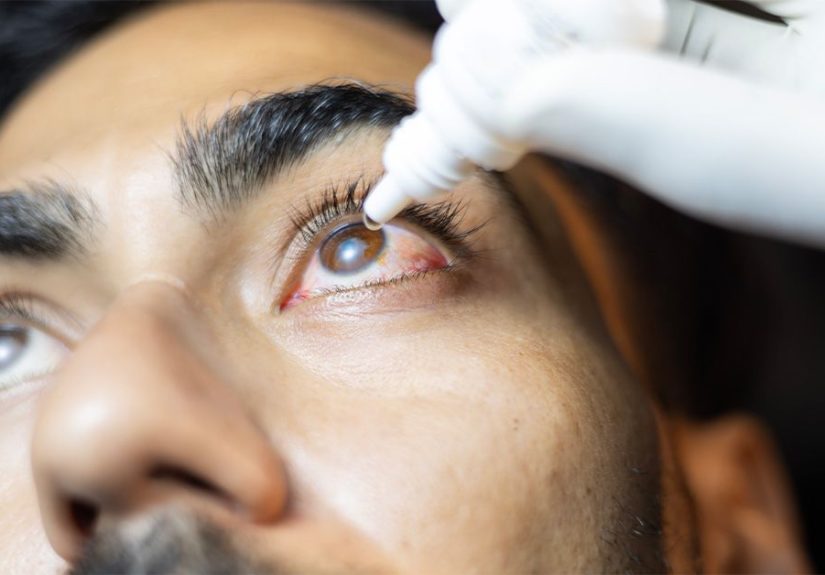
This is the headline symptom. The white part of the eye may turn pink, red, or bloodshot. Sometimes one eye starts first and the second eye joins the party a day later.
2. Thick discharge
A classic clue for bacterial conjunctivitis is thicker discharge that may look white, yellow, or greenish. It can collect at the corners of the eye and leave crusting on the lashes, especially after sleep. Many people describe waking up with the eyelids stuck together, which is unpleasant but also a pretty strong hint that this is not simple eye dryness.
3. Gritty, burning, or irritated feeling
People often say it feels like sand, dust, or an eyelash is trapped in the eye. The eye may burn, sting, or just feel “off” all day. It is usually more irritating than truly painful.
4. Swollen eyelids
Mild eyelid puffiness is common. The tissue around the eye may look a little swollen, especially in the morning or after rubbing the eye.
5. Tearing mixed with mucus
The eye may water, but unlike a classic allergy picture, the tears are often mixed with mucus or pus. That combination of watering and gunky discharge is a frequent bacterial pattern.
6. Eye discomfort with normal activities
Reading, screen time, bright indoor lights, and wind can all make the eye feel worse. Some people become mildly light-sensitive, although severe light sensitivity is a warning sign that something more serious may be happening.
7. Possible ear or respiratory symptoms in children
Because bacterial conjunctivitis can overlap with upper respiratory infections, some children may also have cold symptoms. In some pediatric cases, an eye infection may show up alongside an ear infection. That does not mean every red eye and runny nose equals pneumococcal conjunctivitis, but it can be part of the bigger picture.
How is it different from viral or allergic conjunctivitis?
This is where diagnosis gets tricky. Pink eye is not one disease. It is more like a category with several look-alikes wearing similar costumes.
Viral conjunctivitis
Viral pink eye often causes watery discharge rather than thick pus. It commonly comes with a cold, sore throat, or recent exposure to someone else with red eyes. The eye may still crust a little, but it is usually more watery than gooey.
Allergic conjunctivitis
Allergies usually affect both eyes and are famous for intense itching. Tearing is common, but thick bacterial-type discharge is less typical. Sneezing and a runny nose also push the story toward allergies.
Pneumococcal or other bacterial conjunctivitis
Bacterial cases tend to involve thicker discharge, eyelids stuck shut in the morning, and a more obvious “infected” look. The redness can start in one eye and spread to the other. In outbreak settings, bacterial causes such as pneumococcus become more likely.
The catch is that symptoms overlap. That is why doctors diagnose conjunctivitis mostly through history and an eye exam, not by guesswork alone from one symptom.
How doctors diagnose pneumococcal conjunctivitis
In many cases, a clinician can diagnose conjunctivitis based on symptoms and a basic eye examination. They will usually ask:
- When did the redness start?
- Is one eye affected or both?
- What kind of discharge is present?
- Do you wear contact lenses?
- Do you have pain, light sensitivity, or blurred vision?
- Has anyone around you had pink eye recently?
Most everyday cases do not need lab testing. But a doctor may consider an eye culture in certain situations, such as:
- Severe symptoms
- Recurrent or stubborn infections
- Outbreaks in schools, dorms, or daycare settings
- Cases that do not improve as expected
- Newborn infections
If the infection is part of a community outbreak, identifying S. pneumoniae can help public health teams understand what is spreading and how best to control it.
How to treat pneumococcal conjunctivitis
The good news is that bacterial conjunctivitis often improves, and many people start feeling better within a few days. The not-as-fun news is that the right treatment still matters, especially when symptoms are more pronounced or the infection is clearly bacterial.
1. See a healthcare professional for the right diagnosis
Because viral, allergic, and bacterial conjunctivitis can overlap, it is best not to self-diagnose based on one dramatic glance in the bathroom mirror. A doctor or eye care professional can determine whether antibiotic treatment makes sense and whether the eye shows signs of something more serious.
2. Antibiotic eye drops or ointment may be prescribed
When conjunctivitis is thought to be bacterial, treatment often involves antibiotic eye drops or ointment. These medicines can shorten symptoms in some cases and may help reduce the amount of bacteria present. Exact medication choice depends on the patient, age, severity, contact lens use, local resistance patterns, and whether another eye problem is suspected.
Important note: antibiotic eye drops do not help viral pink eye. That is one reason proper diagnosis matters.
3. Supportive care still helps a lot
Even if you are using prescription treatment, comfort measures matter:
- Use a clean cool compress over closed eyelids
- Gently wipe away discharge with a clean, damp cloth or fresh cotton ball
- Wash your hands before and after touching the eye area
- Use lubricating eye drops only if your clinician says they are appropriate
- Rest your eyes if screens and bright light make symptoms worse
4. Stop wearing contact lenses
If you wear contacts, take them out as soon as symptoms begin and do not wear them again until a clinician says it is safe. This is a big deal. Contact lens wearers have a higher risk of more serious eye infections involving the cornea, and what looks like simple pink eye can occasionally be something more dangerous.
5. Do not use leftover medications
Old eye drops from last year’s mystery redness are not a personality trait. They are a bad plan. Do not use leftover antibiotics, and never use steroid eye drops unless they were specifically prescribed for this episode by an eye specialist. Steroids can worsen certain eye infections and mask important warning signs.
6. Give it a little time, but not too much
Bacterial pink eye may start improving in a few days, but full resolution can take longer. If symptoms are worsening, not improving, or returning quickly after treatment, follow up. Stubborn red eyes deserve a second look.
When to seek urgent medical care
Most conjunctivitis is annoying rather than dangerous. But some symptoms are not normal pink-eye behavior. They are your cue to get help quickly.
- Moderate to severe eye pain
- Blurred vision that does not clear after wiping discharge
- Severe sensitivity to light
- Intense redness, especially if it is getting worse
- Large amounts of discharge or marked swelling
- Symptoms that do not improve or worsen after treatment starts
- Contact lens use with red eye
- Newborn pink eye
- Weakened immune system
These features can point to corneal involvement, a deeper infection, or another eye condition that should not be managed like routine conjunctivitis.
How contagious is pneumococcal conjunctivitis?
Pretty contagious. Not horror-movie contagious, but definitely “don’t share towels with your roommate” contagious.
Pneumococcal conjunctivitis can spread through direct contact with eye secretions, contaminated hands, washcloths, pillowcases, and shared personal items. This is one reason outbreaks have occurred in schools and colleges. A red eye plus poor hand hygiene plus a busy shared environment is not a winning combo.
People are generally most likely to spread infectious conjunctivitis while they still have active drainage and matted eyes. After treatment begins, contagiousness often decreases, but hygiene still matters.
How to prevent spreading it to others
Whether the infection is confirmed as pneumococcal or simply suspected to be bacterial, prevention is gloriously low-tech and extremely effective.
- Wash hands often with soap and water
- Avoid touching or rubbing the eyes
- Clean away discharge using disposable cotton or freshly washed cloths
- Do not share towels, washcloths, pillowcases, eye makeup, or eye drops
- Wash pillowcases, towels, and washcloths in hot water
- Clean glasses regularly
- Throw away eye makeup used during the infection
- Do not return to contact lenses until recovery is complete and lenses or cases are properly replaced or disinfected
What recovery usually looks like
Recovery is often straightforward. The eye may still look red for a bit even after discharge begins to improve. Many people notice the first big win is waking up with less crusting. After that, burning, irritation, and tearing usually taper off.
Some cases improve quickly with treatment, while others linger longer than expected. That does not automatically mean something is terribly wrong, but it does mean follow-up may be worthwhile if the timeline is dragging or symptoms keep bouncing back.
Real-world experiences people commonly report
To make this more practical, here is what the experience of pneumococcal conjunctivitis symptoms and treatment often feels like in everyday life. These are composite-style examples based on common symptom patterns, not dramatic movie scenes where someone whispers, “Tell my family I loved them,” because this is pink eye, not a space mission.
Experience 1: The “I thought it was allergies” phase
A lot of people do not assume infection on day one. They notice mild redness, a scratchy feeling, and a little extra tearing. Since allergies are common and screen time is eternal, they blame pollen, dry air, or the fact that they spent four hours staring at spreadsheets. By the next morning, though, the eyelids are crusted, the discharge is thicker, and the eye looks more obviously inflamed. That shift from “slightly annoyed eye” to “something is definitely living its own life in there” is common in bacterial cases.
Experience 2: Morning is worse than the rest of the day
People with bacterial conjunctivitis often say mornings are the roughest. The lashes can be sticky, the eyelids may be hard to open, and the first bathroom mirror check can be unsettling. After gently cleaning away the discharge with a damp cloth, the eye usually feels better, but irritation returns as discharge builds up through the day.
Experience 3: One eye starts it, the second eye copies it
Another common pattern is one eye becoming red and irritated first, with the second eye following soon after. Sometimes this is true spread from the infected eye to the other eye by hand contact. Sometimes the infection was already setting up camp and just needed an extra day to become obvious. Either way, many people remember a brief moment of hope like, “At least it’s only one eye,” right before that hope leaves the chat.
Experience 4: Treatment helps, but not always instantly
People often expect antibiotic drops to work like magic windshield fluid. Real life is less cinematic. The discharge may lessen first, while redness and irritation take longer. Some improvement may happen within days, but full clearing can take longer than patients expect. That can be frustrating, especially for parents trying to decide when a child is ready for school, or adults trying to explain in meetings that they are not crying, contagious, or both.
Experience 5: Hygiene becomes a full-time hobby
Once someone realizes the infection spreads easily, daily life turns into a hand-washing and towel-management operation. Pillowcases get changed more often. Makeup gets tossed. Contacts stay out. Shared bathroom towels become suspicious. This part may feel excessive, but it is exactly the kind of routine that helps stop reinfection and protects people nearby.
Experience 6: The scary symptoms are different from the typical ones
People who have had routine conjunctivitis before often notice that the usual version is gross and irritating, but not deeply painful. That is why symptoms like real pain, marked light sensitivity, or blurry vision feel different. Those warning signs stand out, and they should. When the symptoms cross from “pink eye nuisance” into “I really cannot see well” territory, that is the moment to seek urgent evaluation instead of hoping a nap will negotiate peace.
Final thoughts
Pneumococcal conjunctivitis is a treatable bacterial eye infection, but it should not be dismissed as “just a little redness.” The most common signs include red eyes, thick discharge, crusting, irritation, and eyelids that seem unusually dramatic in the morning. Because the condition can spread through close contact and shared items, hygiene matters almost as much as treatment.
The smartest approach is simple: get the eye evaluated if symptoms clearly suggest a bacterial infection, use prescribed treatment correctly, stop wearing contact lenses, and pay attention to warning signs like pain, blurred vision, or severe light sensitivity. With the right care, most people recover well. And ideally, they recover without infecting the rest of the household, the daycare class, or that one coworker who always borrows your pens and somehow everything else.







 Close
Close