
Table of Contents >> Show >> Hide
- What Counts as a Fresco (And Why People Misuse the Word)
- Why Frescoes Look Different From Canvas Paintings
- The Greatest Hits: Famous Frescoes That Became Cultural Landmarks
- 1) Pompeii and Roman Wall Painting: Fresco as Immersive Interior Design
- 2) Giotto and the Arena (Scrovegni) Chapel: The Fresco That Rewrote Visual Storytelling
- 3) Masaccio in the Brancacci Chapel: Perspective Meets Real People Energy
- 4) Michelangelo’s Sistine Chapel: Fresco as Athletic Event
- 5) Raphael’s Rooms (Stanze): Fresco as Brainy Spectacle
- Fresco Moves Into the Modern World: Murals With a Message
- How Frescoes Are Made: The Medium That Forces You to Commit
- How to Look at Popular Fresco Art Like You Know What You’re Doing
- Why Frescoes Survive (And Why They Sometimes Don’t)
- Where Fresco Feels Most “Popular” Today
- Experiences With Popular Fresco Art (What It Feels Like Up Close)
- Conclusion
Fresco art is the original “go big or go home” medium: it’s painting that literally becomes part of the wall.
Long before screens, scrolling, and spoilers, frescoes were the blockbuster storytelling formatgiant scenes,
public messages, sacred drama, everyday life, and occasionally a reminder that your patron had money and opinions.
If you’ve ever stood under a painted ceiling and felt your neck complain while your brain whispered
“Worth it”, you already understand why popular fresco art still pulls crowds centuries later.
In this guide, we’ll break down what fresco actually is (and what it isn’t), why it looks so different from
canvas painting, and which frescoes became the “greatest hits” of their timefrom ancient Roman walls to the
politically charged mural renaissance of the 20th century. We’ll also cover how frescoes are made, how to spot
their telltale clues in person, and why conservation can be as dramatic as the art itself.
What Counts as a Fresco (And Why People Misuse the Word)
“Fresco” gets tossed around as a casual synonym for any wall painting. But technically, fresco is a specific
way of painting where pigments mixed with water are applied to fresh lime-based plaster before it sets. As the
plaster cures, chemistry locks pigment into the surfacebasically, the wall and the color form a permanent pact.
That technical definition matters because it affects everything: durability, color, texture, even how restorers
should treat the surface.
The Three Fresco “Flavors” You’ll Hear About
-
Buon fresco (true fresco): Pigment goes on wet plaster. Time is the boss. When the plaster sets,
the paint is part of the wall. -
Fresco a secco (dry fresco): Paint goes on dry plaster (often for details or touch-ups). It can look
great, but it’s generally less durable because the pigment sits more on the surface. -
Mezzo-fresco (in-between): Painted when the plaster is partly setgiving a little more working time,
but not quite the same “chemical bond” vibe as true fresco.
When someone says “fresco,” they usually mean buon fresco, the wet-plaster method associated with
major Italian Renaissance wall cycles and the big-name ceilings. But plenty of historic wall paintings mix methods,
and many famous works include secco details for fine lines, metallic effects, or last-minute fixes.
Why Frescoes Look Different From Canvas Paintings
Frescoes have a signature matte, velvety surface that doesn’t behave like glossy oil paint.
The plaster absorbs the pigment, and the surface can feel almost like colored stone. That’s why fresco colors can
read as soft and luminous even when the subject matter is intense. It’s also why fresco painters had to think in
large shapes and confident strokesbecause blending like an oil painter is harder when your “palette” is literally
drying in front of you.
Fresco also rewards clarity. Big narratives, readable silhouettes, strong perspective, and rhythmic composition
aren’t just stylistic choicesthey’re practical solutions for a medium designed to be seen across a room,
above an altar, or from the far end of a public hall.
The Greatest Hits: Famous Frescoes That Became Cultural Landmarks
“Popular fresco art” usually means works that (1) changed the visual language of their era, (2) became pilgrimage
destinations, and/or (3) influenced what came next. Here are standout examples that keep showing up in art history
conversations for good reason.
1) Pompeii and Roman Wall Painting: Fresco as Immersive Interior Design
Ancient Roman wall painting is where fresco stops being “just decoration” and starts acting like a whole environment.
Homes and villas used wall paintings to create fake architecture, imaginary gardens, mythological dramas, and
theatrical scenesturning rooms into curated experiences. Some works were executed a fresco on fresh plaster, with
additional a secco layers added later for softer colors and details.
Why it’s popular: Roman frescoes feel oddly modern. They’re bold, graphic, and sometimes surprisingly playful.
Also, the preservation storyart “paused” by catastropheadds emotional weight that visitors never forget.
2) Giotto and the Arena (Scrovegni) Chapel: The Fresco That Rewrote Visual Storytelling
Giotto’s frescoes are often treated like a turning point in Western art because the figures feel newly grounded:
they occupy believable space, show human emotion, and tell stories with a cinematic sense of sequence. The
popularity here isn’t about celebrity hypeit’s about influence. Later artists studied how Giotto used gesture,
architecture, and pacing to make narrative scenes feel immediate.
Why it’s popular: It’s the moment fresco becomes not just a wall covering, but a fully developed storytelling machine.
You can practically see the future of Renaissance art booting up.
3) Masaccio in the Brancacci Chapel: Perspective Meets Real People Energy
Masaccio’s frescoes (notably scenes like “The Tribute Money”) are frequently discussed for their convincing
perspective and weighty, human figures. The style feels directless “floating saints,” more “people with gravity.”
Fresco is perfect for this because it forces decisiveness: forms must read clearly, quickly, and at scale.
Why it’s popular: It made realism feel unavoidable. Once you’ve seen a painted figure that seems to truly exist in
the space, it’s hard to go back.
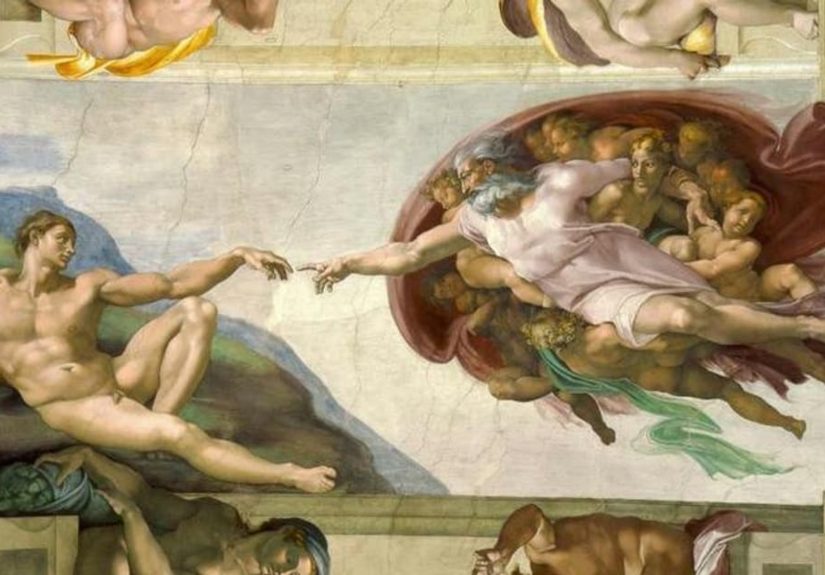
4) Michelangelo’s Sistine Chapel: Fresco as Athletic Event
The Sistine Chapel ceiling is popular in the way mountains are popular: everyone knows it’s there, everyone wants
proof they faced it, and everyone leaves with a sore neck and a story. It’s a vast fresco program packed with
complex poses, dramatic anatomy, and big theological themescreated under intense pressure and relentless scrutiny.
Why it’s popular: It’s technically outrageous, visually unforgettable, and endlessly interpretable. Even people who
swear they “don’t care about art” tend to care about that ceiling once they see it.
5) Raphael’s Rooms (Stanze): Fresco as Brainy Spectacle
Raphael’s fresco cycles are famous for balancing grand composition with elegant, readable storytelling.
Where Michelangelo often feels like thunder, Raphael can feel like a symphony: structured, harmonious, and loaded
with philosophical and political meaning. These frescoes helped define what “High Renaissance” balance looks like.
Why it’s popular: It turns complex ideas into images people can stand in front of for an hour and still feel like
they’re discovering new details.
Fresco Moves Into the Modern World: Murals With a Message
Fresco didn’t end with the Renaissance. In the 20th century, mural movements revived large-scale wall painting as a
public languageoften political, often educational, and intentionally accessible. This is where “popular fresco art”
becomes literal: art for the people, on walls people actually use.
Mexican Muralism: Public Walls, Public Stories
The Mexican muralistsoften called “Los Tres Grandes” (Diego Rivera, José Clemente Orozco, and David Alfaro Siqueiros)
made murals that addressed identity, history, labor, revolution, and the future. They used multiple techniques,
including fresco, and they treated public architecture as a canvas for national conversation.
Diego Rivera’s Detroit Industry Murals: Fresco Inside an American Museum
Rivera’s Detroit Industry murals (1932–1933) are among the most celebrated frescoes in the United States.
Painted as a sweeping panorama of industrial labor and technology, the series wraps viewers in an immersive environment
where machines, workers, and materials become a kind of modern mythology.
Why it’s popular: It’s visually gripping and historically loaded. It doesn’t whisper “art.” It announces itloudly,
in the language of assembly lines and human effort.
Pan American Unity: Fresco Built to Travel (Yes, Really)
Rivera’s Pan American Unity is a fascinating case: a fresco created not on a permanent wall, but on
large portable panels. It’s a fresco that acknowledges modern logisticsart that can move without becoming rubble.
The result is still monumental, still dense with symbolism, and still determined to talk about culture, technology,
and shared futures across the Americas.
How Frescoes Are Made: The Medium That Forces You to Commit
Fresco painting is part art, part construction project, part time-management stress test. In traditional practice,
artists prepare the wall in layers, sketch the design, then apply a final smooth plaster layer in sections that can
be painted before the plaster sets. Those daily sections are called giornateand yes, they can leave
visible edges if you know what to look for.
A Fresco Workflow (Simplified, But Not Sugarcoated)
-
Prep the wall: The surface is dampened and covered with a coarse plaster layer called
arriccio. -
Plan the image: The design can be sketched onto the arriccio (often in reddish pigment called
sinopia) or transferred via a full-scale cartoon. -
Apply the painting surface: A smoother plaster layer, intonaco, goes on in
small sectionseach a giornata. -
Paint fast (but accurately): Pigments diluted in water go directly onto the wet intonaco. As it dries,
a chemical reaction binds pigment to the plaster. -
Add details (sometimes a secco): Fine details or later adjustments may be added on dry plaster, but those
surface layers can be more vulnerable over time.
Fresco demands planning because “fix it in post” is not a reliable strategy when the wall has already turned into
limestone. Artists learned to simplify shapes, anticipate color shifts, and build forms with confident strokes.
The medium rewards clarity and punishes procrastinationso, basically, it’s the opposite of how most people answer emails.
How to Look at Popular Fresco Art Like You Know What You’re Doing
You don’t need an art history degree to appreciate frescoes, but a few insider tricks make the experience richer.
The goal is to see both the image and the methodthe “story” and the “how.”
Spot the Giornate
Look for faint seams or shifts in texture. A giornata edge might trace around a face, a hand, or a piece of architecture.
Once you start seeing them, you realize the painting is a sequence of victories against drying time.
Notice the Matte Surface and the Light
Frescoes love indirect light. Because the surface is matte, the image can feel calmer than oil painting, even when the
subject is dramatic. If the lighting changes as you move, watch how forms “breathe” rather than glare.
Read the Space Like a Stage Set
Fresco cycles were often designed for a specific room. Stand where the artist expected you to stand. Look up where the
ceiling demands it. Step back where the wall wants distance. Fresco isn’t shyit’s built for architecture.
Why Frescoes Survive (And Why They Sometimes Don’t)
True fresco can be remarkably durable because pigment is chemically bound into the plaster surface. But fresco is not
invincible. Moisture is a recurring villain: cool, damp environments can damage frescoes, and salt movement in walls can
cause flaking, powdering, and surface loss. Even when a fresco looks “fine,” conservation teams may be dealing with
complex chemistry happening behind the scenes.
Conservation Can Be Controversial
Restoration sometimes sparks arguments because cleaning can change how colors look, and overpainting can blur the line
between historic surface and modern intervention. Another complication: not all wall paintings are true fresco. If a
conservator assumes a fresco technique where binders were actually used, the treatment can cause damage. Knowing the
material reality of the wall isn’t triviait’s essential to protecting the art.
Where Fresco Feels Most “Popular” Today
Fresco art stays popular because it delivers something modern life rarely does: scale, physical presence, and a sense of
being surrounded by a story. You don’t just “view” a frescoyou share a room with it. That’s true whether you’re staring
up at a Renaissance ceiling, standing in a museum court wrapped in industrial imagery, or walking into a public building
where history is painted at human height.
In the U.S., major Rivera frescoes (including the Detroit Industry murals and Pan American Unity) help keep fresco in the
public imagination, while museum collections and educational institutions preserve fresco fragments and teach the technique.
Meanwhile, ongoing archaeological discoveries and scholarship continue to refresh interest in ancient wall paintingproof
that popular fresco art isn’t just a chapter in the past; it’s an active conversation.
Experiences With Popular Fresco Art (What It Feels Like Up Close)
Seeing fresco art in person is a different experience than seeing it on a screenand not just because your phone can’t
capture scale without turning people into accidental ants. Frescoes are made for real rooms, real light, and real bodies
moving through space. When you walk into a frescoed interior, your brain starts doing something it doesn’t do with most
framed art: it maps the painting as part of the architecture. The wall isn’t a background anymore. It’s the stage.
Start with the way fresco changes your sense of time. You’ll often catch yourself looking twicefirst at the image, then
at the surface. Cracks, faint seams, and tiny losses can be visible, and instead of ruining the moment, they can make it
more powerful. A fresco doesn’t hide that it has survived weather, renovations, smoke, dust, and centuries of human
decisions. It feels less like a “perfect object” and more like a living witness that’s still doing its job.
In a space like the Detroit Institute of Arts’ Rivera Court, the experience is almost cinematic: you’re surrounded, not
merely entertained. Your eyes bounce from one panel to another, and the story builds as you turn your headlabor,
machinery, material, motion. The mood can shift depending on where you stand, like switching camera angles. If you’ve
ever wanted to understand why mural movements cared so much about public walls, stand in a room where the walls speak
louder than the people.
Fresco also changes how you notice craft. On a close look, the surface can feel oddly tenderpowdery in places,
slightly granular, like pigment settled into stone. You may start looking for the daily working sections, the giornata
edges, and once you see them, the fresco becomes a record of human scheduling. “This was a day’s work” stops being an
abstract phrase and becomes a real thought: someone stood here with wet plaster drying, making decisions that could not
be undone tomorrow. It’s a humbling kind of intimacyless “brushwork flex,” more “discipline under pressure.”
Then there’s the sound and the social atmosphere. Fresco spaces often come with a natural hush, even when the room is
fullpartly because people look up and instinctively lower their voices, as if volume might knock the paint loose.
Docents point, tourists tilt, art students sketch, and everybody eventually does the same thing: they step back to let
the image “lock” into place from the intended viewing distance. Fresco trains you to move. It makes you pace, pause,
and reframe.
Finally, there’s the after-effect: you leave a fresco space with a heightened awareness of walls everywhere. Blank walls
start to feel like missed opportunities. A ceiling becomes a potential universe. And even if you never touch a trowel or
mix a pigment, you’ll carry a new appreciation for the sheer audacity of painting on wet plastera medium that demands
planning, nerve, and the willingness to commit to your choices while the wall literally hardens beneath them.
Conclusion
Popular fresco art endures because it offers more than beautiful imagesit offers presence. Frescoes fuse storytelling
with architecture, craft with chemistry, and private vision with public space. From Roman interiors that turned rooms into
illusionistic worlds, to Renaissance chapels that reshaped narrative painting, to 20th-century murals that brought art
into civic life, fresco remains one of the most ambitious ways humans have ever told stories on a wall. And when you see
a great fresco in person, you don’t just understand ityou feel it.






 Close
Close