
Table of Contents >> Show >> Hide
- What Is a Product Growth Platform?
- Why Product Growth Platforms Matter
- The Core Components of a Modern Product Growth Platform
- What a Product Growth Platform Looks Like in Practice
- Metrics That Actually Matter
- How to Choose the Right Product Growth Platform
- Common Mistakes Companies Make
- Conclusion
- Extended Experience: Lessons From Teams Building a Product Growth Platform
- SEO Tags
Note: This article is prepared for web publication and has been cleaned of unnecessary citation artifacts or placeholder markup.
A lot of companies say they want growth when what they really want is a magic button. Click once, users appear. Click twice, they stay forever. Click three times, the CFO sends you a thank-you muffin basket. Real life, of course, is ruder than that. Growth usually comes from building a system that helps teams understand user behavior, improve the product experience, run smarter experiments, and personalize what happens next. That system is what many teams now call a product growth platform.
At its core, a product growth platform is not just one dashboard with impressive charts and suspiciously cheerful colors. It is a connected set of tools, workflows, and shared metrics that help product, growth, engineering, marketing, and customer success teams increase acquisition, activation, retention, expansion, and revenue. In other words, it gives companies a way to stop guessing and start learning.
If your business runs a SaaS product, mobile app, marketplace, subscription service, or digital product with recurring engagement, a product growth platform can become the engine room of smarter decisions. It tells you where users get stuck, which features create value, what onboarding flows actually work, which experiments deserve a rollout, and how to keep customers coming back for more.
What Is a Product Growth Platform?
A product growth platform is the operating layer that helps teams drive growth through the product itself. Instead of relying only on paid ads, email blasts, or heroic sales decks, it uses in-product signals to improve the customer journey. That journey usually includes five stages: acquisition, activation, engagement, retention, and expansion.
Think of it like a control center for product-led growth. It combines behavioral data, user segmentation, experimentation, onboarding guidance, lifecycle messaging, and reporting into one coordinated system. Some companies buy an all-in-one platform. Others build a stack of best-in-class tools that talk to each other. Either way, the goal is the same: use real product data to create better experiences and stronger business outcomes.
The phrase also reflects an important shift in how modern software companies grow. For years, growth teams often sat outside the product team. Today, the best companies treat growth as a product problem. If users do not reach value quickly, they churn. If they do not discover the right features, they stay confused. If the experience feels generic, they wander off to a competitor with shinier onboarding and fewer pop-ups yelling “Upgrade now!”
Why Product Growth Platforms Matter
Growth is more expensive when teams operate blindly. Without a product growth platform, companies often face familiar pain points: fragmented data, arguments over which metric is “real,” delayed experiments, messy handoffs between teams, and onboarding flows that feel like a scavenger hunt designed by a sleep-deprived raccoon.
A strong platform helps solve those issues by creating a shared view of the user. It connects what users say, what they do, where they struggle, and what actions lead to long-term value. That matters because growth is not just about getting more sign-ups. It is about getting the right users to meaningful outcomes faster.
For example, a task management app may discover that users who create three projects and invite one teammate within the first 24 hours are dramatically more likely to stay. A product growth platform helps identify that pattern, build onboarding around it, test improvements, and measure whether changes actually improve retention. That is much more useful than celebrating a spike in traffic from people who signed up, clicked around for ninety seconds, and disappeared into the digital mist.
The Core Components of a Modern Product Growth Platform
1. Product Analytics
Product analytics is usually the foundation. It tracks what users do inside the product, including events, properties, sessions, funnels, and feature usage. Good analytics does more than count clicks. It helps teams answer growth questions such as:
- Where do users drop off during onboarding?
- Which behaviors correlate with long-term retention?
- What features are used heavily, lightly, or never?
- Which segments convert from free to paid?
Without analytics, every roadmap meeting becomes an improv performance. With analytics, teams can find friction points and prioritize work based on actual behavior.
2. User Onboarding and In-App Guidance
Growth does not begin when a user becomes an expert. It begins when a new user stops feeling lost. That makes onboarding one of the most important parts of any product growth platform.
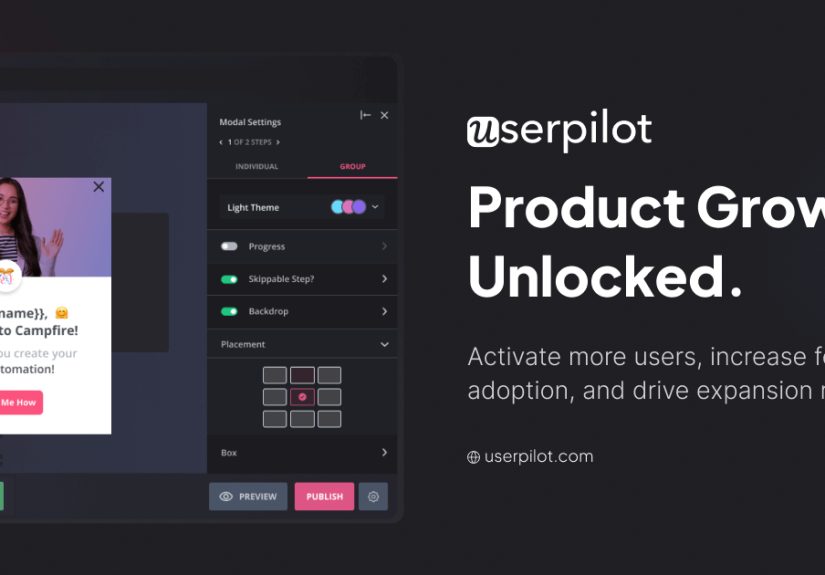
Modern platforms support welcome flows, checklists, product tours, tooltips, contextual prompts, and in-app education. The goal is not to overwhelm users with a parade of modals. It is to guide them toward value. The best onboarding experiences adapt to role, use case, plan type, and stage in the customer journey.
For a collaboration tool, a new solo user may need help importing work and setting up a first project. A team admin, by contrast, may need help inviting colleagues, setting permissions, and connecting integrations. Same product, different path to value.
3. Experimentation and A/B Testing
A product growth platform should make experimentation normal, not ceremonial. Teams need a safe way to test onboarding copy, pricing pages, feature placement, recommendation logic, and upgrade prompts. Great growth platforms help teams define metrics, randomize audiences, monitor guardrails, and interpret results without turning every test into a graduate statistics exam.
Experimentation matters because strong opinions are abundant and often free. Evidence is rarer. A well-run test can reveal that the “obvious” redesign hurts activation, while a small wording change improves completion rates. The platform turns those lessons into repeatable learning.
4. Feature Flags and Progressive Delivery
Feature flags are another essential layer. They let teams release functionality gradually, target specific user groups, and roll back quickly if something breaks. That matters for growth because not every new feature should launch to everyone at once. Sometimes you want to test a workflow with 5% of users, compare outcomes, and expand only when the data looks healthy.
In practice, feature management reduces release risk and makes growth experiments far easier to run. It also helps product and engineering teams work together instead of treating deployment day like an emotionally intense weather event.
5. Customer Data and Identity Resolution
No product growth platform works well if customer data is scattered across tools. Users interact through web, mobile, email, support, billing, CRM, and more. A strong data layer brings those signals together into unified profiles.
This makes segmentation more useful. Instead of sending the same nudge to every user, teams can target first-time users who skipped setup, trial users who reached activation but have not upgraded, or paying customers who are active but underusing a high-value feature. Better data leads to better timing, better targeting, and better odds that your message arrives like helpful guidance rather than a needy robot waving a coupon.
6. Lifecycle Messaging and Engagement
Product growth does not happen only inside the app. It also depends on how teams follow up across email, push notifications, SMS, and in-app communication. The platform should support lifecycle messaging that feels relevant to behavior.
For instance, if a user creates an account but never finishes setup, they may need a quick onboarding reminder. If a customer starts using an advanced feature, they may be a good candidate for an upgrade or add-on. If activity drops for three weeks, that could trigger a win-back sequence. Growth platforms help automate those journeys while keeping them tied to real product events.
What a Product Growth Platform Looks Like in Practice
Imagine a B2B design collaboration app. The company wants to improve trial-to-paid conversion. Here is how a product growth platform might help:
- Analytics shows that users who upload a design file and leave comments within the first session are much more likely to convert.
- Onboarding prompts are updated to encourage that action earlier.
- An experiment tests two checklist designs and one simplified upload flow.
- Feature flags release the better flow to 20% of new users first.
- Lifecycle messaging reminds incomplete sign-ups to return and finish setup.
- Unified data segments design leads separately from casual collaborators.
- Reporting shows which cohort reaches activation fastest and which path leads to paid accounts.
That is the product growth platform in action: less guesswork, faster learning, safer releases, and clearer impact.
Metrics That Actually Matter
A product growth platform is only as useful as the metrics it helps you improve. Vanity metrics can be entertaining, but they rarely pay the bills. The most useful product growth metrics usually include:
- Activation rate: the percentage of users who reach an important early value moment.
- Time to value: how quickly users experience meaningful success.
- Retention rate: how many users continue returning over time.
- Feature adoption: whether high-value features are being used by the right segments.
- Expansion signals: upgrades, seat growth, usage growth, or add-on adoption.
- Churn and reactivation: who leaves, why they leave, and who returns.
- Experiment win rate: how often tested changes produce measurable improvement.
The trick is not to track everything with a pulse. It is to choose metrics that connect user value to business value. If your team obsesses over raw sign-ups but ignores retention, you may just be pouring more water into a leaky bucket and then congratulating yourself on the splash.
How to Choose the Right Product Growth Platform
Not every company needs the same setup. A startup may want speed, flexibility, and a lean stack. A larger company may need governance, warehouse connectivity, role-based access, privacy controls, and enterprise-grade experimentation. Still, a few selection criteria matter almost everywhere.
Look for strong integration
Your platform should connect analytics, messaging, experimentation, and data sources without turning implementation into a side quest that lasts six fiscal quarters.
Prioritize usable insights
Fancy dashboards mean little if only one data wizard can operate them. Teams need tools that make insights accessible to product managers, marketers, engineers, and executives.
Support fast learning cycles
The best platforms shorten the path from idea to test to rollout. If launching an experiment takes longer than the product sprint, momentum dies quickly.
Respect data quality and governance
Growth decisions depend on trustworthy data. Choose platforms that help with event governance, identity resolution, naming conventions, and privacy compliance.
Match the platform to your business model
A consumer app may need strong messaging and engagement automation. A B2B SaaS company may care more about feature adoption, account health, and expansion insights. Pick the platform that fits your real operating model, not the one with the loudest landing page.
Common Mistakes Companies Make
One common mistake is treating the platform like software you install once and then admire from a distance. A product growth platform is not a treadmill for your metrics. Buying it does not count as exercising.
Another mistake is over-instrumenting everything while failing to define clear activation goals. Teams end up with oceans of data and a thimble of insight. Others make the opposite mistake: they run experiments without guardrail metrics, celebrate a conversion lift, and later realize the change harmed retention or support satisfaction.
Many companies also forget that growth is cross-functional. Product, engineering, marketing, success, and data teams all influence the outcome. If the platform belongs to one silo, growth usually slows down because nobody shares the same playbook.
Conclusion
A product growth platform is not just another trendy software category. It is a smarter way to run a digital business. It helps teams understand users, improve onboarding, test ideas safely, personalize journeys, and tie product decisions to measurable outcomes. More importantly, it turns growth into a repeatable discipline instead of a sequence of dramatic guesses followed by emergency dashboard refreshes.
Companies that win with product-led growth rarely do so because they have the most features. They win because they shorten time to value, remove friction, learn faster, and keep customer data connected to action. That is the real promise of a product growth platform: not more noise, but more clarity. Not more random tactics, but a better system for finding what works.
If you are building one, start simple. Define activation. Instrument the journey. Improve onboarding. Run disciplined experiments. Connect your data. Personalize thoughtfully. Then keep learning. Growth is rarely one giant breakthrough. More often, it is a series of smart, well-measured improvements that compound over time.
Extended Experience: Lessons From Teams Building a Product Growth Platform
One of the most useful lessons companies learn is that a product growth platform becomes valuable only when it changes behavior inside the organization. Teams often begin with excitement: they set up event tracking, create dashboards, and announce that they are now “data-driven.” Then reality shows up wearing sensible shoes. The dashboard exists, but nobody trusts the definitions. Marketing and product count activation differently. Engineering ships feature flags, but product is not sure which experiments are still running. Customer success has useful customer feedback, but it never reaches the growth team in a structured way.
The teams that improve fastest are usually the ones that simplify. They agree on a few core metrics, document event names, define a clear activation milestone, and review growth data regularly. They stop asking, “What can this tool do?” and start asking, “What customer behavior are we trying to improve this quarter?” That shift changes everything.
Another real-world lesson is that onboarding deserves constant attention. Many teams build it once, then move on as if onboarding were a kitchen renovation. Done, dusted, and no one wants to see another screwdriver. But onboarding is never really finished. As products change, users change. New acquisition channels bring different expectations. A trial user from a search ad may behave nothing like a referral user from an existing customer. Teams that treat onboarding as a living growth surface usually see better retention over time.
There is also a practical lesson about experimentation: not every test needs to be glamorous. Big redesigns get attention, but small experiments often produce the steadiest gains. Changing the order of setup steps, reducing a required field, showing a checklist later instead of earlier, or delaying an upgrade prompt until after a user reaches value can all have outsized impact. The best growth teams do not chase novelty for its own sake. They chase learning velocity.
Perhaps the most underrated experience is discovering that retention is often the best growth strategy hiding in plain sight. Teams may spend months trying to increase top-of-funnel traffic when the bigger opportunity is improving week-two engagement or encouraging deeper feature adoption among current customers. A product growth platform reveals those opportunities because it makes usage patterns visible. Suddenly, the company realizes the users most likely to expand are the ones who adopted a collaboration feature, connected an integration, or invited teammates in the first month. That is the kind of insight that changes roadmaps.
Finally, successful teams learn to combine data with judgment. The platform should inform decisions, not replace thinking. Numbers can show what users do, but conversations, support tickets, and customer interviews explain why. The strongest product growth programs blend quantitative signals with qualitative context. When that happens, the platform becomes more than a stack of tools. It becomes a company habit: observe, learn, improve, repeat. That habit is where sustainable growth usually begins.







 Close
Close