
Table of Contents >> Show >> Hide
- The Design DNA Behind Rae Dunn Pottery
- What Makes the Cycle-Centric Collection Special
- Why the Collection Resonates With American Home Style
- The Relationship Between Cycling and Ceramics
- How to Style Rae Dunn's Cycle-Centric Ceramics
- Collector Appeal and Long-Term Charm
- Experiences Related to Rae Dunn's Cycle-Centric Ceramics
- Conclusion
Some ceramics are made to sit politely on a shelf and wait for compliments. Rae Dunn’s cycle-centric ceramics do something a little more charming: they make the shelf feel like it might hop on a bicycle and head out for coffee. That is the magic of this collection. It takes the everyday comfort of mugs and plates and gives it just enough motion, wit, and personality to feel fresh without becoming fussy.
Rae Dunn has built a design language around simplicity, tactile warmth, and the beauty of things that feel human rather than machine-perfect. Her pottery is known for soft neutrals, relaxed forms, and lettering that looks as though it arrived with a shrug instead of a drumroll. In a world where housewares often try far too hard to be trendy, her work usually succeeds by doing less. The cycle-centric pieces are a perfect example. They are playful, useful, visually clear, and quietly memorable. In other words, they are the kind of ceramics that make you smile before you even pour the coffee.
This article explores why Rae Dunn’s cycle-centric ceramics still matter, what makes them distinctive, how they fit into the larger Rae Dunn aesthetic, and why bicycle-inspired dinnerware can say something surprisingly meaningful about modern home life. Yes, we are about to take mugs very seriously. But not too seriously. We are still talking about pottery with bicycles on it, not a Senate hearing.
The Design DNA Behind Rae Dunn Pottery
To understand why the cycle-centric collection works, it helps to understand the designer behind it. Rae Dunn’s broader body of work is rooted in simple shapes, natural forms, and an affection for imperfection. Her pottery has long carried a hand-built feeling, even when a piece enters mass-market territory. That tension is part of the appeal. The objects look approachable, almost humble, but they also feel intentional.
Her signature style is easy to recognize: creamy or neutral stoneware, understated silhouettes, and words or graphics that communicate quickly. A lot of home brands pile on decoration until a mug looks like it is begging for attention. Rae Dunn goes in the opposite direction. She creates room for the eye to rest. That restraint is what gives the work personality. It is not loud, but it is never anonymous.
There is also a philosophical layer to the design. Much of Rae Dunn pottery reflects an appreciation for imperfection, texture, and honesty in materials. You can feel that in the slightly irregular surfaces, the handcrafted mood, and the refusal to become too glossy or too precious. The result is pottery that feels lived-in even when it is brand new. It looks like it belongs in a home where somebody actually drinks the tea instead of merely photographing it.
Why Simplicity Wins
Simplicity in ceramics is harder than it looks. A plain mug can become boring in seconds if it has no point of view. Rae Dunn’s pieces generally avoid that trap because the simplicity comes with rhythm. There is contrast between text and blank space, between soft clay forms and bold visual marks, between whimsy and utility. That balance is what keeps the work from feeling empty.
In the cycle-centric pieces, the bicycle motif adds movement to an otherwise calm object. A mug is stationary. A bike is motion. Put the two together and suddenly breakfast has a little narrative energy. The object hints at commuting, exercise, neighborhood wandering, farmer’s market mornings, and that very American fantasy of being the kind of person who says, “I’ll just bike there,” with enviable confidence.
What Makes the Cycle-Centric Collection Special
The phrase Rae Dunn’s cycle-centric ceramics refers to bicycle-themed pieces that stood out because they translated bike culture into tabletop design without turning the collection into novelty merchandise. That distinction matters. A novelty mug screams. These pieces charm. The bicycle imagery feels integrated into the ceramic language instead of pasted on as a gimmick.
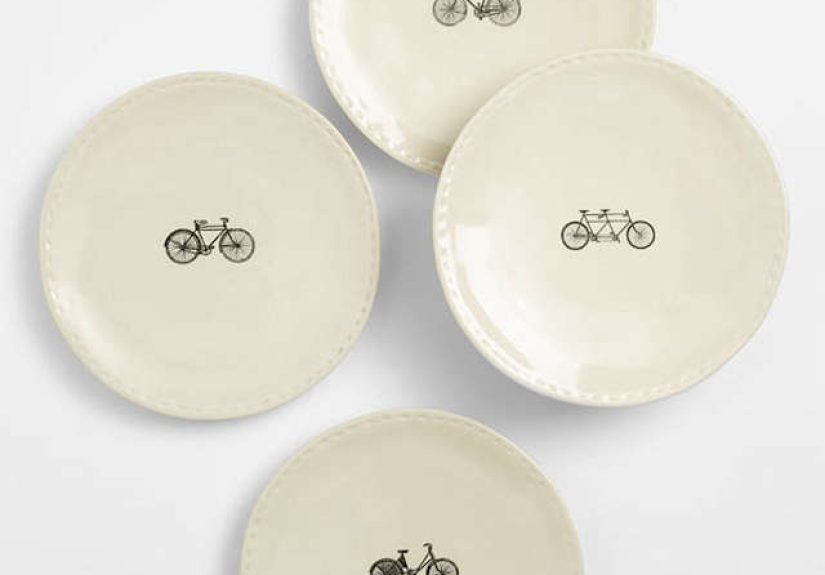
The known pieces in the collection include bike mugs and bike plates presented as sets, with multiple cycle designs and simple stamped wording. They capture a rare sweet spot in home design: specific enough to have identity, broad enough to live comfortably in many kitchens. You do not need to be a hardcore cyclist in aerodynamic sunglasses to enjoy them. You just need to appreciate objects that suggest movement, freedom, and a breezy kind of domestic optimism.
That is what makes these ceramics so effective. They are about bicycles, yes, but they are also about lifestyle shorthand. A bicycle represents fresh air, routine, motion, self-propulsion, urban ease, weekend leisure, and a slightly more charming version of adulthood. On a ceramic surface, that symbolism becomes warm rather than sporty. It says, “I like beautiful practical things,” not, “Please ask me about my tire pressure.”
Bicycle Imagery Without the Clichés
Many bike-themed home goods lean hard into vintage signage, industrial grit, or overly cute nostalgia. Rae Dunn’s cycle-centric ceramics avoid all three. The collection does not feel like a sports bar, a mechanic’s garage, or a themed gift shop near a beach boardwalk. It feels like it belongs in a sunlit kitchen with open shelving, fresh bread, and a suspiciously photogenic bowl of citrus.
The visual restraint matters because bicycles are naturally expressive objects. Their shape is instantly recognizable. Two circles, a frame, a little suggestion of speed, and your brain fills in the rest. That means the bike motif does not need much embellishment to work. Rae Dunn’s style understands that. The ceramics trust the image, the surface, and the user.
Why the Collection Resonates With American Home Style
Part of the staying power of Rae Dunn pottery comes from how neatly it slides into American decorating habits. Open shelving, breakfast nooks, farmhouse accents, neutral palettes, and casual entertaining all make friendly conditions for ceramics that feel handcrafted but not intimidating. Her work became especially visible in the era when home design moved toward soft minimalism with a personal twist. People wanted objects that looked cozy, readable, and camera-ready without feeling expensive in a cold way.
The cycle-centric pieces fit beautifully into that landscape. They bring theme without clutter. They add character without shouting over the room. And they allow the owner to express a little identity through useful objects. That is the quiet genius of the line. A bicycle mug can suggest health, movement, neighborhood life, and a love of design, all while doing the humble work of holding coffee.
There is also the collector angle. Rae Dunn as a brand grew into far more than simple pottery. It became a hunt, a community, and in some cases a competitive sport performed in retail aisles before 10 a.m. The cycle-centric ceramics benefit from that larger mythology. They are not just dishes; they are part of a design culture that mixes decorating, collecting, gifting, and social display. Whether that culture is charming or mildly unhinged depends on how many storage bins are currently living in your garage.
Before the Frenzy, There Was Good Design
It is easy to talk about Rae Dunn only in terms of mug mania, resale culture, and shelves full of stamped words. But that misses the point. The popularity came after the design language was already in place. The cycle-centric collection reminds us that the work resonated because it offered something real: approachable design with personality. Even when the fandom became a whole sociological event, the underlying reason people noticed the pieces in the first place was simple. They looked good, felt familiar, and made daily rituals a little sweeter.
The Relationship Between Cycling and Ceramics
At first glance, bicycles and ceramics seem like odd roommates. One belongs to movement. The other is famous for breaking if you look at it the wrong way while unloading the dishwasher. But conceptually, the pairing is more natural than it seems.
Cycling is about rhythm, repetition, route, and touch. So is using handmade-style pottery. Both involve rituals that make ordinary life feel more vivid. Think about the cyclist’s morning: fill the bottle, check the weather, clip in, go. Think about the ceramic lover’s morning: boil water, choose the mug, pour slowly, settle down. Both rituals value process over spectacle. Both invite a slower awareness of the everyday.
That is why bicycle-inspired ceramics can feel so right. The bike becomes more than a picture. It becomes a symbol of mindful motion. A Rae Dunn bike mug does not merely decorate the kitchen. It brings the emotional tone of cycling into the home: energy, freedom, repetition, breath, routine, and a little adventure.
From Commute to Countertop
There is something especially appealing about taking a symbol of movement and placing it on an object of pause. The bicycle says go. The mug says stay. Put them together and you get a tiny story about balance. Maybe that is why these pieces still feel clever years later. They capture the modern dream of being both active and grounded, stylish and useful, moving fast in the world while keeping home calm and personal.
How to Style Rae Dunn’s Cycle-Centric Ceramics
One reason these pieces work so well is that they are easy to style without becoming precious. In a minimalist kitchen, they add personality. In a farmhouse kitchen, they look right at home. In an eclectic space, they offer visual rest. They can be used daily or displayed in a small grouped arrangement that highlights the bicycle motif without turning the room into a Tour de France shrine.
For a breakfast corner, pair bike mugs with light wood, linen napkins, and a simple glass jar of granola. The mood becomes relaxed and intentional. For open shelving, stack the bike plates with plain white dishes and let the motif appear as a quiet surprise rather than a constant announcement. For gifting, the collection is especially strong because it feels personal without being too niche. It works for cyclists, yes, but also for people who love good typography, pottery, or cheerful kitchen objects.
The best styling choice is not overthinking it. Rae Dunn pieces generally look strongest when they are allowed to breathe. Give them negative space. Let the words and graphics do the work. They are not trying to be a circus act. They are trying to make Tuesday morning look slightly more delightful than it did on Monday.
Collector Appeal and Long-Term Charm
Collectors are often drawn to the cycle-centric ceramics because they hit several sweet spots at once. They are thematic, but not seasonal. They are recognizable, but not generic. They are useful, but still display-worthy. That combination gives them longer life than many trend-driven kitchen pieces.
There is also a gentle emotional charge to them. Bicycle imagery tends to evoke memory. It can suggest childhood freedom, college-town afternoons, family rides, beach rentals, European daydreams, or simply the idea of a better routine. When that symbolism lands on a piece of pottery, the object becomes more than functional. It becomes slightly narrative. It carries a mood.
That is what good ceramics often do. They collect meaning through use. The more often you reach for a favorite mug, the less it is just a mug. It becomes part of your timing, your habits, your kitchen choreography, your version of comfort. Add a bicycle motif and the object starts to feel like a little reminder that life is meant to move, but not always rush.
Experiences Related to Rae Dunn’s Cycle-Centric Ceramics
Living with Rae Dunn’s cycle-centric ceramics is less about owning a “collection” and more about noticing how a few well-designed pieces change the mood of ordinary routines. The first experience people often describe is visual. You open a cabinet, see a bike mug instead of a plain one, and the day feels lighter by about three percent. That may not sound revolutionary, but three percent is the difference between “another morning” and “okay, maybe I can do this.” Design earns its keep in small emotional upgrades.
Then there is the tactile experience. Rae Dunn pottery tends to have that slightly handcrafted, grounded quality that makes you want to actually hold it rather than admire it from a distance. A bicycle image on a mug could have felt gimmicky in a slick, glossy finish. Here, it feels warmer. You wrap your hands around the mug, the clay reads as approachable, and the bicycle motif becomes part of a whole sensory moment: hot coffee, cool kitchen light, a quiet house, and maybe a mental promise that today you will finally become the kind of person who takes a cheerful ride before lunch.
For collectors, the experience includes discovery. Bike-themed Rae Dunn pieces stand out because they do not rely on holiday timing or novelty overload. They feel a little rarer in mood. Finding one can feel like spotting a version of the brand that is both playful and unusually tasteful. That thrill matters. It is the feeling that you found a piece with personality, not just inventory with lettering.
For decorators, the experience is about balance. These ceramics can sit in a kitchen without hijacking it. They do not demand an entire bicycle-themed room, which is good news for everyone. Instead, they add a wink of identity. A shelf with neutral bowls, a cutting board, a little plant, and a Rae Dunn bike mug suddenly feels edited rather than accidental. The piece becomes a conversation starter, but a polite one. It says, “I have a point of view,” not, “Welcome to my lifestyle manifesto.”
There is also a gifting experience tied to the collection. Giving someone a bike mug or plate from this style family feels thoughtful because it lands between practical and personal. It suggests you know something about them, whether that is a love of cycling, a soft spot for pottery, or an appreciation for simple design. Good gifts are not just objects; they are evidence that somebody was paying attention. These pieces are very good at that job.
And finally, there is the experience of memory. Over time, ceramics absorb routine. The mug becomes the one you grab during rainy mornings. The plate becomes the one used for toast on weekends. The bicycle motif starts to mean your own life rather than the designer’s concept. That is the quiet beauty of the collection. It begins as Rae Dunn’s cycle-centric ceramics, but eventually it becomes your coffee mug, your shelf, your ritual, your little symbol of movement inside a home built for rest.
Conclusion
Rae Dunn’s cycle-centric ceramics show how much charm can live inside restraint. They take the familiar language of Rae Dunn potterysoft stoneware, graphic clarity, and lived-in simplicityand add a bicycle motif that feels fresh, intelligent, and surprisingly meaningful. These pieces are not memorable because they are loud. They are memorable because they understand the emotional power of everyday objects.
In a culture that often swings between mass-produced blandness and over-designed clutter, this collection lands in the sweet middle. It is useful, stylish, playful, and grounded. It speaks to cyclists, collectors, decorators, and anyone who wants the kitchen to feel a little more alive. A mug may not change your life, but a good one can certainly improve your morning. And if it happens to feature a bicycle, all the better. That is basically cardio for your shelf.





 Close
Close