
Table of Contents >> Show >> Hide
- The Original Ram TRX Was Built Like a Punchline That Became a Legend
- Why Ram Killed the TRX in the First Place
- The New Ram 1500 SRT TRX Brings Back the Madness
- What Makes the New TRX Different?
- Why “Too Loud” Became a Selling Point
- Why “Too Heavy” Became Part of the Appeal
- TRX vs. RHO: Two Different Kinds of Smart
- Experience Section: What Driving or Living With a TRX Feels Like
- Conclusion: The TRX Came Back Because Excess Still Sells
The Ram TRX was never the sensible choice. It was not designed for quiet school runs, gentle fuel bills, or the kind of person who says, “Let’s be practical” before buying a truck. The original Ram 1500 TRX was a 702-horsepower, supercharged V8 desert animal with the table manners of a chainsaw at brunch. It was loud. It was heavy. It was expensive. It drank fuel with Olympic confidence. And somehow, all of that is exactly why people missed it the moment Ram took it away.
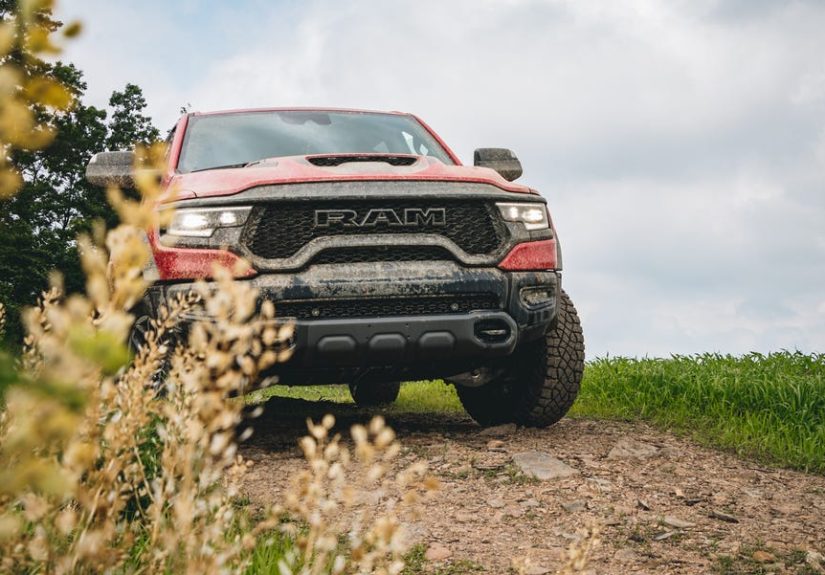
Now the beast is back. The new Ram 1500 SRT TRX returns with a supercharged 6.2-liter HEMI V8, 777 horsepower, 680 lb-ft of torque, and the kind of factory attitude that makes ordinary pickup trucks look like they are waiting outside the principal’s office. Ram did not bring the TRX back because the market suddenly became calm and reasonable. It brought the TRX back because the truck world still has room for excess, emotion, and a little mechanical thunder.
In a market where automakers are chasing efficiency, electrification, turbocharged downsizing, and software-defined everything, the TRX is an unusual comeback story. It proves that performance trucks are not only about numbers on a spec sheet. They are about sound, presence, identity, and the grin that appears when a giant pickup launches like it has been personally offended by physics.
The Original Ram TRX Was Built Like a Punchline That Became a Legend
When the Ram 1500 TRX arrived for the 2021 model year, it felt less like a product launch and more like Ram had released a wild animal into the full-size truck segment. Under the hood sat the supercharged 6.2-liter HEMI V8, the same basic Hellcat family of engine that made Dodge muscle cars famous for turning rear tires into decorative smoke.
In the TRX, that engine produced 702 horsepower and 650 lb-ft of torque. Ram claimed a 0–60 mph time of 4.5 seconds, a quarter-mile run of 12.9 seconds, and a top speed of 118 mph. For a full-size pickup wearing 35-inch all-terrain tires, those numbers were gloriously unreasonable. It was not merely quick “for a truck.” It was quick, period.
Too Loud? Absolutely. That Was the Point.
The TRX’s soundtrack was a major part of the experience. The supercharger whine, the V8 growl, the wide-body stance, and the rumbling exhaust turned every start-up into a small neighborhood announcement. Nobody bought a TRX to blend into traffic. Buying one was closer to adopting a dinosaur with a VIN number.
That matters because pickup trucks, especially performance pickups, are emotional purchases. Buyers compare towing capacity, payload, suspension travel, and off-road hardware, but the final decision often happens somewhere deeper in the chest. The TRX made people feel something. It was irrational in the most marketable way possible.
Too Heavy? Also Yes. But Heavy Can Feel Indestructible.
The original TRX was a big machine, with a curb weight often listed around the high-6,000-pound range depending on configuration and testing source. That kind of mass is not ideal for fuel economy or tight city parking. It also meant the truck felt planted, substantial, and tough when blasting across uneven terrain.
Ram leaned into that sense of bigness. The truck used serious off-road components, including Bilstein Black Hawk e2 adaptive shocks, a widened track, reinforced suspension hardware, underbody protection, and huge tires. It was not a delicate sports car pretending to be outdoorsy. It was a desert-running hammer with heated seats.
Why Ram Killed the TRX in the First Place
The TRX’s first run ended after the 2024 model year, with Ram marking the occasion through a Final Edition. Production of the original supercharged V8 TRX concluded, and the industry direction at the time made the decision understandable. Automakers were under pressure to reduce emissions, improve fleet efficiency, and move toward electrified and smaller-displacement powertrains.
From a corporate planning perspective, replacing a supercharged V8 monster with something lighter, cleaner, and more efficient made sense. Enter the Ram 1500 RHO.
The Ram RHO Was the Rational Successor
The 2025 Ram 1500 RHO arrived with the high-output 3.0-liter Hurricane twin-turbo inline-six. It delivered 540 horsepower and 521 lb-ft of torque, which is hardly weak. In fact, by normal truck standards, those numbers are excellent. The RHO also offered strong off-road hardware, quick acceleration, impressive daily usability, and a lower starting price than the outgoing TRX.
On paper, the RHO was the smarter truck. It was more modern, more efficient, more affordable, and still fast enough to make passengers check whether their coffee had achieved flight. But it did not have the same outrageous personality. It did not have the supercharged V8 scream. It did not feel like the forbidden menu item that everyone secretly wanted to order.
Good Is Not Always Enough
The RHO proved that a turbocharged six-cylinder performance truck could be genuinely capable. But it also highlighted a truth Ram may have underestimated: the TRX name had become bigger than its spec sheet. For many fans, “TRX” meant Hellcat energy in pickup form. Without the V8, the RHO was impressive but emotionally different.
That difference matters. A performance truck is not only transportation. It is a rolling declaration of taste, budget, and tolerance for tire noise. The original TRX gave Ram something no spreadsheet could fully measure: cultural heat.
The New Ram 1500 SRT TRX Brings Back the Madness
The returning Ram 1500 SRT TRX does not tiptoe back into the lineup. It storms in with 777 horsepower and 680 lb-ft of torque from a supercharged 6.2-liter HEMI V8. Ram claims a 0–60 mph time of 3.5 seconds, a 0–100 mph time of 10.0 seconds, a 12.2-second quarter mile, and a 118-mph top speed.
Those numbers are not subtle. They are the automotive equivalent of writing your resume in all capital letters. The new TRX is positioned as the most powerful production street-legal gas half-ton pickup ever produced, and the SRT badge makes the message even clearer: Ram wants its performance identity back.
SRT Is More Than a Badge
The return of SRT branding is important. Street & Racing Technology has long carried emotional weight among Mopar fans. When people see SRT, they think of big engines, aggressive tuning, wide tires, and vehicles that appear to have been engineered by people who believe “too much” is a lazy phrase used by cowards.
By calling the new truck the Ram 1500 SRT TRX, Ram connects the model not only to the original TRX but also to a broader performance legacy. That makes the truck more than a comeback. It becomes a statement that gasoline performance still has a place in the showroom, even as the industry evolves.
What Makes the New TRX Different?
The basic formula remains familiar: big power, full-time four-wheel drive, desert-ready suspension, aggressive bodywork, and a cabin that combines toughness with luxury. But the new TRX is not just a rerun with louder marketing.
Ram says the truck uses a 98% high-strength steel frame for stability and rigidity. It also features factory-installed Bilstein Black Hawk e2 shocks, 11.8 inches of ground clearance, 13 inches of front suspension travel, and 14 inches of rear suspension travel. Those are serious numbers for a full-size truck that can also carry passengers in comfort and look menacing in a grocery store parking lot.
Performance Meets Technology
Inside, the new TRX gets modern truck technology, including a large 14.5-inch Uconnect touchscreen, performance pages, drive modes, available head-up display features, and a premium 19-speaker Harman Kardon audio system. That last part is funny because the engine already provides a 777-horsepower soundtrack, but apparently Ram believes in giving owners options.
The cabin also includes the type of upscale materials and convenience features expected in a six-figure performance pickup. This is part of the TRX’s strange charm. It can look like it belongs in a Baja chase scene, then offer a luxury-truck experience on the drive home.
Why “Too Loud” Became a Selling Point
Modern vehicles are getting quieter, smoother, and more isolated. That is wonderful when commuting through traffic or taking a long highway trip. But performance enthusiasts often want the opposite. They want feedback. They want drama. They want a vehicle that makes the act of driving feel like an event.
The TRX delivers that event every time the engine fires. The sound is not a side effect; it is part of the product. For some buyers, a silent performance truck might be technically impressive, but a supercharged V8 performance truck feels alive. It has mechanical theater.
That is why Ram’s decision makes sense. The TRX was never trying to win over people who wanted the quietest, lightest, most efficient pickup. It was built for buyers who wanted the truck equivalent of a rock concert with four-wheel drive.
Why “Too Heavy” Became Part of the Appeal
Weight is usually treated as the enemy of performance. Sports cars spend fortunes shaving pounds with carbon fiber, aluminum, and engineering wizardry. The TRX plays a different game. It is big because it is a full-size truck. It is heavy because it carries serious hardware. It is wide because it needs stability and suspension travel. It is imposing because that is part of the fantasy.
In a TRX, the mass contributes to the feeling of command. Drivers sit high, surrounded by truck structure, looking over a hood that suggests the engine room may require its own weather system. That sense of scale is not for everyone, but for the target buyer, it is addictive.
The Psychology of Excess
The TRX works because it refuses to apologize. It does not pretend to be a minimalist tool. It is a maximum-impact machine. That kind of honesty is refreshing in a world where many vehicles try to be everything to everyone.
There is also a scarcity factor. When Ram ended the original TRX, it created nostalgia almost immediately. Fans who may have complained about the price or fuel economy suddenly missed the truck because absence made the supercharger sound louder in memory. Bringing it back gives Ram a second chance to turn that nostalgia into showroom traffic.
TRX vs. RHO: Two Different Kinds of Smart
The Ram 1500 RHO still has an important role. For buyers who want strong off-road performance, modern turbocharged power, and a lower price than the TRX, the RHO remains a compelling choice. It is the more rational performance truck for many real-world drivers.
The TRX, however, is not trying to be rational. It is the halo truck. It attracts attention to the brand, gives enthusiasts something to argue about, and reminds shoppers that Ram can still build wild machines. In that sense, the RHO and TRX can coexist. One is the smart answer. The other is the answer you give when someone asks what you would buy after winning a scratch-off lottery ticket in a gas station shaped like an eagle.
Experience Section: What Driving or Living With a TRX Feels Like
Spending time around a Ram TRX, even as a passenger or observer, quickly explains why the truck has such a loyal following. The first thing you notice is not the horsepower number. It is the presence. A TRX does not simply park; it occupies territory. The wide body, tall stance, big tires, and aggressive hood make it feel like the truck arrived early to intimidate the pavement.
Starting one is its own small ceremony. The V8 wakes up with a deep bark, then settles into a rumble that makes nearby economy cars question their life choices. In normal driving, the TRX can be surprisingly comfortable. The suspension is sophisticated enough to smooth out rough pavement, and the cabin feels more premium than the exterior attitude might suggest. It is not a stripped-out toy. It is a luxury truck that happens to have the personality of a desert race truck after three energy drinks.
The acceleration is the experience most people remember. A full-size pickup should not move like this, yet the TRX does. Press the throttle hard and the front end rises, the supercharger whines, the transmission snaps through gears, and the whole truck lunges forward with hilarious confidence. The sensation is not delicate or polished like a European sports sedan. It is more physical, more theatrical, and more ridiculous in the best possible way.
Off pavement, the TRX’s personality makes even more sense. The long-travel suspension, large tires, ground clearance, and wide track give it a feeling of control over rough surfaces. It encourages a kind of driving that feels adventurous without feeling fragile. You are aware of the size, of course. Tight trails are not its natural habitat. But open dirt roads, sand, gravel, and uneven terrain are where the truck’s excess begins to feel purposeful.
Living with a TRX also means accepting its compromises. It is thirsty. It is large. Parking garages become negotiation exercises. Tires are not cheap. Insurance and maintenance are not exactly bargain-bin topics. And yet, owners often forgive these flaws because the truck offers something rare: personality that survives the daily commute. Many vehicles are impressive during a test drive and forgettable by week three. The TRX keeps reminding you why you bought it.
The returning SRT TRX should amplify that same experience. With more power, updated technology, and revived SRT branding, it gives buyers the thrill of the original with a fresh layer of modern equipment. It is still too loud and too heavy for people who never wanted one in the first place. For everyone else, those “problems” are the entire point.
Conclusion: The TRX Came Back Because Excess Still Sells
The Ram TRX was too loud, too heavy, too expensive, and too outrageous. That is exactly why it became memorable. In a marketplace full of careful compromises, the TRX stood out because it did not feel careful at all. It felt like Ram asked, “What if we built a truck for people who think moderation is a warning light?”
The new Ram 1500 SRT TRX brings back the supercharged V8, raises output to 777 horsepower, restores the SRT attitude, and reminds the truck world that emotion still matters. The RHO may be the sensible performance pickup. The TRX is the legend with a louder exhaust note.
And that is the real reason it is coming back. Not because it was quiet. Not because it was light. Not because it was practical. The TRX returns because it was unforgettable.
Note: This article is based on current publicly available information from official Ram/Stellantis materials and reputable U.S. automotive reporting, written as original editorial content with no copied source text or source-link elements.







 Close
Close