
Table of Contents >> Show >> Hide
- What Ray Dalio Means by a Debt Cycle
- The Short-Term Debt Cycle: Boom, Tightening, Slowdown, Repeat
- The Long-Term Debt Cycle: When Borrowing Outruns Income
- The Four Ways Debt Burdens Get Reduced
- How Dalio’s Debt Cycle Shows Up in Your Personal Finances
- What Recent U.S. Data Suggests About the Cycle
- How to Protect Yourself From the Ugly Part of the Cycle
- Experience Stories: What the Debt Cycle Feels Like in Real Life
- Final Thoughts
- SEO Tags
Debt has a funny way of acting like a best friend in good times and a chaotic roommate in bad times. When money is cheap and confidence is high, debt feels productive, sophisticated, and maybe even a little glamorous. You borrow to buy a house, expand a business, invest in growth, or simply keep your lifestyle from arguing with your paycheck. Everything seems manageable because the monthly payment is still small enough to ignore while you order takeout and promise your future self to “be more disciplined next month.”
Then the mood changes. Rates rise. Asset prices wobble. Income growth slows. Suddenly, debt stops looking like a clever tool and starts looking like an invoice with opinions.
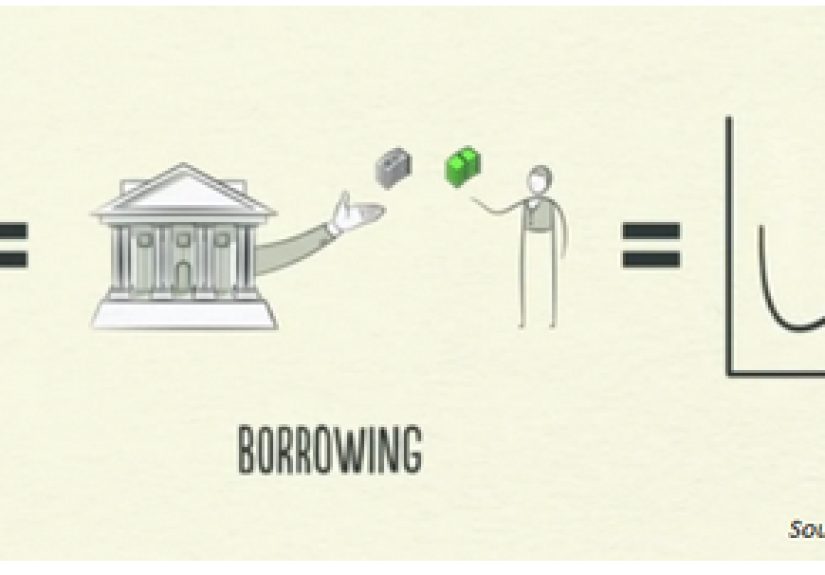
That is the heart of Ray Dalio’s debt cycle framework. In Dalio’s view, economies do not move only because people work harder or invent cooler gadgets. They also move because credit expands and contracts. Credit creates spending power. Spending becomes someone else’s income. More income supports more borrowing. More borrowing supports more spending. It is a wonderfully efficient loop right up until it becomes an absolutely terrible one.
So when people say Dalio “explains your debt cycle,” they are really saying he explains why debt feels helpful, why it becomes dangerous, and why the same force that powers expansion can later magnify a downturn. Once you see the pattern, a lot of personal finance and macroeconomics stops looking mysterious and starts looking mechanical.
What Ray Dalio Means by a Debt Cycle
Dalio’s basic idea is disarmingly simple: one person’s spending is another person’s income, and credit lets spending rise faster than income for a while. That “for a while” is where all the drama lives.
Imagine an economy with no credit. You spend what you earn. Growth is slower and more boring, but also less prone to huge emotional meltdowns. Now add credit. A borrower can spend more than current income. A lender receives an asset that promises repayment later. Both sides are happy. The borrower gets to pull future demand into the present. The lender earns interest. The economy gets a short-term sugar rush that often looks like healthy growth.
Dalio divides this process into two broad rhythms: the short-term debt cycle and the long-term debt cycle. Think of the short-term cycle as the economy’s weather and the long-term cycle as climate. One changes over a few years. The other builds over decades. One gives you a thunderstorm. The other eventually rearranges the whole coastline.
The Short-Term Debt Cycle: Boom, Tightening, Slowdown, Repeat
Why expansions feel so convincing
In the short run, lower interest rates usually make borrowing easier. Households buy homes and cars. Businesses expand. Asset prices often rise because money is flowing and confidence improves. Banks are more willing to lend. Investors become brave enough to call risk “opportunity.” Everyone starts acting like this time is different, which is one of history’s favorite jokes.
This phase feels good because it is good, at least initially. Credit growth supports spending, and spending supports incomes, profits, and employment. That feedback loop can make the economy look stronger than its underlying productivity actually is. In plain English: borrowing can make growth look bigger and smoother than it really is.
Why central banks ruin the party on purpose
Eventually, rising demand can push up inflation, asset prices, or both. At that point, central banks tend to tighten monetary policy. Rates go up. Credit becomes more expensive. Monthly payments rise for new borrowers and for anyone with variable-rate debt. Lending standards get tougher. Some speculative behavior dries up. The same people who once bragged about leverage begin using phrases like “capital preservation” and “waiting for more clarity,” which is finance-speak for “yikes.”
As borrowing slows, spending slows. Growth cools. Some businesses overexpand and get squeezed. Some households realize their budget was never really balanced; it was just wearing low interest rates as a disguise. The short-term debt cycle then moves toward recession or a soft patch, and eventually the process starts again.
This cycle is normal. It is not automatically catastrophic. In fact, Dalio would argue that it is one of the basic engines of modern economies. The problem is what happens when repeated short-term cycles pile more and more debt onto the system over many years.
The Long-Term Debt Cycle: When Borrowing Outruns Income
The dangerous part is not debt alone
Dalio is not anti-debt. He is anti-unsustainable debt. That distinction matters. Debt can be healthy when it funds productive investments that generate enough income to service and repay it. Borrowing to build a profitable factory is different from borrowing to maintain a lifestyle your paycheck cannot support. Borrowing to buy a reasonably priced home is different from assuming home values can never fall because your cousin’s realtor said so over brunch.
The long-term debt cycle becomes dangerous when total debt grows faster than income for too long. As long as asset prices rise and rates keep falling or remain low, that imbalance can stay hidden. But once rates can no longer fall enough, or once creditors become less willing to lend, the math starts getting rude.
This is why Dalio often emphasizes debt service, not just debt totals. A large debt load can look manageable when rates are low and incomes are rising. The same debt becomes painful when refinancing gets expensive, incomes weaken, or asset values fall. In other words, the problem is not only how much you owe. It is how hard the debt is punching your cash flow every month.
Why 2008 still matters
The 2008 financial crisis is one of the clearest modern examples of Dalio’s framework. For years, debt grew faster than income, especially around housing. Cheap credit, rising home prices, and financial engineering made the system look stable right until it turned out to be the opposite. Once home prices fell, balance sheets weakened, lending tightened, and spending pulled back. What had looked like prosperity revealed itself to be a debt-supported expansion with fragile foundations.
When rates hit zero, normal monetary policy lost much of its force. That is a crucial Dalio point. Central banks usually fight downturns by cutting rates and encouraging more borrowing. But if rates are already near zero, that lever becomes weaker. Policymakers then move to extraordinary tools, including asset purchases and other forms of money creation, because the standard playbook is no longer enough.
The Four Ways Debt Burdens Get Reduced
Dalio famously explains that when an economy becomes overindebted, debt burdens usually come down through some mix of four methods. None are magical. All involve trade-offs. Some are merely painful; others are the economic equivalent of stepping on a Lego in the dark.
1. Austerity
This means spending less. Households do it by cutting expenses. Governments do it by reducing spending or deficits. The trouble is that one person’s spending is another person’s income. If everybody cuts at once, growth slows, incomes weaken, and debt ratios can actually become harder to manage in the short run.
2. Defaults and restructurings
Sometimes debts are written down, extended, renegotiated, or not fully repaid. This reduces the burden on debtors, but it hurts creditors because one person’s debt is another person’s asset. It is deflationary and often messy.
3. Money printing and debt monetization
Central banks can create money and buy debt-related assets to support markets and ease financial conditions. This can prevent a full collapse, but it also creates inflation risks and can distort asset prices if overused.
4. Wealth transfers
This usually means taxes, subsidies, or other policy moves that transfer resources from one group to another. Politically, this is where the knives come out. Economically, it is often part of the adjustment whether people enjoy talking about it or not.
Dalio’s ideal outcome is what he calls a beautiful deleveraging: a balanced mix where debt burdens come down without triggering either a brutal deflationary depression or runaway inflation. That sounds elegant because it is. It is also extremely hard to pull off in real life, because economies are run by humans and humans are famous for overdoing things.
How Dalio’s Debt Cycle Shows Up in Your Personal Finances
Most people hear “debt cycle” and think macroeconomics, central banks, and men in expensive ties discussing bond yields. But Dalio’s logic applies at the household level too.
Your personal debt cycle begins when credit allows spending to exceed current income. That can be smart or reckless depending on what the debt buys and whether repayment is realistic.
Healthy personal debt cycle
You borrow for something useful, your income is stable, the rate is reasonable, and the asset or opportunity improves your long-term financial position. Think a mortgage you can comfortably afford, a business loan that funds profitable expansion, or education that has a plausible payoff.
Unhealthy personal debt cycle
You use debt to patch a budget problem, finance recurring consumption, or chase an asset bubble. The balance grows faster than income. Minimum payments become the strategy instead of the safety net. Refinancing becomes a hope, not a tool. Then one shock, such as a job loss, medical bill, higher rate, or lower commission check, turns “manageable” into “why is my coffee suddenly stressful?”
That is your mini debt cycle. Borrowing lifts spending above income. Rising obligations slowly reduce flexibility. A shock forces deleveraging. Spending falls. Recovery takes time.
What Recent U.S. Data Suggests About the Cycle
Recent U.S. data adds an important nuance to Dalio’s framework. Household debt has continued to rise overall, but the stress has not been evenly spread. Fixed-rate mortgage borrowers with strong credit profiles have generally looked more resilient than some users of revolving credit and certain auto borrowers. That is a helpful reminder that debt cycles are never just about one big scary number. Composition matters. Interest rate structure matters. Underwriting matters. Cash flow always matters.
In other words, two households can each have debt and be in completely different worlds. One has a low fixed mortgage locked in before rates rose, a solid emergency fund, and stable income. The other is juggling high-APR credit card balances, a stretched auto loan, and no liquidity cushion. Same word, “debt.” Very different movie endings.
How to Protect Yourself From the Ugly Part of the Cycle
Measure debt by cash flow, not vibes
Do not judge your debt by whether you can “technically make it work.” Judge it by whether your monthly obligations still look safe if income dips, rates rise, or expenses jump.
Know the difference between productive debt and survival debt
Productive debt can increase future earning power or net worth. Survival debt keeps today afloat by sacrificing tomorrow. The two feel very different once interest starts compounding.
Do not build a lifestyle on temporary financing conditions
Low rates are not a personality trait. Easy refinancing is not a retirement plan. A hot housing market is not proof of immortality.
Keep optionality
Liquidity matters because it buys time. Time lets you make deliberate decisions instead of desperate ones. In debt management, panic is expensive.
Watch your debt service ratio
The percentage of your income going toward required debt payments may tell you more than your total balance alone. Cash flow pressure is often the first crack in the wall.
Experience Stories: What the Debt Cycle Feels Like in Real Life
To make Dalio’s framework less abstract, consider three familiar experiences.
The first is a young professional who starts with one credit card and good intentions. At first, the balance is small and always temporary. Then rent rises, travel gets booked, a laptop dies, and “I’ll pay it off next month” becomes a recurring television series with too many seasons. Because minimum payments stay manageable, the debt does not feel urgent. Then interest rates are high, the balance is larger, and more of each payment goes to interest than principal. Nothing dramatic happened in one week. The problem built slowly, then suddenly became expensive. That is a personal version of the debt cycle: easy credit first boosts spending flexibility, then quietly reduces future spending power.
The second is a homeowner who bought when rates were low and prices were rising. For several years, everything looks brilliant. Monthly payments are fixed, equity grows, and the house feels like both a home and a genius-level financial strategy. Then life changes. Maybe there is a relocation, divorce, job loss, or surprise repair bill. If the owner has savings and manageable debt, the system bends without breaking. If the owner added home equity debt, car loans, and credit card balances on top of the mortgage, the same house becomes part of a fragile balance sheet. The lesson is not that housing is bad. It is that leverage stacked on leverage can turn a good asset into a stressful one.
The third is a small-business owner during a slowdown. In the expansion phase, borrowing helped the business hire staff, buy equipment, and increase inventory. Revenue covered the debt nicely, so the leverage looked smart. Then demand softened. Customers paid more slowly. Costs stayed stubborn. The loan payment did not care. Suddenly the owner is cutting expenses, delaying purchases, and preserving cash. That is deleveraging at street level. It is not theoretical. It is payroll, rent, vendor terms, and difficult Tuesday mornings.
These experiences are why Dalio’s model resonates. Debt is not just an accounting entry. It changes behavior. In the up phase, it encourages confidence, spending, and expansion. In the down phase, it encourages caution, asset sales, and retrenchment. The cycle is emotional as much as mathematical. People feel richer on the way up and more trapped on the way down, even when the shift began months earlier in the numbers.
Once you understand that pattern, you stop asking only, “Can I borrow?” and start asking better questions: “What happens if conditions tighten? How dependent am I on refinancing? How much of my future income have I already spent?” Those questions are not pessimistic. They are practical. And in a debt cycle, practical usually ages a lot better than optimistic.
Final Thoughts
Ray Dalio’s debt cycle theory is powerful because it explains both the boom and the hangover. Credit can accelerate growth, support investment, and improve living standards. It can also inflate asset bubbles, encourage overconfidence, and trap households, businesses, or governments when debt grows faster than the income needed to support it.
The biggest takeaway is not “never borrow.” It is “understand the cycle you are entering.” Debt is most dangerous when it feels safest and most seductive when it looks easiest. If you track cash flow, stay skeptical of permanent good times, and respect how quickly conditions can tighten, you give yourself a much better chance of avoiding the ugly phase of the cycle.
Dalio explains your debt cycle by showing that borrowing is never just about money. It is about timing, psychology, incentives, and the fragile relationship between today’s confidence and tomorrow’s repayment. Once you see that, the economy stops looking random. It starts looking like a machine. A very human machine, yes, but still a machine. And machines always care about the math.




 Close
Close