
Table of Contents >> Show >> Hide
- What Was “Spiders Crawling Up Your Back,” Exactly?
- Why This Rhyme Still Feels So Vivid
- The Folklore Behind the Chant
- Why Educators Keep Using Rhymes Like This
- The “Full Lyrics” Problem
- How the Chant Changed Over Time
- Why Adults Still Look It Up
- A Modern Reading of an Old Playground Classic
- Experiences People Still Associate with “Spiders Crawling Up Your Back”
- Conclusion
Editor’s note: This childhood rhyme does not really exist as one neat, laminated, universally agreed-upon lyric sheet. It lives the way a lot of childhood folklore lives: in memory, in motion, in whispers from one kid to another, and in the oddly specific feeling of someone tracing little creepy-crawly fingers up your shoulders while you try not to laugh. So instead of pretending there is one official master version carved into a playground stone tablet, this article explores the best-known remembered forms, where the rhyme came from culturally, why it stuck so hard, and why so many adults still go searching for it years later.
Few childhood chants have the staying power of “Spiders Crawling Up Your Back”. It was part playground rhyme, part back tickle game, part mini jump-scare, and part trust exercise disguised as nonsense. It could happen in a classroom line, at a sleepover, on a school bus, during storytime, or while sitting cross-legged on a carpet that probably had at least one permanent juice stain. It was weird. It was funny. It was a tiny ritual. And somehow, it lodged itself in the brain like glitter after a craft project: impossible to fully remove.
What Was “Spiders Crawling Up Your Back,” Exactly?
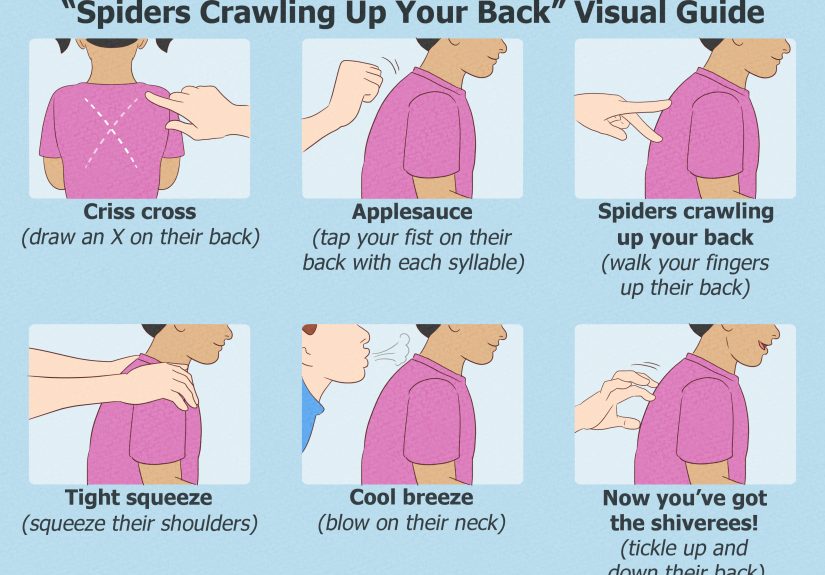
At its core, this was a childhood rhyme paired with touch and movement. One person recited a short chant while tracing patterns, tapping, squeezing, or lightly tickling another person’s back, shoulders, or neck. Some versions were sweet and silly. Some leaned spooky. Some got dramatic enough to sound like a tiny campfire horror script written by a third grader with a flair for suspense.
The structure was simple enough to travel and flexible enough to mutate. That is why one person remembers a soft version used with toddlers, while another remembers a slightly deranged version involving imaginary bugs, cracks, drips, chills, or “shiveries.” Childhood folklore is like that. Kids inherit it, remix it, exaggerate it, and pass it on before any grown-up can file a proper editorial complaint.
There Was Never Just One Version
That is the big secret behind the search for the full lyrics: there probably is no single “full” version that everybody learned. Some people remember a short form linked to the familiar criss-cross opening. Others remember a treasure-hunt setup. Some versions add extra crawling, extra tapping, or an even creepier ending. A few are gentle enough for library storytime. A few sound like they were workshopped by tiny goth poets at recess.
In other words, the rhyme was less like a published song and more like a living hand-me-down. The frame stayed recognizable, but the details changed from state to state, school to school, cousin to cousin, and decade to decade. That is exactly why people get nostalgic about it. Everyone remembers it, but nobody remembers it in exactly the same way.
Why This Rhyme Still Feels So Vivid
The chant is memorable because it used more than words. It recruited the whole body. There was anticipation. There was rhythm. There was suspense. There was the physical sensation of fingers moving up the spine. There was a brief moment where the listener knew something was coming but not quite when. That combination is powerful. The brain loves patterns, surprise, and sensory detail, and this rhyme delivered all three like a tiny Broadway production performed on your shoulder blades.
It also had one of the most reliable engines of childhood memory: predictable buildup followed by harmless chaos. Kids knew the general shape of the chant, but the ending still created a little jolt. The whole point was the delicious almost-scare before the laugh. It was spooky in the safest possible way, like peeking through your fingers during a movie you know ends fine.
And let’s be honest: children adore rituals that are just a little gross, a little creepy, and a lot funny. A rhyme about polite tax planning was never going to survive the schoolyard. Spiders had a much better chance.
The Folklore Behind the Chant
What makes this rhyme especially interesting is that it belongs to the rich world of children’s folklore. That means it was not only taught by adults in formal settings. It also circulated among kids themselves, inside peer groups, where it could evolve quickly. One class would trim it down. Another would add a sinister flourish. Siblings would teach cousins. Camp kids would bring home a new version by August. Nobody needed sheet music. Nobody needed copyright clearance. The tradition moved because children kept moving it.
That helps explain why today’s web searches for the rhyme often sound the same: “I remember part of it, but not all of it.” Of course you do. Childhood folklore is not always stored as text. It is stored as performance. You do not just remember what was said. You remember how it felt, when it happened, who did it, whether you laughed, and whether you flinched before the final squeeze, tickle, or breathy little “cool breeze.”
Libraries and early-childhood educators have preserved gentler versions of the chant as a fingerplay or movement rhyme. In those settings, the emphasis shifts from creepy fun to rhythm, touch, bonding, and playful language. That is the cleaner, friendlier cousin of the version many older kids remember from classrooms and sleepovers. Same basic skeleton. Different personality. Think of it as the difference between a preschool puppet show and a camp bunk with the lights off.
Why Educators Keep Using Rhymes Like This
The endurance of nursery rhymes and fingerplays is not just about nostalgia. There is a practical reason adults keep bringing them into early childhood spaces: they work. Repetition helps children anticipate language. Rhyme helps them hear sound patterns. Movement helps connect words to action. A short chant can turn listening into participation and participation into memory.
That matters because young children build literacy long before formal reading instruction clicks into place. Rhyming language, repeated phrases, gestures, turn-taking, and playful oral patterns all help. A chant that is easy to repeat, easy to perform, and easy to dramatize has a much better chance of sticking than something flat and abstract. Kids do not need a lecture on phonological awareness. They need something catchy enough to chant in a hallway.
This is one reason action rhymes keep resurfacing in storytime programs, preschool classrooms, and family routines. They invite touch, timing, eye contact, and laughter. They encourage connection. They also give children a sense of control because they can predict what comes next and eventually lead it themselves. The magic of a rhyme like this is that it feels unserious while quietly doing serious developmental work. Classic childhood move: sneaking benefits in under the costume of silliness.
The “Full Lyrics” Problem
So what should someone expect when they search “Spiders Crawling Up Your Back full lyrics”? Not a definitive, sacred script. More like a family reunion of related versions.
Most remembered forms share a few common ingredients: a setup, a creeping motion, a tactile payoff, and a closing line designed to trigger a shiver, giggle, or both. Around that framework, details expand and contract. One version may focus on simple rhythm and touch. Another adds extra imagery. Another gets theatrical enough to deserve its own tiny fog machine.
That variation is not a flaw. It is the point. A fixed text would be easier to archive, sure, but it would lose part of what made the chant beloved in the first place. The rhyme stayed alive because children made it theirs. They edited it on the fly. They adjusted it for age, mood, audience, and bravery level. The result is a folklore object wearing a playground costume.
How the Chant Changed Over Time
One fascinating part of this rhyme’s afterlife is how it moved between settings. In family and library spaces, it often softened into a playful back rhyme for babies and toddlers, with gentle motions replacing anything too creepy. In school and peer-group spaces, it could become more suspenseful and more dramatic. Older kids love escalation. Give them one spider and they will eventually pitch you a full cinematic universe.
That split helps explain why adults arguing about the “real” version are usually both right. They may simply be remembering two different branches of the same tradition. One came through early-childhood routines. Another came through peer culture. One version says, “What a fun sensory rhyme.” The other says, “Please prepare for a completely unnecessary but unforgettable ending.” Both belong to the same cultural family tree.
Why Adults Still Look It Up
People do not search for this rhyme because they urgently need a spider-themed text for professional reasons. They search for it because the memory is unfinished. They can recall the feeling, the setup, the laughter, the tiny chill, but one line goes missing. That gap is irresistible. The mind hates a half-open drawer.
There is also comfort in discovering that other people remember the same strange little ritual. Childhood can feel intensely personal, yet these small rhymes prove how much culture travels under the radar. The chant may have felt like a private thing between friends or siblings, but years later you realize people in other towns, other states, and other generations heard recognizable versions too. Suddenly your weird back-tickle memory joins a much larger human pile of weird back-tickle memories. Beautiful, really.
Nostalgia plays a role, too. This rhyme belongs to a category of memory that is not exactly about the words. It is about the atmosphere around the words: carpeted classrooms, hand-me-down lunch boxes, camp cabins, cousins in the basement, and the minor social gamble of letting somebody stand behind you and perform the chant. It was intimate in the most kid-like, non-serious way. That kind of memory does not fade neatly.
A Modern Reading of an Old Playground Classic
Look at it now, and the rhyme is almost a perfect case study in how childhood culture works. It mixes fear and fun. It turns language into a game. It spreads through imitation rather than formal teaching. It rewards exaggeration. It keeps only the parts people enjoy repeating. And it survives because it is embodied, not just spoken.
That last point matters. In a digital world where everything seems searchable, this chant reminds us that not all culture begins as text. Some of it begins as breath, rhythm, fingers, reaction, and repetition. You learn it by being there. You remember it because your body remembers it. A rhyme on paper is one thing. A rhyme performed on your back while you try not to squeal in front of your friends is another thing entirely.
So yes, people search for the lyrics. But what they are really looking for is recognition. They want proof that this oddly vivid fragment from childhood was real, shared, and somehow bigger than their own memory. Good news: it was.
Experiences People Still Associate with “Spiders Crawling Up Your Back”
For many people, the first memory is a classroom floor. Everybody is sitting in rows, trying to look cooperative, while secretly hoping the teacher allows some kind of partner activity. Then comes the magic sentence: turn to the person behind you. Suddenly the room changes. This is no longer ordinary school. This is an event. The chant begins, and the whole class becomes a chorus of giggles, shrugs, fake bravery, and dramatic squeals. Nobody is writing. Nobody is solving equations. Civilization, briefly, has improved.
For others, the rhyme belongs to cousins. It appears at family gatherings when adults are talking in another room and children are left to invent a micro-society from carpet, snacks, and mild chaos. One older cousin knows the rhyme. That cousin instantly becomes an authority figure of great importance. The younger kids line up to experience the mystery. By the end of the night, half the group has learned a version, a few have embellished it, and someone has definitely added an unnecessary detail to make it scarier.
Sleepovers gave the chant a different energy. In daylight, it was funny. After dark, it was theater. The room got quieter. The delivery got slower. Every crawling motion suddenly felt more dramatic. Someone would insist their version was the real version. Someone else would deny remembering the end but somehow remember it perfectly when the performance started. There was always one person who acted fearless and then jumped anyway. That person was crucial to the ecosystem.
Siblings often turned the rhyme into a household tradition. An older brother or sister would do it just well enough to make it hilarious and just long enough to make it suspenseful. Then the younger sibling would try to copy it and ruin the timing in a way that was somehow even funnier. Over time, the words could drift, but the structure stayed. It became less about accuracy and more about ownership. “Our version” mattered more than “the version.”
Some people now reconnect with the rhyme through parenting. They hear a softer storytime variation and suddenly get hit with a full flashback to elementary school, camp, or the back seat of a minivan. It is a strange and lovely moment when a rhyme that once felt mischievous returns as something gentle and affectionate. Same rhythm. Same anticipation. New context. Childhood comes back wearing a cardigan.
And then there is the adult internet search: late at night, totally normal, definitely not a crisis, typing a phrase like “spiders crawling up your back rhyme I can’t remember.” That search is not just about recovering words. It is about recovering texture. The hope is that once the rhyme appears again, so will the room, the people, the laugh, the shoulder squeeze, the little chill. Sometimes memory only needs one phrase to throw the whole door open.
Conclusion
“Spiders Crawling Up Your Back” endures because it sits at the perfect intersection of playground rhyme, fingerplay, childhood folklore, and sensory memory. It is not famous because it was polished. It is famous because it was passed along. It changed hands, changed lines, changed tone, and changed settings, but it kept its core job: create suspense, invite laughter, and leave behind a tiny full-body memory. If you came looking for one official version, the real answer is messier and better. The rhyme survived precisely because it was never frozen. It was shared, altered, performed, and remembered. That is why adults still search for it now. They are not only chasing lyrics. They are chasing the feeling.






 Close
Close