
Table of Contents >> Show >> Hide
- What Is Roseola?
- What Causes Roseola?
- Roseola Symptoms
- Who Gets Roseola Most Often?
- How Long Is Roseola Contagious?
- How Roseola Is Diagnosed
- Roseola Treatment
- Possible Complications of Roseola
- When to Call a Doctor
- Roseola vs. Other Childhood Rashes
- Can Roseola Be Prevented?
- What Recovery Usually Looks Like
- Parent and Caregiver Experiences With Roseola
- Conclusion
- SEO Tags
Roseola is one of those childhood illnesses that seems determined to keep parents guessing. First comes a sudden, sky-high fever that makes everyone in the house look nervously at the thermometer. Then, just when you think things are finally calming down, a pink rash shows up like a surprise encore. If that sounds dramatic, welcome to roseola’s signature move.
The good news is that roseola is usually mild and clears up on its own. The not-so-fun news is that it can look alarming in the moment, especially when the fever spikes fast. Understanding what roseola is, how it spreads, what symptoms to expect, and when to call a doctor can make the experience a lot less stressful. This guide breaks down roseola symptoms, causes, treatment options, and real-life caregiver experiences in plain English.
What Is Roseola?
Roseola is a common viral infection that mostly affects babies and toddlers. It is also called roseola infantum, exanthem subitum, and sixth disease. In most cases, it affects children between 6 months and 2 years old, though some younger or slightly older children can get it too.
What makes roseola memorable is its classic pattern: a sudden high fever for several days, followed by a rash that appears as the fever goes away. That sequence matters because it helps distinguish roseola from some other rash illnesses. In many cases, the child actually seems to feel better by the time the rash shows up, which is one of the few times a spreading rash can be oddly reassuring.
What Causes Roseola?
Roseola is usually caused by human herpesvirus 6, often shortened to HHV-6. Less commonly, it can be caused by human herpesvirus 7, or HHV-7. The word “herpesvirus” can sound alarming, but these viruses are not the same ones that cause cold sores or genital herpes. In roseola, they usually cause a short, self-limited illness in young children.
The virus spreads through respiratory droplets and saliva. In practical terms, that means it can move from one person to another through coughing, sneezing, talking, laughing, and close contact. A child may catch it from another child, a sibling, or even an adult who is shedding the virus without obvious symptoms.
Because exposure is so common, many children get roseola early in life. By the toddler years, plenty of families have already met this fever-and-rash combo whether they invited it over or not.
Roseola Symptoms
The sudden high fever
The first and most noticeable symptom of roseola is usually a high fever that begins abruptly. The fever may climb to 103°F to 105°F and often lasts 3 to 5 days. For many parents, this is the phase that feels the most intense because the child may seem hot, clingy, fussy, and tired while not showing many other clear signs of illness.
Some children have only the fever at first. Others may also develop mild cold-like or stomach-related symptoms, such as:
- Irritability
- Runny nose
- Mild cough
- Decreased appetite
- Mild diarrhea
- Vomiting
- Swollen eyelids
- Swollen glands in the neck
One tricky thing about roseola is that the fever often arrives before the rash, so at first it can look like “just a fever” with no obvious explanation.
The rash after the fever breaks
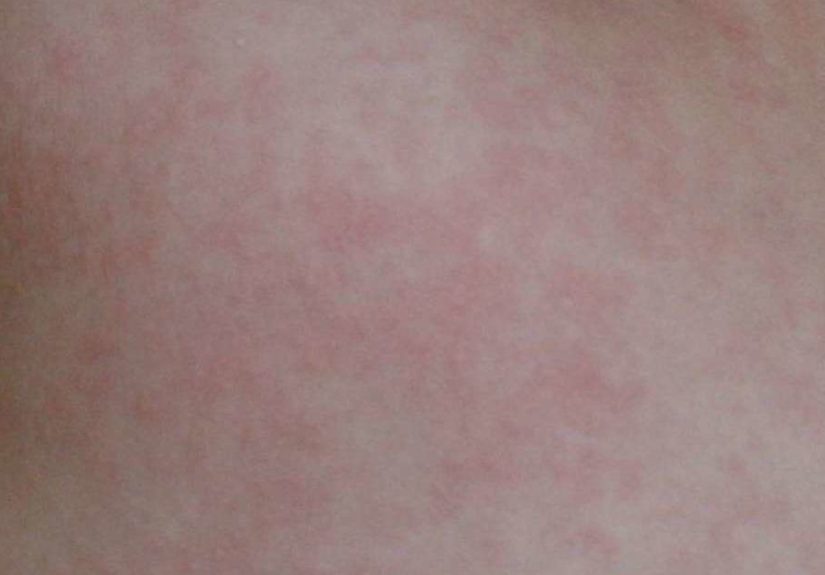
Once the fever drops, a pink or rosy rash may appear, usually within 24 hours. This is the classic roseola rash. It often starts on the chest, back, or abdomen and then spreads to the neck, face, arms, and legs.
The rash may look like small flat spots, raised spots, or a mix of both. It is usually not itchy and does not cause pain. In children with lighter skin tones, it may look pink or red. In children with darker skin tones, it can be harder to spot and may appear faintly red, purple, or simply like a subtle change in texture or color.
Most importantly, the rash tends to be more dramatic than dangerous. It commonly lasts from several hours to a few days and fades without scarring, peeling, or special creams.
Who Gets Roseola Most Often?
Roseola is most common in infants and toddlers, especially those younger than age 2. It becomes more likely after maternal antibodies begin to fade and children start having more contact with other kids and caregivers. Daycare settings, siblings, and normal toddler-level social chaos can all increase exposure.
Adults and older children can catch the virus, but primary roseola is much less common in those age groups because many people have already been exposed earlier in life.
How Long Is Roseola Contagious?
Roseola is thought to be most contagious during the fever phase, before the rash appears. That is part of what makes it so sneaky. By the time the rash shows up and parents realize it might be roseola, the child may already be less contagious.
In general, a child can often return to daycare or school once they have been fever-free for 24 hours and otherwise seem well, even if the rash is still visible. That lingering rash may look dramatic, but it does not necessarily mean the child is still highly contagious.
How Roseola Is Diagnosed
Doctors usually diagnose roseola clinically, which means they rely on the pattern of symptoms and a physical exam rather than lots of testing. The hallmark story is pretty recognizable: high fever for several days, then a rash that appears as the fever resolves.
Lab tests are not usually needed for otherwise healthy children with a typical presentation. However, if symptoms are unusual, severe, or happening in a child with a weakened immune system, a clinician may consider further evaluation to rule out other infections or complications.
Roseola Treatment
There is no specific cure for roseola in most healthy children. Antibiotics do not help because roseola is caused by a virus, not bacteria. Treatment focuses on making the child more comfortable while the illness runs its course.
Supportive care at home
The main goals are fever control, hydration, and rest. Helpful care measures include:
- Offering plenty of fluids to prevent dehydration
- Letting your child rest as needed
- Using lightweight clothing instead of heavy blankets
- Giving fever-reducing medicine if recommended by your child’s healthcare provider
- Using a lukewarm sponge bath or cool cloth for comfort if the fever is bothering your child
For many families, the treatment plan is not glamorous. It is less “high-tech pediatric intervention” and more “fluids, cuddles, and trying not to stare at the thermometer every six minutes.” Still, supportive care is usually enough.
Medications for fever
Acetaminophen or ibuprofen may help lower fever and improve comfort, depending on your child’s age and your pediatrician’s guidance. Do not give aspirin to children with fever because of the risk of Reye syndrome, a rare but serious condition.
Also, ibuprofen is not typically used in babies younger than 6 months unless a healthcare professional specifically says it is appropriate. When in doubt, ask your child’s doctor for the correct medicine and dose based on age and weight.
Possible Complications of Roseola
Most children recover from roseola without complications, but there are a few issues parents should know about.
Febrile seizures
The best-known complication is a febrile seizure. These seizures can happen when a child’s temperature rises quickly. They are often brief and usually do not cause long-term harm, but they can be terrifying to witness. For many families, this is the single most stressful part of roseola.
If your child has a seizure and has never had one before, get emergency medical help right away. Seek urgent care as well if a seizure lasts more than five minutes, even if your child has had febrile seizures before.
Rare but serious complications
Serious complications are uncommon in healthy children, but rare cases involving the brain or nervous system, such as encephalitis or meningitis, have been reported. Children with weakened immune systems may also face a higher risk of severe disease or unusual symptoms.
When to Call a Doctor
Call your child’s healthcare provider if:
- Your child has a fever over 103°F
- The fever is not improving with recommended fever treatment
- Your child is very sleepy, hard to wake, or acting unusually ill
- Your child is not drinking enough fluids or is having fewer wet diapers
- The rash becomes painful, itchy, blistered, or involves the lips or mouth
- The fever returns after the rash appears
- Your child has a weakened immune system or another condition that makes fever riskier
Seek emergency care right away if your child has:
- A seizure, especially a first seizure
- Trouble breathing
- Signs of dehydration, such as no tears, dry mouth, or very few wet diapers
- A stiff neck, repeated vomiting, unusual weakness, or low responsiveness
Roseola vs. Other Childhood Rashes
Roseola can be confused with measles, rubella, fifth disease, and other viral rashes. The difference is often in the timing. With roseola, the child usually gets the fever first, then the rash after the fever fades. In measles, children are often sicker overall and the rash typically begins while they are still ill, not after they seem to rebound.
This does not mean parents should play amateur dermatologist with complete confidence at 2 a.m. A rash plus fever can have many causes, and a healthcare professional should evaluate anything that seems severe, unusual, or simply concerning.
Can Roseola Be Prevented?
There is no vaccine that prevents roseola, and because people can spread the virus before the rash appears, avoiding it completely is difficult. The best prevention strategies are the familiar ones:
- Good handwashing
- Covering coughs and sneezes
- Cleaning shared surfaces and toys
- Keeping a child home while they have a fever
In other words, the same public health basics that show up for every virus are back again. Not exciting, but definitely useful.
What Recovery Usually Looks Like
In most cases, roseola improves within about a week. The fever phase is usually the hardest. Once the fever breaks, many children perk up quickly even if the rash looks impressive. Appetite may take a little time to come back, but most kids return to normal routines fast.
For parents, the emotional timeline can be the opposite: maximum panic during the fever, cautious relief when the rash appears, then a strange realization that the scary-looking rash is actually a sign the illness is winding down. Roseola has a talent for keeping everyone humble.
Parent and Caregiver Experiences With Roseola
The experiences below are composite-style examples based on common caregiver concerns and situations, written to reflect what families often go through when a child has roseola.
Many parents describe roseola as the illness that “came out of nowhere.” One day, their child is mostly fine. The next, the fever shoots up so fast that they assume something much more serious must be happening. Because the rash usually comes later, the early phase can feel confusing. Parents often say things like, “There were no real symptoms except the fever,” which is exactly why roseola can be so unnerving at first.
Another common experience is the mismatch between the numbers on the thermometer and the child’s behavior. Some children with roseola are clearly miserable and clingy. Others, surprisingly, still want to play between fever spikes. That can make caregivers second-guess themselves. A parent may think, “How can my child have a temperature this high and still be trying to stack blocks?” Roseola loves mixed signals.
Then comes the rash, and with it, a whole new wave of worry. Families often say the rash looked dramatic but the child suddenly seemed better. That reversal catches people off guard. In many illnesses, a spreading rash feels like proof that things are getting worse. With roseola, it can mean the opposite. Once a pediatrician explains that the rash often shows up after the fever breaks, many parents feel a huge sense of relief.
Caregivers who have dealt with febrile seizures often remember the event vividly, even when the child recovers quickly. They describe it as frightening, confusing, and unforgettable. In these stories, the biggest comfort usually comes from getting clear medical guidance afterward: what happened, why it may have happened, and what to do if it ever occurs again.
Parents also talk about the practical side of roseola recovery. They remember offering tiny sips of fluids, using light pajamas, checking for wet diapers, and rotating between rest and reassurance. The illness itself may be short, but it can create several long nights. Once it passes, many families say they are better prepared for future fevers because they learned what warning signs matter most and when to seek help.
In short, the roseola experience is often less about complicated treatment and more about understanding the pattern. When families know that high fever may come first, rash may come second, and most children recover well with supportive care, the entire episode becomes less mysterious and a little less scary.
Conclusion
Roseola is a common childhood viral illness that usually looks scarier than it is. Its trademark pattern, a sudden high fever followed by a pink rash as the fever fades, can be alarming the first time a family sees it. Still, most children recover fully with rest, fluids, and symptom relief at home.
The key is knowing what is normal for roseola and what is not. A child who develops a rash after several days of fever may simply be following the classic course of the illness. But seizures, dehydration, breathing problems, severe lethargy, or neurologic symptoms deserve fast medical attention. When parents understand the difference, they can respond with more confidence and a lot less panic.
Roseola may not be a fun family memory, but it is usually a brief one. And if there is any silver lining, it is this: by the time the rash arrives, the worst is often already over.





 Close
Close