
Table of Contents >> Show >> Hide
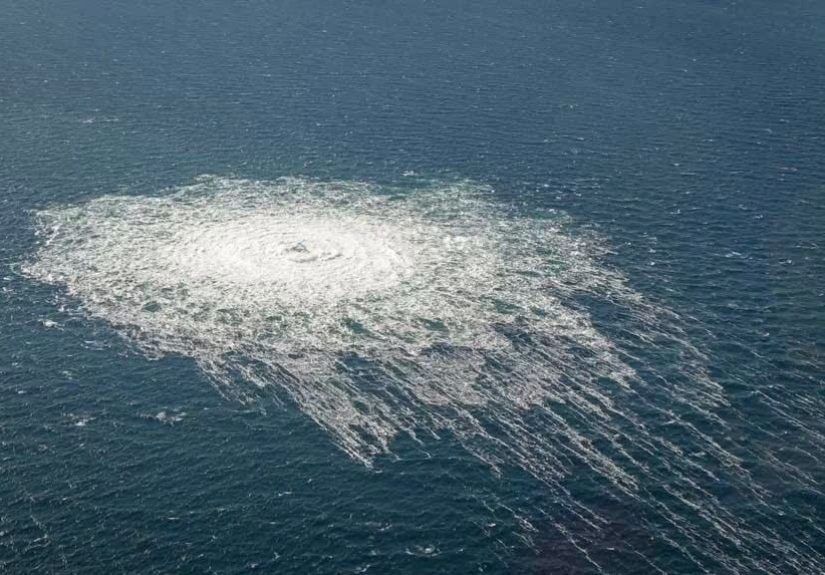
The Nord Stream gas pipeline leaks looked, at first glance, like a scene ripped from a geopolitical thriller: bubbles boiling up in the Baltic Sea, seismologists registering underwater blasts, and European officials trying to figure out whether the continent had just watched a piece of critical infrastructure get blown apart in real time. It was dramatic, expensive, environmentally ugly, and politically loaded enough to make a spy novelist whisper, “Okay, maybe tone it down a little.”
When the Nord Stream explosions were discovered in September 2022, suspicion quickly turned toward Russia. That instinct was not random. Moscow had already weaponized energy flows, slashed gas deliveries, and spent months reminding Europe that pipelines can be both plumbing and pressure tactics. But as investigations unfolded, the story became more complicated. What began as a case of suspected Russian sabotage evolved into a murky, still-disputed mystery involving competing theories, intelligence leaks, forensic breadcrumbs, and a lesson Europe will not forget anytime soon: undersea infrastructure is a lot more vulnerable than most people assumed.
This matters because Nord Stream was never just a pair of industrial tubes on the seabed. It symbolized Europe’s long, uneasy dependence on Russian natural gas, Germany’s controversial energy choices, and the dangerous overlap between commerce and coercion. Once the pipelines ruptured, the debate changed overnight. The question was no longer whether Europe should reduce its reliance on Russian gas. The question became how fast it could build a new energy order while protecting cables, pipelines, and other subsea systems from sabotage, espionage, and hybrid warfare.
What Happened in the Baltic Sea?
On September 26, 2022, pressure drops were reported in the Nord Stream system, and leaks were later identified near the Danish island of Bornholm in the Baltic Sea. Seismic stations in the region recorded explosions, which quickly pushed officials away from the comforting theory of a boring mechanical failure. Three leaks were first identified, then a fourth. The affected lines belonged to Nord Stream 1 and Nord Stream 2, the direct gas routes linking Russia and Germany under the Baltic Sea.
At the time of the blasts, the pipelines were not actively delivering gas to Europe. Nord Stream 1 had already stopped shipments, and Nord Stream 2 had never entered commercial service after Germany froze certification in the run-up to Russia’s full-scale invasion of Ukraine. But both systems still contained gas, which meant the damage triggered a huge methane release into the sea and atmosphere. So even when the pipelines were not functioning as energy lifelines, they were still very capable of becoming environmental nightmares.
That immediate detail is important. The sabotage did not plunge Europe into instant darkness. It did something arguably more strategic: it destroyed a major route that could have become relevant again in future negotiations, cut off the fantasy of easy normalization, and sent a message that critical infrastructure could be turned into a battlefield. In other words, the Nord Stream leaks were not just about gas. They were about power, signaling, and the new rules of confrontation in Europe.
Why Russia Was an Early Suspect
Means, motive, and a very loud geopolitical backdrop
Russia became the early focus for three main reasons. First, it had the technical capacity. Sabotaging pipelines at that depth is not the sort of weekend hobby one picks up between gardening and sourdough. It requires planning, diving expertise, explosives, maritime access, and operational discipline. Russia, as a military and intelligence power with significant naval capabilities in the region, had long been seen as one of the few actors able to conduct such an operation.
Second, Moscow had motive. By late 2022, the Kremlin had already cut gas supplies, fueled fears of an energy crunch, and tried to fracture European unity over support for Ukraine. Damaging Nord Stream could amplify uncertainty, spook markets, deepen political anxiety, and remind European governments that even idle infrastructure could be made useless. It would fit neatly into a broader pattern of using energy as leverage.
Third, the timing felt sinister. Europe was preparing for winter, bracing for tight energy supplies, and scrambling for alternatives. In that climate, many observers saw the blasts as a warning shot below the waterline. The underlying logic was simple: if Russia wanted to prove that escalation could move beyond the battlefield in Ukraine and into Europe’s critical systems, this was one brutal way to do it.
That is why the idea of Russian sabotage landed so quickly in public debate. It was not merely a reflex. It matched the atmosphere of the moment. Still, suspicion is not the same thing as proof, and that distinction became more important as the investigation moved from headlines to hard evidence.
Why the Story Got More Complicated
Public certainty faded as investigators kept digging
European authorities eventually concluded that the damage was deliberate sabotage, but public attribution remained unresolved. Sweden and Denmark both closed their investigations in early 2024 without identifying a culprit in a way that settled the case for the public. Germany continued its probe, and later reporting pointed in a very different direction from the original wave of suspicion.
By 2023, investigators were examining traces of explosives found on a rented yacht reportedly linked to the case. By 2024, German prosecutors had reportedly sought a Ukrainian suspect, and major reporting in the United States and Europe described an operation involving a small team with Ukrainian ties. That did not magically solve the mystery. Ukraine denied state involvement, and public reporting did not establish a clean, universally accepted chain of command. But it did shift the debate from “Was this Russia?” to “How much do we really know, and who exactly authorized what?”
This is where the Nord Stream story stopped behaving like a tidy morality play. Russia may have been the early favorite in the court of public suspicion, yet later investigative reporting suggested the operation may have involved a smaller team connected to Ukraine rather than a large Russian state plot. That does not erase why Russia was suspected. It does show how messy attribution becomes in modern sabotage cases, especially when intelligence services, wartime secrecy, and cross-border investigations collide.
In plain English: the blasts were real, the sabotage finding was real, the damage was massive, but the culprit has remained politically and legally slippery. That ambiguity is one reason the story still grips analysts and conspiracy enthusiasts alike. It sits at the uncomfortable intersection of what governments suspect, what they can prove, and what they are willing to say out loud.
What the Blasts Changed for Europe
Energy security stopped being an abstract policy phrase
Before Russia’s full-scale invasion of Ukraine, Germany relied heavily on Russian gas. Nord Stream was both a supply route and a symbol of that dependence. Critics had warned for years that the pipeline system gave Moscow too much leverage while bypassing Ukraine and increasing Europe’s vulnerability. After the 2022 explosions, that warning no longer sounded theoretical. It sounded overdue.
Europe responded by accelerating changes already underway. Governments expanded liquefied natural gas imports, searched for new suppliers, filled storage, and pushed harder on efficiency, renewables, and diversification. Germany, in particular, had to rethink its energy model at high speed. What had once been framed as a practical commercial relationship with Russia now looked like strategic exposure wearing a business suit.
The Nord Stream damage also influenced expectations for the future. Even U.S. energy outlooks began assuming the pipelines would remain offline for the long term. In effect, the blasts helped turn a temporary crisis into a structural break. The old pipeline relationship between Russia and Germany was not simply interrupted. It was politically shattered.
That is one of the deepest consequences of the leaks. Whether or not the explosions alone caused Europe’s energy divorce from Russia, they made reconciliation via Nord Stream vastly harder to imagine. Infrastructure that once represented interdependence became a monument to distrust.
The Environmental Cost Was Enormous
For all the strategic and diplomatic drama, the leaks also created a major environmental event. Methane is a potent greenhouse gas, and the Nord Stream ruptures released an extraordinary amount of it over a short period. Scientists and reporters described the event as one of the largest known methane releases of its kind, with damage extending beyond climate concerns to potential effects on marine ecosystems and disturbed seabed sediments.
That ecological piece often gets overshadowed by spy-story intrigue, but it deserves attention. The explosions were not only an attack on infrastructure. They were also a reminder that fossil fuel systems can create harm even when they are not transporting usable energy. A pipeline full of gas is still a risk. Blow it open, and the climate gets a spectacularly unwanted guest appearance.
The bitter irony is almost too on-the-nose: Europe spent years arguing whether natural gas could be a bridge fuel, and then one of its biggest pipeline systems literally blew a methane cloud into the sky. History, apparently, does not always do subtle.
Why Nord Stream Still Matters
Because pipelines were only the beginning
The Nord Stream blasts exposed something larger than one sabotage incident. They highlighted the vulnerability of critical undersea infrastructure across Europe and beyond. Pipelines, power links, and data cables all run through waters that are difficult to monitor continuously and expensive to protect comprehensively. Once policymakers saw what happened in the Baltic Sea, it became easier to imagine copycat attacks, covert harassment, and “accidents” that do not feel especially accidental.
That fear has shaped NATO and European security thinking ever since. Undersea systems are now treated less like boring engineering and more like strategic arteries. The concept of hybrid warfare has expanded accordingly. Sabotage no longer has to look like tanks crossing a border. Sometimes it looks like a damaged cable, a cut pipeline, a dragging anchor, or a mystery that takes two years and several governments to untangle.
The Nord Stream case also revealed how difficult it is to build public certainty in a fog of competing narratives. Russia blamed the West. Some commentators pushed wild theories involving the United States. Others insisted from day one that Moscow must have done it. Later reporting complicated all of those easy answers. The result is a textbook case of how information warfare thrives after acts of physical sabotage: once the blast happens, the story itself becomes another battleground.
Experiences and Perspectives: How This Crisis Was Felt on the Ground
For people far from the blast zone, the Nord Stream leaks were experienced less as a single dramatic event and more as a slow, unnerving realization. In Germany, the images of gas churning through the Baltic arrived after months of energy anxiety, price shocks, and endless debates about heating, industry, and winter preparedness. Households were already watching utility bills with the kind of intensity usually reserved for medical test results. The pipeline damage did not create all that fear, but it gave it a shape, a photograph, and a name.
For policymakers, the experience was even sharper. Nord Stream had long represented a deeply divisive bargain: cheap Russian gas in exchange for strategic risk that some leaders preferred to downplay. After the explosions, that balancing act looked less like realism and more like self-deception with a very expensive receipt. Officials who had once talked about resilience in conference rooms suddenly had to think about patrols, seabed surveillance, emergency coordination, and whether Europe’s hidden infrastructure had become the soft underbelly of modern conflict.
For energy traders and industrial planners, the leaks reinforced a brutal lesson: even dormant infrastructure can influence prices, expectations, and confidence. Markets do not wait politely for investigators to finish their paperwork. They react to possibility, fear, and uncertainty. A damaged pipeline can matter even when it is not pumping gas, because it changes what people think might happen next. In that sense, Nord Stream was not just a physical rupture. It was a psychological rupture in Europe’s energy map.
For climate researchers, the event was maddening in a different way. Years of work on methane pollution, fossil fuel leakage, and emissions accountability suddenly collided with a massive release caused by sabotage. It was a real-world demonstration of how climate risk, security risk, and infrastructure risk can overlap in one ugly burst. The image of bubbling methane in the Baltic was not only a security story. It was a climate story with terrible timing and even worse symbolism.
For ordinary observers, the experience was confusion layered on top of disbelief. First came the leaks. Then the suspicion of Russia. Then denials, counterclaims, intelligence chatter, reporting about yachts and divers, and a public narrative that kept changing just enough to prevent closure. The average reader did not need to be an energy analyst to feel the instability. One day the pipeline seemed like proof of Russian escalation. The next, the investigation hinted at a smaller clandestine team. The facts did not neatly line up with the emotional certainty of the first week.
That may be the most human takeaway of all. Major acts of sabotage are not only destructive because of the physical damage they cause. They also reorder perception. They make governments look vulnerable, citizens feel exposed, and infrastructure seem suddenly mortal. The Nord Stream leaks taught Europe that what lies on the seabed is not safely out of sight. It is part of daily life, monthly bills, national strategy, and wartime risk. Once that lesson lands, it does not politely leave.
Conclusion
The title of this story captures the mood of the first days after the explosions: Russian sabotage was widely suspected, and for understandable reasons. Russia had motive, capability, and a recent record of using energy pressure as a political weapon. But the fuller picture is messier than the original suspicion. Public investigations confirmed sabotage, not a final universally accepted culprit. Subsequent reporting and prosecutorial moves shifted attention toward Ukrainian suspects, even as denials and unanswered questions persisted.
That tension is what makes the Nord Stream saga so important. It is not just a story about who may have placed explosives on a pipeline. It is a story about energy dependency, strategic blindness, environmental damage, and the vulnerability of undersea infrastructure in an age of gray-zone conflict. The leaks ended more than a set of pipes. They helped end an era in which Europe could imagine that commercial interdependence with Russia offered stability by default.
And that, perhaps, is the cruelest punchline in the whole affair: the pipes that were meant to bind economies together ended up becoming a case study in fracture.
Note: This article reflects publicly reported facts and analysis available at the time of writing. The sabotage finding is well established in public reporting, but definitive public attribution remains disputed.







 Close
Close