
Table of Contents >> Show >> Hide
- What SaaS Capital’s Data Actually Suggests (and Why It Surprises People)
- Why Annual Contracts Don’t Automatically Increase NRR
- So What Did the Benchmarking Show About Contract Length?
- If Annual Contracts Don’t Boost NRR, Why Do So Many SaaS Companies Push Them?
- How to Improve NRR the Non-Magical Way (the Way That Actually Works)
- A Practical Contract-Length Playbook (Without Deluding Yourself)
- NRR Benchmarks: Why Everyone Cares (and Why You Should Too)
- Conclusion: Annual Terms Are a Finance Lever, Not a Retention Miracle
- Field Notes: of Real-World Experiences Around Annual vs. NRR
If you’ve ever sat in a pricing meeting where someone says, “Let’s push annual contracts to improve retention,” you’re not alone.
It’s one of SaaS’s most beloved mythsright up there with “we’ll fix churn after we ship the new dashboard.”
But here’s the punchline: yearly contracts don’t automatically raise net revenue retention (NRR).
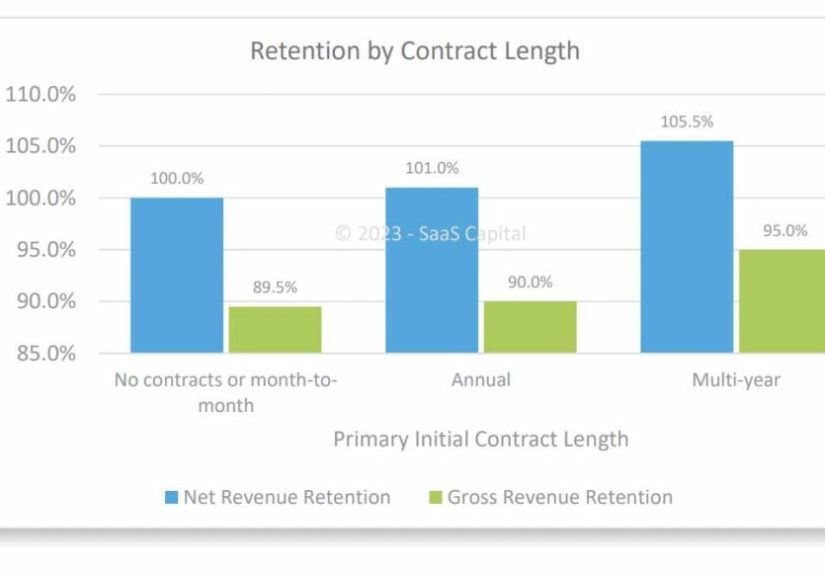
Data summarized from SaaS Capital’s large benchmark work (covering 1,500+ private SaaS companies) suggests that moving customers to annual terms
is, at best, a modest lever for NRRand often just a timing trick that makes churn show up later, not disappear.
What SaaS Capital’s Data Actually Suggests (and Why It Surprises People)
SaaS teams often expect annual contracts to be a retention cheat code: fewer renewal decisions, more commitment, fewer cancellations.
And yes, annual terms can change customer behavior. But NRR is not just “do customers stay?”
It’s “do customers stay and spend more?”
NRR vs. GRR: Same Customer, Two Very Different Questions
Think of retention metrics like two cameras filming the same scene:
- Gross Revenue Retention (GRR) asks: “How much recurring revenue did we keep from existing customers, ignoring upsells?”
- Net Revenue Retention (NRR) asks: “After upgrades, downgrades, and churn, did the existing customer base grow or shrink in dollars?”
Annual contracts can reduce the number of “exit ramps” in a year, which may help GRR. But NRR needs expansion to show up.
If customers are locked into a year but not expanding seats, usage, or modules, your NRR won’t magically float upward.
Why Annual Contracts Don’t Automatically Increase NRR
1) Annual terms often defer churn instead of preventing it
When customers pay monthly, churn can happen any month. When customers pay annually, churn concentrates at renewal.
The customer may be unhappy in month 3, but the cancellation becomes a “future problem” (for you) and a “calendar reminder” (for them).
That deferral can make retention look calmer in the short rununtil renewal season arrives like a horror movie sequel.
2) NRR is measured in recurring revenue, not “how paid-up they are”
This is the big misunderstanding: billing frequency isn’t the same as recurring revenue expansion.
A customer paying annually doesn’t necessarily pay more. They pay earlier.
Cash flow might improve, but NRR cares about what the customer is worth over time (and whether they expand), not whether your bank account feels happier today.
3) Annual discounts can quietly cancel out retention gains
Many SaaS companies trade annual prepay for a discount. If that discount is too generous, you may reduce logo churn but also reduce expansion opportunity.
You’ve basically said, “Pay early and we’ll charge less forever.” Customers love that! Your future NRR… not always.
4) Expansion behavior can shift to renewal instead of mid-year
With monthly plans, upgrades happen as needs change: more seats, more usage, another module.
With annual plans, procurement and budgeting can push expansion decisions to renewal time (“We’ll add those seats next contract year”).
That can flatten in-year expansionespecially in SMB and mid-market segmentskeeping NRR from improving.
5) Longer contracts don’t fix weak product value
If customers aren’t getting outcomes, a longer contract is not a relationshipit’s a longer breakup note.
They might not churn immediately, but they also won’t expand. And NRR’s best friend is expansion.
So What Did the Benchmarking Show About Contract Length?
Here’s the practical takeaway that makes operators nod and optimists sigh:
moving from month-to-month to annual typically doesn’t create a step-change in NRR.
Annual terms can be “basically similar” to month-to-month in net retention, while multi-year terms may show a higher medianthough interpretation matters.
A simple way to interpret the pattern
- Month-to-month vs. annual: tends to change the timing of churn more than the economics of retention.
-
Multi-year: can correlate with higher retentionbut may reflect who sells multi-year (higher ACV, deeper integrations, more enterprise motion),
not just the contract length itself.
In other words, contract length can be a signal of a business model (and customer type), not a universal lever you can pull and instantly get better NRR.
If Annual Contracts Don’t Boost NRR, Why Do So Many SaaS Companies Push Them?
Because annual contracts can be greatjust not for the reason people think
Annual terms can make sense for plenty of strategic reasons:
- Cash flow: annual prepay can reduce burn and extend runway.
- Operational predictability: fewer billing events, fewer collections issues, cleaner forecasting.
- Customer alignment: procurement teams often prefer annual budgets and vendor management cycles.
- Implementation-heavy products: if onboarding takes months, annual terms better match time-to-value.
Notice what’s missing from that list: “It automatically increases NRR.”
Annual contracts are often a finance and go-to-market choice, not a guaranteed retention-growth mechanism.
How to Improve NRR the Non-Magical Way (the Way That Actually Works)
1) Treat activation like a revenue strategy, not a product checklist
Customers expand when they see value compounding. That starts with adoption.
If your “aha moment” takes 45 days, your NRR isn’t a contract problemit’s a time-to-value problem.
2) Design upgrades to be obvious, not hidden behind a sales email
Expansion often happens when the product naturally creates new needs:
usage thresholds, new teams, new workflows, or adjacent modules that feel like the next logical step.
If upgrades require a heroic demo every time, expansion will be lumpy and NRR will suffer.
3) Segment retention plays by customer type
A $49/month self-serve customer and a $50k ACV B2B contract behave like different species.
The retention playbook should match:
- SMB: faster onboarding, product-led expansion, in-app nudges, minimal friction.
- Mid-market: customer success motions, value reviews, standardized expansion paths.
- Enterprise: executive alignment, multi-product roadmaps, services + adoption programs.
4) Price increases and packaging matter more than billing cadence
Healthy NRR often comes from a mix of:
expansion (more usage/seats/modules) and pricing power (value-based packaging, modernization of plans, and disciplined increases).
Billing annually can support these moves, but it’s not the engineyour value proposition is.
5) Make churn boring (in the best possible way)
The best SaaS teams turn churn into a managed process:
early warning signals, consistent customer health scoring, usage drop alerts, and renewal workflows that start months before the renewal date.
If you only “do retention” when the cancellation email arrives, you’re basically running customer success as a jump-scare.
A Practical Contract-Length Playbook (Without Deluding Yourself)
Offer annual because it fits the buyernot because you want to “hack NRR”
A strong default approach looks like this:
-
Let customers choose monthly or annual based on their procurement style and confidence.
If they’re early in adoption, monthly can reduce friction and increase conversion. -
Incentivize annual with value, not a massive haircut.
Consider perks like better support tiers, onboarding credits, or product add-ons rather than a steep discount that permanently compresses expansion upside. - Use multi-year strategically for customers with proven adoption and clear roadmaps, where expansion is likely and renegotiations are expensive.
- Protect renewal quality with structured QBRs, ROI documentation, and success milestonesso renewal is a confirmation, not a re-litigation.
A quick “don’t do this” list
- Don’t force annual on customers who aren’t activated yet.
- Don’t discount so hard you can’t grow inside the account.
- Don’t celebrate annual prepay as retention if usage is collapsing.
- Don’t treat NRR like a billing artifactit’s a value artifact.
NRR Benchmarks: Why Everyone Cares (and Why You Should Too)
Investors and operators love NRR because it reveals a truth that top-line growth can hide:
Can your existing customers carry growth through expansion?
When NRR is above 100%, you have the possibility of growing even if new logo acquisition gets harder.
When it’s below 100%, your growth engine is running uphillbecause you’re refilling a leaky bucket every quarter.
Use NRR with context
NRR varies by ACV, segment, and go-to-market motion. Comparing a self-serve product to enterprise infrastructure software is like comparing a scooter to a cargo ship:
both move, but the math is going to be different.
The more reliable approach: benchmark against companies with similar ACV and customer type, then focus on the levers you actually controladoption, expansion paths, packaging, and customer outcomes.
Conclusion: Annual Terms Are a Finance Lever, Not a Retention Miracle
SaaS Capital’s benchmark workand the broader SaaS operator experiencepoints to a grounded reality:
annual contracts don’t automatically improve NRR.
They can change cash flow, simplify billing, and align procurement cycles.
But NRR moves when customers expand: more usage, more seats, more modules, more value.
If you want better NRR, don’t start by changing the invoice schedule.
Start by making the product indispensable, the outcomes measurable, and the expansion path obvious.
Then, and only then, let annual contracts be what they’re best at:
a convenient buying motion for customers who already believe.
Field Notes: of Real-World Experiences Around Annual vs. NRR
In practice, the “annual will fix retention” idea usually shows up when a team feels the pain of unpredictable churn.
Monthly customers cancel, revenue dips, and suddenly the org wants a sturdier floor. Annual contracts feel like installing hardwood.
But what often happens is more like laying down a rug: the bumps are still thereyou’ve just made them easier to ignore until someone trips at renewal.
A common scenario goes like this: a SaaS company flips the default plan to annual and celebrates a few quarters of calmer churn charts.
The board deck looks cleaner. The pipeline forecast feels less haunted. Then the renewal cohort arrives. Many customers who were “quietly unhappy”
didn’t complain much during the year; they simply underused the product. When renewal season hits, the decision becomes binary:
renew or don’t. If the customer never reached consistent value, they don’t downgradethey leave. The churn didn’t vanish; it synchronized.
Another pattern: annual billing can shift expansion behavior. With monthly billing, adding seats mid-year feels like a small decision.
With annual, customers sometimes delay changes to “keep the contract clean” until renewal. The product may be spreading internally,
but the commercial motion lags behind the usage reality. Teams see healthy adoption signals and assume NRR will followthen discover
upgrades clustered into a single quarter, creating lumpy net retention. The fix is not returning to monthly; it’s building
mid-cycle expansion mechanics: usage-based add-ons, true-ups, or modular packaging that allows expansion without rewriting the entire contract.
You’ll also see discount gravity. Once a company normalizes a steep annual discount, customers treat it like the “real price.”
That makes future price increases politically harder and can compress the upside of expansions. Some teams then try to “save NRR” by pushing multi-year deals.
That can help in the short term, but it’s risky if it’s used to mask weak adoption. A multi-year contract is wonderful when it matches long-term value.
It’s terrifying when it’s just a longer period of being politely ignored.
The healthiest teams approach annual terms as a choice the customer earns through confidence. They focus on onboarding, measurable ROI,
and product moments that naturally create expansion. Annual becomes the preferred option because customers want to commitnot because the vendor
needs a metric to behave. And that’s the real lesson: NRR improves when the product becomes a bigger part of the customer’s world.
Contract length can support that story, but it can’t write the story for you.






 Close
Close