
Table of Contents >> Show >> Hide
- Why We Need New Ways to Store Energy
- What Exactly Is a Sand Battery?
- Real-World Sand Battery Projects
- Sand Batteries vs. Lithium-Ion: Complementary, Not Competitors
- Advantages of Sand Batteries
- Limitations and Challenges
- Where Sand Batteries Fit in the Future Energy Mix
- Experiences and Practical Insights: Living with Sand Battery Heat
- Conclusion: A Simple Idea with Big Potential
Imagine solving one of renewable energy’s biggest headaches with something you can find at the beach (minus the flip-flops and seagulls). That’s the basic idea behind
sand batteries massive thermal energy storage systems that use sand or sand-like material to hold onto heat for hours, days, or even months.
As more solar panels and wind turbines connect to the grid, we’re generating a lot of clean electricity at inconvenient times: tons of power at noon, less at night; plenty on windy weekends,
not so much on still weekday evenings. Without good storage, that clean energy gets wasted, and fossil-fuel plants stick around to fill the gaps. Sand batteries offer a low-cost,
long-duration way to store that extra energy as heat and use it later when demand goes up.
In this in-depth guide, we’ll break down how sand batteries work, where they shine, where they struggle, and how they could help ease our growing energy storage issues all in plain English,
with just enough nerdiness to impress your energy-obsessed friend.
Why We Need New Ways to Store Energy
Traditional power plants are easy to schedule: you burn fuel, you get electricity. Renewable power doesn’t play by those rules. Solar output drops in the evening, right when people get home
and turn everything on. Wind power can spike at 3 a.m. when nobody needs it, then slow down during the afternoon peak. This mismatch between when we generate power and when we use it is
called the intermittency problem, and it’s the reason storage is such a big deal in the energy transition.
Today, lithium-ion batteries handle a lot of short-term storage: they’re great at smoothing minute-to-minute fluctuations and shifting a few hours of energy from mid-day
solar to the evening peak. But they’re still relatively expensive for very long-duration storage the kind of system that could soak up weeks of surplus wind or summer solar and release
it steadily during a long, cold winter.
That’s where sand and other thermal storage technologies enter the chat. Instead of storing energy as electricity in chemical batteries, sand batteries store it as heat in a big, heavily
insulated tank filled with solid material. They aren’t designed to power your phone or your car. They’re built to heat homes, offices, factories, and potentially entire cities.
What Exactly Is a Sand Battery?
Not a Beach in a Box, But Close
A sand battery is a type of high-temperature thermal energy storage system. In simple terms, it’s usually a large steel cylinder or tank filled with sand,
crushed stone, or similar granular material. The system uses excess renewable electricity for example, from wind turbines at night to heat air or electric resistance elements. That
hot air or heat flows through the sand, warming it up to temperatures that can reach around 500–600°C (over 900°F).
Because sand has a good specific heat capacity and is stable at high temperatures, it can hold a lot of thermal energy without melting or breaking down. The entire tank is wrapped in heavy
insulation to keep the heat inside, turning it into a giant long-lasting “thermal battery.” When heat is needed, air is blown through the hot sand, picks up the heat, and then transfers it
to water or air used in district heating networks, building heating systems, or industrial processes.
Key Features of Sand Battery Systems
- Storage medium: low-cost sand, crushed rock, or industrial by-products such as crushed soapstone.
- High temperatures: commonly in the 500–600°C range, with research exploring even higher temperatures for future designs.
- Large scale: systems are often designed for megawatts of thermal power and tens to hundreds of megawatt-hours (MWh) of storage.
- Long storage time: with good insulation, heat can be retained for days, weeks, or in some designs, even months.
- Round-trip efficiency (for heat): mature systems can reach roughly 80–90% efficiency when you measure how much heat you get back compared with what you put in.
Unlike a lithium-ion battery, a sand battery doesn’t usually give you electricity back directly. Instead, its “output” is heat, which can be incredibly valuable in places
where heating dominates energy consumption think cold climates, industrial sites, and cities with existing or planned district heating.
Real-World Sand Battery Projects
Finland: Turning Excess Wind Power into Winter Heat
If sand batteries had a world headquarters, it would probably be Finland. Several of the most advanced projects are located there, where long, dark winters and strong decarbonization goals
make clean heating a high priority.
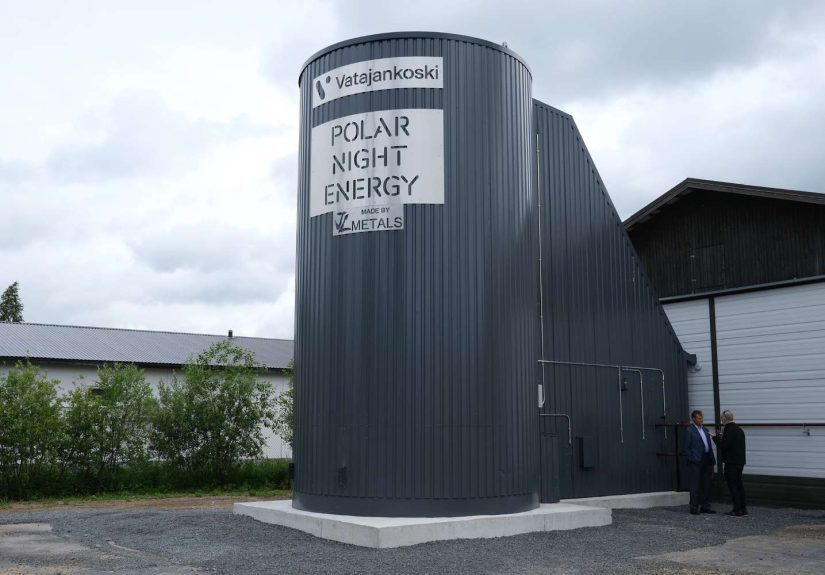
One headline-making installation is an industrial-scale sand battery connected to a district heating network in the municipality of Pornainen. This system uses roughly
2,000 tons of crushed soapstone as the storage material and is designed to deliver about 1 megawatt of thermal power with around 100 MWh of storage capacity. That’s enough to cover nearly a
month of heating demand in summer and close to a week in winter for the small town’s network, while dramatically cutting local emissions and phasing out oil-fired heating.
Another Finnish project has been described as the “world’s largest sand battery,” supplying heat to a small town by charging up with surplus wind and solar power and discharging as hot
water and steam for homes and businesses. Residents don’t see the sand directly they just get reliable, low-carbon heat from their radiators and taps instead of relying on fossil fuels.
These real-world examples show that sand batteries are not just an interesting lab experiment. They’re already operating at the scale of entire communities, helping utilities balance
renewable generation while improving local air quality and reducing greenhouse gas emissions.
Next-Gen Pilots: From Heat Only to Heat and Power
The first wave of sand battery projects focuses mainly on heat. But developers and researchers are already working on designs that can eventually convert some of that stored thermal energy
back into electricity when needed.
Pilot plants are being developed to explore so-called “power-to-heat-to-power” cycles. The idea is that during times of surplus renewable electricity, the sand battery charges up as usual.
Later, during a power shortfall, high-temperature heat from the sand would drive a turbine or a thermophotovoltaic system to generate electricity while still providing useful heat. This
kind of hybrid approach is more complex and less efficient than using sand batteries for heat alone, but it could make them even more valuable in regions with stressed electric grids.
Sand Batteries vs. Lithium-Ion: Complementary, Not Competitors
It’s tempting to ask, “Are sand batteries better than lithium-ion?” but that’s like asking whether a freight train is better than a sports car. They’re designed for different jobs.
Lithium-ion batteries excel at:
- Fast response (milliseconds to seconds).
- High round-trip electrical efficiency (often 85–95%).
- Compact size relative to power output.
- Applications like EVs, home batteries, and short-duration grid storage.
Sand batteries shine when:
- Heat, not electricity, is the main demand (for example, space heating or industrial process heat).
- Storage needs to last for many hours, days, or even seasons.
- Low-cost materials and long lifetimes matter more than compactness.
- You’re comfortable giving up electrical output in favor of efficient, low-cost thermal storage.
At the moment, sand batteries are less suited to tasks like EV fast charging or backing up a data center, where you need high-quality, instantly available electricity. But for
large-scale renewable energy storage linked to heating and heavy industry, they can be a powerful, affordable complement to lithium-ion systems rather than a direct rival.
Advantages of Sand Batteries
1. Extremely Low-Cost, Abundant Materials
Sand (and similar granular materials) is cheap, widely available, and doesn’t require rare metals. Some commercial systems even use industrial by-products like crushed soapstone that would
otherwise be waste. That makes sand batteries attractive from both a cost and a circular-economy perspective.
2. Long Lifetimes and Minimal Degradation
Chemical batteries slowly lose capacity with each charge–discharge cycle. Sand, on the other hand, doesn’t care how many times it gets heated and cooled within its safe temperature range.
The main components that might need maintenance over time are heaters, fans, pipes, and insulation. This can translate into very long system lifetimes with predictable performance.
3. Long-Duration and Seasonal Storage Potential
With sufficient insulation, sand batteries can store heat for long periods with relatively modest losses. That makes them especially interesting for seasonal storage: you
could capture excess solar energy in summer and use that stored heat in winter, when heating demand peaks and solar production is low. While real-world seasonal systems are still emerging,
the physics of heat retention in large, insulated masses is promising.
4. High-Temperature Heat for Industry
Industrial processes like drying, food processing, chemical production, and even some forms of metal processing often need high-temperature heat. Sand batteries can deliver
temperatures in the hundreds of degrees Celsius, sometimes over 600°C, making them strong candidates for decarbonizing industrial heat where direct electrification or
heat pumps alone might not reach the required temperatures.
5. Safety and Environmental Benefits
Sand doesn’t burn, explode, or leak. There’s no flammable electrolyte, no heavy-metal contamination risk if something cracks, and no thermal runaway in the way we worry about with certain
types of batteries. While any high-temperature system requires robust safety engineering, sand batteries start with a very benign storage medium compared with many alternatives.
Limitations and Challenges
1. They’re Big Really Big
One of the obvious trade-offs is size. To store hundreds of megawatt-hours of heat, you need a lot of sand and a big, insulated vessel. That’s fine in industrial zones or rural areas with
available land, but it’s much harder to tuck a sand battery into a dense downtown neighborhood. Space requirements and civil engineering work (foundations, access, safety buffers) are
important cost and design factors.
2. Slower Response and Thermal Inertia
While sand batteries can respond quickly enough for most heating applications, they’re not ideal when you need extremely fast, highly flexible dispatch like a grid-scale lithium-ion system
might provide. It takes time to heat and cool large masses of sand and to move air or other heat-transfer fluids through them. For balancing second-by-second frequency on the grid,
conventional batteries or other technologies will still have the edge.
3. Electricity Conversion Is Still Tricky
Using sand batteries purely as a heat source is relatively efficient. However, if you want to convert stored heat back into electricity, you need turbines, heat engines, or advanced systems
like thermophotovoltaics. Each step introduces losses and complexity. Today, sand-based systems that try to deliver both electricity and heat are still in early stages, with real-world
performance and economics under active development.
4. Thermal Conductivity and Design Optimization
Sand doesn’t conduct heat as well as some other specialized materials, so engineers need clever designs to move heat in and out efficiently. That might mean optimizing grain size, mixing in
materials with better thermal conductivity, or designing internal channels that help air or other fluids distribute heat evenly without creating “hot spots” or cold zones.
5. Integration with Existing Systems
Finally, sand batteries rarely stand alone. They have to plug into district heating networks, industrial systems, and electric grids. That can require new piping, additional heat exchangers,
upgraded controls, and coordinated planning between utilities, city planners, and plant operators. As with any new infrastructure, the soft side regulations, contracts, financing can be
just as challenging as the hardware.
Where Sand Batteries Fit in the Future Energy Mix
Looking ahead, sand batteries are unlikely to replace lithium-ion batteries, pumped hydro, or other storage technologies. Instead, they’ll slot into a specific but important niche:
large-scale, long-duration thermal storage for heating and industry.
In cold-climate countries, sand batteries can pair with wind farms or large solar projects to feed district heating systems, replacing oil and gas boilers. In industrial clusters, they can
absorb cheap, off-peak renewable electricity and release it as process heat during working hours. And in regions building out new energy infrastructure from scratch, sand batteries may
help justify bigger renewable projects by giving developers a way to capture and monetize excess generation instead of curtailing it.
For North America, especially parts of the United States with strong wind resources and seasonal heating needs, sand batteries could become one of several tools used to decarbonize both the
power sector and building heat. They won’t be the only answer, but they can make the overall energy system more flexible, resilient, and affordable.
Experiences and Practical Insights: Living with Sand Battery Heat
So what does all of this look like in real life, beyond the impressive photos of tall steel cylinders full of very hot sand? Let’s walk through what “living with” a sand battery might feel
like from a few different perspectives.
First, picture yourself in a small town that relies heavily on oil or gas for heating. On cold winter days, you’re used to seeing small plumes of smoke or steam from boiler stacks around
town. You’ve probably noticed the fuel trucks making regular rounds, and every few months the local news grumbles about how heating bills are creeping up again. When the local utility
announces it will install a sand battery to store renewable power from nearby wind turbines, it might sound abstract at first like yet another clean-energy buzzword.
Fast-forward a couple of winters. The sand battery has been operating for a while now. Most people barely think about it; they just feel the difference indirectly. The smell of fuel around
the boiler plant is gone. The town is less dependent on imported fuel, so heating prices are more stable. When there’s a particularly windy weekend, local news might mention how the sand
battery charged up, storing cheap renewable energy that will be slowly released as low-carbon heat over the coming days.
From the utility’s point of view, the experience is different but equally important. Before the sand battery, operators had to ramp boilers up and down constantly to match heating demand
and fluctuating electricity prices. Now, when wind power is abundant and prices drop, they crank up the heaters in the sand battery and store that energy. When the grid is stressed or
electricity prices spike, they let the sand battery carry more of the heating load, easing pressure on both the grid and their fuel budget. The control room screens show state-of-charge
graphs, temperature profiles, and flow rates instead of just boiler statuses and fuel consumption.
Industrial users can have a similar experience. A factory that needs constant high-temperature heat might previously have relied on gas burners that had to run even when gas prices were
volatile and carbon costs were rising. With a sand battery linked to renewables, plant managers can schedule their highest heat-demand operations during periods when stored thermal energy
is plentiful. Instead of worrying primarily about gas deliveries, they start watching wind forecasts and grid conditions. The plant’s sustainability report suddenly has a concrete,
visually understandable story: “This big insulated tank of sand is one of the reasons our emissions dropped 40%.”
There’s also a community identity angle. In places that have installed sand batteries, the structure itself often becomes a kind of local landmark a visible sign that the town or city is
trying something new to tackle the energy transition. Students might tour the facility on field trips, learning that climate solutions aren’t just abstract policies but real physical
systems you can walk around and touch (well, maybe not touch remember, it’s very hot in there).
None of this is to say sand batteries are magic. Utilities still have to manage maintenance, financing, and long-term performance. Engineers still need to refine designs, improve thermal
conductivity, and optimize integration with existing infrastructure. Policymakers have to write rules and incentives that fairly value long-duration storage and low-carbon heat. But the
early experiences suggest that once a sand battery is up and running, it can become a quiet, reliable workhorse in the background a kind of thermal backbone that makes the whole energy
system easier to manage.
For households, the biggest “experience” may be that nothing feels dramatically different day to day. The heat still comes on, the shower is still hot, and the bill (ideally) stops giving
you heart palpitations every January. Behind the scenes, though, energy that might have been wasted in the middle of the night or on a windy Sunday is now being captured and put to work.
That’s the real promise of sand batteries: not a flashy gadget, but a quietly transformative way to store more of the clean energy we’re already generating.
Conclusion: A Simple Idea with Big Potential
Sand batteries won’t single-handedly solve every energy storage challenge, but they offer a surprisingly elegant way to tackle one of the hardest parts of the transition: clean,
affordable, high-temperature heat and long-duration storage. By using abundant materials, operating at high temperatures, and integrating directly with heating and industrial systems, sand
batteries can help relieve pressure on electric grids, cut fossil fuel use, and make better use of renewable power.
As more projects are built and more data comes in, we’ll learn where sand batteries work best, how to optimize their designs, and how they can team up with other technologies like heat
pumps, lithium-ion batteries, and green hydrogen. For now, it’s safe to say this is one “hot” idea that deserves a serious place in the conversation about future energy storage.







 Close
Close