
Table of Contents >> Show >> Hide
- The report that kicked off the chatter
- Who is Kam Patterson?
- What “Kill Tony” is, and why it’s become a talent pipeline
- Why SNL would look to “Kill Tony” now
- The fit question: podcast swagger vs. sketch discipline
- From rumor to reality: SNL Season 51 makes the move
- What this says about comedy in 2026
- What fans should watch for next
- Conclusion
- Extra: Real-World “Experiences” That Make This Story Click (About )
If you’ve spent the last few years watching comedy the way modern humans dothrough clips, podcasts, and
algorithm-fed “wait, who is this?” rabbit holesthen this headline feels less like a surprise and more like a
delayed push notification.
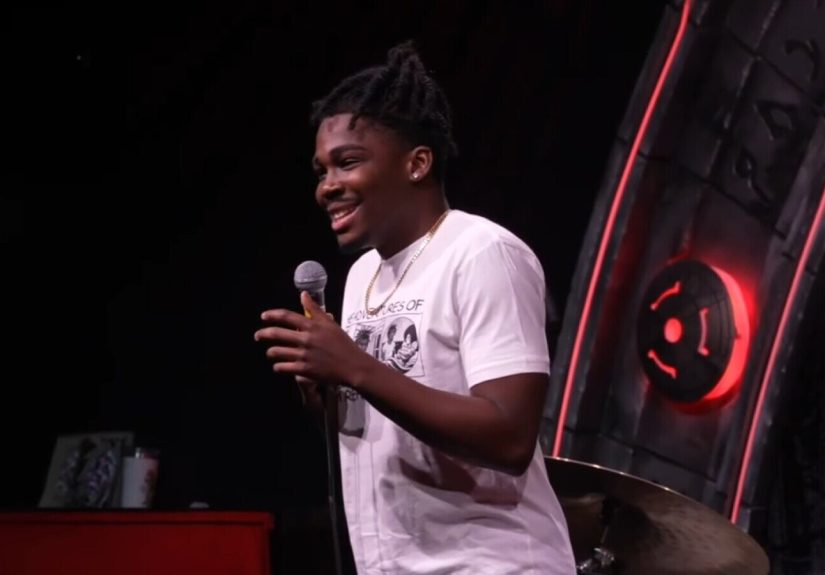
In late August 2025, entertainment chatter suggested that “Saturday Night Live” (SNL) was eyeing a comedian who’d
become a recognizable face (and voice) on “Kill Tony,” the live stand-up podcast juggernaut. The name at the
center of the buzz: Kam Patterson, an Austin-based comic who broke out through rapid-fire sets and crowdwork on
“Kill Tony.” Not long after the rumor, SNL’s Season 51 cast announcement made it official: Patterson was
joining the show as a featured player.
So what started as “reportedly considering” turned into “actually did it.” And that’s where this story gets fun:
it’s not just about one comedian getting a dream job. It’s about how comedy pipelines have changed, why SNL is
looking outside the traditional sketch-and-improv farm system, and what happens when a podcast-built voice
steps onto the most famous live TV comedy stage in America.
The report that kicked off the chatter
The initial reporting framed the situation as SNL considering a “poach” from “Kill Tony”a word that makes comedy
sound like corporate recruiting, which is both hilarious and, unfortunately, accurate. The idea was simple:
SNL, coming off its milestone 50th season and heading into a reshuffled Season 51 roster, was scanning for new
energy. Meanwhile, “Kill Tony” had become a public talent showcase where comedians proveweekly, live, and
under pressurewhether they can land jokes quickly and handle the heat.
In other words: if you’re trying to spot who can perform live, adapt fast, and hold a room, “Kill Tony” is basically
a stress test with microphones.
Who is Kam Patterson?
Kam Patterson is a stand-up comedian who gained wider attention through recurring appearances on “Kill Tony,”
where comics do short sets and then chop it up with the hosts and guests. Patterson’s stylehigh-energy,
quick pivots, confident deliverytranslates well in that environment because the format rewards immediacy:
punch fast, connect faster, and don’t blink when the spotlight hits.
By the time the rumor circulated in late August 2025, Patterson had already become one of the more visible
“Kill Tony” regulars, performing in high-profile live settings and showing up in the broader comedy ecosystem
that orbits Austin’s booming stand-up scene.
Then came the confirmation: SNL announced Patterson as one of five new featured players for Season 51an
unusually large intake that signaled the show was serious about refreshing the ensemble.
What “Kill Tony” is, and why it’s become a talent pipeline
“Kill Tony,” created and hosted by comedian Tony Hinchcliffe and produced/co-hosted by Brian Redban, has
built its brand on a deceptively simple concept: aspiring comics sign up, names get pulled, and performers get
a very short window to make an impressionfollowed by feedback, questions, and often chaotic banter.
It’s part open mic, part roast, part audition, and part “well, you’re definitely awake now.”
The show’s popularity has exploded beyond the comedy-club world, driven by weekly episodes, viral clips, and
the built-in drama of live performance. It also expanded into bigger-stage productions, including Netflix
specials tied to the “Kill Tony” brandfurther proof that this isn’t a niche hang anymore. It’s a mainstream
comedy platform that can elevate comics quickly.
That matters because for decades, SNL’s most obvious hiring lanes were:
stand-up (classic route), improv/sketch theaters (Second City, UCB, Groundlings), and
TV/digital sketch teams. Now add a modern lane:
podcast-and-clip breakout talentcomics with a following, a point of view, and proof they can perform live in front
of a real audience.
Why SNL would look to “Kill Tony” now
SNL has always evolved with comedy culture, even when it pretends it’s above comedy culture. Heading into
Season 51, the show faced multiple cast departures and a rare chance to reshape the ensemble after the big
50th-season moment. When that happens, producers don’t just replace rolesthey try to rebalance the entire
comedic “mix” on the show: stand-ups, character players, impression machines, writers who can perform, and
the occasional wildcard who becomes a breakout.
From a talent-strategy perspective, “Kill Tony” offers something SNL can’t easily simulate in-house:
a massive public audition funnel where comics are tested in real time. You’re not watching a polished tape; you’re
watching someone respond to a crowd, a timer, and a paneloften with zero room to reset.
There’s also the audience equation. “Kill Tony” fans are intensely online, clip-driven, and loyalexactly the kind
of viewer SNL wants to keep pulling back into live Saturday nights (and into streaming the next morning).
Hiring a recognizable podcast regular isn’t just a creative move; it’s a cultural bridge.
The fit question: podcast swagger vs. sketch discipline
Here’s the honest part: succeeding on “Kill Tony” doesn’t automatically mean you’ll thrive on SNL.
These are different sports. One is closer to stand-up boxing. The other is a weekly comedy decathlon where
you sprint, write, rehearse, change costumes, hit marks, and do it all live while a cue card flaps in your face.
What translates well
- Instant presence: Podcast regulars learn to “arrive” quickly. On SNL, that’s goldsketches don’t wait for you to warm up.
- Punchline instincts: Short-form sets train you to find the joke fast, which helps in sketches that need tight beats.
- Audience awareness: Live comedy reps build an internal rhythm. SNL is live-wire TV; being comfortable with real-time reaction is a huge advantage.
- A distinct voice: In an ensemble, the fastest way to stand out is to sound like no one else on the cast.
What can be tricky
- Collaboration intensity: SNL is famously writer-room heavy. Even strong stand-ups have to adapt to a team-driven process.
- Network standards and tone: Podcast comedy often thrives on looseness. Broadcast sketch comedy demands sharper boundaries and structure.
- Character work: Some stand-ups find their footing through “Weekend Update” or desk pieces before they fully click in broader sketches.
- Time pressure: SNL’s weekly schedule is relentless. The energy that feels effortless in a club can get taxed quickly in Studio 8H.
The upside is that SNL has a history of integrating stand-ups in different wayssometimes as sketch anchors,
sometimes as Update personalities, and sometimes as slow-burn players who find the right recurring lane.
The key isn’t forcing a performer into the “classic SNL mold.” It’s building sketches that use what they already
do well.
From rumor to reality: SNL Season 51 makes the move
In early September 2025, SNL confirmed a sizable Season 51 cast update and announced
five new featured players, including Kam Patterson. The season premiere was set for October 4, 2025.
The announcement wasn’t subtle: SNL wasn’t adding “a new person.” It was refreshing a chunk of the roster at once.
Patterson joined a group of newcomers with different comedy backgroundsstand-up, digital, sketch writing,
and viral performancesuggesting the show wanted variety in both style and audience reach. That’s a telling
detail: the “poaching” narrative makes sense only if you assume SNL is competing for talent in a landscape
where comedians can build careers without ever touching network TV.
And Patterson wasn’t the only example of that shift. The broader Season 51 mix reflected modern comedy
career paths: a blend of traditional pipelines and newer internet-native ones. SNL’s message was clear:
if you can make people laugh now, on the platforms where comedy lives, SNL wants to be part of your next step.
What this says about comedy in 2026
The bigger story here is less “SNL steals from podcasts” and more “comedy is finally admitting where comedy
is happening.” For years, podcasts were treated like side quests. Now they’re star factories. They build fanbases,
shape comedic voices, and generate the kind of public proof that talent scouts love.
Meanwhile, SNL is still a massive career accelerantone of the few places where a new face can go from
“who?” to “oh, that person” in a single weekend. It remains a unique platform for mainstream visibility, even as
comedy becomes more fragmented.
So when SNL recruits from “Kill Tony,” it’s not just chasing heat. It’s acknowledging a modern truth:
the path to Studio 8H doesn’t have to start in a sketch theater anymore. Sometimes it starts with a microphone,
a minute, and a room full of people deciding whether you just killedor got killed.
What fans should watch for next
- Early-screen-time strategy: Will Patterson show up first in “Weekend Update” style bits, supporting roles, or character-driven sketches?
- Sketch writing built around his rhythm: The best cast integrations happen when the show writes to a performer’s strengths, not against them.
- Audience crossover: Do “Kill Tony” fans follow him to SNL, and do SNL viewers discover “Kill Tony” through him? That cross-pollination is the real business win.
- Longevity signals: Featured player years can be unpredictable. The question isn’t “Can he be funny?” It’s “Can the show use him consistently?”
Conclusion
The idea of SNL “poaching” a comedian from “Kill Tony” sounded like a spicy rumoruntil it wasn’t.
With Kam Patterson’s Season 51 casting, SNL validated a modern comedy pipeline that runs through podcasts,
clips, and live-audience proving grounds. Whether you see it as smart scouting, cultural catch-up, or simply
the comedy ecosystem doing what it always does (absorbing whatever’s working), the move says one thing loud
and clear: the next generation of SNL talent might be auditioning in places that don’t look like auditions at all.
Extra: Real-World “Experiences” That Make This Story Click (About )
One reason this “SNL meets Kill Tony” moment hits so hard is because it mirrors how people actually experience
comedy nowmessy, personal, and heavily shaped by discovery. A lot of fans don’t “follow comedians” the way
they follow sports teams; they fall into them. Someone texts a clip. An algorithm drops a one-minute set into
your feed. Suddenly you’re watching an entire live podcast episode at 1:00 a.m. while telling yourself, “Just one
more.”
For many viewers, “Kill Tony” is an experience before it’s a show: the tension of the bucket pull, the
secondhand nerves when a new comic walks out, the shock when a performer nails it, and the oddly comforting
truth that even talented people sometimes bomb. It’s comedy with consequencesmostly emotionaland it
creates a strong connection between the audience and the performers who survive that pressure repeatedly.
By the time someone becomes a “regular,” fans feel like they watched the climb in real time.
On the comedian side, the experience is even more intense. A minute of stand-up sounds short until you’re the
one holding the mic and realizing your entire set is basically a single breath. Comics who do well in that format
develop a special kind of stage resilience: you learn to start strong, adapt instantly, and keep your composure
when the room shifts. That resilience is part of what makes the jump to SNL feel plausible. Live TV is different,
but it’s the same core challenge: you don’t get infinite takes on the thing that counts.
Then there’s the viewer experience of SNL itselfespecially during cast shakeups. Longtime fans tend to react
in predictable phases: “Who are these people?” followed by “Okay, that one’s funny,” followed by “Wait, why
aren’t they using my favorite new person?” It’s a relationship with a show that’s always changing, which means
new cast members aren’t just hired; they’re introduced into a living tradition. For a newcomer like Patterson,
that experience can be an advantage: he arrives with an audience that already recognizes him, but he also has
to win over viewers who don’t care how big your podcast clips are if you can’t land jokes in sketches.
If you’ve ever watched a performer move from clubs to bigger rooms, from local buzz to national attention, you
know the emotional whiplash is real. Fans feel proud (“I knew them before it was cool”), skeptical (“Will the big
machine change them?”), and protective (“Please don’t waste them”). That emotional cocktail is exactly why this
story matters. It’s not just a casting noteit’s a modern comedy coming-of-age arc playing out in public, where
the audience feels like they had a front-row seat from the very first minute.





 Close
Close