
Table of Contents >> Show >> Hide
- Why October Works So Well for Tulips and Daffodils
- What “Plant in October” Means Across the U.S.
- The Gardener-Approved “Should I Plant This Weekend?” Checklist
- How to Plant Tulip and Daffodil Bulbs (So They Actually Bloom)
- Tulips vs. Daffodils: Same Planting Season, Different Personalities
- October Mistakes Gardeners Learn Once (and Then Never Forget)
- Specific Examples: What October Planting Looks Like in Real Life
- Can You Plant Tulips and Daffodils in October in Containers?
- Gardeners’ October Experiences (The Stuff You Only Learn by Doing)
- So… Should You Plant Tulip and Daffodil Bulbs in October?
October is that magical month when the air smells like cinnamon, your neighbors suddenly remember rakes exist, and your garden quietly whispers, “Hey… about those spring flowers you want.” If you’ve been staring at a bag of tulip and daffodil bulbs like it’s a pop quiz, here’s the good news: October is often an excellent time to plant in much of the United States.
The slightly more complicated (but still friendly) truth: your calendar doesn’t decideyour soil does. Gardeners and horticulture experts tend to agree on a simple rule: plant spring-blooming bulbs after the soil cools down, but before the ground freezes solid. October just happens to be the sweet spot for a lot of regions.
Why October Works So Well for Tulips and Daffodils
Think of a bulb as a tiny lunchbox packed for a long road trip. Inside is everything the plant needs to wake up in spring, throw a flower party, and then fade back into the background like it was never here. But to pull off that performance, bulbs need two big things in fall: root time and cold time.
1) Cooler soil helps bulbs root instead of rot
Warm, late-summer soil can encourage disease and premature growth (the botanical equivalent of wearing shorts in a blizzard). By October, soil temperatures in many areas drop into a range that supports steady root development without pushing too much top growth.
2) Bulbs need a chilling period to bloom right
Tulips and daffodils are classic “spring-after-winter” flowers for a reason. Many varieties need weeks of cold to trigger strong flowering. Planting in October helps ensure they experience that long, natural cooling period while safely tucked underground.
3) You’re racing the freeze, not the clock
Most guidance boils down to: give bulbs enough time to grow roots before the ground becomes unworkable. In a lot of places, October delivers that windowespecially if you’re aiming for about 6–8 weeks before the ground typically freezes hard.
What “Plant in October” Means Across the U.S.
“October planting” isn’t one-size-fits-allbecause the U.S. isn’t one-size-climate. Gardeners usually time planting by USDA hardiness zone, first hard frost, and (best of all) soil temperature. Here’s how October typically plays out:
Colder regions (roughly zones 3–5): early fall is the main window
In colder northern areas, many gardeners start in September and wrap up in early-to-mid October, because winter arrives with fewer apologies. If you’re in a place where Halloween can include snow, you’ll want bulbs rooted before the soil locks up like a frozen lasagna.
Middle regions (roughly zones 6–7): October is prime time
For much of the Midwest, Mid-Atlantic, and similar climates, October is the “Goldilocks month”not too warm, not too frozen, and usually cool enough to discourage fungal problems and early sprouting.
Warmer regions (roughly zones 8–9+): October may be too early
In warmer climates, October soil can still be fairly warm. Many gardeners wait until November or even December for planting, and tulips often do best with pre-chilling (or buying pre-chilled bulbs) so they get the cold time they crave. Daffodils are generally more forgiving than tulips in mild winters, depending on variety.
The Gardener-Approved “Should I Plant This Weekend?” Checklist
Check #1: Soil temperature
If you want one metric that behaves like a wise gardening oracle, it’s soil temperature. Many gardeners aim to plant when the soil has cooled to below about 60°F at planting depth, often landing closer to the mid-50s. A basic soil thermometer is cheap, fast, and far more reliable than guessing based on pumpkin-spice levels in your neighborhood.
Check #2: Night temperatures are consistently cool
A common gardener rule-of-thumb: wait until nights regularly dip into the 40s–50s°F for a couple of weeks. That usually signals the soil has gotten the memo that summer is over.
Check #3: Your soil drains well
Bulbs hate wet feet. If water sits in your planting area like it’s trying to start a mini-lake, your bulbs may rot before spring. Amend heavy clay with compost, and consider raised beds or container planting if drainage is stubborn.
Check #4: Bulbs are firm and healthy
Choose bulbs that feel solidno mush, no mold, no weird soft spots. Bigger bulbs often mean more stored energy, which can mean stronger blooms (especially for tulips).
How to Plant Tulip and Daffodil Bulbs (So They Actually Bloom)
Planting bulbs is easyuntil you do it “almost right” and then wonder why spring looks underwhelming. Here’s the practical method gardeners swear by.
Depth: the “two to three times” rule
A classic guideline is planting bulbs at a depth of about 2–3 times the bulb’s height. In real-life numbers, tulips are often planted around 6–8 inches deep in many gardens, and daffodils frequently land in a similar range (sometimes a bit deeper for larger bulbs). Deeper planting also helps protect bulbs from temperature swings and hungry critters.
Spacing: give them room, but let them look like a “wow”
Tulips look best in groups, not in lonely single-file lines that resemble an awkward middle school dance. Many gardeners plant in clusters (think: 10+ bulbs together), with spacing commonly around a few inches apart depending on bulb size. Daffodils also shine planted in drifts, and they’re especially good for naturalizing.
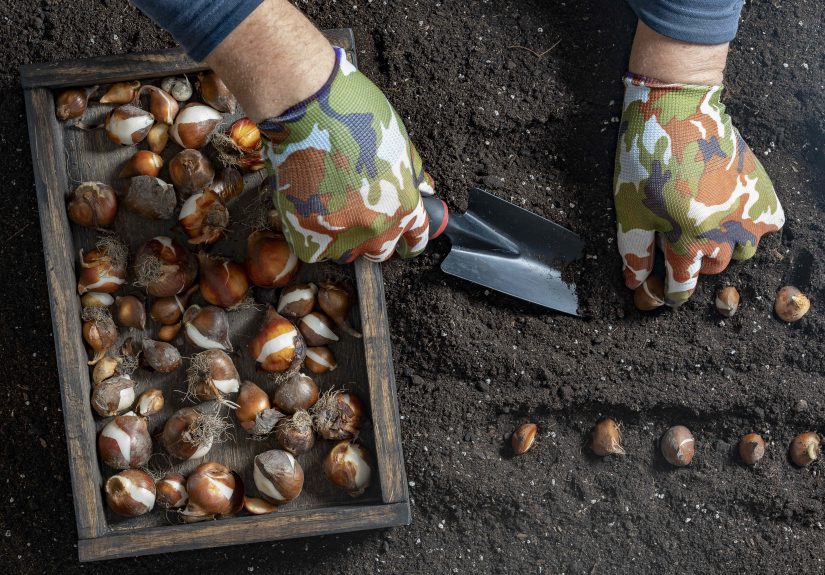
Direction: pointy end up, root plate down
Yes, this matters. Planting bulbs upside down can waste energy and reduce blooming. If you truly can’t tell which end is up, planting on the side is better than planting confidently wrong.
Watering: one good drink, then let nature help
After planting, water thoroughly to settle soil and start root growth. After that, fall rain often does the job unless your weather is unusually dry.
Fertilizer: don’t overdo the “vitamins”
Many gardeners enrich soil with compost and use a bulb-friendly fertilizer approach rather than dumping high-nitrogen fertilizer into the planting hole. Excess nitrogen can encourage leafy growth at the wrong time and doesn’t magically make a bulb more “springy.”
Tulips vs. Daffodils: Same Planting Season, Different Personalities
Daffodils are the reliable friend who always shows up
Daffodils are famously dependable in many regions. They tend to return year after year, naturalize well, and are often left alone by deer and rodents because the bulbs are toxic. They’re also great for gardeners who enjoy low drama.
Tulips are the glamorous friend who might move away
Tulips are gorgeousno argument. But many modern hybrid tulips behave more like annuals in a lot of U.S. gardens, blooming big the first year and then fading in performance later. If you want repeat shows, gardeners often recommend focusing on types known for better perennial behavior (like some species tulips and certain dependable groups).
Warm-climate note: tulips often need extra help
In warmer zones with mild winters, tulips may not get enough natural chilling outdoors. Gardeners commonly use pre-chilled bulbs or chill them in a refrigerator (away from ripening fruit) for weeks before planting later in the season. Daffodils can also benefit from variety selection in warm areas, but they’re generally more forgiving than tulips.
October Mistakes Gardeners Learn Once (and Then Never Forget)
Mistake #1: Planting too early in warm soil
This is the classic “I’m excited and the weather is nice” trap. Planting when soil is still warm can increase disease risk and cause bulbs to sprout before winter. If you see green shoots in November and you didn’t mean to, congratulations: your bulbs are as confused as your group chat.
Mistake #2: Planting too shallow
Shallow bulbs are more likely to be heaved out by freeze-thaw cycles, dug up by squirrels, or stressed by temperature swings. Depth is your insurance policy.
Mistake #3: Ignoring drainage
Bulbs in soggy soil can rot over winter. If your site is heavy clay, add organic matter, plant on a slight mound, or consider raised beds.
Mistake #4: Hosting an all-you-can-eat squirrel buffet
Squirrels can be shockingly efficient at locating freshly planted bulbs. Gardeners often use simple defenses like chicken wire over the bed, planting less-tasty companion bulbs nearby, or covering disturbed soil with mulch once conditions cool further.
Specific Examples: What October Planting Looks Like in Real Life
Example 1: A zone 6 gardener (think parts of Illinois, Ohio, Pennsylvania)
October arrives, nights cool down, and the soil is finally below that “summer hangover” temperature. This gardener plants tulip bulbs in October, aiming for 6–8 inches deep, in groups near a sunny spot that dries out quickly after rain. Daffodils go in toobecause a little reliability is healthy for everyone.
Example 2: A colder zone 4 gardener (upper Midwest, northern New England)
They start earlieroften September into early Octoberbecause once the ground freezes, it’s game over. They prioritize daffodils for naturalizing and plant tulips a bit later within the window, since tulips can tolerate later planting as long as the soil is still workable.
Example 3: A warmer zone 8 gardener (parts of the South)
October is still warm. They wait until later fall, choose daffodil varieties suited to milder winters, and treat tulips as a special projectbuying pre-chilled bulbs or chilling them at home, then planting closer to late fall or early winter for better results.
Can You Plant Tulips and Daffodils in October in Containers?
Yesand containers are a smart workaround if your soil drains poorly or critters treat your yard like a snack bar. Use a pot with drainage holes, a well-draining mix, and plant bulbs at an appropriate depth (still aiming for that “2–3 times bulb height” rule).
In colder areas, protect pots from extreme freeze-thaw by placing them near a sheltered wall or in an unheated garage once winter bites. In warmer areas, containers can also help you control chilling strategies and planting timing more precisely.
Gardeners’ October Experiences (The Stuff You Only Learn by Doing)
Ask a group of gardeners whether you should plant tulip and daffodil bulbs in October, and you’ll hear a chorus of “Usually, yesif your soil’s ready,” followed by the kind of stories that sound suspiciously like cautionary folklore. October is where optimism meets reality: you’ve got a bag of bulbs, a free Saturday, and the weather is finally pleasant enough to work outside without sweating through your shirt… which is exactly why it’s easy to rush.
One of the most common October lessons is that air temperature lies. A sunny 72°F afternoon can feel like summer’s encore, but soil down at bulb depth can still be warmespecially near driveways, foundations, or rock borders that soak up heat. Many gardeners learn (after a year of surprise sprouting) to check nighttime temps and soil temps instead of trusting the “it feels nice out” method. The ones who don’t learn this tend to develop a deep emotional bond with mulch and row covers after the first cold snap.
Another October rite of passage: the squirrel situation. Freshly dug soil is basically a neon sign that says “Treasure Here!” Gardeners who’ve been burned once often develop a whole playbook: laying chicken wire over the bed until the ground settles, planting bulbs deeper, using a thicker mulch layer later in the season, or simply switching more of their spring color budget into daffodilswhich critters often ignore. The funny part is how quickly a person can go from “Nature is beautiful” to “I will outsmart a squirrel with engineering” in a single weekend.
October also teaches the value of planting in drifts, not dots. Lots of gardeners start by spacing bulbs evenly like they’re organizing a closet. Then spring arrives and the flowers look… polite. The next year, those same gardeners usually plant in clusters and sweeping groups, because tulips and daffodils are show-offs and they perform best in ensembles. It’s the difference between a solo karaoke singer and a full choir (with less secondhand embarrassment).
Many gardeners also discover that tulips and daffodils reward different personalities. Daffodils are the “plant them and forget them” option in many regions. They come back, multiply, and quietly make you look like you know what you’re doing. Tulips, on the other hand, can be spectacular but sometimes behave like seasonal guestsespecially in warmer or wetter conditions. Experienced gardeners often treat hybrid tulips as annual highlights: plant fresh each fall for a reliable spring display, then let daffodils and other perennials handle the long-term backbone of the garden.
Finally, October teaches a surprisingly tender lesson: mark your planting spots. In fall, you think you’ll “definitely remember.” In spring, everything wakes up at once, and your shovel doesn’t care about your good intentions. Veteran bulb planters use simple markers, garden maps, or even quick phone photos to avoid accidentally digging up next year’s blooms. It’s a small habit that saves big heartbreakand prevents you from having the world’s shortest tulip season.
So… Should You Plant Tulip and Daffodil Bulbs in October?
If you live in much of the U.S., October is often the ideal time to plant tulip and daffodil bulbsas long as your soil has cooled and you’re still ahead of hard freeze conditions. Use soil temperature and local frost timing as your guide. When you hit that cool-soil window, plant with good depth, good drainage, and a little defense against critters, and you’re setting yourself up for a spring display that makes your yard look like it hired a designer.
And if October isn’t right for your region? That’s not failureit’s gardening. Adjust to your climate, plant later if needed, consider pre-chilling in warm areas, and remember: bulbs are patient. (Unlike gardeners, who would like results immediately, thank you.)





 Close
Close