
Table of Contents >> Show >> Hide
- Why Colin Jost Leaving the Desk Felt Like a Big Deal
- The Pete Hegseth Impression Worked Because It Was Almost Too Believable
- Cold Opens Are the Pressure Cooker of SNL
- Weekend Update Prepared Jost for This More Than It Seems
- The Michael Che Factor: Jost’s Comedy Superpower Is Suffering Gracefully
- Why SNL Needs Utility Players in Unexpected Places
- How the Performance Fits Into SNL’s Long Political Tradition
- What SNL Should Do With Jost Next
- Experience Section: Watching Jost Become More Than the Update Guy
- Conclusion
For more than a decade, Colin Jost has been most closely associated with a desk, a suit, and the gleeful professional hazard known as Weekend Update. He is the guy reading punchlines with the calm of a news anchor and the facial expression of a man who has just realized Michael Che changed the cue cards again. But Saturday Night Live recently reminded viewers that Jost may have another oddly specific talent hiding in plain sight: playing polished, political, country-club chaos in a cold open.
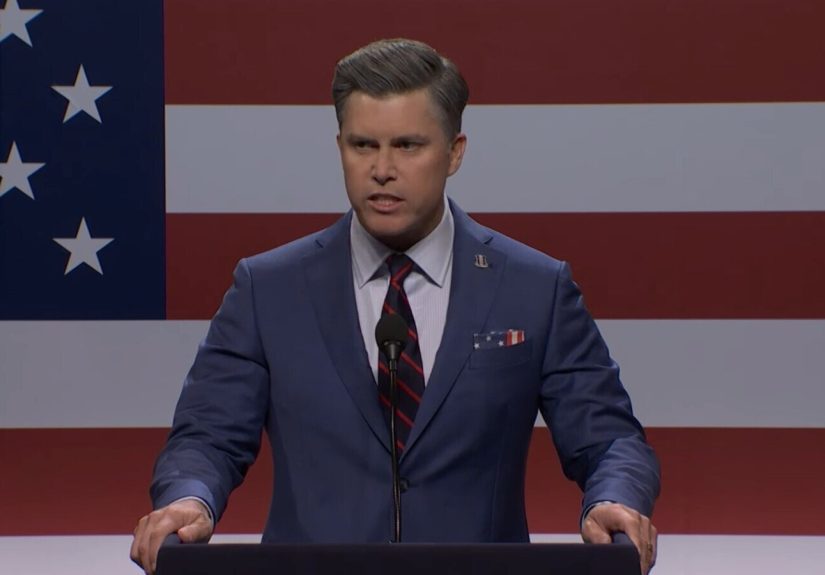
The spark came when Jost stepped outside his familiar Weekend Update zone to portray Pete Hegseth in an SNL Season 51 cold open. The sketch leaned into political satire, cable-news energy, military-pageantry parody, and the kind of smugly confident public figure that SNL loves to puncture with a tiny comedy needle. It was not the kind of role viewers typically expect from Jost, who usually appears as himself, seated beside Che, delivering topical jokes with a mixture of precision and visible dread.
That surprise is what made the moment work. Jost did not need to transform into a wild character from another planet. He only had to tilt his existing screen persona a few degrees toward arrogance, overconfidence, and institutional absurdity. The result was a performance that felt both unexpected and strangely logical. Apparently, SNL found a second use for Colin Jost: when the show needs someone to play a clean-cut man explaining something outrageous with total seriousness, he may be the perfect weapon.
Why Colin Jost Leaving the Desk Felt Like a Big Deal
Colin Jost has been part of Saturday Night Live since 2005, first as a writer and later as a central face of Weekend Update. Since 2014, he has co-anchored the segment, building a long-running chemistry with Michael Che that depends on contrast. Jost often plays the polished straight man; Che plays the relaxed instigator who seems thrilled to watch his co-anchor suffer in real time. Together, they have turned the news-desk format into a recurring social experiment: How uncomfortable can one comedian make another before the audience starts laughing out of concern?
Because of that identity, Jost’s rare sketch appearances carry extra weight. When a cast member who is already known for characters plays another character, the audience accepts it automatically. When Jost does it, the audience notices the shift. He is not just entering a scene; he is leaving the safety of a highly successful lane. That gives the cold open a built-in jolt of novelty.
On SNL, novelty matters. The show has survived for decades partly because it can reframe familiar performers. A writer becomes a performer. A cast member becomes a political figure. A host becomes a recurring character. A Weekend Update anchor suddenly becomes a guy in a cold open delivering lines with the smug certainty of someone who owns too many quarter-zips. That kind of repositioning keeps the show’s live energy alive.
The Pete Hegseth Impression Worked Because It Was Almost Too Believable
Jost’s take on Pete Hegseth did not rely on an oversized wig, a cartoon voice, or a full-body comedic explosion. Instead, the performance found humor in posture, rhythm, and attitude. He captured a type: the media-trained alpha-commentator who speaks as if every sentence has been approved by a gym, a cable-news producer, and a yacht club membership committee.
That is where Jost’s natural comedic tools helped him. His face already communicates tension beautifully. On Weekend Update, that tension often appears when he reads a joke he clearly did not write and absolutely does not want attached to his permanent record. In the cold open, the same controlled discomfort became character work. He looked like a man both performing authority and trying to survive the absurdity of the script around him.
The role also benefited from restraint. Some political impressions on SNL are funniest when they go huge. James Austin Johnson’s Donald Trump, for example, works because it captures the wandering verbal rhythm, the sudden topic shifts, and the surreal confidence of a public figure who speaks like a search engine having a dream. Jost’s Hegseth worked differently. It was less fireworks, more perfectly pressed blazer with a suspicious amount of menace.
Cold Opens Are the Pressure Cooker of SNL
The cold open is one of the most difficult spots on Saturday Night Live. It has to grab the audience before the monologue, summarize the week’s conversation, land jokes fast, and end with the iconic “Live from New York” launch. There is no gentle runway. The sketch begins, the country’s latest fever dream enters the room, and the performers have a few minutes to prove that the show has something to say.
That format is especially demanding when the cold open tackles politics. Political sketches can age overnight. They can feel too obvious, too soft, too crowded, or too dependent on viewers already knowing the news. A successful one needs a clear comic target and a strong performance center. Jost’s appearance helped the Season 51 opener because it gave the sketch a fresh focal point before James Austin Johnson’s Trump entered to widen the satire.
In other words, Jost was not just a random cameo. He was a structural choice. His presence told the audience, “Yes, we know this is not where you usually see him.” That self-awareness created an extra laugh before the scene even fully unfolded. Sometimes the casting is the joke, and sometimes the casting makes the joke sharper.
Weekend Update Prepared Jost for This More Than It Seems
At first glance, Weekend Update and character sketch acting look like different jobs. One is seated, direct-to-camera joke delivery. The other is embodied performance inside a scene. But Jost’s years behind the desk gave him several skills that translate surprisingly well to a cold open.
Timing
Jost knows how to wait. That sounds simple, but live comedy depends on it. He understands when to push a punchline, when to let the audience catch up, and when to let silence do some of the work. A cold open packed with topical references needs that control, or it turns into a traffic jam of jokes wearing fake eyebrows.
Deadpan Confidence
Jost’s comedy often works because he says ridiculous things with a news-anchor calm. That is also the engine of many political impressions. Public figures frequently become funniest on SNL when their absurd statements are delivered with total institutional confidence. Jost can do that. He has been practicing for years, usually while Che sits beside him looking like he just started a small fire.
Self-Awareness
The best version of Jost is not afraid to be the butt of the joke. He knows the audience sees him as polished, privileged, and slightly too neat. Rather than run from that image, he often lets the show weaponize it. That is why his cold-open appearance landed: it used the audience’s existing understanding of Colin Jost and bent it into a character.
The Michael Che Factor: Jost’s Comedy Superpower Is Suffering Gracefully
No discussion of Jost’s range is complete without Michael Che, because Che has spent years turning Jost’s discomfort into event television. Their joke swaps have become a modern SNL ritual. The premise is simple and cruel: each anchor reads jokes written by the other without seeing them first. The execution is where the magic happens. Jost often appears to experience all five stages of grief before reaching the end of a sentence.
That willingness to be embarrassed is a genuine comedic asset. Many performers want to look cool. Jost is often funniest when he looks trapped by his own professionalism. Whether he is reading a Che-written joke or appearing in a cold open as a political figure, the same quality appears: he commits to the bit even when the bit seems personally designed to ruin his afternoon.
The Season 51 finale’s hair-related joke-swap chaos reinforced that idea. Viewers saw Jost nearly go along with an outrageous on-air stunt involving his hair, then later appear in a convincing bald-cap gag during the goodnights. The details were silly, but the takeaway was serious for comedy fans: Jost will commit. He may look terrified while committing, but he commits.
Why SNL Needs Utility Players in Unexpected Places
Saturday Night Live has always depended on performers who can solve odd problems. Sometimes the show needs a celebrity impersonation. Sometimes it needs a game-show host. Sometimes it needs a fake commercial dad, a shouting senator, a background weirdo, or a man who can say the most ridiculous sentence of the night while looking like he belongs at a private-school fundraiser.
Jost may never become the show’s most elastic sketch performer, and he does not need to. His value lies in specificity. When SNL finds the right lane for him outside Weekend Update, the contrast becomes funny. The audience knows him as the desk guy, so seeing him inserted into a political cold open creates a little comedic static. He brings the authority of the anchor chair with him, then lets the sketch corrupt it.
That is a useful tool. In a season where SNL has juggled cast changes, political overload, late-night industry anxiety, and the pressure of following its massive 50th-anniversary celebration, even small casting surprises can help an episode feel alive. Jost as Hegseth gave viewers something to talk about beyond whether the cold open itself was perfect. It gave the show a new lever to pull.
How the Performance Fits Into SNL’s Long Political Tradition
SNL political satire has always worked best when the impression is not merely accurate, but legible. Chevy Chase did not look exactly like Gerald Ford, but he turned Ford into a physical comedy idea. Tina Fey’s Sarah Palin became iconic because it crystallized a public image at the exact moment the culture was ready to laugh at it. James Austin Johnson’s Trump works because it captures not just a voice, but a thought pattern.
Jost’s Hegseth belongs to a smaller category: the impression that succeeds because the casting feels mischievous. The joke is not only “Here is Pete Hegseth.” The joke is also “Why does Colin Jost make sense as Pete Hegseth?” The answer lies in surface similarity, controlled smugness, and the kind of visual polish that makes a satirical character instantly readable.
That does not mean every viewer loved the cold open. Political sketches divide audiences by nature. Some want sharper satire. Some want less politics. Some just want a weird sketch about a haunted toaster. But even mixed reactions can be valuable for SNL. A live show thrives on conversation, and Jost’s appearance gave the premiere a memorable talking point.
What SNL Should Do With Jost Next
The lesson is not that Colin Jost should suddenly appear in every sketch wearing a different tie and pretending to be a different government official. Comedy becomes stale when surprise turns into policy. But SNL should keep this option in its back pocket.
Jost works best outside Weekend Update when three conditions are met. First, the role should align with his natural screen presence: polished, verbal, slightly tense, and faintly intimidating in a debate-club way. Second, the sketch should acknowledge the oddness of seeing him there without stopping everything to explain the joke. Third, the role should let him play seriousness against absurdity. That is his sweet spot.
Imagine Jost as a crisis PR executive who keeps making the crisis worse. Or a preppy villain in a fake true-crime documentary. Or a corporate spokesperson explaining a product recall with horrifying cheer. Or, yes, another political figure who seems built from expensive haircuts and questionable confidence. These are not roles that require Jost to become someone else completely. They require him to weaponize what the audience already thinks he is.
Experience Section: Watching Jost Become More Than the Update Guy
There is a particular pleasure in watching a performer escape the box audiences have built for him. With Colin Jost, that box has always been unusually stylish: a Weekend Update desk, a dark suit, crisp cue cards, and the constant threat of Michael Che ambushing him with a joke that should come with legal review. For years, that has been Jost’s home base, and he is very good at it. The rhythm is familiar. Che tosses a grenade, Jost tries to smile like he is not holding it, and the audience waits for the explosion.
But when Jost appears in a sketch, especially a cold open, the viewing experience changes. You suddenly become aware of how much of his comedy depends on tension. He is not a rubber-faced chaos machine like some classic SNL performers. He is not trying to dominate the scene with volume. Instead, he brings a kind of controlled panic under glass. That is useful because modern satire often needs someone who can embody absurd confidence without winking too hard.
Watching him as Pete Hegseth felt like seeing SNL discover a new setting on a familiar appliance. You thought the toaster only made toast, and then suddenly it also makes waffles. Is it the best waffle machine in America? Maybe not. But is it weirdly good at one very specific kind of waffle? Absolutely.
The performance also reveals something about why audiences continue to care about live sketch comedy. In a polished streaming world, surprise has become rare. Most shows arrive edited, packaged, and algorithmically buffed until every rough edge disappears. SNL still has the ability to make viewers say, “Wait, is that Colin Jost?” That tiny moment of recognition is powerful. It turns passive watching into active noticing.
There is also a practical lesson here for comedy writing. A performer’s perceived limitation can become the joke’s greatest strength. Jost is not known as a wild character actor, so putting him in a character role creates tension before he says anything. The writers can use that. The audience’s expectation does half the setup. The sketch only needs to pay it off.
In many ways, that is the secret of long-running comedy institutions. They survive by rearranging familiar pieces. Jost and Che at the desk? Familiar. Jost being humiliated during a joke swap? Familiar, but still effective. Jost in a cold open as a political figure? Familiar enough to recognize, different enough to feel fresh. That balance is not easy. It is the difference between a show repeating itself and a show remixing itself.
So yes, SNL found something Colin Jost is good at other than Weekend Update. More precisely, it found a way to turn his Weekend Update persona into sketch fuel. He can play polished authority gone sideways. He can carry a political cold-open beat. He can stand outside the desk and still bring the same nervous elegance that makes him funny behind it. And if all else fails, he can always return to the anchor chair, where Michael Che is probably waiting with another joke that will make him question every career choice since 2005.
Conclusion
Colin Jost may always be best known as one half of Weekend Update, and that is hardly a bad legacy. The segment has given him one of the most recognizable roles in modern late-night comedy. But his Season 51 cold-open appearance showed that SNL can use him in more ways than expected. As Pete Hegseth, Jost turned his polished image into a satirical tool, proving that sometimes the funniest casting choice is the one that looks obvious only after it happens.
The performance worked because it did not fight Jost’s persona. It refined it, exaggerated it, and placed it inside a sharper sketch framework. That is smart comedy. It is also a reminder that Saturday Night Live remains at its best when it lets familiar performers surprise us. Jost does not need to become the next great sketch chameleon. He only needs the right target, the right writing, and the right amount of awkwardly confident energy. Apparently, that is more than enough.






 Close
Close