
Table of Contents >> Show >> Hide
- When Your Bench Supply Tops Out at 48 Volts
- What Hackaday’s 330 kV PC PSU Build Is (and Isn’t)
- Why PC Power Supplies Make Appealing Hack Platforms
- From 12 Volts to Hundreds of Kilovolts: The High-Voltage Chain
- The Terrifying Physics of 330 kV
- Why This Is Absolutely Not a Beginner Project
- Learning from the Project Without Rebuilding It
- Safer Ways to Explore High Voltage
- Conclusion: Respect the Sparks, Learn from Afar
- Hands-On Experiences & Lessons from the High-Voltage Trenches
When Your Bench Supply Tops Out at 48 Volts
If you’ve ever shopped for a bench power supply, you’ve probably noticed a hard ceiling:
30 volts is common, 60 volts is already fancy, and anything above that starts to look
suspiciously like lab-grade or industrial hardware with a price tag to match. A
330 kilovolt power supply? That’s not just off the shelf, that’s off in “are you sure
your life insurance is paid up?” territory.
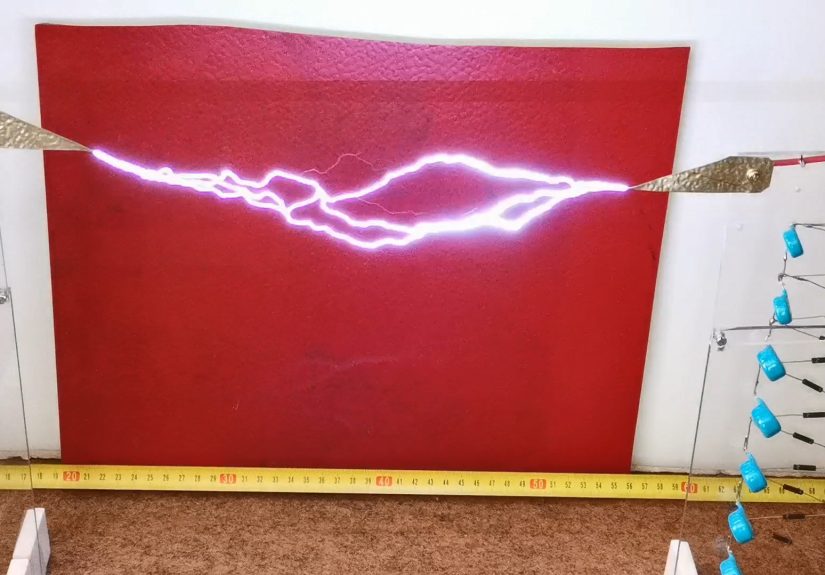
That’s exactly why the Hackaday feature “Sparks Fly: Building A 330 KV Supply From A PC PSU”
grabbed so much attention. A maker took a humble PC power supply unit (PSU), some
high-voltage hardware, and created a setup that can toss out arcs like a mad science
movie prop. It’s an impressive feat of engineering, a great case study in power
conversion and a fantastic reminder of how dangerous high voltage really is.
In this article, we’ll unpack what’s going on conceptually in a build like that, why PC
PSUs are a favorite playground for hackers, what it actually means to work with hundreds
of kilovolts, and why most people should admire this project from a very safe distance.
We’ll also look at safer, more realistic options if you’re curious about high voltage but
would prefer not to become a cautionary tale.
What Hackaday’s 330 kV PC PSU Build Is (and Isn’t)
Let’s start with a key point: this kind of project is not a typical “weekend build”
you toss together on a cluttered desk. High-voltage experiments in the hundreds of kilovolts
live in a very small niche: research labs, serious hobbyists with proper equipment,
and people who think Tesla coils are great party decorations.
The Hackaday write-up highlights a build that uses a modified PC PSU as the low-voltage
workhorse. It’s there to provide a stable DC source, typically on the 12 V rail, with
decent current capacity and built-in protections. That low-voltage DC then feeds a
high-frequency step-up stage (often involving a flyback transformer or similar
high-voltage transformer), followed by rectification and possibly a voltage multiplier
ladder to stack that voltage up into the hundreds of kilovolts.
The result: long, snappy arcs, loud crackling, and a demonstration that looks spectacular
on video. What it is not is a general-purpose, safe, plug-and-play high-voltage
bench supply. It’s a highly specialized setup that demands respect, engineering understanding,
and strict safety protocols.
Why PC Power Supplies Make Appealing Hack Platforms
If you hang out in electronics communities long enough, you’ll see the PC PSU show up
in all kinds of DIY builds. That’s not an accident. Modern ATX power supplies offer:
- Multiple voltage rails (commonly 3.3 V, 5 V, and 12 V) with substantial current capacity.
- Active protections like over-current, over-voltage, and short-circuit protection built in.
- Decent regulation that keeps the 12 V rail within a few percent of nominal under normal load.
- Wide availability and low cost everyone has an old PSU lying around eventually.
Multiple 12 V “rails” in an ATX unit are often just current-limited branches from the same
internal 12 V bus, added to satisfy safety standards that cap how much power is available
on any single accessible output. That’s why you’ll see per-rail limits around 20 A in
many designs it keeps the volt-amps within safety rules, even if the total supply can
deliver much more.
For a high-voltage experimenter, a 12 V rail that can deliver tens of amps is gold. It’s
the perfect front-end to drive a switching stage, a flyback transformer, or an inverter
that does the heavy lifting of stepping voltage way up. Instead of designing yet another
low-voltage supply from scratch, you repurpose a robust, mass-produced PSU and focus your
effort on the high-voltage side which is where the fun (and danger) really lives.
From 12 Volts to Hundreds of Kilovolts: The High-Voltage Chain
So how does a line like “330 kV from a PC PSU” make sense electrically? At a high level,
builds like this usually follow a chain of stages. Think of it as an increasingly
terrifying staircase:
-
Low-voltage DC source.
The PC PSU provides a relatively clean 12 V DC rail with ample current. It must be
loaded correctly and sometimes “tickled” to keep it on, depending on the PSU model. -
High-frequency switching stage.
Here, a MOSFET- or IGBT-based driver chops that DC into a high-frequency waveform
(tens of kilohertz or more). This is where serious layout and component selection matter:
switching losses, gate drive quality, and proper isolation all come into play. -
Step-up transformer or flyback transformer.
A specialized transformer with many more turns on the secondary than the primary
boosts the voltage. Flyback transformers are a favorite because they can provide
high-voltage, isolated output in a relatively compact package. -
Rectification and multiplication.
Diodes and capacitors are arranged in voltage multiplier networks (like Cockcroft–Walton
ladders) to stack the voltage. Even if the transformer only outputs tens of kilovolts,
the multiplier can climb that output toward the hundreds-of-kilovolts range. -
Output structure and load.
At this point you’re dealing with electric fields strong enough to ionize air, cause
corona discharge, and arc across surprising distances. The physical layout where wires
are routed, how sharp edges are minimized, how insulation and spacing are handled
becomes as important as the schematic.
Notice what’s missing here: numbers. Serious high-voltage engineering is all about
details insulation class, creepage and clearance distances, conductor geometry, field
gradients, and more. Those are not things you guess at on a napkin sketch. That’s why
responsible builders and professional designers lean heavily on standards, data sheets,
simulation, and test equipment before they ever energize a high-voltage stage.
The Terrifying Physics of 330 kV
The phrase “330 kV” sounds dramatic, but it can be hard to feel how extreme that really is.
A useful mental image: at very roughly 1 kV per millimeter in air (the classic rule of thumb),
hundreds of kilovolts translate to arc lengths measured in decimeters to feet under the
right conditions. In practice, humidity, pressure, sharp edges, and even dust all affect
when the air breaks down, which is precisely why real designs rely on tested distances
and standards rather than seat-of-the-pants guesses.
At these voltages:
- Arcs can jump from conductors you thought were safely distant.
- Insulation can fail internally due to partial discharge and tracking over time.
- Corona discharge can eat away at materials and generate ozone and other byproducts.
- Surfaces can become energized even without direct contact, due to capacitive coupling.
Industrial and utility systems that operate in the hundreds of kilovolts worry deeply about
creepage, clearance, and pollution degree the ways real-world surfaces, dust, and moisture
change how electricity behaves. Clearances in air are carefully specified, and hardware is
shaped to avoid sharp points and edges that concentrate electric fields and encourage flashover.
In a home workshop, where the “enclosure” might be a 3D-printed box or a wooden board, it’s all
too easy to underestimate just how aggressive high voltage can be. At 330 kV, the system doesn’t
care whether you meant for that bolt to be energized or not it only cares about fields, distances,
and the laws of physics.
Why This Is Absolutely Not a Beginner Project
It’s tempting to see a PC PSU and think “low-voltage, low-risk,” but as soon as you attach it to
a high-voltage stack, you are in a very different world. There are several overlapping hazards:
-
Lethal shock risk. Even modest high-voltage supplies in the tens of kilovolts can deliver
energy sufficient to stop a heart or cause severe burns. At hundreds of kilovolts, you’re firmly
in the realm where a minor mistake can be fatal. -
Stored energy in capacitors. Multiplier ladders typically use large-value capacitors.
Those can hold charge long after power is removed. Discharging them safely requires proper
bleeder networks and procedures, not just “wait a minute and hope.” -
Fire and explosion risk. Arcs can ignite flammable materials; overloaded components
can vent or explode; poor wiring can overheat and start a fire. -
Line-powered hazards. The PC PSU itself connects to mains, which is already dangerous.
Now you’re stacking mains risks and high-voltage DC risks on top of each other. -
Measurement pitfalls. Standard multimeters, probes, and leads are not rated for these
voltages. Using the wrong gear can destroy equipment and injure the person holding it.
Professional engineers and trained technicians mitigate these risks with isolation transformers,
interlocks, rated enclosures, lockout/tagout procedures, and strict rules about where hands and
tools are allowed to go when the system is energized. If your engineering “process” is a hoodie,
a cluttered desk, and a dimly lit room, you’re not in that category.
Learning from the Project Without Rebuilding It
The good news: you don’t need to personally build a 330 kV supply to learn from the Hackaday
project. You can treat it as a case study in several key areas:
-
System architecture. How the builder partitioned the design into low-voltage,
medium-voltage, and ultra-high-voltage sections, and how those sections interact. -
Use of commodity hardware. Repurposing a PC PSU shows how off-the-shelf parts
can be integrated into unusual applications, as long as you understand their limits. -
Field management. The physical arrangement of components, routing of conductors,
and choice of insulation give clues about how to manage electric fields in constrained spaces. -
Failure modes. Comments and follow-up discussion around such projects often
highlight things that went wrong arcing, breakdown, or parts that didn’t survive testing.
Reading, simulating, and analyzing are vastly safer than energizing a few hundred kilovolts
in your garage. Treat the build as a learning resource about what’s possible, rather than
a to-do list for this weekend.
Safer Ways to Explore High Voltage
Curious about high voltage but also attached to being alive and having eyebrows? There are
alternatives that deliver plenty of excitement at more manageable risk levels when used
responsibly:
-
Lower-voltage bench supplies. A good-quality adjustable supply in the 0–60 V range
can take you a surprisingly long way in power electronics, motor control, LED drivers,
and DC–DC converter experiments. -
Commercial high-voltage modules. Encapsulated DC–DC high-voltage modules rated in
the 1–10 kV range are available with documented ratings and internal protections. They’re
still dangerous, but far more manageable than a scratch-built hundreds-of-kilovolts rig. -
Neon sign or ignition transformer demos. Properly enclosed and fused, these can
create visible arcs and corona effects without reaching the extreme voltages of the Hackaday build. -
Tesla coil kits and educational demos. Many kits are expressly designed with
safety in mind (within reason), and come with guidance on safe operating distances and enclosures. -
Simulation tools. SPICE-based packages and field-simulation tools let you experiment
with transformer design, field gradients, and insulation strategies without touching real hardware.
These options let you build intuition about electric fields, insulation, and switching topologies
without jumping straight into something that could punch through air across your entire workbench.
Conclusion: Respect the Sparks, Learn from Afar
“Sparks Fly: Building A 330 KV Supply From A PC PSU | Hackaday” perfectly captures why electronics
hacking is so compelling. It combines creativity, deep technical knowledge, and a willingness to
push past the limits of what consumer gear was ever meant to do. Using a PC power supply as the
front end for a multi-hundred-kilovolt system is a clever reimagining of a commodity component.
At the same time, the project is a bright, crackling billboard that says:
high voltage is not a casual playground. A setup like this demands more than curiosity.
It requires respect for standards, careful design, and a safety mindset that assumes things will
go wrong and plans accordingly.
For most of us, the right move is to read the article, watch the arcs on video, and let that be
enough. Use the project as inspiration to dive deeper into power electronics, transformer design,
and high-voltage theory but keep your own experiments in a range where your test gear, workspace,
and experience can keep up.
In other words: enjoy the fireworks, but keep your fingers, your gear, and your workshop out of
the blast radius.
Hands-On Experiences & Lessons from the High-Voltage Trenches
To understand why projects like a 330 kV PC-PSU-powered supply deserve so much caution, it helps
to look at the kinds of experiences high-voltage experimenters actually report. Patterns emerge
very quickly, and they’re rarely the kind of “it just worked first try” stories you see in a
tidy build log.
One recurring theme is unexpected arcing. Builders discover that the real-world
arc path does not care about the neat lines in a schematic. Arcs jump around mounting holes,
across heatsinks, and over fasteners because those shapes concentrate electric fields. A smooth,
rounded conductor that seems redundant on paper turns out to be the difference between quiet
operation and a dramatic snap that carbonizes a path across a PCB.
Another common experience is dielectric fatigue. Insulation that survives a short
test run can begin to fail after repeated stress. Epoxy, 3D-printed plastics, or even common
wiring insulation can develop microscopic tracks where partial discharges slowly chew away at
material integrity. Eventually, one day, the system that “worked fine yesterday” decides today
is the day it will punch through somewhere new.
High-voltage builders also quickly become students of unintended coupling. A long,
floating conductor becomes an antenna, injecting noise into sensitive circuits. The primary side
of the transformer talks to nearby logic through parasitic capacitances. Microcontrollers reset,
USB links drop, and measurement equipment suddenly shows ghosts not because anything is wired
together directly, but because strong, fast-changing fields don’t respect your “separate boards.”
PC power supplies add their own twist. Their protection circuits are designed around typical
computer loads, not exotic high-voltage inverters. Experimenters report over-current and
over-voltage protections tripping unexpectedly, especially when the high-voltage side draws
current in pulses. That can make the PSU “hiccup” or latch off, forcing the builder to tweak
snubbers, soft-start circuits, or loading strategies just to keep the low-voltage side online.
Measurement is another eye-opener. Standard multimeters and oscilloscope probes, even if they
don’t fail catastrophically, can give misleading readings when pushed close to their limits.
Builders learn to respect the rating printed on the probe body, to use proper high-voltage
dividers, and to keep one hand firmly in their pocket when probing anything connected to a
potentially lethal node. Stories from high-voltage veterans often emphasize that the most
valuable tool on the bench is not the fanciest meter it’s the habit of asking “what happens
if this fails in the worst possible way?”
Finally, there’s the emotional arc (pun absolutely intended). Many experimenters start in awe:
the first time they see a long, jagged arc blast through the air, it feels like magic. Over
time, though, the tone shifts. After a close call, a charred workpiece, or a component failure
that could have gone much worse, they develop a quieter, more sober respect for what they’re
dealing with. The projects become more about careful control and less about “How big a spark
can I get on camera?”
That progression from excitement to respect is perhaps the most useful “experience” takeaway
from any 330 kV PC PSU build. You don’t have to recreate the hardware to learn the lesson.
Reading the stories, studying the designs, and watching how experienced builders talk about
safety will give you a healthier mindset for any power electronics work you do, at any voltage.
If the Hackaday project inspires you, let it be toward better design, better precautions, and
better understanding not just bigger sparks.





 Close
Close