
Table of Contents >> Show >> Hide
- What “High/Low Taste” Looks Like on a Real Table
- Step 1: Build the “Core Set” (Your Low That Does the Heavy Lifting)
- Step 2: Choose Materials Like You Choose Shoes
- Step 3: Add the “High” Pieces That Make Everything Look Expensive
- How to Mix Dinnerware Without Making It Look Like a Yard Sale
- Budget Moves That Still Read “Designer”
- Care Tips: Keep the Pretty Stuff Pretty (Without Babying It)
- Three High/Low Tablescapes Using the Same Core Set
- Quick Shopping Checklist (So You Don’t Regret It Later)
- Real-Life Experiences: What High/Low Dinnerware Teaches You (The 500-Word Add-On)
- Conclusion: Your Table, Your Rules (But Make It Practical)
There are two kinds of people in the world: the “I only buy neutral plates” crowd and the “I need a pasta bowl in every color of the sunset” crowd. The good news? High/low taste dinnerware lets both of you eat at the same table without starting a family group chat war.
“High/low” on the tabletop means you mix pieces that look special (the “high”) with smart, durable basics (the “low”) so your dinnerware feels curatednot chaotic, not break-the-bank precious, and definitely not “college starter set that survived three roommates and a breakup.” Done well, it’s the easiest way to make weeknight meals look intentional… even when the menu is “whatever was in the freezer.”
What “High/Low Taste” Looks Like on a Real Table
High/low isn’t about flexing. It’s about balance:
- Low: dependable everyday plates and bowls you can run through the dishwasher without whispering a prayer.
- High: a few statement piecesmaybe a dramatic salad plate, a sculptural serving platter, or linen napkins that instantly make pizza feel like “casual entertaining.”
Think of it like getting dressed: you can wear a designer coat with jeans, or a thrifted leather jacket with fancy boots. The vibe is “I have taste,” not “I have a museum.”
Step 1: Build the “Core Set” (Your Low That Does the Heavy Lifting)
Start by choosing a base set that’s simple, stackable, and easy to replace. This is the part of your collection that handles Tuesday tacos, cereal emergencies, and that one friend who always “helps” by loading the dishwasher like it’s a competitive sport.
The core pieces most people actually use
- Dinner plates: 10–11 inches (big enough for real meals, not so big they hog your cabinets).
- Salad/dessert plates: 8–9 inches (they’ll become your “I’m not that hungry” plate).
- All-purpose bowls: ideally a medium bowl that can do soup, cereal, and “this is technically a salad.”
- Pasta bowls (optional but life-changing): wide, shallow bowls that make everything look restaurant-y.
- Mugs or tumblers: whatever makes morning you feel less like a villain.
How many place settings? A practical rule: buy for the people in your home, plus 2. If you host a lot, aim for 8 settings. If you never host, aim for 4–6 and a strong delivery app relationship.
What makes a “good low” set?
- Open stock, if possible: so you can replace a plate without buying a whole new set.
- Durable finish: glossy glazes hide utensil marks better than many matte finishes.
- Comfortable shapes: a slight rim helps keep food where it belongs (on the plate, not on your lap).
- Dishwasher and microwave friendly: because we live in the modern world and you deserve peace.
Step 2: Choose Materials Like You Choose Shoes
Dinnerware materials aren’t just trivia. They affect durability, weight, and whether your plates feel “everyday cozy” or “quiet luxury.” Here’s the cheat sheet.
Porcelain
Personality: sleek, versatile, often lighter than stoneware and great for everyday or dressy tables. Porcelain is fired at high temperatures, which generally makes it dense and less porous. It’s a strong candidate for a “one set does most things” approach.
Best for: minimalists, small kitchens (lighter stacks), people who want a clean backdrop for bold food and linens.
Bone china
Personality: refined, often translucent, and surprisingly strong for how delicate it looks. Bone china is the “I brought a nice bottle of wine” of dinnerwarepolished, but not necessarily fragile if it’s well-made.
Best for: special occasions, elevated everyday if you love that airy, elegant feel, and anyone building a classic registry-style collection.
Stoneware
Personality: warm, earthy, often heavier, frequently found in cozy glazes and handmade-looking finishes. Stoneware is popular for everyday use because it feels substantial and “homey” in the best way.
Watch-outs: some finishes show utensil marks or micro-scratches more easily, especially with heavy use. (Yes, your steak knife is basically a tiny rake.)
Earthenware
Personality: rustic and affordable, but typically less durable than stoneware or porcelain. It can be more porous and prone to chipping depending on the piece and glaze.
Best for: occasional use, decorative pieces, or the “I love this handmade look but I’m gentle with my stuff” crowd.
Melamine
Personality: the patio MVP. Lightweight, hard to break, great for outdoors and kids. It’s less “heirloom” and more “pool party that won’t end in shards.”
High/low takeaway: pick one material for your core (often porcelain or stoneware), then let your “high” pieces roambone china salad plates, a stoneware serving platter, or a handful of artsy statement plates.
Step 3: Add the “High” Pieces That Make Everything Look Expensive
This is the fun part: the accessories that turn “dinner” into “tablescape.” You don’t need 40 fancy things. You need a few pieces that pull focus.
1) Statement plates (the fastest upgrade)
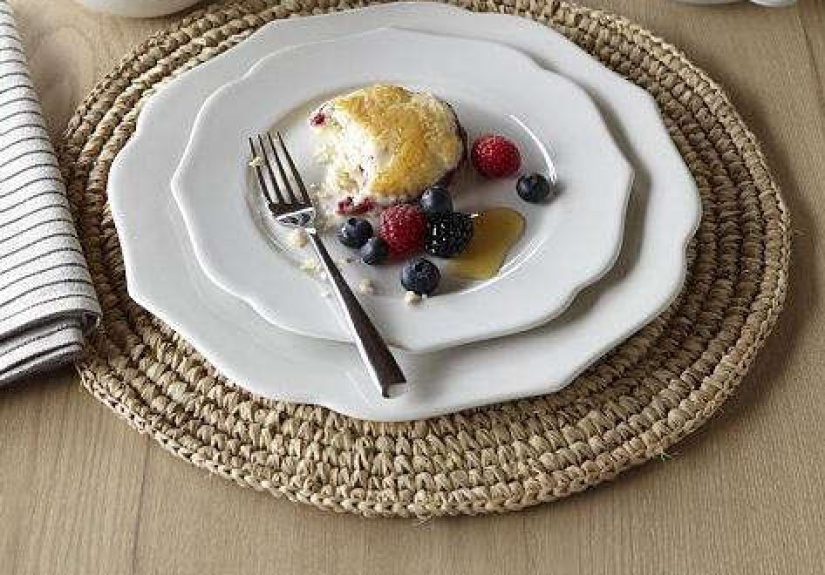
If your base set is simple (especially white or neutral), a statement salad plate is pure magic. It can be sculptural, patterned, or a little weird in an artsy way. Suddenly, even a grilled cheese looks like it’s starring in a lifestyle magazine spread.
Pro move: buy 4–6 statement salad plates, not 12. Mix them. Rotate them. Let them be the “jewelry” of your tabletop.
2) One heroic serving piece
A large platter or oversized bowl does more for your table than a whole new set. Use it for roast chicken, pasta, or even a pile of croissants. It creates that “generous host energy,” even if you bought the croissants because you were running late.
3) Linen napkins (cheap-ish luxury)
Linen napkins are the ultimate high/low hack because they instantly elevate budget plates. Slight wrinkles are not a flaw; they’re a personality trait. (And yes, you’re allowed to throw them in the wash like a normal person.)
4) Glassware or flatware with presence
Sometimes the “high” isn’t the plateit’s what surrounds it. A simple plate with beautiful flatware looks intentional. A basic tumbler becomes chic when paired with a patterned napkin and a clean white plate.
How to Mix Dinnerware Without Making It Look Like a Yard Sale
Mixing is the point. The trick is to mix with a plan, not with panic.
Rule A: Pick a “unifier”
Choose one thing that repeats across the table:
- a shared color (blue-and-white, soft neutrals, warm earth tones)
- a shared shape (all coupe-style plates, all rimmed plates)
- a shared finish (glossy, speckled, reactive glaze)
- a shared “vibe” (vintage floral + modern minimal, rustic stoneware + crisp porcelain)
Rule B: Pattern math
When in doubt, use this ratio:
- 1 bold pattern (statement plate or patterned bowl)
- 1 subtle pattern or texture (a tiny stripe, speckle, or embossed rim)
- 1 solid (your core set)
Rule C: Keep the stack logical
If you’re mixing pieces with wildly different shapes, you’ll hate your cabinets. Make sure your everyday plates nest and stack nicely. Save the sculptural “art plates” for top layers or display storage.
Budget Moves That Still Read “Designer”
High/low taste is basically permission to be clever. Here are low-cost strategies that look high-end.
Buy the basics in a timeless neutral
A simple white or soft-cream base lets you layer in color and pattern. It also makes mismatched pieces feel like a choice, not a mistake.
Shop “open stock” and build slowly
Instead of one giant matching set, build a flexible collection over time. Add a couple pieces when you see something you love. Your table ends up personal, not copy-paste.
Use “high” where it shows most
People notice the top plate first. If you’re stacking plates, make the top one the special one. If you’re serving family-style, invest in one beautiful platter. Let the supporting pieces be quietly capable.
Lean into the high/low thrill of a good dupe
Some retailers release affordable dinnerware that captures a pricier lookthink reactive glazes, modern silhouettes, and that “hand-thrown” vibe. The goal isn’t to fool anyone; it’s to get the look you love at a price that doesn’t ruin your month.
Care Tips: Keep the Pretty Stuff Pretty (Without Babying It)
Good dinnerware should be used. But it should also survive. Here’s how to protect your collectionespecially when you’re mixing finishes and materials.
Avoid thermal shock
Going from freezer-cold to blazing hot is rough on many ceramics. Let dishes warm up a bit before extreme temperature changes, especially with some stoneware and handmade-style pieces.
Stack smart
- Use felt or soft liners between delicate “high” plates if you stack them often.
- Don’t overload cabinetschips happen when stacks wobble or slide.
Watch utensil marks and matte finishes
Matte glazes can be beautiful, but they may show marks more readily. If you love the look, consider using those pieces as “tops” or for lower-contact foods (salad plates, bread plates) and keep your everyday workhorses in a more forgiving glaze.
Know what’s oven-safe (and what is not)
Not all “ceramic” is created equal. Some stoneware is oven- and microwave-friendly, but it doesn’t automatically mean stovetop safe. When in doubt, check the maker’s guidancebecause nobody wants their lasagna night to become a science experiment.
Three High/Low Tablescapes Using the Same Core Set
Let’s make this practical. Here are three looks you can build with one neutral core setjust by changing the “high” accents.
1) The Weeknight Upgrade (15 minutes, no stress)
- Base: neutral dinner plate + everyday bowl
- High accent: linen napkin (even one color), simple water glass
- Centerpiece: a bowl of lemons or a small vase of grocery-store flowers
It’s clean, calm, and makes takeout feel like you planned your life.
2) The Brunch That Looks Like You Have It Together
- Base: neutral salad plates
- High accent: patterned or sculptural small plates for pastries
- Bonus: a big serving platter for fruit (instantly abundant)
Brunch is basically a visual sport. This setup wins without requiring you to become a professional napkin folder.
3) The “Special Occasion” Table (No new dishes required)
- Base: neutral dinner plates
- High accent: statement salad plates or a charger under the plate
- Extra polish: place cards if you’re feeling fancy (or if your family needs assigned seating for emotional safety)
If you want a formal flow, keep place settings practical: use the utensils you need, place napkins accessibly, and let the plate changes match your courses rather than cluttering the table with everything at once.
Quick Shopping Checklist (So You Don’t Regret It Later)
- Will I use this weekly? If not, it should be either truly beautiful or truly cheap.
- Does it stack well? Your cabinets are part of your lifestyle.
- Can I replace single pieces? Open stock saves money and sanity.
- Is the size right? Oversized plates look luxurious but can be annoying in small dishwashers.
- How does it feel in my hands? Comfort mattersespecially with bowls and mugs.
- What’s the care reality? If it “must be hand-washed,” ask yourself who will actually do that.
Real-Life Experiences: What High/Low Dinnerware Teaches You (The 500-Word Add-On)
Here’s the part nobody tells you when you’re browsing dinnerware online: your relationship with plates becomes extremely personal the moment you live with them. Not “write poetry about a bowl” personal, but definitely “why do I reach for that plate every single day?” personal.
The Dishwasher Reality Show
In real kitchens, the dishwasher is the ultimate judge. The prettiest reactive-glaze set might look stunning on a styled shelf, but if the plates are too wide to fit comfortablyor the bowls take up the space of two smaller bowlsyou’ll start negotiating with your appliance like it’s a roommate who never does chores. A solid “low” core set earns its keep here: it fits, it stacks, it cleans well, and it doesn’t come out looking like it wrestled the heating element.
The Stack Test (a.k.a. Cabinet Tetris)
There’s also a moment of truth when you realize that some “high” pieces are basically art objects with zero interest in being stored like normal dishes. A wavy-edge statement plate is gorgeousuntil you try to stack six of them and your cabinet starts sounding like wind chimes. This is why high/low works: your everyday plates do the stacking, and the special pieces come out when you want that extra sparkle. You don’t need your whole cabinet to be a sculpture garden.
The One Bowl Everyone Fights Over
Every household ends up with a “favorite bowl,” and it’s rarely the one you expected. It might be the bowl that’s wide enough for ramen, sturdy enough for chili, and cute enough to photograph. People will claim it without realizing they’re doing it. If you want to feel like a genius, buy more of whatever bowl shape you love most. That’s high/low wisdom in action: invest in the thing you actually use, not the thing you think you “should” use.
The Compliment Effect
When you mix dinnerware well, guests noticebut not in a “where did you buy that and how much did it cost?” way. It’s more like, “Your table feels so inviting.” That’s the real flex. A neutral base plus a few high-impact pieces gives you endless combinations. Today it’s a patterned salad plate and linen napkin; next week it’s the same base plate with a bold glass and a big serving platter. The table stays fresh, but you’re not constantly shopping to reinvent your life.
The Most Useful Lesson
The best dinnerware collection is the one you’re not afraid to use. High/low taste isn’t about saving the “good plates” for a mythical future dinner party where nobody spills anything. It’s about enjoying beautiful things in normal lifebecause normal life is literally when you eat the most.
Conclusion: Your Table, Your Rules (But Make It Practical)
High/low taste dinnerware is the sweet spot between “everything matches” and “everything is chaos.” Build a strong, easy core set. Add a few high-impact pieces that feel like you. Mix patterns with a unifying detail. Treat your dishes well, but don’t treat them like fragile museum artifacts. Your table should be lived-in, welcoming, and ready for both frozen dumplings and fancy dinners.







 Close
Close