
Table of Contents >> Show >> Hide
- What “CCTV at Chernobyl” Actually Means
- The Night of April 26, 1986: Why the “Perfect CCTV Clip” Doesn’t Exist
- The First Cameras That Showed the Aftermath: Helicopters, Film, and the “Invisible Enemy”
- News Cameras and “The Archive That Took Decades to Open”
- “CCTV” in the Cleanup Era: When Cameras Became Safety Equipment
- The Sarcophagus Era: Monitoring a Structure That Was Never Meant to Be Forever
- The New Safe Confinement: The Camera Age Goes Pro
- Modern “CCTV” at Chernobyl: Robots, Drones, and the New Reality of Monitoring
- So… Which Cameras “Recorded” Chernobyl?
- What the Camera Story Teaches Us (Beyond “Wow, That’s Terrifying”)
- Conclusion
- Extra: of Screen-Side Experiences (What It’s Like When Cameras Are Your Only Safe View)
If you’ve ever gone hunting for “the Chernobyl CCTV video,” you’re not alone. The internet loves a clean, cinematic clip:
one ominous monitor, one dramatic flash, one neat little timestamp in the corner. Real life, however, is rarely so cooperative
especially inside a Soviet-era nuclear power plant at 1:23 a.m.
Here’s the truth (served with a side of gallows humor aimed at technology, not people): the most famous images of the
Chernobyl disaster weren’t captured by a tidy, Hollywood-style security camera system. They came from a messy mix of
industrial monitoring cameras, news cameras, still photographers, helicopter footage, later robotic cameras, andmuch later
modern sensor-and-camera rigs designed for decommissioning work that no human should do up close.
This article digs into what “CCTV” meant at Chernobyl, what likely existed on site, why there’s no widely confirmed “explosion
clip,” and how cameras evolved into the real heroes of the aftermathquietly doing the world’s most dangerous “peek around the corner.”
What “CCTV at Chernobyl” Actually Means
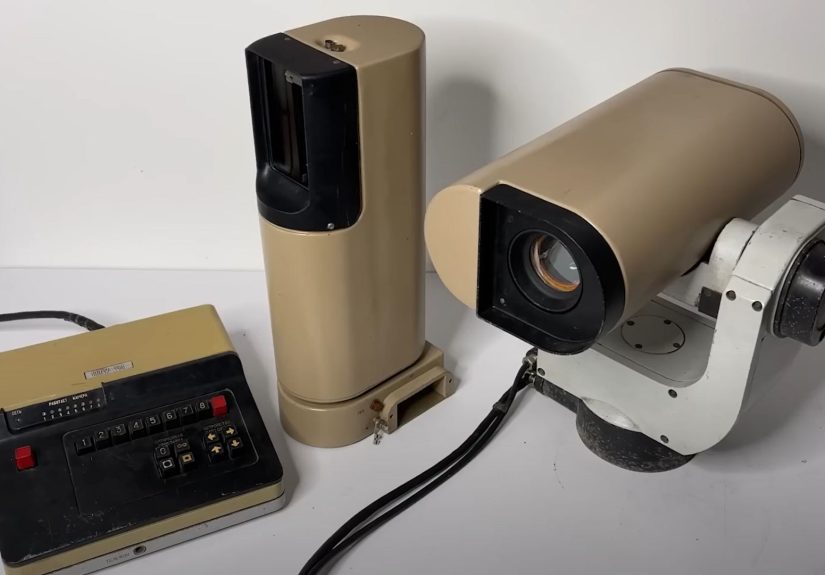
When people say “CCTV,” they’re usually imagining fixed security cameras recording to a tape deck 24/7. At industrial facilities,
though, “closed-circuit television” can also mean industrial TV: cameras used to observe equipment, cranes,
reactor spaces, or restricted areasoften feeding live video to operators, and not always archived like your neighborhood convenience store footage.
So, when you hear “the CCTV cameras that recorded Chernobyl,” it’s best to think in four buckets:
- Operational cameras (industrial monitoring feeds inside the plant)
- Security/perimeter cameras (limited coverage; not all systems record continuously)
- News and documentary cameras (some footage surfaced decades later)
- Post-accident remote cameras (robots, cranes, and modern monitoring inside the shelter and New Safe Confinement)
The Night of April 26, 1986: Why the “Perfect CCTV Clip” Doesn’t Exist
The Chernobyl accident happened during a late-night test that spiraled into a power surge and catastrophic destruction of Unit 4.
The event was sudden, violent, and chaoticexactly the kind of situation where systems fail, power is disrupted, and priorities
become very basic: What just happened? Is anyone alive? Where is the danger?
Even if a plant had internal camera feeds, two things can be true at once:
(1) operators could have had some live video in parts of the facility, and (2) there may have been no reliable, preserved, publicly
documented recording of the moment the reactor was destroyed.
Add in the Soviet Union’s information lockdown in the early days, and it’s easy to see why the world’s earliest visuals of the
disaster are mostly after-the-factphotos, helicopter shots, and later official footagerather than a single definitive
“security camera view.”
The First Cameras That Showed the Aftermath: Helicopters, Film, and the “Invisible Enemy”
Some of the earliest widely shared images came from still photographers and aerial viewpoints. Helicopter reconnaissance and
photography were used early on to assess damage and guide response decisionsbecause when a reactor building is ripped apart,
you don’t stroll over with a clipboard and a confident smile.
Why early photos look grainy, foggy, or “haunted”
A persistent detail in many early-photo stories is that intense radiation can affect photographic film and equipment. Whether the
exact mechanism is radiation fogging, film damage, or other contamination-related factors, photographers documenting the aftermath
faced extreme technical and personal hazards. The result: images that can look oddly veiled, with artifacts and distortions that
feel like the disaster is literally “printing itself” onto the film.
If you’ve seen famous early shots attributed to photographers like Igor Kostin, you’ve likely heard some version of this:
radiation was so severe it ruined or degraded many frames, leaving only a small number usable. Regardless of the fine technical
details, the broader point standscapturing images near the reactor was hard on people and gear.
What these early visuals did for the world
In the first phase of the disaster, cameras weren’t about aesthetics. They were about evidence:
confirming the scale of destruction, documenting response efforts (including helicopters dropping materials onto the reactor debris),
and eventually showing the public what official statements often tried to soften or delay.
News Cameras and “The Archive That Took Decades to Open”
Another major source of “Chernobyl video” is broadcast and documentary footage. For years, much of what viewers saw came through
official filters, later retrospectives, and international reporting. More recently, documentaries have surfaced with previously
unseen footagematerial that existed in archives but wasn’t widely accessible.
If you’ve watched modern productions built from older tapes, you’ve seen how footage can change history’s “feel”:
instead of distant facts, you get faces, daily life, confusion, and that uniquely unsettling vibe of normal routines continuing while
an enormous invisible hazard spreads.
“CCTV” in the Cleanup Era: When Cameras Became Safety Equipment
After the initial emergency phase, the mission shifted from “stop the worst of it” to “stabilize, contain, and clean up.”
That’s where cameras started acting less like passive observers and more like essential tools.
The cleanup required extraordinary work, including rapid construction of a temporary containment structureoften called the
“sarcophagus”completed within months to limit further release of radioactive materials.
Cameras on cranes and equipment: the original “remote work” (minus the snacks)
In high-radiation environments, you want humans far away and machines up close. Cameras make that possible. Over time, remote systems
were developed so operators could control equipment while watching video feedsturning “line of sight” into “line of screen.”
This approach matured dramatically during later phases of containment and decommissioning planning. By the time the New Safe Confinement
project arrived, remote operations weren’t a bonus feature. They were the whole point.
The Sarcophagus Era: Monitoring a Structure That Was Never Meant to Be Forever
The original sarcophagus was built fast under brutal conditionsan engineering sprint against time and radiation. It reduced releases,
but it was considered a temporary solution, and concerns grew over the years about long-term stability.
Monitoringvisual and instrumentalmatters when your “temporary fix” starts living a long life. Cameras can help assess visible
deterioration, confirm conditions after weather events, and support inspections while minimizing worker exposure.
The U.S. Nuclear Regulatory Commission’s backgrounder notes the sarcophagus was started in May 1986 and completed six months later,
with later international efforts aimed at transforming the shelter into a more stable, environmentally safe system.
The New Safe Confinement: The Camera Age Goes Pro
The New Safe Confinement (NSC) is the gigantic arch-like structure built to enclose the old shelter and Reactor 4 area, designed to last
about a century. It was assembled away from the worst radiation, then moved into positionan approach that sounds like “common sense,”
except the “thing” you’re moving is one of the largest transportable buildings ever built.
The NSC isn’t just a big cover. It’s a controlled environment for decades of dismantling and cleanup. That work is heavily dependent on
remote handlingand remote handling depends on cameras the way driving depends on eyes.
The Main Cranes System: heavy lifting with a video game controller vibe
Inside the NSC, remote crane systems were created to dismantle unstable structures and manage hazardous materials. These cranes are
designed for operations in radioactive areas using remote controls and video monitoring. Think: industrial machinery
operating under a roof that’s trying to keep contamination contained, with humans watching from safer locations.
Companies involved in this ecosystem describe remote robotic cranes and monitoring systems as central to cleanup efforts. The whole concept
is straightforward: you can’t safely “walk up and look,” so you build a way to “look” from somewhere elsethrough cameras.
Modern “CCTV” at Chernobyl: Robots, Drones, and the New Reality of Monitoring
In recent years, cameras at Chernobyl have expanded beyond fixed mounts. Robots and drones have helped map radiation, inspect structures,
and document conditions without sending people into risky areas.
Robots with cameras: when wheels beat boots
Modern robotics and sensor packages can capture video while simultaneously collecting radiation readings and environmental data.
That combo matters because radiation is famously rude: you can’t see it, smell it, or politely ask it to stop. Cameras show you
where you are; sensors tell you how dangerous it is.
Reports about robotic deployments in and around Chernobyl have highlighted how mobile platforms can support inspection and mapping tasks.
The big win isn’t flashy footageit’s reduced exposure and better data.
Drones: a camera platform the 1980s could only dream of
Aerial footage has become one of the most recognizable “aftermath visuals” for audiences. Drones have captured sweeping views of
Pripyat and the Exclusion Zone, showing nature reclaiming streets, buildings, and stadiumsan eerie reminder that life doesn’t wait
for humans to feel ready.
And in the grim irony category, the site’s monitoring story didn’t end with the NSC. In 2025, major news organizations reported a drone strike
that damaged the protective structure around Reactor 4, with officials noting radiation levels remained normal at the time. Modern cameras
including official video shared publiclycaptured aspects of that incident in a way the world never got to see in 1986.
So… Which Cameras “Recorded” Chernobyl?
If your definition of “recorded” is “captured the exact moment of destruction on a preserved plant security tape,” there’s no widely confirmed,
publicly established CCTV clip that cleanly shows that.
But if your definition is “created the visual record we rely on,” then yescameras absolutely recorded Chernobyl, in phases:
- Early aftermath images from still photographers and aerial viewpoints that documented destruction and response.
- Broadcast and documentary footage that revealed the human and social reality, including material that surfaced years later.
- Engineering monitoring cameras used to observe and operate remote systems during containment and long-term cleanup work.
- Modern robotics and drone cameras that support inspection, mapping, and documentation while reducing risk to people.
What the Camera Story Teaches Us (Beyond “Wow, That’s Terrifying”)
1) Seeing is safety
In nuclear incidents, visibility is a form of protection. Cameras help prevent “guesswork,” and guesswork is a terrible strategy
when the stakes include radiation exposure and structural hazards.
2) The aftermath lasts longer than the headline
Chernobyl wasn’t a single night; it became decades of monitoring, containment, and health tracking. Even U.S. government summaries emphasize
long-term impacts, ongoing monitoring, and the enormous scale of cleanup efforts.
3) Archives matter
Footage locked awayor filtered through official narrativesshapes what the public understands. When older video emerges later, it can
reframe history in a surprisingly powerful way: it turns “information” back into “experience.”
Conclusion
The “Chernobyl CCTV” story isn’t one camera, one angle, one tape. It’s a patchwork: early photos that fought physics, news footage shaped by politics,
and a long timeline where cameras transformed from witnesses into working toolseyes for cranes, robots, inspectors, and engineers who needed to operate
in places humans simply couldn’t safely stand.
In other words: Chernobyl wasn’t recorded like a bank lobby. It was recorded like a long, complicated, high-stakes engineering projectone where the
camera isn’t just documenting history. It’s helping prevent the next chapter from getting worse.
Extra: of Screen-Side Experiences (What It’s Like When Cameras Are Your Only Safe View)
People often talk about Chernobyl as if it’s a place you “see” with your eyesruined buildings, abandoned ferris wheels, that famous concrete-and-steel
silhouette. But a huge part of the real Chernobyl experience, especially in the aftermath, is what it feels like to see the site through a screen.
For engineers and operators working decades later inside the New Safe Confinement era, the experience can resemble a strange cross between a control
room and a film-editing studio: monitors everywhere, camera angles chosen for function, not beauty, and a constant awareness that the video feed is
showing something you can’t safely approach. When a crane moves or a tool engages, the “action” is often a careful choreography guided by camera views:
wide shots for positioning, close-ups for precision, and backup angles because one lens can get dusty, obstructed, or simply fail. It’s not glamorous.
It’s attentive, repetitive, andoddlyquiet, the way serious work gets when everyone knows mistakes have consequences.
Photographers documenting the aftermath describe a different kind of screen-side experience: you take the shot, but you don’t really know what you’ve
“got” until later. With film, you couldn’t instantly review footage like we do now. The uncertainty is its own stressimagine risking your equipment and
your health for a frame, then wondering whether the image survived at all. That delayed reveal turns photography into a time capsule: the picture you
finally see isn’t just a record of the reactor; it’s a record of everything the camera and photographer endured to make it exist.
Visitors and journalists who later filmed drone footage over Pripyat often describe an emotional “distance paradox.” The camera is flying freely, capturing
crisp, sweeping viewsyet the footage amplifies the sense of separation. You’re observing a city frozen in time from above, like a model town in a museum,
except the reason it’s frozen is painfully real. It’s beautiful in the way abandoned places can be visually striking, and unsettling because the beauty feels
undeserved.
And then there’s the modern news cycle experience, where cameras record not only history but the fragile present. When reports surfaced of damage to the
protective structure in 2025, public video and photos made the story immediate: not a distant Cold War disaster, but a site still vulnerable, still requiring
monitoring, still depending on engineering systemsand yes, still depending on cameras to verify conditions quickly and reduce risk.
Across all these experiences, one theme repeats: cameras don’t just show what happened. They shape how humans can safely interact with a place that remains
dangerous. At Chernobyl, the screen isn’t a substitute for realityit’s the only responsible way to face it.






 Close
Close