
Table of Contents >> Show >> Hide
- What Makes a Nuclear Explosion Different?
- The Four Big Damage Mechanisms
- Airburst vs. Ground Burst: Why Location Changes Everything
- Why Yield Is Not the Whole Story
- Historical Examples: Hiroshima, Nagasaki, and the Nuclear Age
- The Hidden Damage: Infrastructure Collapse
- Electromagnetic Pulse: The Technology Problem
- Fallout Safety: The Public Health Lesson
- Environmental and Climate Concerns
- Why “Small Nukes” Are Still Not Small
- The Psychological Power of Nuclear Weapons
- How Nuclear Weapons Shape Modern Security
- Common Myths About Nuclear Destruction
- Experiences and Reflections: What Learning About Nuclear Power Changes
- Conclusion: The Real Meaning of Nuclear Destructive Power
Nuclear weapons are the sort of invention that make humanity look both brilliant and deeply in need of a group project supervisor. They are not simply “big bombs.” A conventional explosion mostly destroys by releasing chemical energy in a fast, violent burst. A nuclear explosion releases energy from the nucleus of atoms, which is why even a single weapon can produce blast, heat, radiation, fire, fallout, infrastructure collapse, long-term health risks, environmental disruption, and geopolitical shock waves all at once.
Understanding the destructive power of nukes does not require dramatic movie music, a secret bunker, or a villain stroking a cat. It requires clear science, historical context, and a sober look at how nuclear effects interact with real cities, real weather, real people, and real emergency systems. The core lesson is simple: nuclear weapons are uniquely destructive because their damage is layered. The first seconds are catastrophic; the following hours are dangerous; the years afterward can reshape health, politics, land use, and public memory.
What Makes a Nuclear Explosion Different?
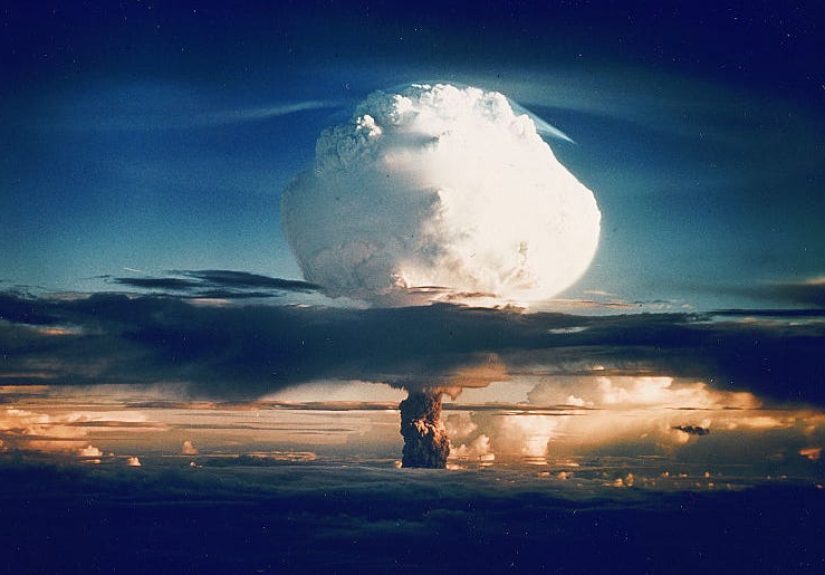
A nuclear detonation releases an enormous amount of energy in a tiny fraction of a second. That energy appears in several forms: an intense flash of light, a rapidly expanding fireball, a powerful blast wave, immediate ionizing radiation, anddepending on the detonation conditionsradioactive fallout. Unlike ordinary explosives, nuclear weapons combine physical force with heat and radiation, which means the danger is not limited to knocked-down buildings.
The size of a nuclear weapon is often described by “yield,” usually measured in kilotons or megatons of TNT equivalent. One kiloton equals the explosive energy of 1,000 tons of TNT. The bombs used on Hiroshima and Nagasaki were in the kiloton range. Many modern nuclear weapons can be far more powerful, although actual effects depend heavily on yield, altitude, terrain, weather, building density, and whether the explosion occurs in the air or at ground level.
The Four Big Damage Mechanisms
1. Blast: The Invisible Hammer
The blast wave is the part most people imagine first: a wall of compressed air racing outward. It can crush structures, shatter windows, overturn vehicles, and turn ordinary city materials into hazards. The blast does not politely stop at the edge of a neighborhood like it has reached a municipal boundary. It spreads outward, weakens with distance, and interacts with streets, buildings, hills, and open spaces.
In dense urban areas, buildings can sometimes shield areas behind them, but they can also create dangerous debris fields. That is why simple “circle on a map” illustrations are useful for public understanding but never perfectly predict what happens block by block. A downtown full of concrete, glass, tunnels, elevated roads, and underground utilities behaves differently from a flat test range in the desert.
2. Thermal Radiation: Heat at Terrible Speed
A nuclear flash produces intense thermal radiation. This heat can ignite exposed materials, start fires, and cause burns to people with direct line of sight to the fireball. The thermal effect depends on visibility, weather, smoke, clothing, distance, and obstacles. A wall, hill, or large structure can reduce exposure; an open view can increase it.
Fire is one reason nuclear destruction can expand beyond the immediate blast zone. Cities are full of fuel: wooden structures, gas lines, vehicles, furniture, plastics, paper, and electrical systems. The modern city is basically a giant hardware store with restaurants, apartments, and traffic lights attached. When many fires begin at once, emergency response becomes extremely difficult because roads, communications, water pressure, hospitals, and power systems may all be damaged at the same time.
3. Prompt Radiation: The First Invisible Threat
Prompt ionizing radiation is released immediately during the explosion. It is most dangerous near the detonation and can harm living tissue at high doses. Its relative importance varies by weapon yield and detonation conditions. For larger explosions, blast and heat may dominate over wider areas; for some smaller or specialized scenarios, prompt radiation can be a major concern closer to the event.
Radiation is frightening partly because humans cannot see, smell, or taste it. That makes public communication essential. In a radiation emergency, official instructions matter because protective actions depend on location, timing, and measured contamination levels. Guessing is not a plan. It is just anxiety wearing a tiny lab coat.
4. Fallout: The Danger That Rides the Wind
Fallout is radioactive material that falls back to Earth after a nuclear explosion, especially when the fireball pulls dirt, debris, and particles into the rising cloud. A ground-level detonation generally creates much more local fallout than an airburst because soil and debris can become contaminated and carried downwind.
Fallout patterns are shaped by wind, rain, particle size, terrain, and the height of the explosion. This is why fallout is not a neat circle. It can form a plume stretching away from the detonation site. The most dangerous period is usually early, when radiation levels are highest. Over time, radioactive decay reduces intensity, but contaminated areas can still create serious response, cleanup, and health challenges.
Airburst vs. Ground Burst: Why Location Changes Everything
A nuclear explosion in the air can maximize blast damage over a broad area because the shock wave spreads efficiently before reflecting from the ground. A surface or ground burst can produce heavier local fallout because the fireball interacts with soil, pavement, buildings, and other materials. That distinction is central to understanding nuclear effects.
This does not mean one type is “safe.” There is no cozy version of a nuclear detonation. It means the pattern of destruction changes. An airburst may create wider immediate blast effects, while a ground burst may create a more severe fallout problem downwind. Emergency planners study these differences because response prioritiesshelter, medical triage, evacuation timing, radiation monitoring, and public messagingdepend on them.
Why Yield Is Not the Whole Story
It is tempting to think nuclear destruction works like a video game slider: double the yield, double the damage radius. Reality is more complicated. The relationship is not linear. Increasing yield greatly increases total energy, but damage zones expand according to physical scaling laws, terrain, and environmental factors. A larger weapon is obviously more destructive, but the exact footprint depends on more than one number.
Weather can change fallout direction. Urban density can change casualties and shielding. Time of day can affect how many people are indoors, commuting, or gathered in commercial districts. Building codes, emergency preparedness, hospital capacity, and public trust in warnings all matter. Nuclear effects are physics meeting society at high speed, and society is rarely wearing a helmet.
Historical Examples: Hiroshima, Nagasaki, and the Nuclear Age
The atomic bombings of Hiroshima and Nagasaki in August 1945 remain the only wartime use of nuclear weapons. They demonstrated that a single bomb could devastate a city and create immediate and long-term human consequences. The historical record from Japan, later weapons tests, medical studies, and emergency planning research has shaped modern understanding of nuclear blast, burns, radiation exposure, fallout, trauma, and recovery.
Since 1945, nuclear weapons have grown more varied. Some are smaller than Cold War giants; others remain far more powerful than the first atomic bombs. The United States, Russia, China, France, the United Kingdom, India, Pakistan, North Korea, and Israel are commonly discussed in the context of nuclear weapons, though official policies and stockpile transparency vary. The strategic danger is not only the size of arsenals but the possibility of miscalculation, escalation, accidents, cyber confusion, or political crisis.
The Hidden Damage: Infrastructure Collapse
The destructive power of nukes is not limited to the first flash and shock wave. Modern life depends on networks: electricity, water treatment, fuel delivery, hospitals, phones, internet, transportation, food supply, and emergency services. A nuclear detonation can damage these systems together, creating cascading failures.
Imagine a city where bridges are blocked, hospitals are overwhelmed, power is out, water pressure is low, cell towers are damaged, and emergency workers must operate in areas with debris and possible radiation hazards. Even people outside the most damaged zones can face serious risk because rescue, treatment, communication, and evacuation become harder. Nuclear weapons attack not just buildings but the systems that help people survive disasters.
Electromagnetic Pulse: The Technology Problem
Nuclear explosions can also create electromagnetic effects, often discussed as EMP. The details depend on altitude and conditions, but the broad concern is that electronics, power grids, communications, and control systems could be disrupted. Popular culture sometimes treats EMP like a magic “turn off civilization” button. Real-world effects are more complex, but emergency planners take the risk seriously because modern societies rely heavily on electronics.
The key point is not that every phone, car, or toaster would instantly become a decorative brick. The key point is uncertainty. A major disruption to communications and power during a nuclear emergency would make every other response task harder. Information becomes as valuable as medicine when people need to know where to shelter, when to move, and what areas to avoid.
Fallout Safety: The Public Health Lesson
Public health guidance generally emphasizes getting inside, staying inside, and staying tuned to official information after a nuclear or radiological emergency. Thick walls, basements, and central rooms can reduce exposure to fallout outside. Time, distance, and shielding are the classic principles of radiation protection: spend less time near the hazard, increase distance from it, and place dense material between yourself and the source.
This is not glamorous advice, which is probably why action movies prefer motorcycles and dramatic countdowns. But in real emergency planning, simple protective actions can save lives. A good shelter location, emergency supplies, a battery-powered or hand-crank radio, water, basic medication, and family communication planning are practical tools for many disasters, not only nuclear events.
Environmental and Climate Concerns
A nuclear detonation can contaminate land, water, buildings, and infrastructure. Cleanup can be long, expensive, and technically difficult. In a larger nuclear exchange, scientists have also studied the possibility of widespread fires injecting soot into the atmosphere, potentially affecting sunlight, agriculture, and global climate patterns. The severity of such outcomes depends on the scale of the conflict, targets, fire behavior, and atmospheric response.
Even a limited nuclear conflict could create consequences far beyond the battlefield. Food systems are global. Markets react to fear. Refugee movements strain neighboring regions. Medical supply chains are international. Nuclear weapons are therefore not just military tools; they are civilization-level risk multipliers.
Why “Small Nukes” Are Still Not Small
Terms such as “low-yield” can be misleading. A lower-yield nuclear weapon may be smaller than a strategic megaton-class weapon, but it can still produce devastating blast, heat, radiation, and fallout effects. “Small” in nuclear language can still mean city-shaking power. It is like calling a crocodile “less large than a dinosaur.” Technically true, not comforting.
The danger of low-yield weapons is also political. Some analysts worry that if leaders perceive a nuclear weapon as “usable,” the threshold for nuclear escalation could fall. Once any nuclear weapon is used, the risk of rapid retaliation, misunderstanding, panic, and wider conflict increases dramatically.
The Psychological Power of Nuclear Weapons
Nuclear weapons are designed not only to destroy but also to terrify. Their political power comes from deterrence: the idea that no rational opponent would start a nuclear war because the retaliation would be unbearable. For decades, this logic has shaped military planning and international diplomacy.
But deterrence is not a magic force field. It depends on rational actors, reliable communication, secure command systems, accurate warning, and restraint under pressure. History includes false alarms, technical failures, misread signals, and moments when human judgment prevented disaster. The destructive power of nukes is therefore matched by the fragility of the systems meant to control them.
How Nuclear Weapons Shape Modern Security
Nuclear weapons influence alliances, defense budgets, arms control treaties, nonproliferation efforts, and regional rivalries. They can make countries feel secure while making the world more nervous. Arms control agreements, verification systems, hotlines, inspections, and diplomatic channels exist because nuclear risk cannot be managed by hope alone.
The most effective nuclear safety strategy is prevention: reducing the chance that nuclear weapons are ever used. That includes nonproliferation, secure materials, crisis communication, de-escalation agreements, responsible leadership, and public education. A population that understands nuclear risk is less likely to treat it as either science fiction or background noise.
Common Myths About Nuclear Destruction
Myth 1: “Everyone Would Die Instantly”
Nuclear weapons can cause massive casualties, but effects vary by distance, shelter, terrain, weather, and response. Many people outside the most devastated zones could survive if they take appropriate protective action, especially against fallout.
Myth 2: “Fallout Lasts Forever at Maximum Danger”
Fallout can be extremely dangerous, especially early, but radiation levels decline over time due to radioactive decay. That is why sheltering during the early period can be so important.
Myth 3: “A Nuclear Explosion Is Just a Bigger Explosion”
Nuclear weapons combine blast, thermal radiation, ionizing radiation, possible EMP, fallout, fires, and long-term contamination. Calling a nuke “a bigger bomb” is like calling the ocean “a damp puddle with ambition.”
Experiences and Reflections: What Learning About Nuclear Power Changes
Spending time with the topic of nuclear destruction changes the way you look at ordinary things. A skyline stops being only glass and steel; it becomes a network of homes, schools, clinics, power lines, water mains, subway tunnels, grocery stores, and people with unfinished errands. The phrase “blast radius” sounds technical, almost clean, until you remember that every block on a map contains birthdays, pets, coffee cups, family photos, homework, and someone’s favorite terrible chair.
One of the strongest experiences people often describe when studying nuclear history is the shock of scale. At first, the numbers feel abstract: kilotons, megatons, miles, radiation dose, overpressure. Then the mind starts translating those terms into familiar places. What would happen to a downtown hospital? What if schools were open? What if the wind blew toward suburbs? What if emergency workers could not reach damaged areas? Suddenly, nuclear weapons are no longer distant Cold War artifacts. They are a warning about how fragile normal life can be.
Another experience is the strange contrast between complexity and simplicity. The physics is complex. The political strategy is complex. The history is complex. But the moral conclusion is not very complicated: these weapons are too destructive to treat casually. They compress every human weaknessfear, pride, rivalry, miscommunication, technological failureinto a machine capable of turning a political mistake into a humanitarian disaster.
Learning about nukes also makes emergency preparedness feel less like paranoia and more like basic citizenship. A flashlight, radio, water, documents, medicine, and a family plan will not solve nuclear war. But preparedness teaches a useful mindset: panic is not a strategy; information matters; shelter matters; neighbors matter. The same habits help during storms, blackouts, floods, fires, and other emergencies. Preparedness is not about living in fear. It is about refusing to be completely helpless when systems wobble.
The most powerful personal takeaway is that nuclear weapons should never become normal. Once a danger becomes background noise, people stop asking hard questions. Who controls these weapons? What safeguards exist? Are communication systems reliable? Are treaties being strengthened or abandoned? Are leaders reducing risk or performing toughness for television? Public attention cannot replace expert diplomacy, but silence gives risk more room to grow.
Finally, the topic creates a surprising appreciation for ordinary peace. A normal morningtraffic, breakfast, weather complaints, a laptop that needs chargingsuddenly looks like a miracle of coordination. Nuclear weapons remind us that civilization is not just buildings and machines. It is trust, restraint, planning, cooperation, and the daily decision not to let fear run the world. That may sound grand, but it is also practical. The best nuclear disaster is the one that never happens.
Conclusion: The Real Meaning of Nuclear Destructive Power
The destructive power of nukes comes from more than explosive force. It comes from the combination of blast, heat, radiation, fallout, fire, infrastructure collapse, environmental harm, psychological fear, and geopolitical escalation. A nuclear weapon is not just a weapon against a target; it is a weapon against systems of life.
Explaining nuclear destruction clearly is not about spreading fear. It is about replacing vague dread with informed seriousness. The science shows why nuclear weapons are uniquely dangerous. History shows why they must never be used casually. Emergency guidance shows that protective actions can matter. Diplomacy shows that prevention is the highest form of survival.
In the end, the most important fact about nuclear weapons is not how powerful they are, but how much responsibility they demand. Humanity built them. Humanity must control them. And ideally, humanity should keep proving that intelligence can do more than invent terrifying thingsit can also choose not to use them.
Note: This article is written for public education and safety awareness. It explains nuclear effects at a high level and does not provide instructions for building, obtaining, targeting, or using weapons.





 Close
Close