
Table of Contents >> Show >> Hide
- What Is the Mesh Grating, Exactly?
- Why Microwaves Need Shielding in the First Place
- The Big Science Trick: Holes That Let Light Through but Block Microwaves
- The Mesh Is Only One Layer of the Safety System
- “So… Is My Microwave Leaking Radiation?”
- How to Tell if the Door Mesh or Seal Might Be a Problem
- Common Myths (and What’s Actually True)
- Why the Mesh Looks Dark (and Why It’s Hard to See Your Food)
- Microwave Safety Checklist (Fast, Practical, No Drama)
- Conclusion: The Tiny Dots Are Doing Big Work
- Everyday Experiences: The Mesh Moments You’ve Probably Lived Through (and What They Teach You)
- SEO Tags
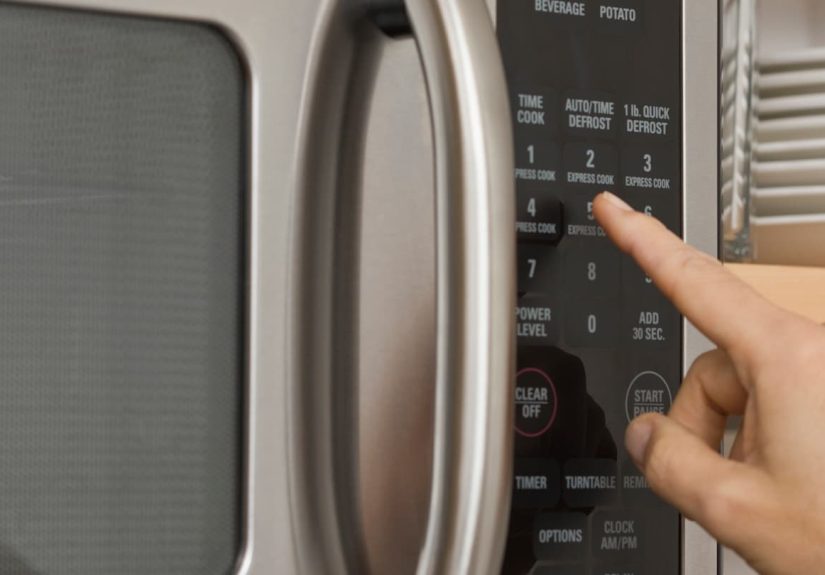
That dotted “screen” on your microwave door isn’t there to ruin your chance of watching cheese melt in real time (though it absolutely does that). It’s there because your microwave is basically a tiny, food-safe radio transmitterand your kitchen is not supposed to be the broadcast area.
The mesh grating (also called the microwave door screen) is a key part of the oven’s shielding system. It helps keep microwave energy inside the cavity while still letting visible light out so you can peek at your leftovers. In other words: it’s the bouncer at the club door, checking wavelengths at the rope.
What Is the Mesh Grating, Exactly?
The “mesh” you see is a thin metal screen (or perforated metal layer) built into the microwave’s door window. It’s typically sandwiched between layers of glass and/or plastic. This is why you should not peel off any interior films or shields on the doorthose layers are part of the engineered assembly, not bonus packaging.
If your microwave has a door window, that window is a weak point for containment: glass is transparent to visible light, but it’s not a complete shield by itself for the kind of electromagnetic energy a microwave uses. The metal mesh solves that problem by acting like an electromagnetic barrier.
Why Microwaves Need Shielding in the First Place
A microwave oven heats food using electromagnetic wavescommonly around 2.45 GHz in household models. Those waves bounce around inside the metal cooking cavity, interacting with food and causing it to heat primarily through dielectric heating (translation: molecules wiggle, friction happens, and your soup stops being sad and cold).
But the “heat your food” part only works if the energy stays where it belongs: inside the box. That’s why the cooking chamber is metal and why the door has multiple safety and containment features. The mesh is one of the most visible (and most misunderstood) pieces of that system.
The Big Science Trick: Holes That Let Light Through but Block Microwaves
Here’s the fun part: the mesh works because of wavelength.
Microwaves are “big” waves
At about 2.45 GHz, the wavelength is roughly 12 centimeters (around 4.8 inches). That’s enormous compared to visible light, whose wavelengths are measured in nanometers (tiny fractions of a millimeter).
The mesh holes are tiny compared to microwave wavelength
The holes in the mesh are very smallsmall enough that microwave energy can’t efficiently pass through. In practical terms, the openings are far below the size needed for those long microwave wavelengths to “fit” and propagate outward. The screen behaves like a conductive barrier, reflecting and attenuating the microwave energy back into the cavity.
Visible light slips right through
Visible light has a much shorter wavelength, so those tiny holes are still huge relative to light waves. That’s why you can see the bright interior lamp and the vague outline of your burrito, even though the microwave energy stays contained.
This is the same basic concept used in shielding and Faraday cages: conductive enclosures (and conductive screens) can block electromagnetic fields, especially when openings are appropriately small for the frequencies involved.
The Mesh Is Only One Layer of the Safety System
If the mesh were the only thing protecting you, microwaves would come with a complimentary lead apron, a waiver, and a tiny lawyer in the box. Fortunately, modern microwave ovens rely on multiple overlapping features:
1) The metal cavity (the “box” part)
The cooking chamber walls are metal, which reflects microwave energy and keeps it bouncing around inside. This enclosure is a major part of why microwaves are generally safe to use when in good condition.
2) The door seal and choke system (the “edge” part)
Most leakage risk isn’t through the center windowit’s around the door edges, where the door meets the frame. Many designs use a choke seal (an engineered rim structure that impedes microwave leakage at the operating frequency) plus conductive surfaces that mate when the door is closed. Think of it as a wavelength-specific “maze” that makes escaping energy give up and go back inside.
3) Interlock switches (the “don’t run with the door open” part)
Microwaves also use door interlock switches so the oven will not generate microwave energy unless the door is fully closed and latched. Many models use multiple interlocks (and a monitor switch) so that if something is misaligned or fails, the system defaults toward shutting down instead of operating unsafely.
Bottom line: the mesh is crucial, but it’s not your only line of defense. It’s part of a layered containment strategy.
“So… Is My Microwave Leaking Radiation?”
In a microwave that’s in good condition, leakage is designed to be very low. In the United States, there are federal performance standards limiting allowable microwave leakage. That doesn’t mean zero leakage is physically possible in every scenariobut it does mean the appliance is engineered and tested to keep leakage well below levels considered harmful under normal use.
The bigger concern is damage: if the door doesn’t close properly, if hinges/latches/seals are compromised, or if the screen is cracked or badly corroded, that’s when you should stop treating it like a trusty kitchen sidekick and start treating it like a “needs professional attention” project.
How to Tell if the Door Mesh or Seal Might Be a Problem
You don’t need a lab coat to do a basic reality check. Here are practical signs that your microwave’s door area needs attention:
- Cracked door glass or visible damage to the window area.
- Peeling/bubbling inner door film (don’t remove it; it’s part of the door assembly).
- Rust around the door frame, screen edges, or inside lip where the door closes.
- Door doesn’t latch firmly, sags, or feels “loose” when you close it.
- Gaps you can see around the door when it’s shut.
- Damage from drops or slams (especially if the door alignment changed afterward).
What to do if you spot damage
If the door, hinges, latch, or seal looks compromised, the safest move is to stop using the microwave and contact the manufacturer or a qualified appliance technician. Door alignment and interlock systems are not the place for “I saw a hack on the internet and now I own a screwdriver” energy.
Common Myths (and What’s Actually True)
Myth: “If I can see inside, microwaves must be escaping.”
Nope. You’re seeing visible light, which slips through the mesh openings easily. Microwave energy is in a very different wavelength range and is blocked by the conductive screen and the overall door/cavity design.
Myth: “Standing in front of a microwave is basically tanning, but for your organs.”
Not how this works. Microwave ovens are designed to contain the energy, and leakage drops rapidly with distance. Under normal operation and good condition, the risk is low. The bigger real-world hazards in most kitchens are things like steam burns, hot liquids, and fires caused by inappropriate materials.
Myth: “I can test leakage with a phone/Wi-Fi app/popcorn kernels and vibes.”
Consumer “tests” are often misleading because they’re not measuring microwave leakage at the right frequency, distance, or sensitivity. Proper testing uses calibrated meters designed for microwave frequencies and standardized measurement methods.
Why the Mesh Looks Dark (and Why It’s Hard to See Your Food)
The mesh looks dark because you’re seeing a patterned metal screen plus reflections and contrast effects from the layered door materials. It’s doing its job by being conductive and dense enough to block microwave radiation, not by being your personal cooking livestream camera.
Pro tip: if you want better visibility, clean the door window (inside and out) and the interior light cover (when safe and per your manual). Grease film and splatter can make it even harder to see through the mesh.
Microwave Safety Checklist (Fast, Practical, No Drama)
- Don’t use a microwave with a damaged door (hinges, latch, seal, or window).
- Keep the door edges clean so the seal surfaces mate properly.
- Don’t remove inner door films/shieldsthey’re part of the safety design.
- Avoid slamming the door (misalignment is a slow-motion safety problem).
- Call a pro for door/interlock repairs; “DIY” can defeat safety interlocks.
- Use microwave-safe containers and follow basic heating guidelines to avoid burns and uneven cooking.
Conclusion: The Tiny Dots Are Doing Big Work
The mesh grating on your microwave door is not decorative. It’s a carefully engineered safety feature that helps keep microwave energy contained, using simple-but-brilliant physics: the openings are small enough to block long microwave wavelengths while still letting short visible light wavelengths pass.
And it doesn’t work alone. The metal cavity, choke seal, and door interlock switches all team up to keep microwave energy where it belongsinside the oven, heating dinner, not your elbow.
So the next time you squint through that dotted window trying to decide if your leftovers are “warm” or “lava,” remember: those dots are the reason you get to make that decision safely.
Everyday Experiences: The Mesh Moments You’ve Probably Lived Through (and What They Teach You)
Most people don’t think about microwave door mesh until they have a very specific, very human momentusually involving melted butter, a late-night snack, or someone in the household asking, “Why is the window pixelated like it’s censoring my burrito?”
One classic experience: you’re trying to melt chocolate “gently,” which is a phrase that means “I will stare into the microwave like it’s a high-stakes sports game.” The mesh makes it hard to see detail, so you lean closer. The light inside looks bright, the bowl looks mostly fine, and thensurpriseyou open the door and discover you’ve created a chocolate lava lake with a scorched ring around the edges. The takeaway isn’t that the mesh failed you. The takeaway is that the mesh is doing its job while you’re doing yours: watching for problems like bubbling, smoking, or arcing without getting exposed to the microwave energy itself.
Another common moment happens during cleaning day. You wipe the inside of the door and notice a thin plastic film or inner shield. Some people assume it’s a shipping protector and start picking at a corner (because peeling things is deeply satisfying). Then the rational part of the brain kicks in: “Wait… why would they leave a peel tab inside my microwave?” Exactly. That layer is usually part of the engineered door assembly. If it’s peeling, bubbling, or damaged, that’s a repair/replacement conversationnot a “let me just remove it and see what happens” experiment.
Families also tend to discover the importance of the mesh through kid logic. Kids love asking why the holes are there. Adults often answer, “So you can see inside,” which is true in the same way saying “Cars have seatbelts so the interior looks sporty” is true. The better explanation sticks with them: those holes are designed to let light through but keep microwave energy in. Once you tell that story, you’ll notice kids start pointing out “the dots” on other thingslike speaker grilles, vents, or screened enclosuresand you’ve accidentally taught them a real-world engineering concept in between reheating pizza.
Then there’s the “moving day microwave” experience. You pack the microwave in a box, it bumps around, and when you unpack it you notice the door doesn’t close with the same confident click. Maybe it’s a little crooked. Maybe the latch feels less crisp. Most people have a split-second internal debate: “It still runs… so it’s fine, right?” This is where the door system matters. A microwave can power on and still have a door alignment problem that you shouldn’t ignore. If the door doesn’t close properly, or if the hinge/latch area looks off, that’s a sign to pause and get it checked. The goal is not to panicit’s to respect that the door is part of the safety system, not just a lid.
Some experiences are even more obvious, like the dreaded spark show. Someone puts in a twist tie, foil edge, or a container with metallic trim, and the microwave produces a tiny lightning storm. The mesh didn’t “cause” that; it contained the energy while an improper material created arcing inside the cavity. Afterward, people sometimes inspect the door and notice discoloration or residue on the window. Cleaning is fine, but if you see actual damage to the mesh area, cracks, or warping, that’s when you stop using it and call in an expert.
Finally, there’s the “appliance age reality check.” Older microwaves may show rust near the door frame or wear along the closing surfaces. People often keep using them because “it still heats.” But door seals and mating surfaces are part of what helps keep leakage low. If rust, dents, or looseness appear around the door, it’s worth treating that as a real safety signalnot just cosmetic aging. In many homes, the most practical experience-based lesson is simple: if the door can’t close like it’s supposed to, the microwave shouldn’t run like it’s supposed to.
These everyday moments all point to the same conclusion: the mesh grating is doing serious safety work in the background. You don’t need to fear your microwaveyou just need to treat the door like what it is: a precisely designed barrier that deserves basic care, clean surfaces, and professional repair when something’s off.






 Close
Close