
Table of Contents >> Show >> Hide
- What “Comics-Accurate” Really Means (And Why It’s Tricky)
- The Performances That Feel Ripped Straight From Marvel Comics
- Samuel L. Jackson as Nick Fury
- J.K. Simmons as J. Jonah Jameson
- Charlie Cox as Matt Murdock / Daredevil
- Vincent D’Onofrio as Wilson Fisk / Kingpin
- Elizabeth Olsen as Wanda Maximoff / Scarlet Witch
- Paul Bettany as Vision
- Tom Hiddleston as Loki
- Chadwick Boseman as T’Challa / Black Panther
- Tatiana Maslany as Jennifer Walters / She-Hulk
- Honorable Mentions (Because Comics Fans Love Lists Almost as Much as They Love Arguing)
- Conclusion
- Afterword: of Fan Experiences With “Comics-Accurate” MCU Performances
The Marvel Cinematic Universe has done something wild: it didn’t just bring superheroes to lifeit convinced millions of people that a talking raccoon has emotional depth and that a purple space warlord could be… oddly persuasive in a group chat about population control. But as the MCU grew, one question kept popping up in fandom debates (usually right before someone yells “Actually!”): which performances feel the most comics-accurate?
Not “identical to one specific panel from one specific issue,” because comic continuity is basically a haunted house with rotating doors. This is about something more satisfying: the rare moments when an actor captures the voice, the vibe, the posture, the moral code, the humor, the menace, and the emotional wiring that made the character iconic on the page. When it happens, you don’t just recognize the characteryou feel like Marvel snuck into your long box and stole your imagination.
What “Comics-Accurate” Really Means (And Why It’s Tricky)
Comics accuracy isn’t one thing. It’s a checklist with moving goalposts. A character might have five “definitive” versions depending on which decade you fell in love with them, and Marvel has been remixing its own mythology since before your favorite MCU actor had a driver’s license.
So for this list, “comics-accurate” means the performance hits most of these:
- Core personality: the character’s default settings (values, flaws, and coping mechanisms).
- Iconic energy: the rhythm of how they talk, threaten, charm, or spiral.
- Character-specific details: mannerisms, humor style, intensity level, and that unmistakable “only they would do that” behavior.
- Comics DNA on screen: moments that feel like they could be caption boxes and splash pageswithout needing a literal copy/paste.
With that in mind, here are the MCU performances that most consistently feel like they walked off the page, shook the ink off their boots, and asked where the nearest shawarma place is.
The Performances That Feel Ripped Straight From Marvel Comics
Samuel L. Jackson as Nick Fury
There are “good adaptations,” and then there’s Samuel L. Jackson as Nick Furyan example so clean it almost feels like time travel. The MCU’s Fury isn’t just inspired by the comics; in a very real way, modern comics helped sculpt the version Jackson would play. That makes the performance feel less like “casting” and more like Marvel closing a very stylish loop.
Jackson’s Fury nails the character’s comic-book job description: strategic, paranoid-for-good-reason, constantly running three plans at once, and allergic to nonsense. He sells the idea that S.H.I.E.L.D. isn’t a buildingit’s a chessboard. And he plays Fury with the kind of calm authority that says, “I’m not raising my voice… because I already assumed you’d disappoint me.”
J.K. Simmons as J. Jonah Jameson
Some roles are so perfectly aligned with the comics that the actor basically becomes the default mental image forever. J.K. Simmons’ J. Jonah Jameson is that kind of casting lightning. He delivers the classic JJJ recipevolume, outrage, speed, and the moral certainty of a man who thinks punctuation is optional when you’re furious.
Comics Jameson is more than “angry boss”: he’s a crusader who believes he’s protecting the public, even when his certainty turns him into Spider-Man’s loudest headache. Simmons hits that balance. He’s funny, yes, but he’s also dangerous in a modern waybecause he understands attention. The performance feels like the comics updated for the era of viral outrage without losing the character’s essential, bulldozing soul.
Charlie Cox as Matt Murdock / Daredevil
Daredevil is one of Marvel’s trickiest characters to get right, because the comics don’t just ask for a superherothey ask for a Catholic guilt-powered pressure cooker who can’t stop trying to save people even when it wrecks his life. Charlie Cox plays Matt Murdock like a man carrying two burdens at once: the responsibility to do good and the fear that he’ll never be good enough.
The comics’ best Daredevil runs thrive on contradictionsmercy and violence, faith and rage, charm and loneliness. Cox lives in those contradictions. His version feels like a street-level hero drawn with heavy shadows and heavier consequences, exactly the tone Daredevil fans expect when they open an issue and think, “Well, this is going to hurt emotionally. Again.”
Vincent D’Onofrio as Wilson Fisk / Kingpin
Comic-book Kingpin is terrifying because he’s not a cackling monsterhe’s a force of nature in a suit, a man who can talk like a businessman and then turn a room into a nightmare. Vincent D’Onofrio’s Fisk captures that duality with frightening patience. He’s controlled until he isn’t, and when the switch flips, you understand why heroes fear him even without superpowers.
D’Onofrio brings the “crime lord as tragic ego” vibe that has defined Fisk for decades. He doesn’t play Kingpin as a simple villain; he plays him as a person who believes the city belongs to himmorally, emotionally, and politically. It’s the same energy the comics use when they show Fisk as a corrupting gravity well: you don’t just fight him. You risk becoming part of his story.
Elizabeth Olsen as Wanda Maximoff / Scarlet Witch
Scarlet Witch in the comics can be heroic, tender, unstable, frightening, and heartbreakingsometimes all in the same storyline. Elizabeth Olsen’s performance embraces that complexity instead of sanding it down. She plays Wanda as someone whose grief isn’t a single emotion; it’s a whole weather system that changes the world around her.
What makes Olsen especially comics-accurate is her ability to hold two truths at once: Wanda can be sympathetic and wrong. Powerful and scared of herself. Loving and capable of causing harm. That’s peak Scarlet Witch comics DNAemotion turned into reality, morality blurred by loss, and the uncomfortable question of how much power one person should be allowed to have when their heart is breaking.
Paul Bettany as Vision
Vision is a character who’s always walking a tightrope: he’s a synthezoid with the soul of a philosopher and the social instincts of someone who learned humanity from textbooks. Paul Bettany plays that tightrope beautifully. His Vision feels gently alienpolite, curious, preciseyet emotionally sincere in a way that makes you root for him harder than you expected to.
In the comics, Vision stories often hinge on the question “What does it mean to be a person?” Bettany delivers that theme without turning Vision into a cold robot or a sitcom puppy. He’s thoughtful, sometimes awkward, and quietly brave. It’s comics-accurate in the best way: he doesn’t imitate “human,” he studies itthen chooses kindness anyway.
Tom Hiddleston as Loki
Loki has worn many comic maskstrickster, tyrant, chaotic ally, cosmic problem, and occasional agent of growth who still absolutely enjoys stirring the pot. Tom Hiddleston captures the classic Loki contradiction: he craves affection while pretending he’s above it, and he’s deeply wounded while insisting he’s the smartest person in every room.
Hiddleston’s Loki lands that comic-book blend of menace and mischief. He can be charming enough to make you doubt your own judgment, then turn around and remind you that this is still a god of lies. Even when Loki evolves, the performance keeps the character’s core intact: always performing, always strategizing, always trying to rewrite the story so he’s not the “lesser” siblingjust the more interesting one.
Chadwick Boseman as T’Challa / Black Panther
T’Challa in the comics is regal without being distant, compassionate without being soft, and strategic in a way that makes him feel like a king who actually studies the costs of leadership. Chadwick Boseman nails that balance. His performance carries the weight of a nation while still feeling personallike every decision is filtered through duty, tradition, and the desire to do right by his people.
Boseman’s T’Challa also feels comics-accurate because he’s not just “a hero.” He’s a leader. He listens, he reflects, and when he acts, it’s with purpose. The quiet intensity, the moral clarity, and the disciplined restraint echo the version of Black Panther that readers know: a character who can stand among gods and geniusesand still make the room feel like it belongs to Wakanda.
Tatiana Maslany as Jennifer Walters / She-Hulk
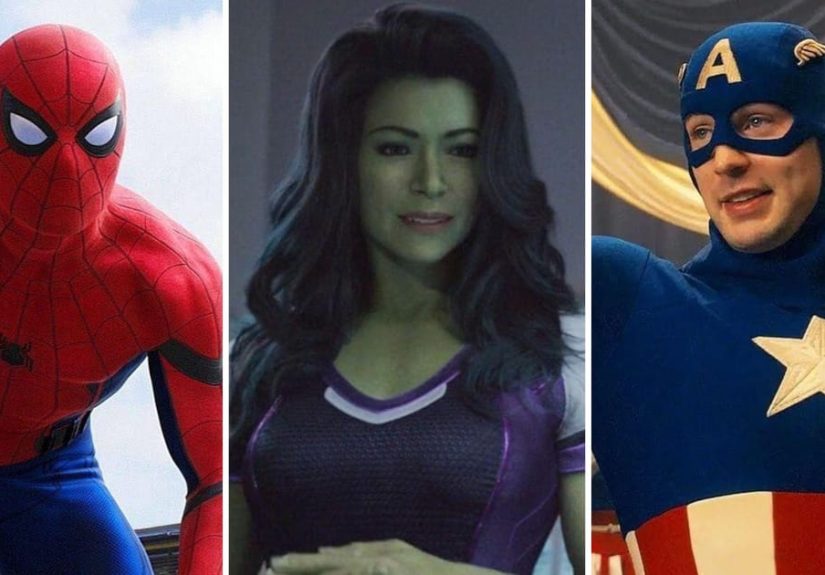
She-Hulk’s comic-book identity isn’t just “Hulk, but lawyer.” It’s humor, meta-awareness, and the feeling that Jennifer Walters is in on the jokeeven when the joke is about the genre she’s trapped inside. Tatiana Maslany embraces that spirit with confidence. She plays Jen as smart, relatable, occasionally overwhelmed, and fully capable of side-eyeing the absurdity of her own narrative.
The most comics-accurate part is how comfortably Maslany navigates the tonal gymnastics. She can do heartfelt character work, then pivot into wink-at-the-audience commentary without losing the character underneath. That’s classic She-Hulk energy: a superhero who knows she’s in a storyand uses that awareness like it’s another superpower.
Honorable Mentions (Because Comics Fans Love Lists Almost as Much as They Love Arguing)
- Chris Evans as Captain America: the moral compass, the humility, and the stubborn “do the right thing” backbone that defines Steve Rogers.
- Josh Brolin as Thanos: even with MCU changes, the performance captures the comic vibe of an unstoppable zealot who truly believes he’s the hero.
- Benedict Cumberbatch as Doctor Strange: arrogance, wit, and that “I have read books you haven’t even heard of” confidencetempered by hard-earned humility.
- Tom Holland as Spider-Man: not always the most “classic comics” version, but he nails Peter’s sincerity, panic, and heart-on-sleeve heroism.
Conclusion
The MCU doesn’t win comic fans over by copying panelsit wins by capturing identity. When a performance is truly comics-accurate, you can feel decades of storytelling humming underneath every line read and every silent reaction. It’s not just a character on screen. It’s the character you’ve known for yearsfinally breathing in real time.
Afterword: of Fan Experiences With “Comics-Accurate” MCU Performances
If you’ve ever watched an MCU scene and immediately thought, “That’s exactly how they sounded in my head,” you already understand the weird, delightful magic of comics-accurate performances. It’s not a logical reaction. You’re not checking a spreadsheet of canon. You’re having a full-body nerd recognition momentlike your brain just found the matching puzzle piece it didn’t know it was missing.
The experience usually starts small. Maybe it’s a voice cadence that feels right. Maybe it’s a facial expression that screams “classic JJJ” or “that’s absolutely a Loki move.” And then, suddenly, you’re down the rabbit hole: pulling up an old issue, hunting for a similar beat, and realizing the actor didn’t just play the rolethey studied the character’s soul. It’s the same reason people love seeing a comic-accurate costume pop up for a second. It’s proof that someone on the creative team was a fan first, and a professional second.
There’s also a very specific group experience that happens when you watch with other fans: the “quiet pointing” phenomenon. Nobody wants to pause the movie every 12 seconds, but somebody always leans forward like a detective and says, “That’s straight from the comics.” Then everyone pretends they’re not excited, even though their eyes are basically doing fireworks. Later, you all talk about it like sports commentators breaking down a play: why the moment worked, what run it reminded you of, and how the actor nailed the character’s moral wiring.
Comics-accurate performances can also change how you read. After seeing a definitive take on screen, you might revisit older stories and notice new layers. A Kingpin scene hits harder because you can hear D’Onofrio’s calm menace in your head. A Scarlet Witch moment feels more tragic because Olsen’s grief-flavored intensity colors the page. Sometimes the performance even “standardizes” a character for yousuddenly, that voice is the voice, and it’s hard to un-hear it.
And let’s be real: accuracy is comforting. Comic universes are huge. They’re messy. They contradict themselves. So when an actor arrives and makes a character feel instantly recognizable, it gives fans a sense of stabilitylike a lighthouse in the storm of continuity. You might disagree about which storyline is best, but you can still agree that the performance captured the essence.
The best part is how these performances invite new readers in. Someone who’s never touched a comic can watch the MCU, fall in love with a character, and then ask, “Where do I start?” That’s the real win: comics-accurate performances don’t just reward longtime fansthey build the next generation of them.







 Close
Close