
Table of Contents >> Show >> Hide
- Why Birds + Butterflies Love “Boring” (Native) Plants
- The No-Fuss Garden Formula
- The Perfect Layout (Works for Small or Medium Yards)
- Your Step-by-Step No-Fuss Build (Weekend-Friendly)
- Simple Plant Palettes (Pick One and Adjust Locally)
- Maintenance That’s Actually Low-Maintenance
- Quick Troubleshooting (Because Gardens Love Drama)
- What “Perfect” Really Looks Like
- Real-World Experiences and “No-Fuss” Lessons Gardeners Commonly Share (Extra )
Want a garden that’s alivefluttering, chirping, buzzinginstead of just… existing politely? Good news: you don’t need rare plants, fancy gadgets, or a schedule that looks like a NASA launch plan. The “perfect” bird and butterfly garden is mostly about giving nature the basics and then getting out of the way.
This guide lays out a simple, low-maintenance plan that works in most U.S. yards by focusing on four essentials: native plants, bloom succession, water, and safe shelter. It’s designed to be easy to plant, easy to maintain, and hard to mess uplike a slow cooker recipe, but for wildlife.
Why Birds + Butterflies Love “Boring” (Native) Plants
Here’s the secret that feels almost unfair: the plants that support the most wildlife often aren’t the fussiest ones. Native plantsthe species that evolved in your regiontend to:
- Need less watering once established
- Handle local weather better (heat, cold snaps, humidity, your weird spring that lasts 11 minutes)
- Support far more native insectswhich birds rely on, especially during nesting season
- Provide the host plants caterpillars require (because baby butterflies can’t survive on “good vibes” alone)
Butterflies need two different menus: nectar plants for adults and host plants for caterpillars. If you only plant nectar flowers, you may get visitorsbut you won’t get the full life cycle happening in your yard. The goal is a “full-service habitat,” not a quick snack bar.
The No-Fuss Garden Formula
Think of this as a simple recipe. You’re aiming for a yard that offers:
- Food, all season: flowers from spring through fall + seeds/berries later
- Water: a birdbath, shallow dish, or tiny recirculating fountain
- Cover: shrubs, grasses, and “don’t-clean-it-all” areas for shelter
- Low chemicals: skip broad pesticidesyour garden’s food chain depends on insects
The “9-Plant” Shortcut (Easy Bloom Succession)
If you want a dead-simple starting point: choose at least nine blooming plants, with three for each season (spring, summer, fall). Plant them in clumps. That’s it. That one rule prevents the most common mistake: creating a garden that looks great for two weeks and then becomes a green waiting room.
The Perfect Layout (Works for Small or Medium Yards)
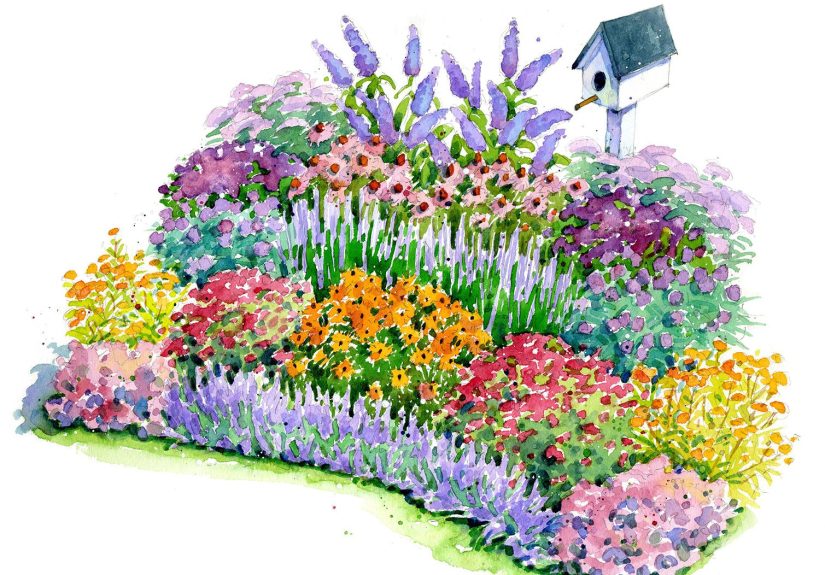
You can scale this plan up or down, but the structure stays the same. Picture a planting bed that’s roughly 10–12 feet long and 6–8 feet deep. If you only have containers, you can still use the same “layers” concept.
Layer 1: A Backbone Shrub (or Two)
Back of the bed = structure, berries, nesting cover. Choose 1–2 native shrubs suited to your region and sun level. Good “multi-benefit” categories include:
- Berry/fruiting shrubs: serviceberry, viburnum, elderberry (region-dependent)
- Dense shelter shrubs: native viburnums, inkberry holly (where appropriate)
No-fuss tip: Shrubs reduce maintenance because they fill space reliably and provide year-round value. Think of them as the couch in your living roomeverything else looks more intentional once they’re in place.
Layer 2: The “Butterfly & Bird Buffet” Perennials
Middle of the bed = nectar, host plants, and seed heads. Aim for 5–7 perennial species, in repeating drifts. Classic native-friendly groups many regions can adapt include:
- Milkweeds (for monarchs and other species, choose local native types)
- Bee balm / wild bergamot (pollinator magnet, hummingbird favorite in many areas)
- Coneflowers (nectar + seeds for finches later)
- Black-eyed Susans (reliable bloom, great “starter” native-style plant)
- Blazing star (excellent for butterflies; showy but tough)
- Joe-Pye weed (where it fitstall, late-season nectar powerhouse)
Layer 3: The Front Edge (Grasses + “Landing Pads”)
Front of the bed = neatness (for humans) + shelter (for wildlife). Add 1–2 native grasses and a few shorter blooming plants. Benefits:
- Grasses provide cover and nesting material
- They make the bed look tidy even when flowers fade
- They help birds forage and hide from predators
Where the Water Goes
Put a simple water source within 10–15 feet of cover so birds can drink and retreat quickly. Options:
- Birdbath (keep it shallow; clean and refill regularly)
- Shallow dish + stones (butterflies can “puddle” safely)
- Small recirculating fountain (sound attracts birds; low maintenance if you top it off)
Your Step-by-Step No-Fuss Build (Weekend-Friendly)
Step 1: Pick the “Easy Win” Site
Choose a spot with 6+ hours of sun if possible. Many of the best nectar plants bloom best with sun. Partial shade can still workjust pick shade-tolerant natives. Don’t fight your yard. Work with it.
Step 2: Reduce Lawn, Don’t Overthink Soil
For a no-fuss conversion:
- Mow the area short
- Cover with cardboard (remove tape) and wet it down
- Add 2–4 inches of compost/topsoil mix on top
- Mulch lightly (leave a few small bare patches if you can)
This “sheet mulching” method smothers grass without turning your weekend into a digging-themed fitness challenge.
Step 3: Shop Smart (Avoid “Pesticide-Treated” Plants)
When buying plants, prioritize:
- Native species (not just “pollinator-friendly” labels)
- Untreated plantsavoid plants grown with systemic insecticides
- Perennials (they come back; your future self will feel adored)
Step 4: Plant in Clumps
Instead of one coneflower here and one over there like they’re socially distancing, plant groups of 3–7 of the same species together. Pollinators find food faster, and the garden looks more intentional.
Step 5: Add Host Plants on Purpose
Pick at least 2 host plant types that fit your region. Examples (region-dependent):
- Milkweed for monarchs
- Native asters support multiple species
- Parsley/dill/fennel can host swallowtails (great in mixed ornamental/edible gardens)
- Native grasses can serve as hosts for some skipper butterflies
No-fuss mindset: Expect leaves to look chewed. That’s not damageit’s proof you built a functional ecosystem.
Simple Plant Palettes (Pick One and Adjust Locally)
These are “training wheels” palettessolid, widely used categories. Swap exact species with what’s native to your ZIP code and available locally.
Northeast / Mid-Atlantic Starter Palette
- Serviceberry (shrub/small tree)
- Viburnum (native shrub)
- Milkweed (local native type)
- Purple coneflower
- Bee balm / wild bergamot
- Blazing star
- Goldenrod
- New England aster (or other native aster)
- Little bluestem (native grass)
Midwest Starter Palette
- Serviceberry or native viburnum
- Milkweed (local native type)
- Black-eyed Susan
- Purple coneflower
- Bee balm
- Blazing star
- Joe-Pye weed (if space allows)
- Asters + goldenrods (late-season must-haves)
- Little bluestem or switchgrass
South / Southeast Starter Palette
- Native berrying shrub (region-appropriate viburnum, elderberry, or similar)
- Milkweed (local native type)
- Coreopsis
- Bee balm (region-suitable species)
- Coneflowers (region-suitable)
- Blazing star
- Native sunflower species (where appropriate)
- Asters + goldenrods for fall
- Native bunchgrass for structure
West / Southwest Starter Palette
The West is huge and varied, so lean especially hard on local native plant lists. Still, the structure holds:
- A native shrub for cover (region-appropriate)
- Native milkweed species where appropriate
- Drought-tough native wildflowers with staggered bloom
- Native grasses for shelter
- Shallow water source (critical in hot, dry areas)
Maintenance That’s Actually Low-Maintenance
Year 1: Water Like You Mean It
The first year is about establishment. Water deeply a couple times a week at first (depending on heat and soil), then taper. After plants root in, natives usually need much less.
Deadheading: Do It Selectively
If you want more blooms, you can deadhead some flowers. But leave plenty of seed heads for birdsespecially coneflowers and similar plants. In winter, those seed heads are a pantry.
Fall Cleanup: Don’t Over-Clean
Butterflies and beneficial insects can overwinter in leaf litter and hollow stems. Instead of cutting everything down and raking every leaf like your yard is auditioning for a detergent commercial, try this:
- Leave stems standing until spring
- Keep some leaf litter under shrubs or in a corner
- Cut back in spring after warmer weather returns
Pesticides: The One Thing That Breaks the System
Broad insecticides don’t just remove “bad bugs.” They remove the food supply. If you want birds and butterflies, you need insects. Use hand-picking, targeted approaches, and tolerate a little cosmetic damage. Nature is not a showroom.
Quick Troubleshooting (Because Gardens Love Drama)
“I’m Getting Flowers, But No Butterflies”
- Add host plants (not just nectar)
- Plant more in clumps (easier to find)
- Provide a shallow water dish with stones
- Double-check pesticide use nearby (including lawn treatments)
“Birds Show Up, Then Vanish”
- Add more cover (shrubs and grasses)
- Keep water clean and consistent
- Let seed heads stand through winter
“Something Is Eating My Plants”
Congratulations: your garden is working. If the plant is a host plant, chewing is the whole point. If it’s getting destroyed, add more plant diversity, protect young plants temporarily, and avoid chemical quick fixes that collapse the food chain.
What “Perfect” Really Looks Like
A perfect bird and butterfly garden isn’t spotless. It has a little leaf litter. A few chewed leaves. Some seed heads in winter. It looks like a place where life happens.
If you build the garden using the no-fuss formulanative plants, bloom succession, water, and shelteryou’ll end up with a space that’s both beautiful and functional. And the best part? Over time, it gets easier. Nature starts doing the heavy lifting, and you get to enjoy the show.
Real-World Experiences and “No-Fuss” Lessons Gardeners Commonly Share (Extra )
Ask a group of backyard gardeners what actually happens after they plant a bird-and-butterfly garden, and you’ll hear the same funny pattern: everyone starts out imagining a peaceful nature documentary, and then reality shows up like a chaotic sitcom… in the best way.
First surprise: the garden looks “sleepy” at first. People often expect instant magiclike butterflies will arrive the moment the last plant hits the soil. But in real yards, year one is mostly about roots. Gardeners commonly report that the first season feels like a slow build: a few bees here, a curious bird there, and thenoften in late summersuddenly things ramp up. It’s like the yard finally gets the memo: “Oh! We’re doing habitat now.”
Second surprise: chewed leaves can be emotionally confusing. Gardeners who’ve spent years trying to prevent insect damage sometimes panic when milkweed or parsley starts looking like a salad bar after a middle-school field trip. But many also say that once they reframe it“This is the point”it becomes genuinely satisfying. Spotting a caterpillar feels like finding proof that the plan worked. And yes, people absolutely end up showing caterpillars to friends who didn’t ask. (That’s how you know you’re officially a garden person.)
Third surprise: birds change behavior when you change the menu. Gardeners often notice that birds don’t just visit for seedthey start foraging. They hop through grasses, poke around stems, and make quick stops at shrubs like they’re checking a grocery list. When seed heads are left up through fall, folks frequently mention finches and sparrows hanging around longer. It’s a small shift, but it makes the yard feel “inhabited,” not just decorated.
Fourth surprise: water is the great multiplier. Many gardeners say adding even a simple birdbath dramatically increased visitsespecially during hot spells. The funniest part is how quickly birds act like they own it. You put out a birdbath and suddenly you’re running a very exclusive spa with extremely demanding clients who yell if you’re late refilling it.
Fifth surprise: the easiest gardens are the ones you don’t over-manage. People commonly share that when they stopped doing a “total fall cleanup” and left some stems and leaves, spring got better: more early pollinators, more activity, and fewer “where did everybody go?” moments. It’s also a time-saver. The no-fuss approach isn’t lazinessit’s ecology with better boundaries.
Over time, gardeners often describe a mental shift: they stop aiming for perfect symmetry and start aiming for function. A garden that feeds birds, grows caterpillars, blooms across seasons, and needs less babysitting? That’s not just pretty. That’s a yard that works.







 Close
Close