
Table of Contents >> Show >> Hide
- The Episode Behind the Headline: Why “Homer at the Bat” Still Hits
- Why This Simpsons Baseball Episode Changed the Show
- The Baseball References Are Smart, Not Just Loud
- Why “Homer at the Bat” Feels Like the Golden Age in a Bottle
- The Hall of Fame Connection Is Real, Not Just a Cute Headline
- Thirty Years Later, What the Episode Still Gets Right
- Experience Section: What Rewatching “Homer at the Bat” Feels Like Now
- Conclusion
Some TV episodes age like milk. Others age like a perfectly broken-in baseball glove: a little creaky, a little weathered, and somehow even better because time got involved. When people call The Simpsons a cultural institution, they are usually thinking about episodes like “Homer at the Bat”, the baseball classic that first aired in 1992 and hit its 30th anniversary in 2022. Three decades later, it still feels less like a nostalgic relic and more like a grand slam of comedy, sports satire, and cartoon chaos.
That matters because plenty of celebrity-heavy episodes from any era can feel like flashy stunt casting in hindsight. “Homer at the Bat” does the opposite. It stuffs nine Major League Baseball stars into Springfield, gives each of them a memorable comic turn, and still leaves Homer Simpson right where he belongs: at the center of the mayhem, wandering through greatness with the confidence of a man who has absolutely no idea what is happening.
So yes, this really is a Hall of Fame episode. Not in the fake, internet-hyperbole sense where every sandwich is “iconic” and every trailer is “breaking the internet.” In this case, the Hall of Fame part is almost literal. The episode was honored by the National Baseball Hall of Fame years after it aired, which is about as official as pop culture gets unless Ken Burns starts narrating your group chat.
The Episode Behind the Headline: Why “Homer at the Bat” Still Hits
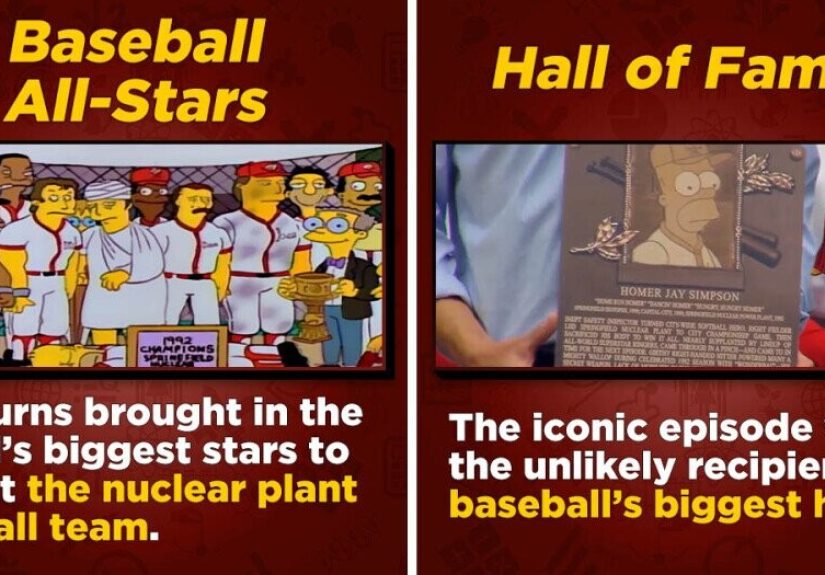
If the title “‘The Simpsons’: A Hall Of Fame Episode Is 30 Years Old” sounds familiar, that is because the reputation of this episode has been growing for years. The setup is gloriously simple. Homer helps transform the Springfield Nuclear Power Plant softball team from lovable losers into contenders thanks to his magical homemade Wonderbat. Mr. Burns, being Mr. Burns, decides that a normal company team is not enough. After betting big on the championship game, he orders Smithers to recruit ringers from professional baseball.
That is where the episode becomes a comedy museum of early-1990s baseball. Suddenly Springfield has Don Mattingly, Wade Boggs, Ozzie Smith, Ken Griffey Jr., Roger Clemens, Jose Canseco, Darryl Strawberry, Steve Sax, and Mike Scioscia walking through town like they took a wrong turn on the way to spring training and ended up in an animated fever dream.
On paper, that premise sounds like a ratings stunt. On screen, it becomes something better: a perfect collision between America’s favorite dysfunctional family and America’s pastime. The episode understands baseball deeply enough to parody it lovingly. It also understands celebrity well enough to mock the whole concept of star power without draining the stars of their charm.
It Is a Sports Episode, But It Is Also a Simpsons Episode
That distinction is the secret sauce. A lesser sitcom would have used the ballplayers as decorative wallpaper. The Simpsons gives them actual comic identities. Steve Sax gets tangled up in crime panic. Ozzie Smith becomes a victim of cartoon physics and vanishes into a mysterious dimension. Roger Clemens is reduced to chicken confusion. Ken Griffey Jr. suffers one of the funniest exaggerated sports ailments ever animated. Don Mattingly gets dragged into the all-time great “sideburns” misunderstanding. Every cameo lands because every player becomes part of the joke machine.
And yet the family never disappears. Homer is still the emotional engine of the episode. He is proud of his Wonderbat, thrilled by softball glory, devastated when the ringers shove him aside, and ultimately too oblivious to realize that destiny has chosen his skull as a championship weapon. It is a very Homer victory: accidental, painful, and weirdly noble.
That balance is a big reason “Homer at the Bat” remains one of the best Simpsons episodes ever. It juggles spectacle without losing the heart of the series. Or to put it another way, it invites baseball royalty into Springfield and still makes room for Homer to win the game with his face. That is elite roster management.
Why This Simpsons Baseball Episode Changed the Show
By the time this episode aired, The Simpsons was already popular, but “Homer at the Bat” pushed the series into a bigger, stranger, more ambitious zone. It showed that the writers could build an episode around an absurdly large premise, fill it with celebrities, layer in movie references, and somehow still make the entire thing feel coherent. That is not easy. Most shows struggle to keep one guest star from feeling like an awkward cousin at Thanksgiving. This episode handled nine.
It also helped prove something important about the show’s growing power in popular culture. Athletes actually wanted to be in Springfield. The series had become enough of a phenomenon that real baseball stars were willing to show up as cartoon versions of themselves, make fun of their images, and let the writers do strange things to them. That was a flex before the internet invented the word “flex” for everything from watches to breakfast bowls.
Critically and culturally, the episode marked a turning point. It demonstrated that The Simpsons could stretch beyond the grounded family satire of its earlier years and embrace a more surreal, expansive comic world. You can feel the show discovering how much bigger its imagination could be. The episode starts with a softball signup sheet and ends in a place where old movie references, baseball mythology, Broadway-level joke density, and cartoon absurdism all live in harmony.
The Ratings Win That Mattered
There is also a delicious piece of TV history attached to this episode. “Homer at the Bat” was widely remembered as the first new Simpsons episode to beat a new episode of The Cosby Show in the ratings. At the time, that was not a small achievement. That was a planted flag. It signaled that Fox’s animated troublemaker was no longer just the bratty upstart. It was becoming a genuine prime-time force.
So when fans talk about this episode as a landmark, they are not just being sentimental. It really did matter to the growth of the series, to the identity of the network, and to the way celebrity cameos would be used in animation going forward. The show basically looked at television convention, shrugged, and said, “Let’s put nine all-stars in a cartoon and make it art.”
The Baseball References Are Smart, Not Just Loud
One of the reasons this classic Simpsons episode has held up so well is that it respects baseball history while also gleefully goofing on it. The title nods to the old poem Casey at the Bat. Homer’s Wonderbat evokes The Natural. The closing number, “Talkin’ Softball,” turns baseball nostalgia into a punchline machine. The episode is packed with little gifts for sports nerds, but it never requires a PhD in box scores to be funny.
That is a tough trick. Good sports comedy has to work for two audiences at once: people who know the game inside out and people who only know that a hot dog costs too much at the stadium. “Homer at the Bat” nails both. If you know baseball, you appreciate the player choices, the era-specific star aura, and the parody of baseball mythology. If you do not, you still get a beautiful avalanche of jokes about ego, superstition, bad luck, and Mr. Burns behaving like a tiny undead Little League dad with unlimited money.
The episode also captures something many modern sports stories miss: baseball is funny. It has rituals, quirks, petty superstitions, old ghosts, strange language, and a pace that lets nonsense bloom. The Simpsons understood that. It did not treat baseball as sacred marble. It treated it like a living American mythology that deserved both affection and a pie in the face.
The Gags That Never Leave Your Brain
Every great episode has jokes that turn into permanent cultural wallpaper, and “Homer at the Bat” has a whole warehouse of them. The “sideburns” argument is one of the best examples of a joke that gets funnier every time because it is so pointlessly authoritative. The Darryl Strawberry heckling bit is petty perfection. The Ozzie Smith visual gag is ridiculous in exactly the right way. And the Barney-Wade Boggs prime minister debate still lands because it is gloriously unexpected.
That is the thing about the episode’s humor: it is not just clever; it is sticky. These jokes burrow into memory. They become shorthand among fans. Even people who have not watched the episode in years can hear certain lines in their heads instantly, like old friends barging into a conversation uninvited and somehow improving it.
Why “Homer at the Bat” Feels Like the Golden Age in a Bottle
When fans debate the golden age of The Simpsons, this episode usually strolls onto the field wearing a varsity jacket and no one argues too hard. It represents so much of what made the series special in its peak years: absurd intelligence, emotional clarity, ruthless joke writing, cultural confidence, and the ability to be both broad and precise at the same time.
The script does not waste space. The animation supports the comedy instead of just illustrating it. The references are rich without turning smug. Mr. Burns is magnificent in full tyrant mode. Smithers gets to be the weary logistics manager of a completely insane plan. Homer gets humiliated, sidelined, and redeemed. And all of it moves with the confidence of a show that knows exactly how funny it is but still works hard anyway.
That matters even more 30 years later because audiences now live in a world drowning in cameos, nostalgia bait, reboot fumes, and corporate synergy disguised as entertainment. A lot of modern pop culture feels assembled by committee and approved by three branding departments and one executive who says things like “Can it trend harder?” “Homer at the Bat” reminds viewers what it looks like when a big, crowd-pleasing idea is executed by writers who are actually having fun.
The Hall of Fame Connection Is Real, Not Just a Cute Headline
The “Hall of Fame” label attached to this Simpsons baseball episode is more than fan praise. The National Baseball Hall of Fame and Museum actually celebrated “Homer at the Bat”, honoring the episode and even preserving materials connected to it. Homer Simpson was given a ceremonial “induction,” which feels both absurd and completely appropriate. If baseball can make room for poetry, folklore, and superstition, surely it can spare a little space for a man who won a title game by getting beaned in the head.
That recognition says a lot. It confirms that the episode did not just parody baseball from the outside. It joined baseball culture. It became part of the sport’s wider storytelling tradition, the kind of pop-cultural artifact people revisit because it captures something true about the game, the era, and the country that made both.
And really, that is why the episode lasts. It is not merely a funny half hour of television. It is a time capsule of early-1990s celebrity, a valentine to baseball weirdness, a milestone in animation history, and one of the clearest examples of The Simpsons becoming the giant it would remain for decades.
Thirty Years Later, What the Episode Still Gets Right
Rewatching “Homer at the Bat” now, the freshest surprise is how modern it still feels. Not because the references are current; they are proudly of their time. It feels modern because it understands the mechanics of fandom. It knows that sports fans are half statistician, half poet, and half unhinged uncle. Yes, that is three halves. Baseball fans can handle it.
The episode also understands that fame is funniest when punctured gently. These baseball stars are not presented as untouchable legends. They are vain, confused, dramatic, unlucky, insecure, or bizarrely overcommitted to sideburn policy disputes. The joke is never that they are worthless. The joke is that celebrity does not save anyone from cartoon humiliation. In Springfield, everybody can get got.
That spirit is a big reason the episode keeps winning new admirers. It is generous, not mean. It loves baseball, but it is not blinded by reverence. It loves Homer, but it never pretends he is secretly competent in the normal sense. It loves absurdity, but it grounds the madness in characters who still feel emotionally real. That mix is rare. Three decades later, it still looks easy only because the episode is so good at hiding the difficulty.
Experience Section: What Rewatching “Homer at the Bat” Feels Like Now
Watching “Homer at the Bat” today feels a little like opening an old box in the attic and finding it packed with baseball cards, ticket stubs, and one note from your younger self that simply says, “This rules.” The episode carries that exact energy. It is warm without being mushy, nostalgic without begging for applause, and specific enough that the details make the memories sharper instead of fuzzier.
For viewers who grew up with classic The Simpsons, the experience is almost physical. You remember the rhythm before the jokes land. You know what is coming, and it still works. That is a special kind of comedy durability. Plenty of funny scenes get laughs once. The great ones make your brain grin in advance. By the time the softball team hits the field, you are not just watching an episode; you are revisiting a shared language.
There is also something deeply satisfying about seeing a sports story where the stakes are ridiculous and the emotions are still sincere. Homer really does care about that team. Mr. Burns really does care about winning, albeit in the deeply unhealthy way only a billionaire ghoul can. The players, even as exaggerated cartoon versions of themselves, still bring a weird kind of dignity to the silliness. The result is a viewing experience that feels both low-pressure and strangely meaningful, like a summer game played for no reason and every reason at once.
Then there is the laughter that comes from recognition. Not just recognition of jokes, but of a whole era of entertainment. This was a time when prime-time TV could still surprise people by being openly smart, silly, and wildly specific. Rewatching the episode now can feel like stepping back into a period when writers trusted audiences to keep up with references to old baseball culture, movie homages, and strangely literary nonsense. Nobody stops to explain the joke. The episode just throws the fastball and assumes you can hit.
That confidence is part of the pleasure. So is the generosity. “Homer at the Bat” never talks down to sports fans, comedy fans, or casual viewers. It invites all of them in. If you know every player, great. If you only know Homer, also great. If your strongest baseball opinion is that the snacks are expensive, the episode still has room for you. That broad welcome is why rewatching it can feel oddly communal, even when you are alone on a couch with a bowl of chips and the sudden urge to yell at a television about sideburns.
And maybe that is the deepest experience attached to the episode now: gratitude. Gratitude that a show at the top of its game decided to make something this silly with this much craft. Gratitude that the celebrity cameos were used for character jokes instead of hollow clout. Gratitude that Homer Simpson, patron saint of accidental achievement, still gets to wander into a sports myth and come out the hero. In a media landscape full of loud things that vanish by next Tuesday, rewatching this episode feels reassuring. Some stories stick. Some jokes survive. Some half-hours become part of the culture’s furniture. Thirty years later, “Homer at the Bat” still feels lived-in, loved, and very much alive.
Conclusion
So yes, ‘The Simpsons’: A Hall Of Fame Episode Is 30 Years Old is a headline with some real weight behind it. The episode in question, “Homer at the Bat,” is not just one of the best sports episodes in TV history. It is one of the clearest demonstrations of what made The Simpsons great in the first place. It is smart without showing off, sentimental without getting syrupy, and packed with jokes that still connect like line drives.
Most importantly, it still feels joyful. Not manufactured joy. Not algorithm-approved joy. Real joy. The kind that comes from watching artists take a bonkers premise, commit completely, and make it sing. Or in this case, make it sing “Talkin’ Softball” over sepia-tinted credits while Homer accidentally becomes a legend. That is not just a classic. That is Cooperstown-level nonsense. And television is better for it.





 Close
Close