
Table of Contents >> Show >> Hide
- What the Allies Are Actually Doing
- Why Simulate a North Korean Attack Now?
- What “Simulating an Attack” Really Looks Like
- The Nuclear Piece Is No Longer Abstract
- Why North Korea Reacts So Loudly
- Do These Exercises Prevent War or Risk It?
- What This Means for the Region
- Experiences From the Edge of Deterrence
- Conclusion
On the Korean Peninsula, military exercises are never just military exercises. They are alarms, signals, political messages, insurance policies, and occasionally the geopolitical equivalent of checking whether the fire extinguisher still works before somebody starts juggling torches in the kitchen. That is why the latest round of U.S.-South Korea drills matters so much. Washington and Seoul are not simply marching troops around a map for exercise-induced cardio. They are running command-post simulations, field maneuvers, evacuation drills, missile-defense scenarios, cyber-response planning, and rapid-mobilization rehearsals built around a very specific problem: what happens if North Korea attacks, escalates, or tries to throw the alliance off balance in the opening hours of a crisis.
The headline version is dramatic, but not wrong. The United States and South Korea really are simulating a North Korean attack. The more precise version is that they are simulating the messy, fast-moving, multi-domain conditions that would likely accompany a North Korean strike or major provocation. That includes missile threats, artillery pressure, cyberattacks, GPS jamming, infiltration, disruption of civilian movement, and the political shock that would come with any confrontation on one of the most heavily armed frontiers in the world.
What the Allies Are Actually Doing
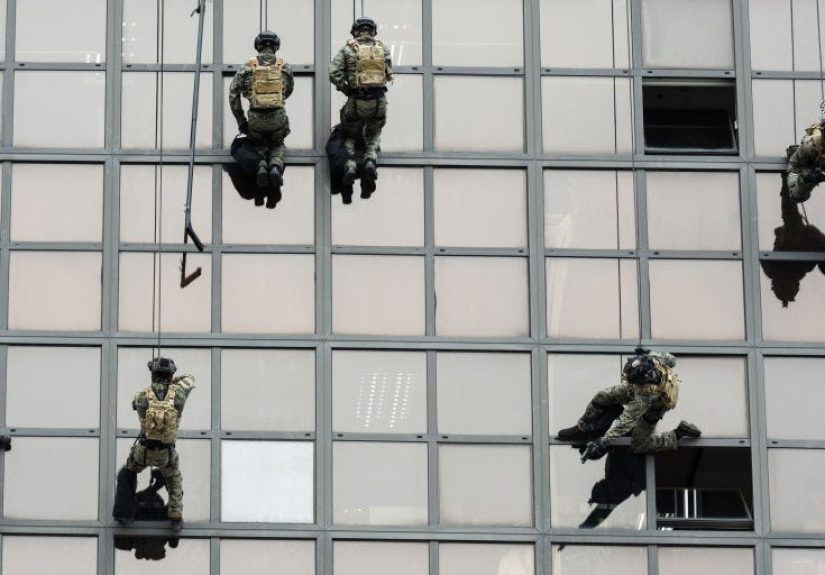
The centerpiece of the current training cycle is Freedom Shield, the annual U.S.-South Korea exercise designed to strengthen combined defense readiness. In 2026, the exercise ran from March 9 to March 19 and involved about 18,000 South Korean troops, along with U.S. forces whose numbers were not publicly detailed. It combined computer-assisted command-post training with the companion Warrior Shield field events, which are meant to make the whole thing feel a lot less like a PowerPoint marathon and a lot more like the opening chapter of a real emergency.
And yes, that distinction matters. Command-post exercises are where generals, planners, and operations staffs rehearse decisions under pressure: who moves, who reinforces, who defends, who evacuates civilians, who manages logistics, who coordinates air and missile defense, and how quickly those decisions can be made when the clock is being rude. Field training exercises, meanwhile, put boots, vehicles, aircraft, engineers, medics, and communications units into realistic conditions. Together, they create a full-spectrum rehearsal of alliance warfighting and crisis response.
This year’s drills were also tied to a broader strategic goal: preparing for the eventual transfer of wartime operational control to South Korea. That means the allies are not only practicing how to respond to a North Korean threat, but also testing how command arrangements would function if Seoul takes on a larger wartime leadership role in the future. In plain English, the alliance is not just sharpening its sword. It is also checking who grabs which end of the sword when things get ugly.
Why Simulate a North Korean Attack Now?
Because North Korea has spent years giving the region a very loud reminder that it is not standing still.
Pyongyang has continued advancing its missile and nuclear programs, deepening its military signaling, and broadening the kinds of threats it poses. Analysts and officials increasingly focus not only on ballistic missiles, but also on cruise missiles, battlefield nuclear concepts, cyber operations, drone threats, and the possibility of rapid, coordinated strikes designed to create confusion before the allies can fully respond. U.S. and South Korean planners have adapted accordingly.
That adaptation shows up clearly in the exercises. Recent summer drills have reflected “realistic threats” across multiple domains, including not just missile attacks but also GPS jamming and cyberattacks. Earlier rounds of Freedom Shield were publicly described as focusing on identifying and striking cruise-missile threats that North Korea has suggested could carry nuclear warheads. In other words, the training menu is no longer built around a single giant tank charge rolling south. It is built around a modern threat set in which disruption is part of the attack.
That makes sense given North Korea’s recent behavior. Pyongyang has continued weapons testing, expanded its strategic rhetoric, and signaled that nuclear weapons are central to regime survival and coercive leverage. It has also strengthened ties with Russia, a development that raises fresh questions about technology sharing, military learning, and the confidence Kim Jong Un may draw from new strategic partnerships. No alliance planner worth their coffee budget is going to look at that and say, “You know what, let’s just wing it.”
What “Simulating an Attack” Really Looks Like
If you picture a single giant mock battle in which one side wears “North Korea” name tags, that is not quite how this works. Modern alliance exercises are layered. Some portions are digital and command-driven. Others are intensely physical and tactical.
During Freedom Shield 2026, U.S. and South Korean forces practiced noncombatant evacuation operations, mobilization, initial defense, and offensive operations. They also carried out river-crossing drills, amphibious assault events, movement-to-contact training, live-fire preparation, medical readiness activities, detainee handling, and chemical, biological, radiological, and nuclear decontamination tasks. That sounds like a lot because it is a lot. A North Korean crisis would not arrive as a tidy one-lane emergency. It would be a traffic jam made of missiles, politics, logistics, and bad sleep.
These scenarios matter because first hours and first days are everything on the peninsula. North Korea’s strategy has long been understood as one that seeks to exploit surprise, shock, and speed. The allies therefore train to compress response time. They want commanders to make faster decisions, units to move with fewer mistakes, and joint systems to work across land, sea, air, cyber, and space-linked operations. The goal is not theatrical realism for its own sake. The goal is to make hesitation less likely in a real crisis.
The Nuclear Piece Is No Longer Abstract
This is where the story gets especially important. The alliance is not only training for conventional attacks. It is also building a more detailed framework for dealing with North Korea’s nuclear threat.
Since the 2023 Washington Declaration, the U.S. and South Korea have deepened cooperation through the Nuclear Consultative Group. In 2024, the two countries announced joint guidelines for nuclear deterrence and nuclear operations on the Korean Peninsula. That does not mean South Korea is becoming a nuclear state, and it does not mean every exercise is a nuclear war rehearsal. What it does mean is that the alliance is getting more explicit about how conventional and nuclear planning fit together if Pyongyang tries nuclear coercion or worse.
Officials have described this effort as improving conventional-nuclear integration and strengthening allied deterrence and response capabilities. That phrase may sound like it was polished by twelve committees and a thesaurus, but the meaning is straightforward: South Korea wants more confidence that the U.S. nuclear umbrella is real, usable, and politically credible, while Washington wants a stronger allied framework for deterrence without opening the door to a separate South Korean bomb program.
The drills reflect that shift. Reporting on recent exercises shows that nuclear-related scenarios are increasingly woven into the planning environment, even when the military is careful about describing exactly what is or is not being simulated. The message is clear enough: the alliance wants North Korea to believe that any attempt at nuclear coercion will fail spectacularly and leave the regime worse off than before it started.
Why North Korea Reacts So Loudly
North Korea has long denounced U.S.-South Korea exercises as invasion rehearsals, and this year was no exception. Kim Yo Jong criticized the 2026 drills as provocative and aggressive, while Pyongyang again framed them as proof of hostile intent. That reaction is predictable, but it is not meaningless.
From North Korea’s perspective, these exercises are dangerous precisely because they improve allied readiness. Better interoperability, clearer command lines, and faster mobilization make coercion harder. They also reduce the odds that the alliance can be paralyzed by early strikes or political confusion. That is bad news for any regime that wants crisis leverage.
At the same time, Pyongyang often uses the drills as a pretext for its own shows of force. Missile launches, harsh statements, and military demonstrations tend to accompany or follow major allied exercises. That does not prove the exercises cause North Korean aggression in a simple one-to-one way, but it does show how military signaling on the peninsula becomes a noisy feedback loop. One side drills, the other denounces, then somebody launches something into the sea, and suddenly the regional temperature has gone from simmer to boil.
Do These Exercises Prevent War or Risk It?
The honest answer is: both arguments exist, but deterrence is the stronger one.
Critics say large-scale drills can harden North Korean paranoia, narrow diplomatic space, and create the risk of miscalculation. That concern is not frivolous. On a peninsula where minutes matter and suspicion is practically part of the weather, signaling can be misread.
But supporters of the exercises argue, with good reason, that poor readiness is even more dangerous. If North Korea ever believed the alliance was slow, divided, undertrained, or politically wobbly, the temptation to escalate or coerce could rise. Military exercises are therefore less about provoking war than about making war look unwinnable to the other side.
That is the logic behind the U.S.-South Korea approach. The alliance is trying to convince Pyongyang that surprise will not work, intimidation will not work, nuclear blackmail will not work, and any attack would trigger a coordinated response across the full range of allied capabilities. Deterrence, at its core, is about shaping the enemy’s expectations before the shooting starts. It is psychology wearing combat boots.
What This Means for the Region
The significance of these simulations goes beyond the peninsula. They signal to Japan that the alliance network in Northeast Asia remains active. They signal to China that the U.S. still intends to maintain a serious military role in the region. They signal to Russia that instability on the Korean Peninsula will not find Washington and Seoul asleep at the switch. And they signal to South Korean voters that the government is trying to balance diplomacy with preparedness, not replace one with the other.
In that sense, the drills are as much political communication as military preparation. Every movement of engineers, aviators, logisticians, and command staffs says something. The allies are saying they expect a complicated threat environment. They are saying they take North Korea’s evolving capabilities seriously. Most of all, they are saying that deterrence is not a slogan. It is a practice, and practice is what these exercises are for.
Experiences From the Edge of Deterrence
To understand why these exercises matter, it helps to think about the human experience wrapped around them. For soldiers and planners, a North Korean attack scenario is not an abstract map exercise. It is a test of whether radios connect, whether medical teams move fast enough, whether evacuation routes stay open, whether engineering units can bridge obstacles under pressure, and whether commanders can make decisions before the situation outruns them. In real life, there is no pause button, no “please hold while we update the slide deck,” and no bonus points for sounding calm while the system falls apart.
For civilians in South Korea, especially those living with the constant background hum of the North Korean threat, the drills can feel strangely ordinary and deeply unsettling at the same time. Air-raid awareness, emergency messaging, news alerts about missile launches, and periodic military activity are part of the broader security atmosphere. Many people go to work, grab coffee, complain about traffic, and still carry the knowledge that one of the world’s most militarized borders is not far away. That combination of normal life and strategic tension is one of the peninsula’s defining experiences.
For alliance officers, the challenge is coordination. The United States and South Korea operate together closely, but close cooperation still has to be practiced constantly. Language, procedures, command relationships, logistics chains, intelligence sharing, and political sensitivities all need to line up in real time. Exercises are where those rough edges get discovered before a crisis does the discovering for everyone.
For analysts and observers, the most striking experience is often the rhythm of escalation and rehearsal. North Korea tests a weapon. The allies adjust. The allies drill. North Korea denounces the drill. Markets shrug, diplomats issue statements, and the cycle continues. It can start to feel repetitive from a distance, but repetition is exactly why these exercises are important. On the peninsula, routine is not boredom. Routine is resilience.
And for the broader public watching from abroad, the lesson is simple: deterrence is not built only by dramatic speeches or aircraft-carrier photo ops. It is built in tedious briefings, muddy training grounds, command-post simulations, medical logistics rehearsals, and all the other unglamorous tasks that make a military alliance work when something terrible might happen. If that sounds less cinematic than the phrase “simulating a North Korean attack,” well, welcome to real security policy. It is less Top Gun, more organized anxiety with excellent radios.
Conclusion
The U.S. and South Korea are simulating a North Korean attack because they believe the threat environment demands it. These drills are not random displays of strength or ritual chest-thumping. They are structured efforts to prepare for missile strikes, cyber disruption, evacuation emergencies, rapid mobilization, and the possibility of nuclear coercion. In a region where miscalculation could be catastrophic, readiness is not optional.
That does not mean military exercises are a magic solution. They cannot erase political tension, restart diplomacy, or guarantee that North Korea will behave predictably. What they can do is make the alliance faster, sharper, and harder to intimidate. On the Korean Peninsula, that may be the difference between a crisis that spins out of control and one that never starts in the first place.







 Close
Close