
Table of Contents >> Show >> Hide
- What Makes a Coffee Maker Worth Keeping Out All the Time?
- The Coffee Makers That Truly Deserve the Space
- Features That Matter More Than Fancy Marketing
- How to Choose the Right Coffee Maker for Your Routine
- What Usually Wastes Counter Space
- The Real-Life Experience: What It Feels Like When a Coffee Maker Actually Earns Its Spot
- Final Pour
Counter space is kitchen real estate, and kitchen real estate is expensive. That means every appliance sitting out in the open should be earning its keep. A coffee maker that turns out flat, lukewarm sadness while hogging half the counter? Eviction notice. A machine that consistently brews flavorful coffee, fits your routine, and does not require an engineering degree before sunrise? That one gets to stay.
The best coffee makers worth your counter space are not always the flashiest, the biggest, or the ones with enough buttons to launch a small rocket. The real winners make excellent coffee with repeatable results, feel easy to use on sleepy mornings, and match the way people actually drink coffee at home. Some homes need a polished drip machine that can handle weekday autopilot and weekend brunch. Others need a compact single-serve brewer, a beginner-friendly espresso machine, or a manual brewer that takes up almost no room at all.
So let’s get practical. If you are trying to choose the best coffee maker for your kitchen, here is what actually deserves a permanent spot on your countertop, plus what to skip if you would rather not waste money, space, or precious morning patience.
What Makes a Coffee Maker Worth Keeping Out All the Time?
A coffee maker earns counter space when it gets the fundamentals right. First comes flavor. Great machines brew at the right temperature, distribute water evenly over the grounds, and produce coffee that tastes balanced instead of bitter, burnt, or weirdly hollow. That sounds obvious, but in the world of home brewing, “obvious” is surprisingly rare.
Next comes convenience. A machine can brew a beautiful cup, but if it is annoying to fill, confusing to program, or a nightmare to clean, it becomes decorative clutter with a plug. The best models make good coffee without turning every morning into a tiny crisis.
Then there is footprint. Not every excellent coffee maker is small, but the ones worth leaving out usually justify their size with either versatility or exceptional coffee quality. In other words, if a brewer is going to occupy prime kitchen territory, it should either do multiple jobs well or do one job so well that you forgive it for being a bit of a countertop diva.
The Coffee Makers That Truly Deserve the Space
1. For Most Homes: A Quality Drip Coffee Maker
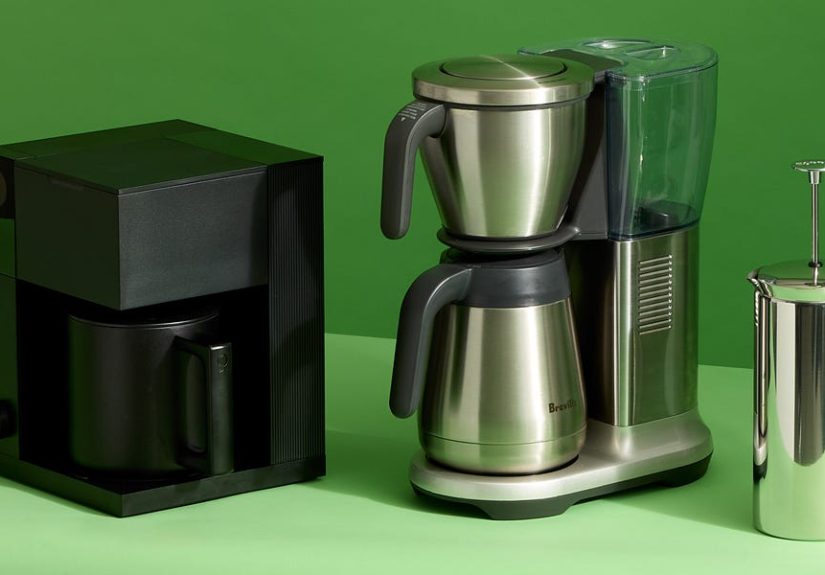
If your household drinks coffee daily and prefers full mugs over tiny, dramatic espresso shots, a high-performing drip coffee maker is still the smartest buy. This is the category where the biggest names keep resurfacing for good reason: machines like the Technivorm Moccamaster, OXO Brew, Ratio Six, Breville Luxe Brewer, Breville Precision Brewer, and Fellow Aiden keep winning praise because they focus on what actually matters. They brew evenly, hit strong flavor notes, and feel built for repeat use instead of one honeymoon week followed by disappointment.
The beauty of a great drip machine is that it does not ask much from you. Add water, add grounds, press a button, and receive a reliably good pot of coffee. Some models lean minimalist and beautiful, like the Moccamaster and Ratio Six, both of which have a serious “I own matching mugs on purpose” energy. Others, like the Fellow Aiden or Breville Precision Brewer, appeal to coffee enthusiasts who want more control over temperature, bloom, and brew profiles without doing full manual pour-over before 7 a.m.
If you want a daily driver that feels premium without becoming precious, this category is where your money works hardest. For many households, the answer to “what coffee maker is worth the counter space?” is simply a very good drip brewer and the discipline to stop shopping after that.
2. For Mixed Households: A Versatile Hybrid Brewer
Some kitchens are coffee battlegrounds. One person wants a carafe. Another wants one quick cup. Someone else wants iced coffee. A fourth person apparently believes “specialty” means “dessert in a mug.” In that kind of home, a hybrid brewer can be the hero.
Machines like the Ninja DualBrew stand out because they handle both grounds and pods, brew multiple sizes, and offer different styles without forcing you to crowd the kitchen with two or three separate devices. That kind of flexibility is genuinely useful when households have different routines. It also makes sense for people who entertain, work from home, or fluctuate between “just give me caffeine” and “today I am crafting a beverage.”
The trade-off is size and complexity. Hybrid brewers are usually bigger and have more parts, which means they are worth the space only if you will actually use the extra features. If your routine is one plain morning mug and nothing else, do not buy the appliance version of a Swiss Army knife when a sharp chef’s knife would do.
3. For Small Kitchens: A Single-Serve Machine That Pulls Its Weight
A single-serve coffee maker can be a brilliant use of space or a total waste of it. The difference comes down to brew quality, speed, and whether the machine offers enough flexibility to justify its footprint. The better options in this category include the Nespresso VertuoPlus, Keurig K-Supreme Plus Smart, Ninja Pods & Grounds Specialty Single-Serve Coffee Maker, and Bruvi.
Nespresso machines tend to win over people who want convenience but still care about body and crema-like texture, especially when espresso-style drinks are part of the routine. Keurig machines remain popular because they are fast, familiar, and easy for households with multiple users. Ninja’s pods-and-grounds approach is appealing because it gives people pod convenience without locking them into pod-only life forever. That matters more than brands like to admit.
The key question is this: are you buying a single-serve brewer because it suits your life, or because you are hoping it will magically improve your life? It will not organize your mornings, answer emails, or make Mondays legal. But it can be perfect for solo drinkers, dorm-like kitchen setups, guest stations, and anyone who does not want an entire carafe waiting around getting sad on a hot plate.
4. For Espresso Lovers: A Compact Machine With Real Skill
If your order history says cappuccino, latte, flat white, and “one more because today has been a lot,” then a compact espresso machine may be more deserving of your counter than a drip brewer. The Breville Bambino Plus keeps showing up as a favorite because it offers a strong balance of approachable size, quick heat-up, and beginner-friendly performance.
This is the kind of machine that makes sense for people who actually want espresso drinks at home, not just people who like the idea of being “into espresso.” There is a difference. The Bambino Plus is small enough for an average kitchen, stylish enough to leave out, and capable enough to make milk drinks feel like a real upgrade from regular brewed coffee.
That said, espresso machines become countertop parasites when owners underestimate the ritual. You will need fresh beans, a decent grinder if your machine does not include one, and a willingness to learn. If that sounds fun, wonderful. If it sounds exhausting, stay in the drip lane and be happy there.
5. For Minimalists: Manual Brewers That Barely Take Any Space
Not every worthy coffee maker plugs in. In fact, some of the most space-efficient options are manual brewers like the Chemex, Kalita Wave, and AeroPress. These are ideal for people who care about flavor, want a tiny footprint, and do not mind taking a more hands-on approach.
A Chemex looks gorgeous and brews a clean, crisp cup that feels slightly more sophisticated than your average weekday coffee. The Kalita Wave is forgiving and beginner-friendly for pour-over. The AeroPress has developed a near-cult following because it is compact, quick, travel-friendly, and capable of making a surprisingly satisfying cup.
These options are especially smart if your kitchen is small and your standards are high. They do not dominate the counter, and they can be tucked away easily. The catch, of course, is that they ask more of you. Manual brewing is less “press button, receive coffee” and more “participate in your own happiness.” For some people, that is charming. For others, it is too much before breakfast.
Features That Matter More Than Fancy Marketing
When comparing the best coffee makers, focus on features that improve coffee and daily use rather than features that just look impressive on a product page. Temperature consistency matters. Even water dispersion matters. Brew basket design matters. A thermal carafe matters if you drink coffee slowly or serve multiple people. Easy-to-remove parts matter because nobody wants to perform countertop surgery just to clean yesterday’s grounds.
Programmability can be helpful, but only if the interface is intuitive. Built-in grinders can be excellent on some drip machines and underwhelming on others. Smart features are fun when they genuinely simplify brewing, but not when they turn a coffee maker into an app subscription with a water tank.
Also, do not underestimate aesthetics. A coffee maker that lives on your counter becomes part of your kitchen’s visual rhythm. There is nothing wrong with wanting something that brews well and looks good. Beauty is not a useless feature when the appliance never leaves your line of sight.
How to Choose the Right Coffee Maker for Your Routine
Choose based on your actual habits, not your fantasy self. Your fantasy self hand-grinds beans, discusses tasting notes, and owns linen napkins for no reason. Your actual self may just need coffee fast enough to become a functioning member of society.
If you brew for two or more people most mornings, a quality drip machine is usually the best value. If you mostly drink one cup and care about speed, single-serve makes sense. If milk drinks are your main event, go espresso. If you value compact storage and ritual, manual brewing is a strong choice.
And if your household contains multiple coffee personalities, versatility becomes worth paying for. The goal is not to buy the most advanced machine. It is to buy the one that will still make sense six months from now when the novelty wears off and routine takes over.
What Usually Wastes Counter Space
The biggest offenders are oversized machines with mediocre coffee, pod-only brewers for households that mostly drink full mugs, and bargain coffee makers that overheat, under-extract, or age badly after a few months. A cheap machine is not a deal if it makes you want to stop using it. That is just countertop decor with abandonment issues.
Another mistake is buying a machine for one feature you use twice a year. Iced setting? Great, if you actually drink iced coffee often. Built-in frother? Useful, if lattes are part of the program. Twelve brew modes? Impressive, if you are opening a tiny café beside the toaster.
The Real-Life Experience: What It Feels Like When a Coffee Maker Actually Earns Its Spot
The difference between a decent coffee maker and one that is truly worth your counter space is not always obvious on day one. On day one, almost any new machine feels exciting. It is shiny. It smells faintly of packaging and ambition. You imagine yourself becoming the kind of person who wakes up early, makes excellent coffee, and somehow also folds laundry on time.
The real test begins around week three. That is when the novelty leaves and routine walks in wearing sweatpants. Suddenly, the questions become much more honest. Is the water tank annoying to fill? Does the lid slam shut like it is angry at you? Is cleanup simple, or are there three damp parts air-drying on your counter like tiny coffee-themed punishment?
A truly good coffee maker quietly improves your mornings. You stop thinking about the machine because it is doing exactly what it should. It becomes part of the rhythm. Fill. Brew. Pour. Continue being a person. There is no dramatic learning curve, no daily bargaining, no muttered speech about why the coffee tastes different again today.
That is also when you start noticing the little things that matter more than spec sheets. A carafe that pours without dribbling down the side. Buttons that make sense before caffeine. Coffee that still tastes good on the second mug. A machine that does not look like a plastic spaceship parked next to your fruit bowl.
There is also something satisfying about a coffee maker that suits your identity without demanding a performance. Maybe you are the kind of person who loves the clean ritual of a Chemex and a slow Saturday morning. Maybe you are a one-button hero with a packed schedule and exactly six usable brain cells before 8 a.m. Maybe you want espresso drinks at home because paying coffee shop prices has become a personal insult. The right machine supports your routine instead of trying to rewrite it.
Counter space has emotional value too. A coffee maker is often the first appliance you interact with every day. That makes it surprisingly personal. A good one feels helpful. A bad one feels like being heckled before sunrise. When people say a brewer is “worth every penny,” what they often mean is that it saves friction. It makes daily life smoother. It replaces one tiny frustration with one tiny pleasure, and that trade is bigger than it sounds.
In the end, the best coffee maker is not the one with the longest feature list. It is the one you are genuinely happy to live with. The one that makes coffee you want to drink, fits your kitchen without bullying it, and earns its place every single morning. That is what “worth your counter space” really means. Not just a good appliance, but a good roommate.
Final Pour
If you want one simple takeaway, here it is: buy the machine that matches your actual coffee habits and does the fundamentals exceptionally well. For most people, that means a strong drip brewer. For small kitchens, it may be a smart single-serve machine or a manual favorite like the AeroPress. For latte loyalists, a compact espresso machine is probably the better long-term fit. The winners are not the ones with the loudest features. They are the ones that keep making your mornings better without taking over your kitchen.





 Close
Close