
Table of Contents >> Show >> Hide
- Tile vs. AirTag at a Glance
- How Bluetooth Trackers Actually Work
- Apple AirTag: Best for iPhone Users
- Tile Trackers: Best for Android and Mixed Households
- Range and Real-World Finding Performance
- Battery Life and Durability
- Privacy and Safety: The Serious Part
- Price and Value
- Best Use Cases: Which Tracker Should You Buy?
- Real-World Experience: What It Feels Like to Live With Tile and AirTag
- Final Verdict: Tile vs. AirTag
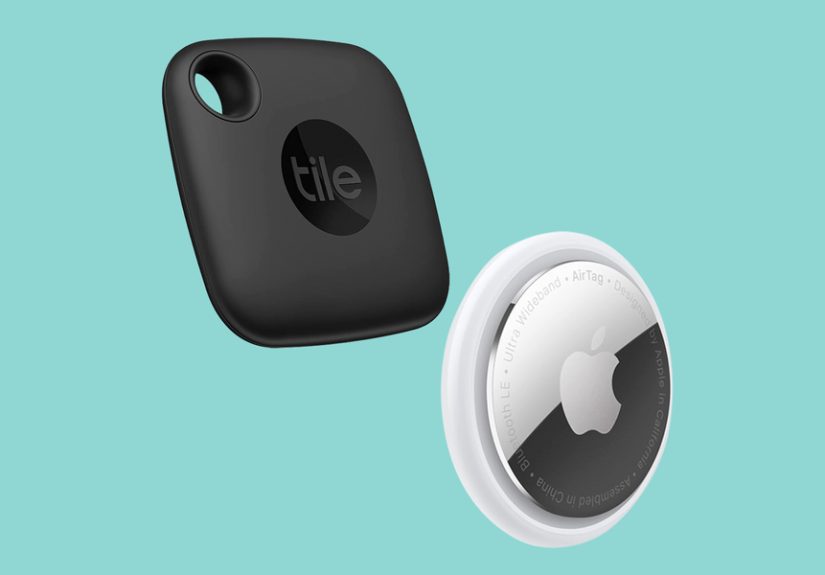
Misplacing your keys used to be a tiny domestic tragedy. Now, thanks to Bluetooth trackers, it can become a 45-second scavenger hunt with dramatic sound effects. Two names dominate that little rescue mission: Tile and Apple AirTag. Both help you find lost stuff, both can live on keyrings or inside bags, and both are small enough to disappear exactly when you need them most. Classic.
But choosing between Tile and AirTag is not as simple as picking the cutest plastic coin. The best tracker depends on your phone, your household, your travel habits, your privacy comfort level, and whether your wallet has room for a round device or prefers something flat. This Tile vs. AirTag tracker comparison guide breaks down the differences in design, range, battery life, app experience, network size, safety features, price, and real-world usefulness.
The short answer: AirTag is usually the better tracker for iPhone users, especially travelers and anyone who wants the biggest crowd-finding network. Tile is the better fit for Android users, mixed-device families, people who want wallet-friendly shapes, and anyone who likes a tracker that can also make a missing phone ring from the couch cushions.
Tile vs. AirTag at a Glance
| Feature | Apple AirTag | Tile Trackers |
|---|---|---|
| Best for | iPhone users and frequent travelers | Android users, iOS users, and mixed households |
| Phone compatibility | Requires Apple devices for setup and daily use | Works with iOS and Android through the Tile/Life360 app |
| Network | Apple Find My network | Tile and Life360 network |
| Precision finding | Yes, with compatible iPhones and Apple Watch models | No Ultra Wideband precision finding on current Tile models |
| Shape options | One round tag | Pro, Mate, Slim, and Sticker formats |
| Battery | User-replaceable CR2032 battery | Tile Pro has replaceable battery; other current models use sealed multi-year batteries |
| Water resistance | IP67 | Current 2024 models are IP68 |
| Typical weakness | Not practical for Android owners | Smaller finding network and privacy concerns around Anti-Theft Mode |
How Bluetooth Trackers Actually Work
First, let’s clear up a common misunderstanding: AirTags and Tiles are not tiny GPS satellites in your backpack. They do not contain magical global tracking elves, although that would make a fantastic product demo. These devices mainly use Bluetooth to communicate with nearby phones. When your tracker is close, your phone can ring it, show its last known location, or guide you toward it.
When your item is far away, the tracker relies on a larger crowdsourced network. An AirTag can be detected anonymously by nearby Apple devices connected to the Find My network. Tile trackers depend on nearby devices running Tile or Life360 services. That network difference is one of the biggest reasons AirTag often performs better for lost luggage, city travel, airports, and items left in public places.
Apple AirTag: Best for iPhone Users
The AirTag is Apple’s polished, minimalist answer to “Where did I put my keys?” The current second-generation AirTag keeps the familiar coin-shaped design but adds stronger finding features, including expanded Precision Finding, an improved speaker, Bluetooth proximity finding, NFC for Lost Mode, and a user-replaceable CR2032 battery. It is rated IP67 for splash, water, and dust resistance, which means it can handle rain, spills, and the occasional accidental puddle drama.
AirTag Strengths
The biggest AirTag advantage is the Find My network. Because iPhones, iPads, and Macs are everywhere in the United States, an AirTag has a high chance of being detected when it is lost in a public area. This is especially useful for luggage, backpacks, camera bags, checked suitcases, and keys left at a coffee shop by someone who definitely “had them a second ago.”
Precision Finding is another major win. With compatible iPhones, AirTag can guide you with distance and direction instead of simply saying, “Good luck, it is somewhere nearby.” That makes it excellent for finding items under a blanket, behind a couch, in a car, or inside the mysterious drawer where cables go to retire.
AirTag also benefits from Apple’s tight software integration. Setup is quick, the Find My app is already built into Apple devices, and Lost Mode can display contact information when someone taps the AirTag with an NFC-capable phone. For iPhone owners, the experience feels smooth because Apple controls the hardware, software, and network.
AirTag Weaknesses
The obvious problem is Android. Android users can receive some unwanted-tracking alerts and scan for compatible trackers, but they cannot use AirTag as their own everyday tracker in the same way an iPhone user can. If you use a Google Pixel, Samsung Galaxy, or Motorola phone, buying an AirTag for yourself is like buying a beautiful front door key to someone else’s house.
AirTag also comes in only one shape. It is small, but it is round and not naturally wallet-shaped. You can buy third-party holders, loops, adhesive mounts, and wallet accessories, but that often adds cost and bulk. A Tile Slim simply slides into a wallet. An AirTag needs a little wardrobe department.
Tile Trackers: Best for Android and Mixed Households
Tile’s biggest advantage is variety. The Tile lineup includes Tile Pro for keys and bags, Tile Mate for everyday items, Tile Slim for wallets and passports, and Tile Sticker for remotes, bikes, gear cases, and other objects that need a tracker stuck to them like a tiny digital barnacle.
The 2024 Tile Pro offers the strongest Tile range, with an advertised range up to 500 feet, a loud 110 dB ring, IP68 water resistance, and a replaceable one-year battery. Tile Mate and Tile Slim offer up to 350 feet of range with sealed batteries rated up to three years, while Tile Sticker is smaller, adhesive, and rated up to 250 feet of range. These options make Tile more flexible than AirTag for different objects.
Tile Strengths
Tile works with both iOS and Android. That matters more than people think. A household with one iPhone user, one Android user, three backpacks, two luggage tags, and one remote that has apparently joined witness protection may find Tile easier to standardize across everyone.
Tile also offers practical shapes. The Slim is one of the simplest wallet tracker solutions because it is card-shaped. The Sticker is handy for remotes, equipment, and small items where a keyring hole would be useless. Tile Pro has a built-in keyring hole, while AirTag needs an accessory for most keychain use.
Another Tile advantage is phone finding. Many Tile models let you double-press the tracker to ring your phone, even if it is hiding nearby. This sounds minor until your phone is wedged between couch cushions and you are late for work. At that moment, it is not a feature; it is a lifestyle intervention.
Tile Weaknesses
Tile’s biggest weakness is network size. Tile’s finding network can be helpful, especially in populated areas, but it generally does not match Apple’s Find My network in density. If your lost bag is sitting in a busy airport, an AirTag may receive more frequent location updates because so many Apple devices pass nearby.
Tile also lacks Ultra Wideband precision finding in its current mainstream lineup. You can ring a Tile and use proximity signals, but you do not get the same arrow-and-distance guidance that makes AirTag feel almost like a treasure map. For nearby searches, this can be the difference between “It is under the couch” and “It is somewhere in this ZIP code of laundry.”
Range and Real-World Finding Performance
On paper, Tile Pro has excellent Bluetooth range. The 2024 Tile Pro advertises up to 500 feet, which is impressive for a small tracker. Tile Mate and Tile Slim advertise up to 350 feet, while Tile Sticker advertises up to 250 feet. AirTag does not emphasize the same kind of simple maximum Bluetooth range number; instead, Apple focuses on Precision Finding and the Find My network.
In real life, Bluetooth range depends on walls, furniture, bodies, cars, bags, weather, and whether your tracker is buried under a pile of gym clothes that now qualifies as a geological layer. Tile may ring loudly and work very well around the house, office, garage, or yard. AirTag tends to shine when an item is outside your immediate Bluetooth range and needs help from the broader Apple network.
For luggage and travel, AirTag usually has the edge. For finding keys in your home, Tile Pro can be excellent, especially because of its loud alarm and built-in keyring hole. For wallets, Tile Slim is more convenient than a round AirTag unless you use a special AirTag wallet.
Battery Life and Durability
AirTag uses a replaceable CR2032 coin cell battery that typically lasts more than a year depending on use. Replacing it is straightforward, inexpensive, and less wasteful than replacing the whole tracker. Tile Pro also uses a replaceable battery rated around one year, making it the most maintenance-friendly Tile model.
Tile Mate, Tile Slim, and Tile Sticker use sealed batteries that can last up to three years. That is convenient because you do not have to think about batteries for a long time. The tradeoff is that when the battery dies, the tracker itself is effectively done. For people who prefer less maintenance, sealed batteries are fine. For people who hate e-waste, replaceable batteries are more appealing.
Durability is strong on both sides. AirTag is IP67 rated, while current Tile models are listed as IP68. Both are designed for everyday splashes, rain, and rough bag life. Neither should be treated like a scuba diving buddy. Your tracker can survive water; it probably does not want a snorkeling vacation.
Privacy and Safety: The Serious Part
Bluetooth trackers are useful, but they also create real safety concerns because a bad actor could hide one in someone else’s bag, car, or coat. Apple has built unwanted tracking alerts into iOS, and Android also supports unknown tracker alerts for compatible trackers, including AirTags and Find Hub-compatible devices. If an unknown tracker appears to be moving with you, your phone may show an alert, help you play a sound, and provide instructions for finding or disabling it.
Tile has its own safety approach, including Scan and Secure and Anti-Theft Mode. Anti-Theft Mode is designed to keep thieves from finding and removing your Tile, but it also makes Tiles harder for others to detect. Tile requires identity verification to activate Anti-Theft Mode, yet privacy advocates and security researchers have raised concerns about the balance between theft prevention and stalking protection.
The practical advice is simple: use trackers for your own belongings, never for people without consent, and take unknown tracker alerts seriously. If you receive an alert and feel unsafe, move to a public location, document what your phone shows, and contact someone you trust or local authorities.
Price and Value
AirTag is usually priced at $29 for one or $99 for a four-pack in the United States, though discounts appear frequently. Tile pricing varies by model and bundle. Tile Mate is usually budget-friendly, Tile Pro costs more because it offers the strongest range and replaceable battery, and Tile Slim or Sticker may be worth the extra money if the shape solves a specific problem.
The best value depends on your ecosystem. For iPhone users, AirTag delivers excellent value because the Find My network is so strong. For Android users, AirTag is not a good value because it is not built for them. Tile becomes the smarter buy when cross-platform compatibility matters more than Apple’s network advantage.
Best Use Cases: Which Tracker Should You Buy?
Choose AirTag If You Use an iPhone
AirTag is the strongest choice if you live in the Apple ecosystem. It is especially good for luggage, backpacks, camera bags, keys, and travel items. The combination of Precision Finding, Find My network coverage, Lost Mode, and replaceable battery makes it a powerful everyday tracker.
Choose Tile If You Use Android
Tile is the better choice for Android users because it actually works as a full tracker on Android. You can set it up, ring it, check location history features where available, and use the app without borrowing an iPhone like a tech support hostage situation.
Choose Tile Slim for Wallets
If your main goal is tracking a wallet, Tile Slim is easier than AirTag. Its card-like design fits where a round AirTag does not. AirTag wallets exist, but they can make a wallet bulky. Tile Slim keeps things simple.
Choose Tile Sticker for Remotes and Gear
Tile Sticker is useful for TV remotes, camera cases, small tools, and gear that does not have a loop. AirTag can do this with an adhesive accessory, but Tile Sticker is purpose-built for the job.
Choose AirTag for Checked Luggage
For checked luggage, AirTag is usually the stronger option for iPhone users because airports are full of Apple devices that can help update location. It will not force an airline to move faster, but it can give you a calmer answer than the classic baggage claim shrug.
Real-World Experience: What It Feels Like to Live With Tile and AirTag
In everyday life, the best tracker is the one that disappears into your routine until the moment you need it. AirTag feels almost invisible for iPhone users. You attach it, name it, forget it, and then one day Find My saves you from checking the refrigerator for your keys. The app experience is clean, and Precision Finding can feel surprisingly satisfying. There is something deeply comforting about watching your phone say you are 12 feet away, then 6 feet, then suddenly accusing the couch of hiding evidence.
Tile feels more practical and flexible. The different shapes make it easier to match the tracker to the item. Tile Slim in a wallet is wonderfully boring in the best way: no bulge, no special case, no “why is there a cookie in your billfold?” questions. Tile Sticker is great for remotes because remotes are tiny rectangles of chaos that somehow migrate under furniture despite having no legs.
For keys, the experience depends on your priorities. AirTag is excellent if you already use an iPhone and do not mind buying a keyring accessory. Tile Pro is excellent if you want a built-in hole, a loud ring, and Android compatibility. In a house or office, both can solve the most common problem: the item is nearby, but your brain has filed its location under “miscellaneous.”
For travel, AirTag gives iPhone users more peace of mind. It is not perfect, and it cannot make a suitcase teleport from Chicago to Miami, but it can show whether your bag is still at the departure airport, sitting near the carousel, or enjoying an unscheduled vacation. Tile can help too, but its network depends more heavily on nearby Tile or Life360 users, so updates may be less frequent in some locations.
Privacy comfort is also part of the experience. AirTag’s unwanted tracking alerts can be annoying in shared travel situations, but they exist for a good reason. Tile’s Anti-Theft Mode may appeal to people worried about stolen bikes or bags, but some users may be uncomfortable with a mode that makes trackers harder to detect. The best experience is not only about finding your stuff; it is about using the technology responsibly.
One underrated lesson from using trackers is that they do not replace habits. They are safety nets, not personality upgrades. A tracker will help you find keys, but it will not teach you to put keys in the same bowl every day. It will help you locate luggage, but it will not stop you from packing your charger in the checked bag like an optimistic fool. The smartest setup combines simple routines with trackers on high-risk items.
A practical setup might look like this: AirTag in checked luggage, AirTag on keys for iPhone users, Tile Slim in a wallet for mixed-device households, and Tile Sticker on the remote that everyone swears they did not touch. For families, Tile may be easier when not everyone uses Apple. For solo Apple users, AirTag is often the cleanest choice.
The final test is emotional: which tracker makes you feel less stressed? If you use an iPhone, AirTag’s network and Precision Finding usually win that contest. If you use Android or want multiple shapes, Tile feels more adaptable. Either way, the true winner is the person who no longer has to perform the ancient ritual of patting every pocket while whispering, “No, no, no, not again.”
Final Verdict: Tile vs. AirTag
AirTag is the best Bluetooth tracker for most iPhone users because it combines a huge finding network, Precision Finding, simple setup, replaceable battery, and strong travel usefulness. Tile is the best choice for Android users, mixed-device families, and people who want tracker shapes designed for wallets, remotes, and everyday gear.
If you are deep in the Apple ecosystem, buy AirTag. If you use Android, buy Tile. If you are buying for a household with both platforms, Tile is more flexible. If you are tracking luggage and own an iPhone, AirTag is hard to beat. If you are tracking a wallet, Tile Slim may be the most practical option.
In the Tile vs. AirTag debate, there is no universal champion for everyone. There is only the best tracker for your phone, your stuff, and your personal talent for losing things in plain sight.
Note: Product features, prices, compatibility, and app functions may change over time. Before purchasing, check the latest specifications and availability from the manufacturer or retailer.






 Close
Close