
Table of Contents >> Show >> Hide
- What Is a Track Rack Ceiling Pot Rack?
- Why a Ceiling Pot Rack Still Makes Sense
- Track Rack vs. Traditional Grid-Style Pot Rack
- Best Places to Install a Track Rack Ceiling Pot Rack
- How to Choose the Right Track Rack Ceiling Pot Rack
- Installation Basics: What to Know Before You Drill
- Styling Tips for a Better-Looking Pot Rack
- Pros and Cons of a Track Rack Ceiling Pot Rack
- Who Should Buy One?
- Experience: Living With a Track Rack Ceiling Pot Rack Every Day
- Final Thoughts
If your kitchen cabinets are one pan away from filing a formal complaint, a Track Rack ceiling pot rack might be the peace treaty you need. It is one of those rare kitchen upgrades that can feel practical and stylish at the same time. You get cookware off the shelves, keep your most-used pans within reach, and add a little “yes, I do know what I’m doing in this kitchen” energy to the room.
Unlike bulky storage fixes that make a kitchen feel crowded, a ceiling-mounted Track Rack uses vertical space that usually sits there doing absolutely nothing except collecting invisible dust and bad decisions. That is the magic of a good hanging pot rack: it turns dead space into working storage. And when the design is streamlined, adjustable, and thoughtfully installed, it can look less like clutter and more like a deliberate design move.
This guide breaks down what a Track Rack ceiling pot rack is, why people still love ceiling pot racks, how to choose the right style, where to install one, and what everyday life with one actually feels like. Spoiler alert: it is often less “restaurant chaos” and more “finally, I can find my skillet without excavating three stockpots and a mystery lid.”
What Is a Track Rack Ceiling Pot Rack?
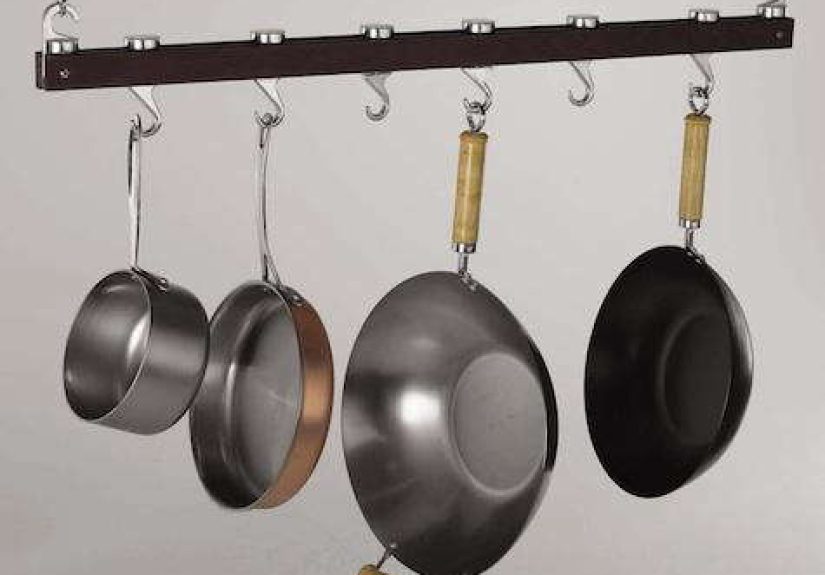
A Track Rack ceiling pot rack is a ceiling-mounted cookware storage system built around parallel bars or rails that hold movable hooks. The best-known version comes from Taylor & Ng, which describes Track Rack as an original cookware display and storage system designed to keep pots, pans, and lids within easy reach while making smart use of available space. In other words, it is not just a generic hanging rack with a catchy name. It is a specific style built around tracks, hooks, and modular accessories.
That design is what makes a Track Rack different from the old-school pot rack many people picture first. Instead of a giant overhead cage or heavy grid that dominates the room, a classic Track Rack setup is usually cleaner and more linear. Some models use two 36-inch bars and a set of pan hooks, swivel hooks, end hooks, and steel hanging links. Other versions come in a round format for tighter kitchens, while rectangular models may add a wood center grid shelf and extra connectors for people who want more overhead storage.
The result is a kitchen pot rack that feels flexible. You can slide hooks around, rearrange cookware as your habits change, and create a display that works for your actual kitchen rather than an imaginary TV kitchen where nobody owns lids or sheet pans.
Why a Ceiling Pot Rack Still Makes Sense
It frees up cabinet space
The biggest reason people buy a ceiling pot rack is the simplest one: cabinets get crowded fast. Pots, pans, lids, sauté pans, Dutch ovens, and skillets are not exactly known for stacking politely. A Track Rack ceiling pot rack moves your most-used cookware overhead so drawers and cabinets can be reserved for bowls, plates, pantry goods, or the blender you swear you use every weekend.
It keeps cookware within reach
There is a real quality-of-life difference between grabbing a skillet from a hook and pulling it out from under a leaning tower of cookware. A hanging pot rack can make a kitchen feel more efficient because the items you use most often stay visible and accessible. For people who cook several nights a week, that everyday convenience adds up quickly.
It adds visual character
Let’s be honest: part of the appeal is that it looks good. A Track Rack ceiling pot rack can lean industrial, modern, farmhouse, vintage, or slightly chef-core, depending on the finish and the cookware you hang from it. Stainless steel pans create a crisp, professional look. Black cookware feels moodier and more modern. Natural wood versions warm up the room and soften all that hard kitchen hardware.
It makes vertical space work harder
Many kitchens have limited square footage but decent ceiling space. A ceiling-mounted pot rack turns that vertical area into functional storage. This is especially helpful in smaller kitchens, apartment kitchens, galley kitchens, or homes where upper cabinets already feel maxed out.
Track Rack vs. Traditional Grid-Style Pot Rack
If you are deciding between a Track Rack ceiling pot rack and a more traditional overhead rack, the difference comes down to storage style and visual weight.
A Track Rack is usually better for people who want a sleeker profile and adjustable hanging points. It works especially well for frying pans, saucepans, lids, and utensils that benefit from easy grab-and-go access. It is also a smart choice if you prefer a pot rack that looks intentional instead of overly rustic or restaurant-heavy.
A grid-style ceiling pot rack, by contrast, often gives you more shelf-like storage. Many popular versions include a center grid, hanging chains, and multiple hooks. That can be great if you want space for lids, cookbooks, baskets, or bulkier cookware. Some even combine storage with lighting, which is useful if your kitchen needs both function and drama. The tradeoff is that these racks usually look larger and feel more visually present.
So which one is better? Neither wins universally. A Track Rack ceiling pot rack is best when you want streamlined cookware display and flexible hook placement. A grid rack is better when you need more overhead shelf storage. Think of it this way: Track Rack is the tidy stylist, while the grid rack is the overachieving cousin with a label maker and extra shelves.
Best Places to Install a Track Rack Ceiling Pot Rack
Over a kitchen island
This is the classic placement for a reason. An island usually offers open overhead space, keeps cookware close to prep zones, and makes the pot rack feel like a design feature rather than an afterthought.
Above a counter or prep area
If you do not have an island, a prep counter can work beautifully. The key is making sure the rack does not interfere with upper cabinets, task lighting, or your field of vision. You want “easy reach,” not “why am I ducking in my own kitchen?”
Near the range, but not awkwardly near the range
Some cooks like pot racks near the stove so their go-to pans are close by. That can work, but clearance matters. Avoid placing the rack where you can bump your head, crowd the cooking zone, or add grease buildup to your weekly personality challenges.
In kitchens with enough ceiling support
This sounds obvious, yet it is the part people tend to skip because optimism is free. Ceiling pot racks should be mounted according to the manufacturer’s instructions and supported properly. Many reputable brands recommend mounting directly into ceiling joists or beams, not just drywall. Translation: this is not the time for heroic improvisation.
How to Choose the Right Track Rack Ceiling Pot Rack
Start with your cookware habits
Do you reach for the same two skillets, one saucepan, and a stockpot every week? Great. A smaller Track Rack may be enough. Do you own cast iron, sauté pans, lids, a griddle, and cookware that multiplies when nobody is looking? Then you may want a longer or rectangular version with more hooks and hanging flexibility.
Measure width, drop, and walk-through space
Before you buy, measure the area where the rack will hang. Look at the width of the rack, the height drop from the ceiling, and the clearance below it. The goal is for cookware to stay reachable without becoming forehead décor. If your ceiling is high, hanging links or chains can help lower the rack to a more usable height. If your ceiling is low, a low-profile model may be the smarter move.
Check the mounting requirements
This is non-negotiable. Some Track Rack models mount directly to a ceiling wood joist, and some 36-inch versions are designed around joists that are 16 inches on center. Always verify the requirements for the exact model you are considering. Never assume all ceiling racks install the same way just because they all look vaguely “hangy.”
Look at the included hardware and accessories
One reason people like Track Rack systems is the modular hardware. Depending on the model, you may get pan hooks, swivel hooks, end hooks, connecting bolts, eye hooks, and steel hanging links. Some rectangular models also include a center grid shelf. Those details matter because they affect how much cookware you can hang and how customizable the setup will be once it is installed.
Match the finish to your kitchen
Track Rack styles come in finishes such as chrome, anthracite gray, and natural wood. The right finish can make the rack disappear into the room or stand out as a feature. Chrome feels crisp and utilitarian. Black or anthracite looks sharper and more modern. Natural wood feels warmer and more relaxed, especially in transitional or farmhouse-inspired kitchens.
Respect the weight limit
Some heavy-duty ceiling pot racks on the market advertise substantial load capacities, but that does not automatically mean every ceiling, every anchor point, or every model can handle the same load. Always follow the manufacturer’s stated limit for your exact rack and keep your ceiling structure in mind. Your cast-iron collection may be beautiful, but gravity remains undefeated.
Installation Basics: What to Know Before You Drill
Installing a Track Rack ceiling pot rack is not impossible for a confident DIYer, but it does require more care than hanging a framed print or pretending a command hook can solve everything.
- Find the joists first. Use a stud finder or other reliable method to locate the ceiling joists or beams.
- Read the instructions for your exact model. Track Rack systems vary by shape, size, and included hardware.
- Map the final hanging height. Dry-fit the layout so pans will be reachable without blocking sightlines.
- Distribute weight thoughtfully. Do not hang all the heavy cookware on one side like you are testing your life insurance policy.
- Check movement. Make sure swinging lids, long handles, and swivel hooks have room to move without knocking into lights or cabinets.
If you are at all unsure about structure, alignment, or ceiling material, hiring a pro is money well spent. A ceiling pot rack should feel sturdy and boring once installed. “Boring” is excellent when the subject is heavy metal hanging above your head.
Styling Tips for a Better-Looking Pot Rack
Edit what you hang
You do not need to display every pan you own. In fact, you should not. A Track Rack ceiling pot rack looks best when it holds the cookware you actually use and the pieces that look reasonably good out in the open.
Group by size or finish
Organizing cookware by size, function, or finish makes the rack feel neater. Matching stainless steel pans create a polished look. Mixed metals can work too, but do it on purpose.
Mix in utensils carefully
Hooks are not just for pans. Ladles, strainers, tongs, and frequently used utensils can all earn a spot. Just do not turn the rack into a hanging junk drawer with ambition.
Keep it clean
Open storage only looks stylish when it is maintained. Wipe down the rack, rotate out unused pieces, and do not let a layer of grease and dust turn your beautiful kitchen pot rack into a cautionary tale.
Pros and Cons of a Track Rack Ceiling Pot Rack
Pros: saves cabinet space, keeps cookware accessible, uses vertical space efficiently, adds style, and can be customized with different hooks and hanging arrangements.
Cons: requires proper ceiling support, keeps cookware visible at all times, may need regular dusting, and can become visually busy if overloaded.
For most people, the deciding factor is simple: if your cookware storage is currently annoying you on a weekly basis, the pros will probably feel much bigger than the cons.
Who Should Buy One?
A Track Rack ceiling pot rack is a great fit for frequent home cooks, people with smaller kitchens, homeowners who want to free up cabinet space, and anyone who likes their storage to double as décor. It is also a smart choice for kitchens with open layouts, islands, or generous prep zones where a hanging rack can feel integrated rather than squeezed in.
It may not be ideal if you strongly prefer hidden storage, have very low ceilings, rarely cook, or do not have a suitable mounting location. A pot rack should make your kitchen easier to use. If it makes the room feel cramped or chaotic, it is the wrong solution for that space.
Experience: Living With a Track Rack Ceiling Pot Rack Every Day
The everyday experience of using a Track Rack ceiling pot rack is usually less dramatic than the shopping photos suggest, but in a good way. The first thing most people notice is not the style. It is the relief. Cabinets suddenly stop feeling like cookware escape rooms. You open a lower cabinet and, miracle of miracles, the mixing bowls are where you left them. The skillet you use for eggs is hanging right there. The saucepan for pasta water is visible without a scavenger hunt. It is a small change, but it makes a kitchen feel calmer almost immediately.
There is also a learning curve. During the first week, many people hang too much on the rack because they are excited. It is understandable. New storage has a way of making us overly confident. Then reality arrives wearing the handle of a giant stockpot. After a few days, most households start editing. The pieces that stay on the rack are the real workhorses: the everyday skillet, the medium saucepan, the colander, the favorite sauté pan, maybe the tongs and ladle. The bulky roasting pan that comes out twice a year usually gets demoted back to a cabinet, where it can think about what it has done.
Another common experience is that cooking starts to feel more fluid. You move less. You reach less. You stop clanging through stacks of cookware every time dinner begins. That convenience is especially noticeable on busy weeknights, when the kitchen already feels like mission control and nobody has time to battle a wedged lid. A ceiling-mounted pot rack will not cook dinner for you, sadly, but it can remove several irritating steps from the process.
People are often surprised by the visual effect too. A Track Rack ceiling pot rack can make a kitchen feel more finished, as though the room has an actual system instead of a collection of survival tactics. If the rack is well proportioned and the cookware is curated, it can add warmth and personality instead of clutter. Guests notice it. They ask about it. Sometimes they assume you are more organized than you really are. Accept the compliment and move on.
Of course, daily life with an open pot rack also means accepting a little maintenance. The rack and the cookware need occasional wiping, especially in hardworking kitchens where steam and grease are part of the routine. It is not difficult, but it is not optional either. Open storage rewards good behavior and exposes bad habits. If you hang a pan you never clean properly, that pan will become an unflattering main character.
Over time, most people settle into a rhythm. The rack becomes less of a statement piece and more of a useful part of the kitchen. That is probably the best outcome. You stop admiring it every day because it is busy doing its job. It quietly saves space, reduces friction, and makes the kitchen feel easier to use. And honestly, that is the sweet spot for any home upgrade. A Track Rack ceiling pot rack should not feel like a stunt. It should feel like the kitchen finally got smarter.
Final Thoughts
A Track Rack ceiling pot rack is one of those upgrades that manages to be practical, stylish, and genuinely helpful at the same time. It gives hardworking cookware a better home, frees up valuable cabinet space, and brings order to kitchens that have started to feel crowded. The secret is choosing the right size, mounting it correctly, and resisting the temptation to hang every single pan you own like you are opening a museum of sauté equipment.
If your kitchen needs more function without adding more bulk, this kind of hanging pot rack is worth serious consideration. Done right, it is not just storage. It is a better workflow, a cleaner cabinet situation, and a kitchen that finally feels like it has room to breathe.







 Close
Close