
Table of Contents >> Show >> Hide
- Why a Thrifted Basket Works So Well on a Front Door
- How to Pick the Right Goodwill Basket
- Prep the Basket Before the Makeover
- To Paint or Not to Paint
- How to Turn the Basket Into Door Decor That Actually Looks Expensive
- Seasonal Ideas for Your Basket Door Hanger
- How to Hang It Without Ruining Your Door
- Design Tips That Make the Whole Entryway Look Better
- Common Mistakes to Avoid
- Why This DIY Feels So Satisfying
- Real-Life Decorating Lessons From Turning a Goodwill Basket Into Front-Door Decor
- Conclusion
There are two kinds of people in this world: the ones who walk into Goodwill looking for one picture frame and leave with exactly one picture frame, and the rest of us, who somehow exit with a wicker basket, a brass candlestick, a lamp shaped like a pineapple, and a thrilling sense of possibility. This article is for the second group.
If you have ever spotted an old basket at a thrift store and thought, “You’re weirdly charming, but I have no idea what to do with you,” congratulations. You are one hot glue stick away from front-door glory. A thrifted basket can become a gorgeous door hanger that feels warmer than a standard wreath, more personal than a store-bought sign, and much more interesting than the sad, faded bow that has been hanging there since last fall and now looks emotionally exhausted.
The beauty of this project is that it is budget-friendly, beginner-friendly, and flexible enough to work for spring, summer, fall, winter, and that magical decorating season known as “I just want my entryway to look like I have my life together.” With the right prep, a little paint, some greenery, and a few styling tricks, an old Goodwill basket can become the prettiest thing on your front doorand possibly the most complimented.
Why a Thrifted Basket Works So Well on a Front Door
Wreaths get all the attention, but baskets bring something extra: shape, texture, and depth. A basket gives your front door a layered look without requiring advanced crafting skills or the patience of a Victorian seamstress. It also creates a built-in “container” for faux stems, seasonal greenery, ribbons, or even a tiny chalkboard sign if you are feeling aggressively charming.
Better yet, thrift-store baskets tend to have character. Maybe the weave is slightly uneven. Maybe the handle is bent in a way that somehow makes it cuter. Maybe it looks like it once held picnic supplies for someone named Carol in 1987. All of that is good. Front-door decor looks better when it has texture and personality. Perfection is lovely, but charm is what gets noticed from the sidewalk.
Using a thrifted basket also taps into one of the smartest decorating moves around: repurposing what already exists. Instead of buying a brand-new seasonal piece every few months, you create a reusable base you can update throughout the year. One basket, many moods. Spring tulips. Summer lavender. Fall leaves. Winter evergreens. Your basket becomes the little black dress of your entryway.
How to Pick the Right Goodwill Basket
Look for Shape First
The best basket for a front door is one with a clear silhouette. Wall baskets, hanging baskets, half-moon baskets, market baskets, or small handled baskets all work beautifully. Anything with a flat back or sturdy base will be easier to hang and arrange. Cone-shaped baskets are especially pretty because they naturally mimic the shape of a floral swag.
Check the Condition
You do not need a perfect basket, but you do want a structurally sound one. Loose strands are fine. Full-on unraveling is not. Check the handle, the weave, and the bottom. If it wobbles like it has a dramatic backstory, put it back and keep shopping.
Think About Scale
A basket that looks adorable in your hand can disappear on a full-size front door. Aim for something that feels substantial enough to be seen from the curb. If your door is large, dark, or set back from the street, go a little bigger than you think. Front doors can handle drama. In fact, they usually benefit from it.
Prep the Basket Before the Makeover
Before you start decorating, give that basket the spa day it deserves. Thrifted finds are charming, but they can also be dusty, musty, or carrying the faint scent of somebody else’s attic. Start by gently cleaning the basket with a dry brush, soft cloth, or vacuum brush attachment to remove dust and debris. If it needs more help, wipe it carefully and let it dry completely before doing anything else.
This part is not glamorous, but it matters. Paint and glue do not perform miracles on damp, dirty surfaces. If you skip prep, your project may still look cute for a day or two, but later it may peel, sag, or develop the kind of smell that suggests raccoons once held meetings in it.
If any pieces are loose, secure them with craft glue and let everything dry fully. Trim frayed ends if needed. At this stage, ask yourself a simple question: do you want the basket to look natural, vintage, modern, cottagey, moody, bright, or “I own at least three linen table runners”? Your answer will guide the finish.
To Paint or Not to Paint
You can absolutely leave the basket natural if the color is already pretty. Warm wicker tones look wonderful on black, navy, olive, red, or wood-toned doors. But if the basket is faded, blotchy, orange in a way that feels suspicious, or simply not your style, paint is your best friend.
Best Colors for a Front-Door Basket
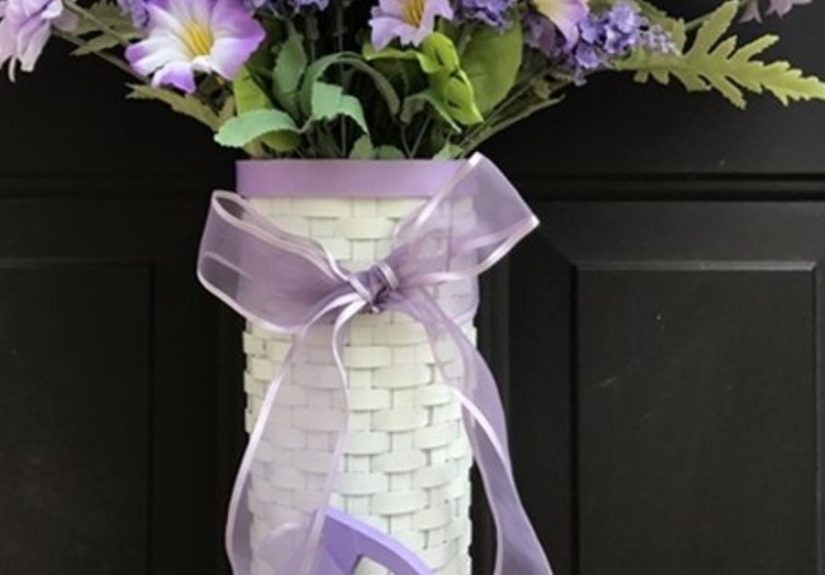
White gives a basket a fresh cottage look. Black makes it feel modern and dramatic. Soft sage or muted blue can create a calm, collected entryway. Cream and taupe keep things neutral and timeless. Gold or brass accents can add a little sparkle without turning the project into a disco ball.
Spray paint is usually the easiest option for wicker or woven baskets because it reaches into all the curves and gaps more evenly than a brush. Light coats are better than one heavy coat. You want “stylish upgrade,” not “basket dipped in frosting.” If you like a weathered look, dry brushing a second tone over the top can add instant depth.
For extra durability, especially if your front door is exposed to moisture or strong sun, finish with a suitable clear protective coat. Think of it as sunscreen for your basket, except much less awkward to apply.
How to Turn the Basket Into Door Decor That Actually Looks Expensive
Start With a Filler Base
A basket looks best when it feels full, not stuffed. Begin with a base layer of greenery, eucalyptus, faux fern, lamb’s ear, olive branches, or flexible seasonal stems. This gives your arrangement structure and helps everything else sit naturally. If the basket is deep, you can place floral foam, crumpled kraft paper, or even a small hidden container inside to lift the stems higher.
Add a Focal Point
Now add the stars of the show. In spring, try tulips, ranunculus, daffodils, or faux blossoms. In summer, hydrangeas, wildflowers, or lavender look breezy and welcoming. For fall, berries, wheat stems, dried leaves, sunflowers, or muted orange florals bring warmth without screaming “pumpkin spice emergency.” In winter, use evergreen sprigs, pine cones, red berries, magnolia leaves, or a velvet ribbon that looks like it has opinions.
Choose one main style and stick with it. A common mistake is trying to include everything: lavender, plaid ribbon, lemons, pine cones, faux cotton stems, and one lonely sunflower. That is not a front-door statement. That is a crafting identity crisis.
Let Some Stems Move Naturally
The prettiest arrangements are slightly loose and asymmetrical. Let greenery trail a little. Angle the main blooms. Allow one side to be fuller or taller than the other. Nature is not symmetrical, and front-door decor should not look like it was arranged with a ruler and a threat.
Add Ribbon, But Calm Down
A beautiful ribbon can transform a basket instantly. Linen, velvet, burlap, grosgrain, and wide cotton ribbon all work well depending on the season. The trick is restraint. One lovely bow or long flowing tie is elegant. Five ribbons in competing prints turns the basket into a gift bag from a department store that lost control.
Seasonal Ideas for Your Basket Door Hanger
Spring Basket
Fill the basket with faux tulips, flowering branches, pale greenery, and a soft striped ribbon. Think fresh, airy, and cheerful. This is the season for pastel confidence and the occasional tiny bird’s nest tucked inside for extra charm.
Summer Basket
Go brighter with daisies, lavender, lemon leaf, or wildflower-inspired stems. Add a blue-and-white ribbon or a natural jute bow for a breezy porch look. Summer baskets should feel like sweet tea in decor form.
Fall Basket
Layer eucalyptus, wheat, dried hydrangea tones, rust-colored florals, and berries. This is where texture really shines. Add a muted plaid ribbon or a simple leather tie if you want rustic warmth without looking like you glued an entire craft store to the handle.
Winter Basket
Use faux cedar, pine, magnolia leaves, frosted berries, pine cones, and maybe a few tiny bells or twinkle lights if your setup allows it safely. A dark green or velvet red bow feels classic and cozy. Winter baskets look especially beautiful against darker doors.
How to Hang It Without Ruining Your Door
The hanging method matters almost as much as the basket itself. A ribbon loop over the top of the door is a classic option and works well if you want a soft, decorative look. A metal wreath hanger is easy and renter-friendly. For some doors and smooth exterior surfaces, outdoor-rated adhesive hooks or strips may also work well if you follow the product directions carefully and stay within weight limits.
Whatever method you choose, test the weight of the finished basket before hanging it for real. Faux florals are lighter than fresh flowers, which is one reason they are great for this project. If your basket becomes unexpectedly heavy, switch to a sturdier hanger before your beautiful door decor turns into a dramatic porch incident.
Design Tips That Make the Whole Entryway Look Better
A pretty basket on the door is lovely. A pretty basket that works with the rest of your entryway is even better. Think about color coordination. If your doormat, planters, shutters, or porch pillows already have a palette, let the basket join the conversation. It does not need to match exactly, but it should not look like it wandered in from another zip code.
Texture is important too. Woven baskets pair beautifully with stone, brick, painted wood, black hardware, lanterns, and potted plants. If your front porch is minimal, the basket can add softness. If your porch already has lots of visual interest, keep the basket simpler so the whole scene feels curated rather than crowded.
And please, step back from the door once you finish. I mean literally. Walk to the curb. See how it looks from a distance. Front-door decor is not judged from six inches away while you hold hot glue in your teeth. It is meant to create a first impression from the outside in.
Common Mistakes to Avoid
Using Too Many Stems
If your basket arrangement looks like it ate another arrangement, remove a few pieces. Full is good. Puffy and confused is not.
Ignoring Weather
If your front door gets blasted by sun or rain, choose materials that can handle it better, and place delicate accents where they are more protected. Gorgeous does not help much if it fades into a haunted haystack by next Tuesday.
Forgetting the Door Color
A cream basket on a pale beige door may vanish. Dark florals on a black door might feel flat. Contrast is what makes your project pop.
Making It Too Theme-y
A subtle seasonal look often feels more elegant than a basket screaming a holiday at full volume. Aim for “welcoming and stylish,” not “my craft supplies staged an uprising.”
Why This DIY Feels So Satisfying
There is something especially rewarding about taking an overlooked thrift-store item and turning it into a standout piece for your home. It is affordable, creative, and practical all at once. You are not just making decor. You are creating a welcome. That sounds lofty for a basket, but honestly, front-door decor does set the tone. It tells people something about the home before they even knock.
And unlike some DIY projects that require power tools, six online tutorials, and a brief emotional breakdown, this one is approachable. You can finish it in an afternoon. You can redo it seasonally. You can customize it endlessly. Best of all, when someone says, “Where did you get that?” you get to enjoy the deeply satisfying sentence: “Oh, it was just an old basket from Goodwill.”
Real-Life Decorating Lessons From Turning a Goodwill Basket Into Front-Door Decor
One of the funniest things about a project like this is how low the stakes seem at first. You buy a basket for a few dollars, toss it in the car, and think, “This will be easy.” Then you get home and realize the basket smells faintly like old potpourri and library books, one side is flatter than the other, and you now have very strong opinions about ribbon width. That is the moment the project becomes personal.
People who decorate a lot will tell you that the best pieces are often the ones with a history, and thrifted baskets prove that immediately. They are rarely perfect, but that is part of the magic. A basket from a secondhand store has already lived a little. It has texture. It has quirks. It has probably seen at least one very questionable floral arrangement in its lifetime. When you repaint it, restyle it, and hang it on your front door, you are not hiding its age so much as giving it a much better next chapter.
Another experience almost everyone has with this project is learning the difference between “cute in theory” and “cute on the actual door.” A basket can look beautiful on a table and completely disappear once it is hung outside. That is why scale matters more than people think. The front door is like a stage. Small props do not always read well from the audience. Bigger stems, stronger contrast, and a fuller shape tend to win every time.
Then there is the weather lesson, also known as nature’s way of humbling crafters. The first time a gorgeous bow gets twisted by wind or a few stems droop after a rainy day, you stop decorating for the photo and start decorating for real life. That is actually a good thing. It teaches you to build with intention. Secure the stems better. Choose materials that hold up. Use the pretty ribbon, yes, but maybe not the one that behaves like tissue paper in humidity.
There is also a surprising emotional side to front-door projects. The basket is not just an object once it is finished. It becomes part of the way your home greets people. It is the first thing you see when you come back from work, errands, school pickup, or one of those chaotic grocery trips where you went in for bread and came out with seventeen unrelated items. A pretty front door has a small but real effect on mood. It makes home feel cared for.
And perhaps the best experience of all is the confidence boost that comes from making something look expensive when it definitely was not. A Goodwill basket can cost less than coffee and still end up looking like boutique decor if the colors are thoughtful and the styling feels balanced. That little transformation is weirdly addictive. Once you do it once, you start eyeing every thrift-store shelf like a treasure hunter. Old tray? Maybe wall art. Brass bowl? Maybe centerpiece. Basket with a slightly crooked handle? Obviously future front-door perfection.
That is what makes this project so memorable. It is not just about upcycling. It is about training your eye to see possibility where other people see clutter. It is about creating something warm, useful, and beautiful from a humble object. And honestly, in a world full of expensive decor trends and fleeting seasonal purchases, there is something very satisfying about making the prettiest thing on your front door out of a basket that almost nobody else wanted.
Conclusion
If your front door needs a little personality, do not overlook the basket aisle at Goodwill. With a bit of cleaning, a fresh finish, and a thoughtfully styled arrangement, a thrifted basket can become a front-door piece that feels custom, charming, and surprisingly high-end. It is one of those rare DIY projects that is affordable, useful, flexible, and genuinely fun to make.
So the next time you spot a slightly dusty woven basket sitting quietly on a thrift-store shelf, do not pass it by. Give it a second chance. Your front door is waiting, and frankly, it deserves something prettier than another predictable wreath.






 Close
Close