
Table of Contents >> Show >> Hide
- What Happened During the SM-6 Test?
- Why the Littoral Combat Ship Matters
- What Is the SM-6 Missile?
- Why Firing an SM-6 From a Small Ship Is a Big Deal
- The Mk 70 Payload Delivery System Explained
- From “Lightly Armed” to “Harder to Ignore”
- How This Test Fits Into U.S. Navy Strategy
- Benefits of Putting Big Missiles on Smaller Ships
- Challenges and Limitations
- What This Means for the Future of the LCS Fleet
- Why the Test Captured So Much Attention
- Strategic Takeaway: Small Ship, Bigger Message
- Experience Notes: What This Test Feels Like From a Naval-Technology Perspective
- SEO Tags
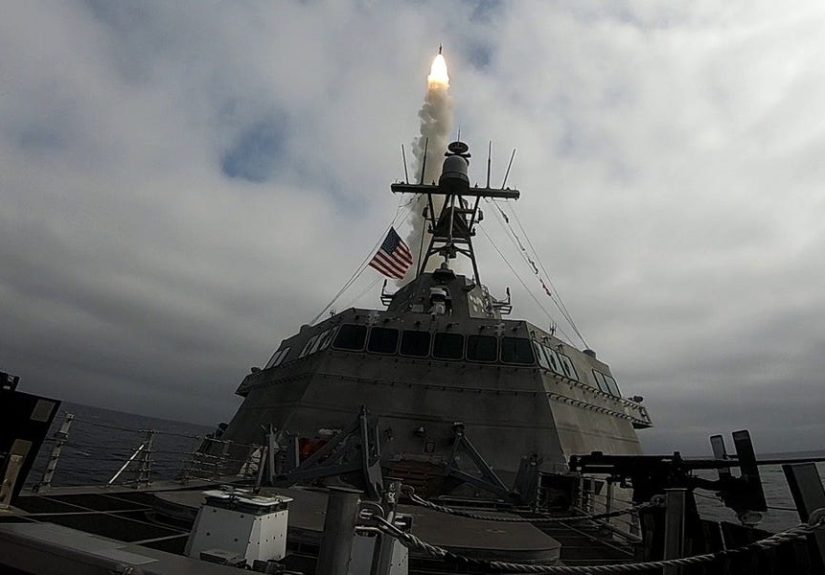
The U.S. Navy has a flair for making small ships do unexpectedly big things. In one of the more attention-grabbing naval demonstrations of recent years, the Independence-variant littoral combat ship USS Savannah fired a Standard Missile-6, better known as the SM-6, from a containerized launcher placed aboard the ship. For a class often criticized as lightly armed, the image was hard to ignore: a relatively small, fast, shallow-draft warship launching one of the Navy’s most versatile missiles from a portable system on its deck.
The test was not just a fireworks show for defense enthusiasts. It represented a practical experiment in distributed firepower, modular weapons, and the Navy’s ongoing effort to make more of its fleet useful in high-end maritime competition. In plain English, the Navy is exploring whether ships that were once seen as underpowered can be turned into more dangerous, flexible players without redesigning them from keel to mast. Not bad for a ship class that has spent years getting roasted like a hot dog at a Fourth of July cookout.
What Happened During the SM-6 Test?
USS Savannah conducted the live-fire demonstration in the Eastern Pacific Ocean on October 24, 2023. During the event, the ship used a containerized launching system to fire an SM-6 missile at a designated target. The Navy described the test as a demonstration of the littoral combat ship’s modularity and ability to integrate a containerized weapon system for surface engagement.
The launcher involved was associated with the Mk 70 Payload Delivery System, a containerized vertical launch capability related to the widely used Mk 41 Vertical Launching System found on larger U.S. Navy cruisers and destroyers. Instead of building vertical missile cells permanently into the hull, the Navy placed a launcher module aboard the ship. Think of it as adding a serious toolbox to a pickup truckexcept the toolbox can launch one of the most capable missiles in the fleet.
The test was especially notable because littoral combat ships were originally designed for speed, flexibility, and near-shore operations rather than heavy missile combat. The SM-6 launch showed that even a ship without a traditional built-in vertical launch system may be able to contribute to long-range maritime strike and air-defense missions if equipped with the right modular systems.
Why the Littoral Combat Ship Matters
The Littoral Combat Ship, or LCS, was developed to operate in coastal waters, also called littorals. The Navy built two major variants: the Freedom variant, a steel monohull design, and the Independence variant, an aluminum trimaran design. USS Savannah belongs to the Independence variant, which has a wide, futuristic-looking hull that makes it look like something a Hollywood designer sketched after three coffees and a documentary about stealth aircraft.
LCS ships were intended to be fast, networked, and adaptable. They were built around mission packages for tasks such as surface warfare, mine countermeasures, and anti-submarine operations. In theory, that modular approach sounded brilliant. In practice, the program faced years of criticism over reliability, survivability, weapons limitations, mission package delays, and early retirements of some hulls.
Still, the Navy has continued to look for ways to get more value from the LCS fleet it plans to keep. The SM-6 firing from USS Savannah fits into that larger story. Rather than treating LCS as a one-mission coastal patrol tool, the Navy is testing whether the class can become a distributed launch platform for larger missiles. That could matter in the Pacific, where geography, distance, and the need for many dispersed naval assets are central to U.S. planning.
What Is the SM-6 Missile?
The SM-6 is one of the U.S. Navy’s most flexible missiles. It is designed for multiple roles, including anti-air warfare, terminal ballistic missile defense, and anti-surface warfare. That versatility is what makes the SM-6 so valuable. It is not simply a one-job weapon; it is more like the Navy’s multitool, though obviously much louder and significantly less welcome at airport security.
In fleet operations, a missile like the SM-6 can help defend ships against aircraft and missiles, while also providing the option to strike hostile surface ships. Its multi-mission profile makes it attractive for modern naval warfare, where commanders may need one weapon type to handle different threats across sea and air domains.
That flexibility is important because shipboard space is limited. A destroyer or cruiser with dozens of missile cells still has to make choices about what to carry. A smaller ship like an LCS has even tighter limits. If the Navy adds containerized launchers to LCS platforms, it will want missiles that offer maximum usefulness per cell. The SM-6 is a strong candidate because it gives commanders more options from a limited launch capacity.
Why Firing an SM-6 From a Small Ship Is a Big Deal
At first glance, the test may look like a simple technical demonstration: launcher goes on ship, missile goes up, target gets engaged. But the strategic message is much bigger. The Navy is experimenting with the idea that more ships can carry meaningful long-range weapons, not just large Aegis destroyers and cruisers.
This concept supports distributed maritime operations. Instead of concentrating firepower on a handful of large ships, the Navy can spread weapons across more platforms. That makes it harder for an adversary to know where the next missile could come from. It also gives U.S. commanders more ways to complicate an opponent’s planning.
For the LCS specifically, the test helps answer a long-running question: can these ships become more relevant in a serious naval fight? The answer is not automatic, and one test does not magically solve every issue the class has faced. Ships still need sensors, networks, crews, logistics, protection, and reliable systems. But adding SM-6-capable launchers could make LCS more than a lightly armed patrol vessel in contested waters.
The Mk 70 Payload Delivery System Explained
The Mk 70 Payload Delivery System is best understood as a containerized launcher that can bring vertical-launch capability to platforms that do not have built-in missile cells. It is related to the Mk 41 Vertical Launching System, one of the backbone launch systems of the U.S. Navy surface fleet.
Containerized launchers are attractive because they can potentially be moved, installed, tested, and adapted more quickly than permanent ship redesigns. They can also allow the Navy to experiment with new operating concepts without waiting years for a new class of warship. In naval acquisition terms, that is almost speedy enough to be considered a miracle.
The key advantage is flexibility. A launcher module can be placed on a suitable deck area, integrated with the ship’s combat and communication systems, and used to fire compatible missiles. This does not mean every ship instantly becomes a destroyer. Integration is complex, and operational usefulness depends on targeting, command-and-control, safety, stability, and fleet-level coordination. Still, the demonstration suggests the Navy sees containerized systems as one path toward boosting firepower across a wider range of ships.
From “Lightly Armed” to “Harder to Ignore”
For years, critics argued that the LCS lacked the punch needed for modern naval combat. Early ships carried a 57 mm gun, short-range defensive systems, helicopters, small boats, and mission equipment, but they did not have the kind of vertical missile battery found on destroyers. Later upgrades, including the Naval Strike Missile, improved the class’s anti-ship capability. The SM-6 demonstration pushes that idea further.
A ship carrying Naval Strike Missiles can threaten surface targets at meaningful distances. A ship with SM-6 capability can potentially add a broader set of missions, depending on integration and rules of employment. That shifts how planners may view the platform. The LCS may still be small compared with destroyers, but a small ship with serious missiles is not something opponents can casually ignore.
This is where the term “tiny littoral combat ship” needs a little context. An Independence-variant LCS is not tiny like a fishing boat. It is over 400 feet long and displaces thousands of tons. But compared with an Arleigh Burke-class destroyer or a cruiser, it is a smaller combatant with less built-in firepower. The surprise comes from seeing a ship of this type launch a missile typically associated with larger, more heavily armed surface combatants.
How This Test Fits Into U.S. Navy Strategy
The U.S. Navy is preparing for a maritime environment where long-range missiles, drones, submarines, satellites, electronic warfare, and fast decision-making all matter. In the Pacific especially, distances are huge, bases are limited, and ships may need to operate in dispersed groups. That environment rewards platforms that can contribute to sensing, targeting, defense, and strike from multiple locations.
By testing SM-6 from an LCS, the Navy is exploring how to increase the number of launch nodes in the fleet. A launch node is simply a platform that can fire a missile when connected to the right command-and-control network. The more launch nodes available, the more complex the operating picture becomes for an adversary.
This idea does not replace destroyers, submarines, aircraft carriers, or aircraft. Instead, it adds another layer. A future force could include large warships with deep magazines, submarines with stealthy strike capability, aircraft with long-range weapons, unmanned systems, and smaller surface ships carrying containerized launchers. The result would be a fleet that is less predictable and more distributed.
Benefits of Putting Big Missiles on Smaller Ships
More Distributed Firepower
The most obvious benefit is spreading firepower across more ships. If only a few major combatants carry long-range missiles, those ships become high-value targets. If smaller vessels can also carry meaningful weapons, an opponent has more problems to track.
Better Use of Existing Hulls
Building new warships takes years and costs a lot of money. Upgrading existing ships with modular launchers may offer a faster way to increase capability. It is not free, and it is not simple, but it can be quicker than waiting for a new shipbuilding program to mature.
Flexible Mission Planning
A containerized system could allow planners to adjust ship capabilities based on mission needs. One deployment may prioritize mine countermeasures or patrol. Another may require added missile firepower. Modular payloads give the Navy more room to tailor forces.
Stronger Deterrence
Deterrence depends partly on uncertainty. If potential adversaries know that more U.S. ships can carry long-range missiles, they must account for more threats. Even a small ship can become strategically relevant if it adds credible combat power in the right place at the right time.
Challenges and Limitations
It is tempting to see the SM-6 launch and declare the LCS problem solved. That would be too simple. A successful test proves potential, not perfection. Real operational use requires reliable integration, training, maintenance, safety procedures, targeting data, communications, and tactical doctrine.
Magazine depth is another limitation. A containerized launcher may carry only a small number of missiles compared with a destroyer’s large vertical launch system. That means an LCS equipped with such a system could deliver important shots, but it would not replace a major surface combatant. It would be an additional shooter, not a floating arsenal.
Survivability also matters. Smaller ships may not have the same defensive depth, armor, redundancy, or combat systems as larger warships. If placed in a highly contested environment, they need support from the broader fleet. The missile launcher may increase offensive reach, but it does not automatically make the ship invulnerable. Naval warfare, unfortunately, does not come with cheat codes.
What This Means for the Future of the LCS Fleet
The SM-6 test suggests the Navy is not done trying to reinvent the littoral combat ship. Instead of viewing LCS only through the lens of past program problems, the Navy is looking at how the ships can contribute under new operational concepts. Later discussions around adding Mk 70 systems to more LCS platforms point toward a broader interest in giving the class greater missile capacity.
If the Navy follows through, some LCS ships could become more valuable in forward-deployed roles, especially in regions where speed, presence, and distributed firepower matter. They could operate with allies, support maritime security, contribute to sea-control missions, and provide additional launch capacity during crises.
However, success will depend on execution. The Navy must ensure that upgrades are affordable, safe, maintainable, and tactically useful. It must also avoid overpromising. The LCS has already had a complicated public reputation; adding big missiles will help only if the ships can reliably perform the missions assigned to them.
Why the Test Captured So Much Attention
Part of the fascination comes from contrast. The SM-6 is a high-end missile. The LCS is often portrayed as a controversial, lightly armed ship. Put them together, and the result is newsworthy. It is like watching a compact car tow a yacht: even if you understand the engineering, you still want to see the video twice.
Defense watchers also paid attention because the test connects to a larger trend: containerized weapons are becoming more important. The U.S. military has tested missile launchers from ships, ground vehicles, and other platforms. The goal is to create flexible, mobile, and survivable ways to deploy long-range fires.
For the Navy, this could open new possibilities. A ship does not always need to be built around a large missile battery to carry serious weapons. With the right module and integration, different platforms can become part of the strike network. That approach could reshape how the fleet thinks about smaller ships, auxiliary vessels, unmanned platforms, and forward operations.
Strategic Takeaway: Small Ship, Bigger Message
The U.S. Navy’s SM-6 launch from USS Savannah was more than a single missile test. It was a message about adaptability. The Navy is trying to get more combat value from existing ships, distribute firepower across the fleet, and make its force harder to predict. The LCS may still have critics, but the test showed that the class can be used in ways that were not central to its original public image.
For readers following naval technology, the key point is not that every LCS will suddenly become a mini-destroyer. The real point is that modular launch systems may give the Navy new ways to add firepower where it needs it. In a future maritime fight, flexibility could be just as important as size.
USS Savannah’s test did not erase the LCS program’s history, but it did add a new chapter. And for a ship class that has taken plenty of criticism, launching an SM-6 from a containerized system is a pretty strong way to say, “I’m still in the game.”
Experience Notes: What This Test Feels Like From a Naval-Technology Perspective
When analyzing the U.S. Navy’s SM-6 test from a littoral combat ship, the most interesting experience is not the missile launch itself. Missiles launch all the time during tests and exercises. What makes this event memorable is the shift in expectations. For years, the LCS conversation often sounded like a list of frustrations: too expensive, too lightly armed, too complicated, too different from what the Navy originally promised. Then suddenly, there is USS Savannah firing an SM-6 from a containerized launcher, and the conversation changes from “What went wrong?” to “What else could this ship do?”
That shift matters because military technology often evolves through adaptation, not perfect first drafts. Many famous platforms were criticized early in their lives. Some improved through upgrades, new tactics, and better mission alignment. The LCS may never become the ship its strongest supporters originally imagined, but the SM-6 test shows that a platform’s value can change when new systems are added creatively.
From a practical viewpoint, this demonstration also highlights how modern naval power is becoming more networked. The launcher is important, but it is only one piece of the puzzle. A missile is most useful when paired with accurate targeting, reliable communications, trained crews, and a command structure that can make fast decisions. The ship that fires the missile may not be the same platform that detects or tracks the target. That is the real future of distributed naval warfare: many platforms sharing information so the fleet acts like a connected system rather than a collection of isolated ships.
There is also a lesson in humility. A successful demonstration does not mean the Navy can simply bolt launchers onto every available deck and call it a day. Ships have weight limits, stability requirements, electrical needs, crew training demands, safety concerns, and maintenance realities. The ocean is a harsh workplace. Saltwater does not care about PowerPoint slides. If a system is going to be deployed for real, it must survive heat, corrosion, vibration, rough seas, and the daily rhythm of sailors using and maintaining equipment under pressure.
Still, the experience of watching this development unfold is encouraging for anyone interested in innovation. It shows the Navy trying to move faster and think differently. Instead of waiting only for future ships, it is asking how existing ships can be made more useful now. That mindset is important in an era when threats evolve quickly and shipbuilding timelines remain painfully long.
For the public, the test is also a reminder that “small” military platforms can still carry strategic weight. The LCS is not a destroyer, and it should not be judged as one. But if it can serve as a mobile missile node, support allied operations, patrol contested waters, and add uncertainty to an opponent’s calculations, then it has value. The SM-6 firing from USS Savannah may not be the final answer for the LCS fleet, but it is a strong signal that the Navy is still experimenting, still adapting, and still searching for ways to make every ship count.





 Close
Close