
Table of Contents >> Show >> Hide
For more than two years, Russia’s most advanced fighters were treated like
porcelain in a world of sledgehammers: expensive, fragile, and kept far from
the front. That changed when Ukraine claimed it had destroyed or severely
damaged a Su-57 “Felon” stealth fighter deep inside Russian territory a
jet Moscow presents as its answer to the U.S. F-22 and F-35.
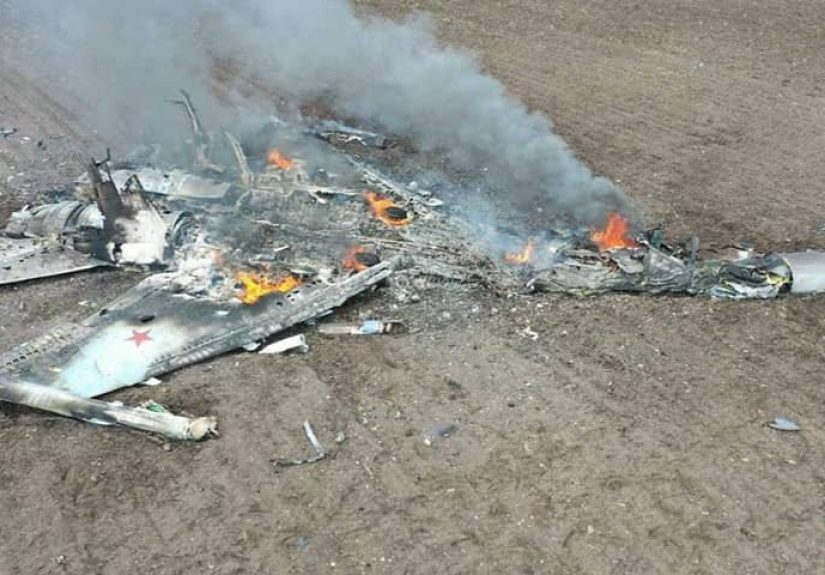
Whether you frame it as “shot down,” “destroyed on the ground,” or “taken
off the board,” the result is the same: one of Russia’s most sophisticated
fighter jets stopped being a theoretical threat and turned into a very real
smoking hole in the tarmac. For Ukraine, that’s not just a tactical win
it’s a psychological and strategic message: even the priciest toys are not
safe.
What Actually Happened?
A strike hundreds of miles from the front line
In early June 2024, Ukraine’s military intelligence agency (GUR) announced
that its forces had struck a Russian Su-57 at Akhtubinsk airfield in
Russia’s Astrakhan region, roughly 580–600 kilometers (about 360–370 miles)
from the front lines in Ukraine. Satellite images
released by Ukraine and analyzed by open-source intelligence (OSINT)
communities showed a previously intact Su-57 on June 7 and fresh blast
craters and burn marks near the same spot on June 8.
Western media, including Reuters, Associated Press, and Business Insider,
reported that if confirmed, this would be the first known time Russia’s
fifth-generation Su-57 had been successfully hit in combat.
Ukrainian officials framed it as a historic milestone: the “most advanced”
Russian fighter, previously kept safe deep inside Russian territory, had
suddenly joined the long list of Russian aircraft that have been destroyed
in the war.
Hit versus “shot down”: why the wording matters
Technically, the Su-57 at Akhtubinsk appears to have been struck on the
ground by a long-range weapon, likely a drone or cruise missile, rather than
dogfighted out of the sky Top Gun–style.
But in modern warfare, the distinction is largely academic: an out-of-action
aircraft is an out-of-action aircraft. Ukraine’s message that it can
locate, target, and destroy highly protected assets hundreds of miles inside
Russia is far more important than whether the jet was airborne at the
time.
Russia, for its part, did not enthusiastically confirm the loss, but Russian
commentators and military bloggers complained publicly about the lack of
hardened shelters and better base protection an indirect admission that
something expensive and embarrassing had happened.
What Makes the Su-57 So Important?
Russia’s “fifth-generation” flagship
The Sukhoi Su-57 is billed as Russia’s first true fifth-generation
multi-role stealth fighter, intended to compete with American jets like the
F-22 and F-35. It combines low-observable design features, internal weapons
bays, advanced avionics, and long-range air-to-air and air-to-ground
weapons.
Russian officials and state media have touted the Su-57’s ability to:
- Engage multiple targets at long range, including enemy fighters and air defenses;
- Carry modern precision-guided munitions and cruise missiles;
- Integrate with hypersonic weapons in newer upgrade packages;
- Operate as a “command” node in a networked battlefield, sharing data with drones and other aircraft.
In theory, losing even one Su-57 is a big deal because the total fleet is
tiny. Open-source estimates suggest only a few dozen have been built, with a
smaller subset fully operational.
A troubled, high-value program
The Su-57 program has faced delays, funding issues, and at least one
high-profile crash during testing. Serial production only ramped up
recently, and each airframe is believed to be very expensive.
For Russia, these aircraft are not expendable assets they’re prestige
symbols and scarce strategic tools.
That helps explain why Russia reportedly kept its Su-57 fleet away from the
most dangerous parts of the Ukrainian front. Analysts say the jets may have
launched long-range missiles while staying over Russian territory, avoiding
Ukrainian air defenses as much as possible.
In other words, Moscow treated them less like frontline brawlers and more
like delicate sniper rifles.
How Ukraine Managed to Hit the Su-57
Long-range strikes and Western green lights
The strike on Akhtubinsk didn’t happen in a vacuum. By mid-2024 Ukraine had
steadily expanded its long-range strike campaign inside Russia, targeting
fuel depots, radar stations, aircraft factories, and air bases.
As some Western partners began loosening restrictions on using their weapons
against targets on Russian soil, Kyiv gained more flexibility to go after
high-value assets that had previously been off-limits.
According to Ukrainian and Western reports, the Su-57 strike likely involved
a combination of:
- Intelligence, surveillance, and reconnaissance (ISR) from satellites and drones;
- Long-range Ukrainian-made drones or missiles capable of reaching deep into Russia;
- Carefully timed attacks to catch aircraft exposed on open tarmac rather than inside shelters.
The operation highlighted a growing reality: distance is no longer a
guarantee of safety. Air bases previously thought to be comfortably beyond
reach are now vulnerable, especially if critical jets are parked in the open
like they’re waiting for a casual Sunday air show.
The information war: destroyed or just damaged?
Ukrainian sources described the Su-57 as “destroyed,” pointing to large
blast marks and secondary damage around the jet.
Other analysts including those at RUSI and various OSINT projects were
more cautious, suggesting that while the jet was clearly hit, the exact
level of damage (repairable or total write-off) is harder to prove from
satellite images alone.
Russia, unsurprisingly, downplayed the incident. But the finer technical
details matter less than the strategic message: if Ukraine can hit a Su-57
once, it can try again. That forces Russia to move jets farther from
Ukraine, invest in hardened shelters, and divert air-defense systems to
protect bases instead of supporting frontline troops.
Part of a Bigger Pattern: Russia’s Advanced Jets Under Pressure
Su-35s, Su-34s, and a shrinking sense of invincibility
The Su-57 incident fits into a broader pattern in which Ukraine has
gradually chipped away at Russia’s inventory of high-end aircraft:
-
In June 2025, Ukraine said it had shot down a Russian Su-35 fighter over
the Kursk region a heavy, modern air-superiority jet that plays a key
role in Russian air operations. -
Reports from Ukrainian and Western outlets suggest that at least one of
those Su-35 downings may have involved a Ukrainian-operated F-16 working
with Western airborne radar, marking a new phase in the air war. -
Ukrainian forces have also repeatedly claimed Su-34 bomber shootdowns,
including strikes in 2025, as those jets launched glide bombs against
Ukrainian cities and frontline positions.
Independent tallies of visually confirmed aircraft losses show dozens of
Russian fixed-wing aircraft from workhorse Su-25s to more advanced Su-34s
and Su-35s destroyed since the full-scale invasion began in 2022.
How it changes behavior in the sky
Every time an advanced jet is lost, Russia doesn’t just lose metal; it loses
pilots, training time, and confidence. Analysts note that Russian crews have
increasingly shifted to launching standoff munitions from safer distances,
often outside the effective range of most Ukrainian air defenses.
That keeps the jets safer but reduces their effectiveness. It’s the air-war
version of trying to play soccer while never crossing the halfway line: you
may still take shots, but they’re not as accurate or flexible. The Su-57
strike amplifies this dynamic, signaling that even bases far from the front
are no longer sanctuaries.
What the Su-57 Strike Means for Ukraine and Its Allies
Strategic messaging, not just fireworks
For Ukraine, publicly announcing that it had hit a Su-57 served several
purposes:
-
Domestic morale: It shows Ukrainians that their forces
can strike symbolic assets that Russia once considered untouchable. -
International signaling: It reassures Western partners
that advanced weapons, training, and intelligence support are paying off. -
Deterrence: It warns Russia that high-end tools stealth
fighters, strategic bombers, missile launch platforms are all on the
list of potential targets.
Hitting such a high-profile jet also reinforces Ukraine’s argument for more
advanced air-defense systems and longer-range missiles. If one Su-57 can be
damaged with existing tools, supporters can reasonably ask: what might
Ukraine achieve with more range, more precision, and more Western-made
hardware?
The escalation debate
Every deep strike inside Russia raises questions about escalation. Some
Western policymakers worry about attacks on Russian territory crossing a
political red line, while others argue that high-value military targets far
from civilians are precisely the sort of targets Ukraine should be allowed
to hit.
So far, the pattern has been incremental: limited permissions for
counter-strikes, followed by careful Ukrainian operations, followed by
further discussion based on results and Russian reactions. The Su-57
incident is part of that evolving boundary a case study in how deep
strikes can degrade Russia’s ability to wage war without triggering the kind
of escalation everyone wants to avoid.
On the Ground: Experiences and Reactions
For Ukrainians, news that “one of Russia’s most advanced fighter jets” had
been taken out didn’t feel like just another headline. It felt like proof
that perseverance, ingenuity, and a lot of late-night work in basements and
workshops were actually changing the balance of power in the sky.
Imagine you’re a Ukrainian air-defense operator who has spent months
tracking Shahed drones, cruise missiles, and guided bombs on flickering
radar screens. You rarely see the launch platforms the bombers, the
fighters, the stealth jets because they stay far away, behind layers of
Russian air defenses. Hearing that one of those high-end aircraft was hit
on its own turf is like finding out the bully who lives two streets over
finally slipped on his own ice.
The emotional reaction, according to local reporting and social-media
commentary, mixed pride with cautious realism. People joked about Russia’s
“invisible” stealth fighter becoming very visible when it caught fire, but
they also knew that every Russian loss is typically followed by another wave
of missile and drone attacks against Ukrainian cities. The war hasn’t
allowed anyone to celebrate for long.
On the Russian side, the experience was different but equally human.
Military bloggers complained that expensive aircraft were sitting in the
open without shelters, practically inviting long-range strikes.
Some criticized commanders for repeating the same mistake seen at other
airfields, where Tu-95 and Tu-22 bombers were damaged in earlier Ukrainian
drone attacks. The tone was half outrage, half grim resignation: if Ukraine
can reach Engels or Akhtubinsk once, it can probably do it again.
For pilots on both sides, the psychology of the air war keeps evolving.
Russian pilots already knew that flying near the front meant facing layered
Ukrainian air defenses. Now they also know that the bases they take off from
even hundreds of miles from the battlefield can be targeted. The sense
of “rear-area safety” that many militaries relied on for decades is
eroding, replaced by a constant low-level anxiety that the next siren might
be for them.
Ukrainian pilots and drone operators, meanwhile, are learning that long-game
persistence pays off. Each successful deep strike requires weeks or months
of intelligence gathering, testing, and coordination. When a high-value
target like a Su-57 is hit, it validates the entire ecosystem: the engineers
who designed the drones, the coders who wrote the navigation software, the
volunteers who crowdfunded equipment, and the analysts who pored over blurry
satellite images at 2 a.m. searching for the outline of a particular
airframe.
International observers experience the event mostly through numbers and
maps. Military analysts debate whether the jet is a “total loss” or just
heavily damaged. Defense ministries ask whether their own aircraft are
similarly exposed. Base commanders everywhere quietly look at their flight
lines and ask: “How many of our jets are sitting outside like that?”
If there’s a practical “experience-based” takeaway here, it’s this:
modern air power isn’t only about who has the flashiest fighter jet on
paper. It’s about who can:
- Protect those aircraft with shelters, dispersal tactics, and strong air defenses;
- Hide them from the global swarm of commercial satellites and drones;
- Keep bases hardened and flexible enough to ride out precision strikes.
The Su-57 episode hammered home a lesson that air forces worldwide already
suspected: if you treat a fifth-generation fighter like a museum piece
parked on an open apron, sooner or later someone will design a very modern
way to smash the glass. Ukraine’s experience and Russia’s, too suggests
that in the 21st century, “rear areas” are just another part of the
battlefield, and even the most advanced fighter jet in the brochure can end
up as a very expensive before-and-after photo set.
Conclusion
Ukraine’s strike on the Su-57 Russia’s flagship “most advanced” fighter
jet may not have looked like a classic dogfight, but it reshaped
perceptions of what is possible in the war. It showed that long-range
strikes, clever intelligence work, and persistent pressure can reach assets
once assumed to be untouchable. It forced Russia to think harder about how
it protects its rarest aircraft and gave Ukraine a powerful narrative
victory to match the physical damage.
In the bigger picture, this episode is less about one destroyed jet and more
about the future of air warfare. Bases are targets. Distance is relative.
And even the most advanced fighter is only as safe as the concrete it’s
parked on and the people defending it.





 Close
Close