
Table of Contents >> Show >> Hide
- What this podcast episode is really about
- Greed, explained without a pitchfork
- Where greed shows up in real life
- 1) The “more is more” procedure trap
- 2) Consolidation: when “choice” becomes a marketing term
- 3) Private equity: fast money meets slow medicine
- 4) PBMs and the invisible toll booth
- 5) Paperwork as a profit center: prior authorization and admin bloat
- 6) Medical debt: the bill that keeps on billing
- 7) Surprise bills and the fine print fight back
- So what do we do about it?
- Why “greed” is a clinical issue, not just a moral one
- Closing thoughts
- Experiences related to the topic (what greed feels like up close)
If you’ve ever opened a medical bill and thought, “Interestingmy appendix apparently came with a subscription plan,” you’re not alone.
In the U.S., health care can feel less like a place you go to get well and more like an escape room where every clue costs $87.
The twist? Most people inside the systempatients, nurses, physicians, pharmacistsdidn’t sign up to play “Who Wants to Be a Billionaire: Prior Authorization Edition.”
And yet, here we are.
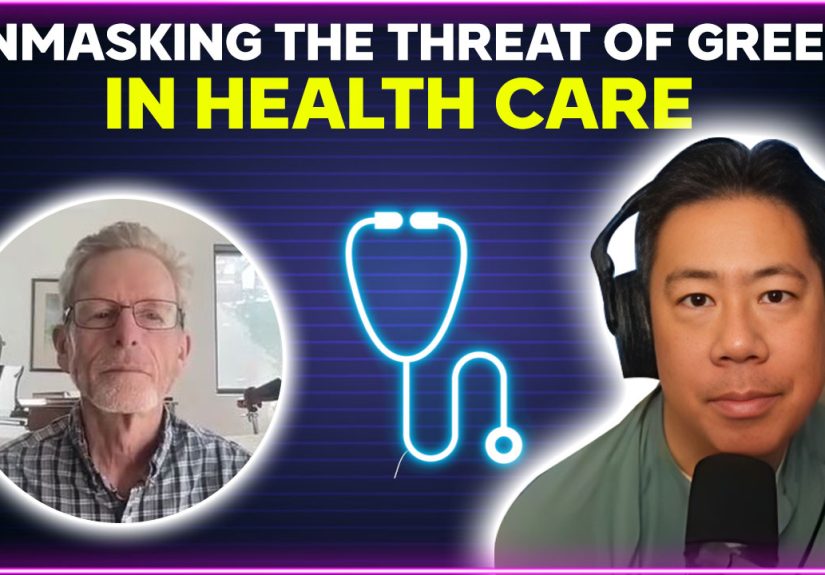
The podcast episode “Unmasking the threat of greed in health care” pushes a blunt, uncomfortable idea into the center of the conversation:
greed isn’t just a bad vibe in the backgroundit can become an existential threat when it drives decisions that should be guided by evidence, ethics, and patient need.
It’s the kind of episode that makes you nod, then sigh, then pause the audio to stare at the wall and whisper, “So we’re really doing this as a country, huh?”
What this podcast episode is really about
In the KevinMD podcast episode, physician Don Gaede talks about the “existential threat of greed” highlighted in a major medical editorial and connects it to what he says he has seen in vascular medicine:
patients pushed toward procedures they don’t need, often when they’re least equipped to question the recommendation.
The episode doesn’t argue that earning money in health care is inherently wrong.
It argues something more specificand more alarming: when financial incentives become the main character, patient welfare becomes a supporting role.
That’s why the conversation keeps circling back to overuse, unnecessary procedures, and the power imbalance between someone in a paper gown and someone with the clipboard.
The episode also points listeners toward solutions that aren’t glamorous but are practicallike the Choosing Wisely movement, which encourages clinicians and patients to talk openly about what care is truly necessary and what’s just “because we can bill for it.”
Greed, explained without a pitchfork
Let’s define terms, because “greed” is a word that can turn a serious policy discussion into a shouting match faster than you can say “facility fee.”
Profit is not automatically greed. Profit can fund innovation, keep rural hospitals open, and pay staff fairly.
Greed is what happens when the goal quietly shifts from taking care of people to extracting the maximum revenue from peopleeven when it harms them.
Health care is uniquely vulnerable to greed because it has three features that make “normal market rules” behave badly:
patients don’t choose emergencies, prices are often hidden until after the service, and the buyer (the patient) usually can’t judge the quality of what they’re buying.
In that environment, bad incentives don’t just waste moneythey can steer clinical decisions.
Where greed shows up in real life
1) The “more is more” procedure trap
Overuse is one of the oldest forms of profiteering in medicine because it hides in plain sight.
A procedure can sound impressive, look decisive, and still be unnecessary.
When the system rewards volume, “doing more” can become the defaulteven when “doing less” is safer, cheaper, and better.
This is not theoretical. Federal enforcement actions have repeatedly alleged medically unnecessary procedures billed to public programssometimes involving stents or vein interventions, sometimes involving other high-revenue services.
Not every case is the same, and not every aggressive intervention is inappropriate, but the pattern matters: when there’s a financial upside to intervention, vigilance must go up too.
Choosing Wisely exists for exactly this reason. It aims to reduce unnecessary tests and procedures by encouraging evidence-based conversationscare that is supported by evidence, avoids duplication, and isn’t harmful or unnecessary.
The point isn’t to ration care; it’s to stop pretending that “more care” always means “better care.”
2) Consolidation: when “choice” becomes a marketing term
Another place greed can wear a respectable suit is consolidation.
When a market becomes dominated by a few big systems, leverage shifts.
Prices rise more easily, independent practices struggle to negotiate, and patients discover that “you can choose any doctor you want” really means “as long as it’s one of these three buildings with the same logo.”
Federal agencies and researchers have been collecting public input and evidence on how consolidation affects prices, access, and qualityespecially when private capital is involved.
Consolidation can bring efficiencies, but it can also reduce competition in ways that make health care more expensive without making it better.
In plain English: if a hospital system can charge more because it has no real competitor, it might.
If it can pay less because staff have fewer options, it might.
That’s not every mergerbut it’s enough of them that regulators keep circling back to the issue.
3) Private equity: fast money meets slow medicine
Private equity (PE) has become one of the most debated forces in health care because it often applies a high-pressure business playbook to a field where the stakes are literally life and death.
PE firms typically buy, restructure, and sell within relatively short time frames.
In health care, “restructure” can mean anything from improving operations to cutting staffing, pushing more lucrative service lines, increasing charges, or changing referral patterns.
Evidence is complex and varies by setting, but multiple peer-reviewed studies have raised concerns.
Research has linked some PE acquisitions to higher charges and shifts in staffing and service mix, and the debate has intensified as more data becomes available.
Even when outcomes aren’t universally worse, the key question remains: when the financial clock is ticking, who gets prioritizedthe patient with a complex need or the spreadsheet with a quarterly target?
The most important takeaway for everyday readers isn’t “PE is always bad.”
It’s this: ownership structures matter, incentives matter, and transparency is non-negotiable when financial decisions can ripple into clinical ones.
4) PBMs and the invisible toll booth
If you want to understand how greed can thrive without most people noticing, look at pharmacy benefit managers (PBMs).
PBMs sit between drug manufacturers, insurers, and pharmacies, and they influence which drugs are preferred, how pharmacies are reimbursed, and what patients pay at the counter.
In theory, PBMs can negotiate lower prices. In practice, the incentives can get messyfast.
Federal investigations and reports have described how PBMs can profit through mechanisms like spread pricing, steering prescriptions to affiliated pharmacies, and marking up drugs far above acquisition costs.
The details are technical, but the lived experience is simple: patients show up expecting one price and find another; independent pharmacies struggle; and everyone feels like they’re paying into a system that’s allergic to daylight.
5) Paperwork as a profit center: prior authorization and admin bloat
Few things make clinicians feel like they’re practicing medicine inside a bureaucratic maze quite like prior authorization.
The idea is to curb unnecessary care. The reality can be delays, denials, and hours of back-and-forth that burn out staff and frustrate patients.
When a system is complex enough, administrative friction becomes its own kind of taxone that patients and clinicians pay in time, stress, and sometimes deteriorating health.
U.S. health spending is high for many reasons, but administrative complexity is a major contributor.
Analyses comparing the U.S. to peer countries repeatedly highlight higher administrative costs and burdensboth in insurance and in provider-side administration.
In a healthier system, paperwork supports care. In an unhealthy one, paperwork becomes the business model.
Physicians report that prior authorization delays care and contributes to burnout.
Patients experience it as the modern version of being put on holdexcept the hold music is your symptoms getting worse.
6) Medical debt: the bill that keeps on billing
Greed doesn’t always look like a corporate boardroom. Sometimes it looks like a collections notice for a visit you thought was covered.
Medical debt remains common in the U.S., and it’s not limited to people who “didn’t plan.”
People with insurance can still face large bills because of deductibles, coinsurance, out-of-network surprises, or coverage denials.
Survey data and health policy research have documented how widespread medical debt is and how it hits certain groups harder.
Policy efforts have tried to reduce the spillover of medical debt into credit reporting and broader financial harmbecause getting sick shouldn’t be a backdoor route to wrecking your credit score.
But medical debt is stubborn: it’s a symptom of prices, coverage design, and billing practices, not just a personal budgeting problem.
7) Surprise bills and the fine print fight back
Surprise billing became so notorious that the U.S. created a dedicated federal law to address it: the No Surprises Act.
The basic idea is straightforward: if you can’t reasonably choose an in-network providerespecially in emergenciesyou shouldn’t be punished for it with a massive out-of-network bill.
That matters because surprise bills were a perfect greed loophole: patients had little control, little information, and huge exposure.
The law doesn’t solve every billing problem, but it signals something important:
some parts of the system were so structurally unfair that the only fix was to change the rules.
So what do we do about it?
The podcast’s message isn’t “give up.” It’s “take the mask off.”
Greed thrives in silence, jargon, and resignation. It weakens when people name it, measure it, and build guardrails against it.
Here are practical stepsbecause righteous outrage is energizing, but it’s not a care plan.
For patients and families
- Ask “What happens if we do nothing for now?” Not foreverjust long enough to consider whether watchful waiting is safer than rushing into a procedure.
- Ask for the evidence in plain language. “How will this change my outcomes?” is a fair question, not a rude one.
- Request cost information early. Even if the answer is fuzzy, the act of asking signals that hidden pricing isn’t acceptable.
- Appeal denials. It’s exhausting, and that’s the point. But appeals do work, and persistence can be medically protective.
- Bring a second set of ears. A trusted friend or family member can help you track options, risks, and next stepsespecially when you’re anxious or in pain.
For clinicians
- Normalize “less can be more.” If you frame conservative care as “doing nothing,” patients will fear it. If you frame it as “active monitoring,” they’ll understand it.
- Support ethics and utilization review that protects patients, not revenue. Oversight should be clinically grounded, not financially captured.
- Use Choosing Wisely-style language. “Evidence-supported, not duplicative, free from harm, truly necessary” is an excellent mental checklist.
- Speak up early. The longer questionable practices persist, the more “normal” they feeland the harder they are to stop.
For employers and payers
- Reward outcomes, not volume. Paying for more services guarantees you’ll get more services. That’s not a mysteryit’s math with a stethoscope.
- Make benefit design readable. If a smart person needs three spreadsheets to understand coverage, the system is optimized for confusion.
- Audit PBM contracts aggressively. Transparency about rebates, spread pricing, and pharmacy steering isn’t optional when patients can’t afford medications.
For policymakers
- Strengthen oversight of consolidation and complex ownership structures. If no one can easily explain who owns what, accountability gets lost.
- Invest in fraud prevention and enforcement. Unnecessary care isn’t just wasteit can be harm.
- Support reforms that lower administrative burden. A system that burns clinician time is a system that quietly reduces patient care capacity.
- Continue tackling high drug costs. Negotiation, transparency, and competition tools can reduce the room where profiteering flourishes.
Why “greed” is a clinical issue, not just a moral one
The phrase “existential threat” sounds dramaticuntil you connect the dots.
When patients can’t afford care, they delay it. When they delay it, conditions worsen. When conditions worsen, care gets more expensive.
When clinicians are buried in administrative work, they have less time for patients.
When staffing is cut too far, safety suffers.
When financial incentives encourage overuse, patients face unnecessary risk.
Greed becomes clinical when it changes behavior at scale.
It becomes existential when it erodes trustthe most essential ingredient in medicine.
Once patients believe recommendations are sales pitches, the entire system suffers: adherence drops, relationships fracture, and the “healing” part of health care gets replaced by suspicion and survival mode.
Closing thoughts
The most valuable thing about “Unmasking the threat of greed in health care” isn’t that it shocks you.
It’s that it gives language to something many people already feel:
the system sometimes acts like patients are revenue streams first and human beings second.
But the episode also points toward something hopeful: greed is not a law of nature.
It’s a set of incentives, structures, and choices.
And what humans build, humans can redesignpreferably with fewer surprise bills, fewer unnecessary procedures, and fewer “your call is very important to us” messages while your medication sits in limbo.
Experiences related to the topic (what greed feels like up close)
The stories below are composite experiences drawn from common patient and clinician reports in U.S. health carebecause you don’t need a single villain to recognize a pattern.
You just need the same plot showing up in different waiting rooms.
Experience #1: The procedure that “just makes sense” (until you ask one more question).
A patient is told they “should” have an intervention soon. The explanation is confident, fast, and sprinkled with reassuring phrases like “routine” and “quick.”
The patient nodsbecause who wants to argue with someone wearing the authority costume?
Then a family member asks, “What’s the evidence that this improves outcomes for someone like them?”
Suddenly the conversation slows down. Alternatives appear. Risks are discussed.
It’s not that the clinician was evil; it’s that the system often rewards speed and certainty, not nuance.
In the best version of the story, the patient leaves with a plan that fits their actual risk and benefitnot a default menu option.
Experience #2: The insurance denial that turns a clinic into a call center.
A clinician prescribes a medication with strong evidence and a reasonable safety profile. The insurer requires prior authorization.
The staff submits forms. The insurer requests more forms.
A week passes. Then two. The patient’s condition worsens, and now the patient needs a follow-up visitironically increasing costs.
Nobody at the clinic feels like a hero; they feel like unpaid extras in a bureaucratic drama.
The patient doesn’t see “administrative complexity.” They see a system that can’t get out of its own way.
And when the medication is finally approved, it feels less like care and more like winning an argument with a fax machine.
Experience #3: The pharmacy counter shock.
The patient arrives expecting a manageable copay. The screen says otherwise.
The pharmacist shrugs the kind of shrug that says, “I, too, live under this sky.”
The patient asks why it costs so much, and the answer is a soup of terms: formulary, tiering, preferred, non-preferred, deductible phase, coinsurance.
The patient isn’t trying to become a health policy scholarthey’re trying to breathe, sleep, or keep their blood sugar stable.
They leave without the medication “for now,” promising to call the insurer later.
The medication doesn’t get picked up, the condition destabilizes, and the system later pays a far bigger price in urgent care or hospitalization.
The “savings” were an illusion; the harm was real.
Experience #4: The medical bill that arrives like a sequel nobody asked for.
The care happens in March. The bill arrives in June. Another bill arrives in July.
A “final notice” appears in August, which is funny because it’s the third “final notice.”
The patient calls and learns that the facility fee is separate from the professional fee, and the anesthesiologist was out of network, and the lab used a different billing entity.
The patient didn’t choose any of that. They chose to get treated.
The stress becomes its own health issuesleep disruption, anxiety, skipped follow-ups.
It’s not just the money; it’s the feeling that the system is designed to outlast your patience.
Experience #5: The quiet moral injury.
A clinician notices patterns: pressure to schedule more, document more, code more, move faster.
None of the individual requests sound unethical in isolation. Together, they slowly distort the work.
The clinician starts to feel like the job is less about caring and more about producing.
That’s when burnout becomes more than fatigueit becomes a loss of meaning.
And when clinicians lose meaning, patients lose time, attention, and continuity.
Greed doesn’t just take money. It can take the soul out of the room.
The point of these experiences isn’t to make you cynical. It’s to make you fluent.
The more we recognize the patternsoveruse, opacity, consolidation, administrative frictionthe harder it becomes for anyone to wave them away as “just how it is.”
Because “just how it is” is not a diagnosis. It’s a design choice.






 Close
Close