
Table of Contents >> Show >> Hide
- What the W162 Dalston Pendant Actually Is (Beyond “Nice Lamp”)
- Design Details That Matter (Because Pretty Isn’t the Same as Useful)
- Lighting Performance: The Specs You Actually Feel Day-to-Day
- Dimming and Control: Don’t Let One Switch Ruin a Great Pendant
- Where the W162 Dalston Looks Best (and Why)
- Choosing the Right Size and Layout: A Simple, Non-Annoying Method
- Installation Notes (a.k.a. The Part Where Gravity Gets Involved)
- Care, Cleaning, and the “Raw Tumbled” Glow-Up
- Who the W162 Dalston Pendant Is For (and Who Should Keep Scrolling)
- Experience Notes: What Living With the W162 Dalston Pendant Tends to Be Like (Approx. )
- Conclusion
Some pendant lights walk into a room and immediately start yelling, “Look at me!” The W162 Dalston Pendant does the opposite.
It shows up, rolls up its sleeves like it’s about to fix your sink, and then quietly makes your entire kitchen/dining/office look
like a thoughtful adult lives there. (Even if there’s a snack stash in the junk drawer. No judgment.)
Designed for Swedish lighting brand Wästberg by Sam Hecht and Kim Colin (Industrial Facility), the W162 Dalston takes cues from
classic workshop lampshonest shape, durable attitudethen upgrades the whole situation with modern LED performance and carefully
controlled glare. The result is a minimalist pendant light that feels architectural without feeling cold, and practical without
feeling like it belongs in a garage.
What the W162 Dalston Pendant Actually Is (Beyond “Nice Lamp”)
At its core, the W162 Dalston is a ceiling-suspended LED pendant designed to deliver even, high-quality downlight over a surface
(think dining tables, kitchen islands, worktables, and the spot where you always open packages). Wästberg describes it as inspired
by workshop lamps, refined with advanced LED technology for “high-quality illumination” that doesn’t demand attentionunless you
want it to.
It’s offered with multiple shade options, including a newer 2024 shade variant called w162 Dalston s3a smaller,
more graphic form made entirely of die-cast aluminum, aimed at smaller-scale illumination needs. That “smaller-scale” detail matters:
it’s the difference between lighting a sprawling farmhouse island and lighting a compact breakfast nook without overwhelming it.
Design Details That Matter (Because Pretty Isn’t the Same as Useful)
A deeply recessed LED engine that’s polite about glare
Dalston’s light source sits deeply recessed, which is a fancy way of saying: you can hang it a bit higher and still avoid that
“staring into a tiny sun” feeling when you walk into the room. Wästberg highlights this as “highly efficient glare protection even
when hung high,” and it’s a big reason the pendant works in real homesnot just pristine showroom kitchens.
COB LED + reflector + prismatic diffuser
The W162 Dalston uses an integrated COB (chip-on-board) LED combined with a reflector and a prismatic diffuser to create light that
is evenly distributed over large surfaces. Translation: it’s designed to spread light smoothly across a table or counter, instead of
blasting one bright spot and leaving everything else in moody shadow.
Honest materials and a “built like it means it” construction
Wästberg leans into durability here: the die-cast aluminum LED engine doubles as a heat sink, and it attaches to a separate shade
(with shade material depending on variant). That heat-management detail is not just triviaLED longevity and stable performance are
heavily tied to thermal design.
A color palette that behaves like a design tool
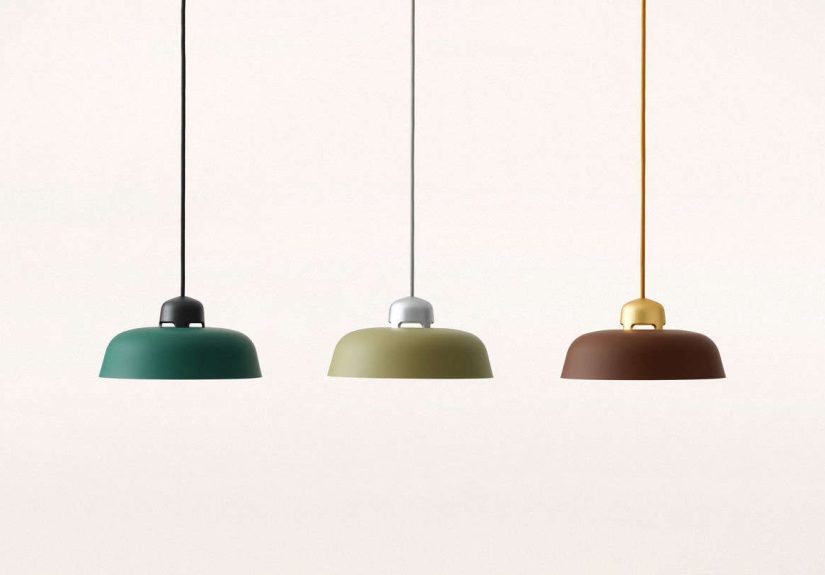
The Dalston family comes in a refined palette (including graphite black, silk grey, nut brown, olive green), and Wästberg also
introduced a raw tumbled aluminum finish that intentionally skips added coatings. Over time, it develops a patina
from handling and oxidationbasically, it ages like good leather, not like cheap paint.
Lighting Performance: The Specs You Actually Feel Day-to-Day
Warm white light (2700K) that flatters food, wood, and faces
The Dalston is specified at 2700Ka warm white tone commonly chosen for living spaces because it reads cozy and
inviting rather than clinical. If your goal is “warm dinner glow” instead of “airport security line,” 2700K is usually the lane.
High color rendering (CRI ≥ 90)
Color Rendering Index (CRI) is a measure of how accurately a light source renders colors compared to a reference source. With
CRI ≥ 90, Dalston is in the “high color quality” tierhelpful if you care about how your countertops, cabinetry,
art, or that tomato you swear is red (but might be coral?) appear under artificial light.
Color consistency (3-step MacAdam)
Dalston is specified at a 3-step MacAdam range, which is a way of describing tight color consistency between
fixtures. This matters most when you install multiple pendants in a rowbecause “almost the same white” becomes very noticeable
when they’re side-by-side.
Output and efficiency (context matters)
In its listed configuration, the W162 Dalston variants are around 9W system power and roughly
~500+ lumens at 2700K (with slight variation by shade), and specified as phase-cut dimmable. In practice, that
output is often used as focused task/area light over a surface, not as the single, only light source for an entire open
floor plan. Pair it with recessed, wall lights, or cove lighting if you want a well-layered room.
Dimming and Control: Don’t Let One Switch Ruin a Great Pendant
The W162 Dalston is specified for phase-cut dimming. In the real world, phase-cut dimmers generally fall into
“leading-edge” (forward-phase) and “trailing-edge” (reverse-phase) styles. LEDs can be pickysome combinations dim beautifully,
others flicker like they’re auditioning for a horror movie.
The practical move: match the fixture’s driver requirements with a compatible dimmer, and if you’re installing multiple pendants,
test dimming behavior early. Compatibility programs (like those promoted by industry groups) exist because LED+dimmer mismatches are
common enough to deserve their own support ecosystem.
Where the W162 Dalston Looks Best (and Why)
Over a dining table
Dalston’s “even spread over large surfaces” design is basically an engraved invitation to live above a dining table. A common
guideline for hanging dining pendants is roughly 30–36 inches above the tabletop, adjusting upward for taller
ceilings. That range usually keeps sightlines comfortable while putting light where plates and people actually are.
Example setup: For a 72-inch rectangular table, a single larger pendant can feel sculptural, while two pendants can create better
coverage and rhythm. If you do multiples, keep them visually centered on the tablenot the ceiling boxso the room looks intentional
even when the chairs aren’t perfectly tucked in (because life).
Over a kitchen island
Kitchen islands love pendant lighting because it provides task light and helps “zone” the space. The same 30–36-inch hanging-height
guideline is commonly used over countertops. For multiple pendants, designers and lighting guides often suggest spacing them so the
layout feels balancedmeasured center-to-centerrather than crowding the island’s ends.
Example setup: On an 8-foot island, two pendants often feel calmer and cleaner; on a 10–12-foot island, three can work if you keep
spacing consistent and leave a little margin at the ends so the lights don’t look like they’re about to fall off the countertop.
In an entry or hallway (yes, really)
Because Dalston manages glare well, it can work in circulation spaces where you’ll see it from multiple angles. A single pendant in
a tall entry can read like understated sculpture, especially in graphite black or raw tumbled aluminum.
Over a desk or studio worktable
A warm 2700K pendant with high CRI can be surprisingly good for creative work, particularly if you’re not doing color-critical tasks
that demand cooler temperatures. Add a task lamp if you need punchy, adjustable beam control, and keep Dalston as your comfortable
“area light.”
Choosing the Right Size and Layout: A Simple, Non-Annoying Method
-
Start with the surface. A classic guideline is to choose a fixture diameter that’s about
1/2 to 2/3 the width of the table (or the lit zone), especially for dining setups. -
Decide if you want one statement or multiple beats. One pendant can look bold and calm; multiples can improve
coverage and create rhythmespecially over long rectangles. -
Respect sightlines. Hanging too low can block conversation; too high can feel disconnected from the surface.
The common 30–36-inch rule is popular because it usually lands in the functional sweet spot. -
Plan layered light. Use Dalston as task/area light, then add ambient sources (recessed, indirect, sconces) so the
room feels finished at nightnot like an interrogation room with one overhead spotlight.
Installation Notes (a.k.a. The Part Where Gravity Gets Involved)
A pendant is simple until it isn’t. Wästberg’s mounting instructions emphasize practical steps like routing the cable through the
shade, setting your drop length, using strain relief, and clipping the cover back onto the ceiling base properly. Hardware for
fastening to the ceiling is typically not included, because ceilings vary and manufacturers don’t like guessing what’s behind your
drywall. Fair.
Quick pre-install checklist
- Confirm your ceiling box is rated and securely mounted for a pendant fixture.
- Choose your hanging height before cutting cable, and mock it up if you’re unsure.
- Pick a compatible dimmer for phase-cut LED dimming, and test for flicker at low levels.
- Consider symmetry if installing multiple pendantsmeasure from the countertop/table, not the ceiling.
- Stay in dry interiors unless the product is rated for damp/wet locations (Dalston is IP20, i.e., indoor/dry).
Care, Cleaning, and the “Raw Tumbled” Glow-Up
Most finishes are straightforward: dust with a soft cloth, avoid harsh cleaners, and don’t treat powder coating like it owes you
money. The raw tumbled aluminum finish is intentionally “alive”it can show fingerprints and evolve over time. If you love objects
that develop character, it’s a feature. If you love perfection, pick a coated finish and protect your peace.
Who the W162 Dalston Pendant Is For (and Who Should Keep Scrolling)
The W162 Dalston makes sense if you want a pendant light that’s:
- Minimal but not sterile (workshop honesty, home-friendly mood)
- High quality in light color (CRI ≥ 90, warm 2700K)
- Comfortable to live with (glare control, even distribution)
- Design-forward in a quiet way (it doesn’t need to be the loudest object in the room to be the best one)
You might skip it if you need mega-bright, whole-room illumination from one fixture, or if you want a sparkling chandelier moment.
Dalston’s vibe is more “excellent jacket you’ll wear for years” than “sequined outfit you wear once and regret on camera.”
Experience Notes: What Living With the W162 Dalston Pendant Tends to Be Like (Approx. )
Because Dalston is designed like a tooljust a very handsome onepeople’s experiences with it often center on the same themes:
comfort, control, and how it behaves in a real room at night. One of the first “oh, that’s nice” moments usually happens the
evening it’s installed. The light reads warm and settled, and the fixture tends not to shout at you from across the room. Instead,
it defines a zone: the island becomes the island, the table becomes the table, and suddenly everyone gathers exactly where you
intended (even if you didn’t intend itlighting is sneaky like that).
The glare control is another commonly appreciated detail. With many LED pendants, you’ll catch the bright source in your peripheral
vision when you stand up, walk past, or sit at an angle. Dalston’s recessed engine and diffuser approach generally helps reduce
that “tiny spotlight in your eyeballs” effect, especially when the pendant is hung at a practical height or a little higher in a
taller room. That doesn’t mean you can hang it in orbit and still get perfect task light, but it does mean you have more flexibility
than you do with an exposed-bulb pendant.
The next set of real-world experiences tends to revolve around dimming. Phase-cut dimming can be excellent, but it’s also where
homeowners learn that not all dimmers are created equal. When the dimmer is compatible, the pendant becomes a mood tool: brighter
for prep and paperwork, lower for dinner and late-night “just one more episode.” When the dimmer isn’t compatible, people notice
flicker at low levels or limited dimming rangeusually prompting a dimmer swap rather than abandoning the fixture. In other words,
the common lesson is: budget for the right dimmer, not just the right pendant.
Installation experiences are usually straightforward for a qualified installer, but there are a few recurring “good to know” moments.
Setting the drop length is easier when you mock up height firsttape a paper circle on the ceiling, hang a string, live with it for
a daybecause once you commit, you want the pendant to feel centered on the surface, not merely centered on a junction box that was
placed by someone in 1998 with mysterious motives. People also tend to like the way Dalston looks in multiples: two or three in a
row can feel crisp and architectural, and the consistent color quality becomes noticeable (in a good way) when the fixtures match.
Finally, finish choice shapes long-term satisfaction. Coated colors stay visually calm and predictable. The raw tumbled aluminum, on
the other hand, is a relationship. It changes, it marks, it develops patinaand for the right person, that’s the charm. If you like
objects that tell the truth about being used, it’s deeply satisfying. If you don’t, the safer choice is a coated shade that stays
“as installed” for years. Either way, the most consistent experience is this: the Dalston doesn’t just light a roomit quietly
organizes it.
Conclusion
The W162 Dalston Pendant is the kind of lighting choice that gets better the longer you live with it. Its workshop-inspired form
feels timeless, but the engineering is thoroughly modern: warm 2700K light, high CRI, controlled glare, and an even spread that
makes daily life look and feel bettercooking, working, eating, talking, existing. If you want a pendant that behaves like a
well-designed tool (and also happens to be gorgeous), Dalston earns its place above the surfaces that matter most.







 Close
Close